
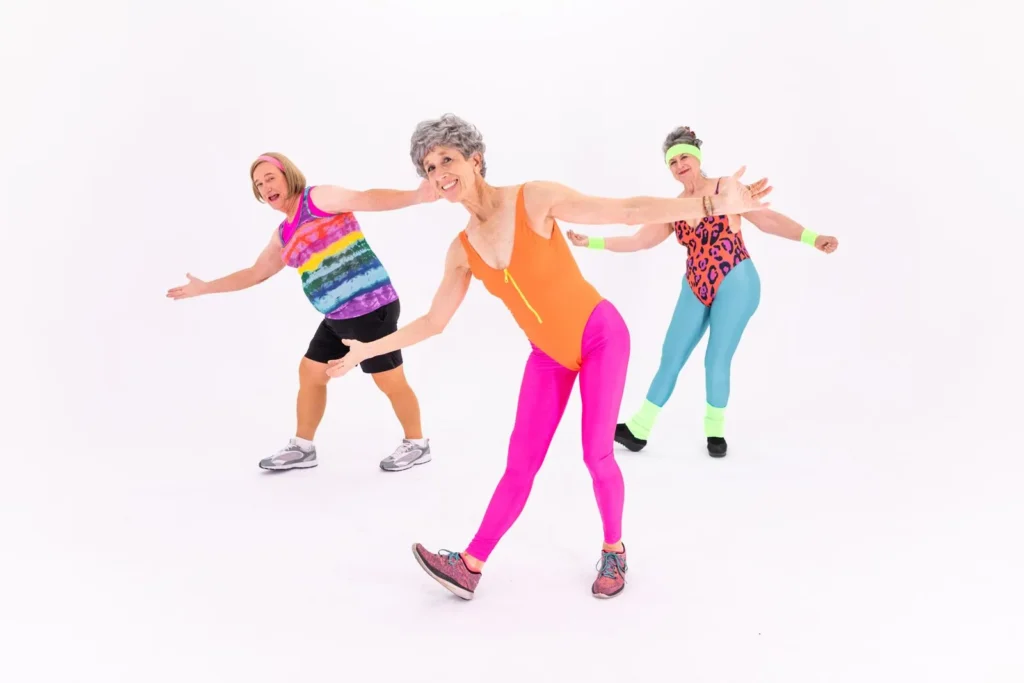
If you want zumba for energy and vitality, the honest version is this: a well-run class can lift your mood and alertness within half an hour, and a few weeks of regular classes can make ordinary days feel less draining. But Zumba cannot create energy out of nothing. Poor sleep, skipped meals and low water intake can turn a great class into a flat, exhausted evening. This guide covers how the energy lift works, why it sometimes backfires, what to eat around class, and a four-week ramp that builds stamina without burning you out.
Does Zumba actually boost energy, or does it just tire you out?
Zumba boosts energy for most healthy adults, usually in two stages. A 45 to 60 minute class often lifts mood and alertness within 20 to 30 minutes of starting. With three or four classes a week, daily stamina typically improves over about three to six weeks. It backfires only when sleep, food or hydration are poor.
That two-stage pattern is worth remembering, because people judge Zumba on the wrong clock. If you expect your afternoon slump to vanish after one class, you will be disappointed. If you expect a better mood tonight and easier stairs in a month, you will usually be right.
What happens in your body: the same-day lift and the slow shift
The same-day effect comes from moderate-to-vigorous movement itself. Most Zumba choreography keeps your heart rate well above resting levels for the whole session, and that sustained effort is associated with the “feel-good” chemistry people describe as a post-workout high. You also get a break from screens and sitting, a shot of music, and a bit of social energy if you are in a group class. All of that stacks.
The slow shift is plain conditioning. Regular aerobic work trains your heart to pump more blood per beat and your muscles to use oxygen more efficiently. The practical result is that the same flight of stairs, the same market walk, the same school run costs you less effort than it did. You are not generating extra energy so much as wasting less of it.
One honest limit: how energetic you feel is partly subjective, and it moves with sleep, stress and diet as much as with exercise. Treat Zumba as one strong lever, not the whole machine.
Why do I feel more tired after Zumba instead of less?
Feeling drained after Zumba almost always traces back to what happened before class: too little sleep, too little food, or too little water. A hard session burns roughly 300 to 500 kcal for many adults, so an empty tank or a dehydrated body shows up as fatigue within the hour, not as a bonus.
| What you notice | Likely cause | What to change this week |
|---|---|---|
| Light-headed or shaky mid-class | Nothing eaten for 4 or more hours | Have a small carbohydrate snack 60 to 90 minutes before class |
| Heavy legs, headache, dark urine afterwards | Not enough water before and during class | Drink 300 to 500 ml in the two hours before, and sip through class |
| Wiped out the whole next day | Intensity too high for current fitness or recovery | Use low-impact versions of the jumps and take one rest day between early classes |
| Wired at bedtime, poor sleep | Late, high-intensity class plus caffeine | Move class earlier, or finish with a slow cool-down and skip late coffee |
| Tired even on easy days, for weeks | Possibly a health issue, not a workout issue | Get a basic check-up before pushing harder (see the section below) |
Notice that none of these fixes involve dancing less. They involve feeding, hydrating and pacing the habit properly.
Three myths that quietly kill your energy gains
Myth 1: “Harder is always better.” If you are already short on sleep, maximum intensity adds load to a body that is running a deficit. Energy comes from the cycle of effort and recovery. Dance at a level where you can still talk in short sentences for most of the class, and save the all-out songs for days when you slept well.
Myth 2: “Skipping meals keeps me light for class.” It keeps you light on fuel. Going into a class on an empty stomach is a reliable way to feel dizzy halfway through, and a heavy craving afterwards often undoes the calorie burn. A small snack is better than none.
Myth 3: “Coffee does the same job.” Caffeine is fast, usually working within 20 to 30 minutes, but it can fade with a crash, and a late cup can cost you sleep, which costs you tomorrow’s energy. Zumba is slower to start but does not carry that rebound, and its benefit builds with practice. They can coexist, but a cup of coffee is not a substitute for movement, and movement is not a reason to avoid sleep.
What should I eat before Zumba to avoid an energy crash?
Eat a small, mostly carbohydrate snack of roughly 100 to 200 kcal about 60 to 90 minutes before class, such as a banana or two idlis. Keep fat and fibre low so it digests easily. After class, combine carbohydrate with 10 to 20 grams of protein, for example curd with fruit or an egg with a roti.
| When | Indian option | Portion | Approx. kcal |
|---|---|---|---|
| 60 to 90 min before | Banana | 1 medium (about 100 g with peel off) | About 90 |
| 60 to 90 min before | Idli | 2 small (about 100 g) | About 120 |
| 60 to 90 min before | Dates | 2 to 3 (about 20 to 30 g) | About 55 to 85 |
| Within 1 hour after | Curd with fruit | 150 g curd plus half a banana | About 130 |
| Within 1 hour after | Boiled eggs with 1 roti | 2 eggs plus 1 medium roti | About 260 |
| Within 1 hour after | Roasted chana and chaas | 30 g chana plus 200 ml chaas | About 150 |
| During class | Plain water or coconut water | Small sips; up to 200 ml coconut water | 0 to 40 |
These are rounded estimates; brands and home recipes vary. If you are managing weight, a dietitian can set these portions against your daily target, and our online nutritionist consultation is built for exactly that. If you are vegetarian or vegan, swap eggs for paneer (about 50 g), tofu or a bowl of dal.
A four-week ramp for zumba energy boost without burnout
Start with what your body can recover from, not with the biggest number you can manage. Build frequency first, then intensity. The plan below assumes you are healthy, fairly sedentary and new to regular dancing; adjust down if you are returning from a break.
| Week | Classes | Intensity | Focus | What to check |
|---|---|---|---|---|
| 1 | 2 classes, non-consecutive days | Low-impact, about 6 out of 10 effort | Learn the moves, keep breathing steady | Do you feel better or worse 2 hours after? |
| 2 | 3 classes, one rest day between | Mostly low-impact, add a few high-energy songs | Pre-class snack and water routine | Any dizziness or heavy legs? |
| 3 | 3 classes | Mix of low and high impact, about 7 out of 10 | Add 10 minutes of gentle stretching after | Is the afternoon slump milder? |
| 4 | 3 to 4 classes | 7 to 8 out of 10 on your best days only | One lighter day if sleep was short | Compare sleep, mood and stair-climbing ease with week 1 |
If you find a week too much, repeat it rather than pushing on. Consistency over four weeks beats a heroic first fortnight that ends in exhaustion. For deeper background on what regular classes do for the body beyond energy, read our overview of the benefits of Zumba.
Do a stronger core and legs make you feel less tired?
Yes, often. A weak core and tired legs make standing, walking and sitting upright cost more effort, which quietly drains you all day. Building trunk and lower-body strength lets posture and movement run on less effort, so the same day leaves less of a mark on you.
Many Zumba routines already work these areas. If you want to target them on purpose, our guide to Zumba for abs and core explains the moves that build trunk stability, and Zumba for toned legs does the same for the lower body. On a rest day, a gentle session of Zumba and yoga or a slow class from our online yoga classes can help you recover without losing the habit.
By lifestyle: who benefits most and who should go slowly
Desk workers and long commuters. Sitting for 8 to 10 hours makes people feel heavy and foggy. A class before work or after you get home breaks the pattern. Even on weeks when you cannot attend, a few minutes of music and movement between meetings is better than nothing.
New mothers and caregivers. Broken sleep is the main energy thief here, and Zumba will not fix that on its own. Start with low-impact versions, keep classes short, and wait for your doctor’s go-ahead if you are recently postpartum.
People over 40. Recovery takes a little longer, so build the ramp above slowly, favour low-impact options, and warm up properly. If you have joint, blood pressure or heart concerns, speak to your doctor first.
Shift workers. Irregular sleep hits energy harder than any workout fixes. Anchor classes to the same point in your wake cycle, and avoid hard sessions right before you try to sleep.
A safety note: if you are tired most days despite adequate sleep, or you feel breathless, dizzy, or notice chest discomfort, palpitations or unusual swelling, see a doctor before you keep exercising. In India, low iron, vitamin B12 and vitamin D, and thyroid problems are common, treatable causes of constant tiredness. A simple blood test can rule them out, and no dance routine should be used to push through a symptom that needs a diagnosis.
How Fitstrot Zumba classes fit into an energy plan
Fitstrot’s online Zumba classes are led by Yash Pathak, our lead Zumba trainer, who is ZIN Licensed, ACE Certified and Strong Nation Certified. Because classes are online, you can do them at home and scale the intensity to how you feel that day. That flexibility matters for energy: you can choose low-impact when you are depleted and go bigger when you are rested. See the full format on our online Zumba classes page, or read how the online Zumba classes blog post breaks down what to expect from a session.
Frequently asked questions about Zumba and energy
Does Zumba give you energy right away or only over time?
Both. Within roughly 20 to 30 minutes of moving, most people feel a lift in mood and alertness. A more lasting rise in everyday stamina builds over about three to six weeks of regular classes as your heart and muscles become more efficient. Poor sleep or food can mask it.
Why do I feel exhausted after Zumba?
Exhaustion after Zumba is usually caused by too little sleep, too little food or water beforehand, or intensity set too high for your current fitness. Eat a small carbohydrate snack 60 to 90 minutes before class, hydrate, and use low-impact options until your body adapts. Persistent fatigue deserves a doctor’s check.
Is Zumba better than coffee for an afternoon slump?
For lasting energy, usually yes, because movement lifts alertness without the crash that can follow caffeine, and it does not disturb sleep when timed sensibly. For a quick fix mid-meeting, coffee is more practical. The two work best when coffee is kept to the morning and movement is regular.
Can I do Zumba on an empty stomach?
You can, but most people feel better with a small snack of about 100 to 200 kcal first. Dancing on empty can cause light-headedness, especially if you skipped the previous meal. Keep it light, such as a banana or two idlis, and drink water. If you feel faint, stop and sit.
Can Zumba help if I always feel tired for no obvious reason?
Gentle, regular Zumba may help energy and mood, but constant unexplained tiredness should be checked by a doctor first. Common treatable causes include low iron, vitamin B12 or D, thyroid problems, and sleep disorders. Once the cause is addressed, start with low-impact classes and build slowly.
If you want to test this for yourself, join one of Fitstrot’s online Zumba classes and keep a simple note for four weeks: your sleep hours, your mood after class, and how you feel at 4 pm.


