

Good yoga for men starts with what most men actually bring to the mat: stiff hips from long hours of sitting, tight hamstrings, and shoulders shortened by pressing and desk work. This guide skips the vague “just stretch more” advice. You will see why those areas lock up, how to balance strength holds with mobility work, and how to follow a 25-minute routine with alignment cues and easier options for every pose. You do not need to touch your toes to begin.
What does yoga actually do for a man’s body?
For most men, yoga builds usable range of motion in the hips, hamstrings and upper back while training slow, controlled strength in the core, legs and shoulders. It also teaches steady breathing under effort. Many men find that this combination makes squats, running and desk days feel easier, though results depend on consistency and your starting point.
That is a modest promise on purpose. Yoga is not a magic fix, and it does not replace lifting or cardio. What it adds is the part most training plans skip: joint-by-joint control, positions held under tension, and a calmer nervous system between hard sessions. A man who lifts four days a week and sits for nine hours a day tends to get more from two short yoga sessions than from a fifth gym day.
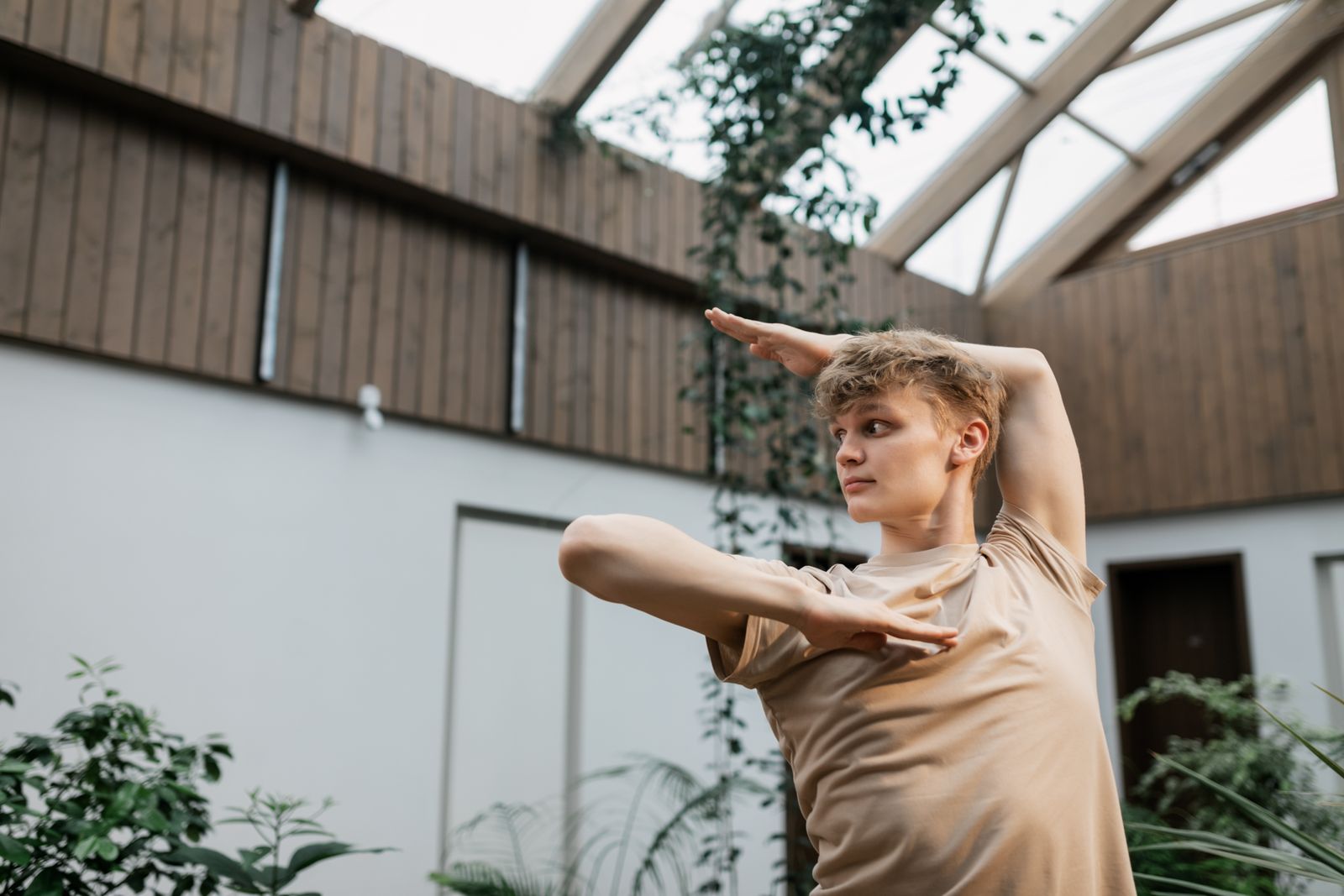
Why are hips and hamstrings so tight in men?
Tight hips and hamstrings in men usually come from sitting for 8 to 10 hours a day and lifting without full-range mobility work. Sitting keeps the hip flexors shortened and the hamstrings idle, so both stiffen over months and years rather than overnight.
Three patterns show up again and again in men who start yoga:
- Short hip flexors. The front of the hip stays folded all day, so standing tall feels like your lower back is doing the work. Low lunges and a tucked tailbone help here.
- Hamstrings that feel tight but are often just guarded. The back of the thigh can resist stretching when the pelvis tips badly or the lower back is tired. Bending the knees often reveals more range than straining straight-legged.
- Stuck upper back and shoulders. Bench pressing, driving and laptop work round the shoulders forward, which limits overhead reach and makes some poses feel impossible.
The good news is that tissue responds to regular, gentle loading. Think weeks, not days: short, regular sessions beat one hard stretch.
Strength or flexibility: what should yoga for men train?
Train both, in roughly equal measure. Men who are already strong but stiff gain most from slow mobility work and longer holds. Men who are flexible but weak gain most from standing and plank-based strength poses. A good weekly plan uses one flowing session for strength and one slower session for stretching.
Different styles lean in different directions, so choose by what your body lacks, not by what sounds impressive.
| Style | Main effect | Typical pace | Best for |
|---|---|---|---|
| Hatha yoga | Alignment, balance, gentle strength | Slow, 5 to 8 breaths per pose | Beginners, men over 40, learning form |
| Vinyasa yoga | Strength endurance and mobility | Moderate, one breath per movement | Men who like to keep moving |
| Power yoga | Muscular effort, heart rate up | Brisk, long holds in standing poses | Lifters and runners wanting challenge |
| Yin yoga | Passive stretch of hips and back | Very slow, 2 to 4 minutes per pose | Recovery days, stiff hips |
If you are unsure where to begin, our overview of types of yoga compares the wider list, and the guide to yoga for beginners covers the first month in more detail.
Myth check: is yoga too easy or too soft for men?
No. Holding Chair Pose for 45 seconds, lowering slowly through Chaturanga, or staying in Warrior II for eight breaths is hard work for most men, even trained ones. Yoga is a different kind of difficulty: slow, controlled effort rather than heavy loads or speed. Being stiff is a reason to start, not a reason to avoid it.
Two related myths are worth correcting too.
- “I must be flexible first.” Flexibility is a result of practice, not an entry ticket. Every pose below has an easier option.
- “Yoga will shrink my belly.” Yoga cannot remove fat from one chosen area. Fat loss comes from your overall eating pattern, activity and sleep. Yoga can support that routine by keeping you moving and recovering well, but it is not a targeted fat burner.
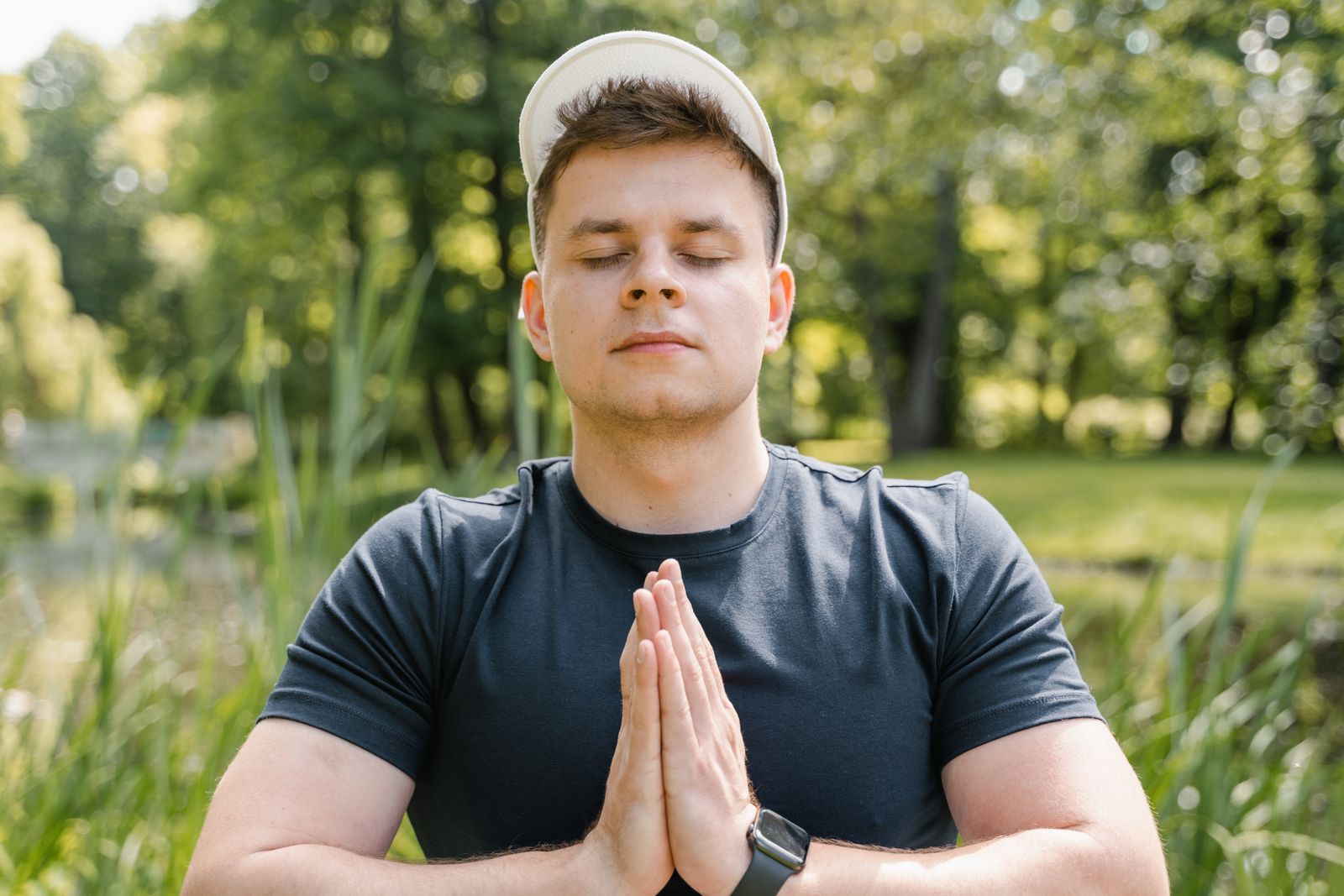
What is a good 25-minute yoga routine for men?
A good beginner routine for men runs about 25 minutes and moves from warm-up to hips, hamstrings, strength holds and a calm finish: Cat-Cow, Downward Dog, Low Lunge, Warrior II, Chair Pose, Plank, Cobra, Seated Forward Fold and a Supine Twist. Hold each for 5 to 8 slow breaths, and stop short of pain.
Use the table as a screenshot-friendly checklist. The cues are about alignment first, depth second.
| Pose | Hold | Alignment cue | If it feels too much |
|---|---|---|---|
| Cat-Cow | 8 slow breaths | Hands under shoulders, knees under hips; move from the tailbone | Do it seated on a chair |
| Downward Dog | 5 breaths | Press the floor away, lengthen the spine, keep knees soft | Bend the knees, or place hands on a wall |
| Low Lunge (each side) | 5 breaths | Front knee over ankle, tuck the tailbone, ribs stacked over hips | Pad the back knee with a folded towel |
| Warrior II (each side) | 5 breaths | Knee tracks over the second toe, shoulders stacked over hips | Shorten the stance, bend the front knee less |
| Chair Pose | 5 breaths, 2 rounds | Weight in heels, ribs down, arms long by the ears | Sit back to a higher depth, hands on thighs |
| Plank to Cobra | 4 to 5 rounds | Shoulders over wrists, ribs drawn in; in Cobra, elbows stay bent | Drop knees in plank, keep Cobra low |
| Seated Forward Fold | 8 breaths | Hinge from the hips, long spine, bent knees allowed | Sit on a folded blanket, loop a strap over the feet |
| Supine Twist (each side) | 6 breaths | Both shoulders heavy on the floor, knees stacked or loosely crossed | Support the knees with a pillow |
How to walk through the first week
Do the whole sequence slowly on day one, then repeat it on days three and five. Count breaths instead of watching the clock; a calm cycle of about 4 seconds in and 4 to 6 seconds out keeps the pace honest. If you train at home, our guide to yoga at home covers setting up a small space, and if you want the full flow written out, the online yoga classes overview explains how live sessions work.
How do you fit yoga around gym days? A weekly plan
If you lift or run, aim for 3 yoga sessions a week of 20 to 30 minutes: one flowing session for strength, one slow session for hips and hamstrings, and one short breathing and stretch session on a rest day. Keep intense yoga away from the hardest leg day so your legs recover.
| Day | Gym or sport | Yoga | Focus |
|---|---|---|---|
| Monday | Push or upper body | None | Rest your shoulders |
| Tuesday | Legs | 10 minutes, easy | Low Lunge, Seated Forward Fold |
| Wednesday | Rest | 25 to 30 minutes, slow | Hips and hamstrings (hatha or yin) |
| Thursday | Pull or back | None | Rest your hips |
| Friday | Cardio or sport | 20 to 25 minutes, flowing | Vinyasa-style strength and balance |
| Saturday | Optional light workout | 10 minutes | Breathing and a Supine Twist |
| Sunday | Rest | None or a walk | Full recovery |
For a session built around a sore lower back, the dedicated page on yoga for back pain is a safer starting point than this general routine.
Who should modify or check with a doctor first?
Check with a doctor or physiotherapist before starting if you have a recent surgery, a hernia, a disc problem or sciatica with leg numbness, uncontrolled high blood pressure, glaucoma, or a joint injury. Everyone else can begin gently, but should stop any pose that causes sharp, pinching, burning or numb sensations.
These adjustments matter most for men:
- Pain near the sit bone or upper hamstring. Deep forward folds can irritate this area. Keep your knees bent and reduce depth.
- Lower back or sciatica symptoms. Avoid forcing forward folds and deep twists, and keep a slight bend in the knees.
- High blood pressure. Avoid holding your head below your heart for long, and keep your breathing smooth rather than forceful. Take medication as prescribed and do not change it because of yoga.
- Knees and ankles. Skip cross-legged and deep hip-opening shapes that twist the knee. Use a cushion under the hips or a chair instead.
- Wrists and shoulders. Come down to the forearms or knees in Plank, or place the hands on a wall.
A useful rule: a mild, even stretch you can breathe through is fine. Pain that is sharp, sudden or travels down a limb is a signal to ease off and get it assessed.
What is the best yoga for men over 40?
For men over 40, slower styles such as hatha with props usually work best: 3 sessions a week of 20 to 30 minutes, 5 to 8 breaths per pose, blocks under the hands, bent knees in folds and a chair for balance. Build consistency first, and add intensity only after about 6 to 8 weeks.
Warm up for a few minutes before deeper stretches, and treat any old injuries with extra caution.
How soon will you notice a difference?
Many men notice calmer breathing and easier sleep within 1 to 2 weeks, mobility gains such as a deeper squat or easier forward fold within about 4 to 6 weeks at three sessions weekly, and strength endurance in holds after roughly 8 to 12 weeks. These are common timeframes, not guarantees, and they vary by person.
What matters most is rhythm, not heroics. Three 20-minute sessions each week beat one long session followed by three weeks of nothing. Track simple markers, such as how far your hands reach in a forward fold and how long you hold Chair Pose.
Common mistakes men make when starting yoga
Most early mistakes come from treating yoga like a gym set: forcing depth, holding the breath and skipping the slow parts. Correct them early and the practice becomes safer and far more useful.
- Bouncing into stretches. Move into a stretch gradually, then stay still and breathe.
- Locking the knees. Keep a soft bend in standing poses and forward folds to protect the back of the knee and hamstring.
- Holding the breath. If you cannot breathe smoothly, the pose is too deep or too long.
- Skipping the finish. The last 3 to 5 minutes of lying still or a gentle twist is where the calming effect of the session settles in.
- Comparing yourself to others. Hip structure and training history differ, so someone beside you may fold deeper without being any fitter.
Frequently asked questions about yoga for men
Is yoga good for men?
Yes, for most men yoga is a useful addition to training. It can improve hip and hamstring mobility, build slow strength in the core and legs, and teach calmer breathing. It is not a replacement for medical care, and anyone with injuries or health conditions should check with a doctor first.
How many times a week should a man do yoga?
Three sessions a week of 20 to 30 minutes is a sensible starting point for most men. Men who lift heavily can swap one session for a shorter 10-minute stretch on a rest day. Add a fourth session only if you recover well and feel no joint irritation.
Can yoga build muscle for men?
Yoga can build modest strength and muscular endurance, mostly in the legs, core and shoulders, especially for beginners. It is not the most efficient way to gain large amounts of muscle. For size, combine it with resistance training and enough protein and calories.
Do I need to be flexible to start yoga?
No. Flexibility is something yoga develops, not a requirement. Every pose can be adjusted with bent knees, blocks, a strap, a wall or a chair. Start at a depth where you can breathe calmly and add range gradually over weeks.
What is the best yoga for tight hips and hamstrings in men?
Low Lunge, Warrior II, a Seated Forward Fold with bent knees and a Supine Twist are a good base. Add a slow hatha or yin session once a week. Hold each pose for 5 to 8 breaths and never push into sharp pain.
Where to go from here
If you would rather have someone watch your alignment and adjust the plan to your hips, shoulders and schedule, book a live session with Fitstrot’s online yoga classes. If your goal is strength and size alongside mobility, a plan from 1-on-1 personal training can pair gym work with yoga.


