

Yoga for hairfall reduction is worth trying for one honest reason: it can lower stress and improve sleep, and stress is a common trigger for temporary shedding. It is not a regrowth treatment, it cannot reverse genetic pattern baldness, and no pose will fix low iron or a thyroid problem. This guide separates what yoga can reasonably support from the myths, gives you a gentle 25-minute sequence, and tells you when to see a doctor first.
Can yoga really reduce hairfall, or is that a myth?
Yoga can support hair health indirectly by lowering stress and improving sleep, which may ease stress-related shedding. It does not regrow hair, stop genetic hair loss, or treat iron, thyroid or hormonal causes. Treat it as one supportive habit alongside a doctor’s check and a balanced diet, never as a stand-alone fix.
Losing roughly 50 to 100 strands a day is normal, so a few hairs on the comb is not a crisis. Trouble starts when far more follicles than usual move into the resting phase together. Doctors call this temporary heavy shedding, and it often shows up two to three months after a trigger such as a high fever, surgery, childbirth, crash dieting or a long period of stress.
| Common claim | Myth or fact | What is reasonable to say |
|---|---|---|
| Head-down poses “feed” the hair roots with blood | Mostly myth | Blood flow to the head does rise briefly while you are inverted, but there is no good proof that this reverses shedding. Most hairfall is not caused by a poor blood supply to the scalp. |
| Kapalbhati “detoxes” the scalp | Myth | “Detox” has no clear meaning for hair. Forceful breathing is not a hair treatment and comes with real cautions. |
| Rubbing nails together (balayam) regrows hair | Unproven | Harmless, but do not expect regrowth from it. Do not delay a check-up because of it. |
| Yoga can stop genetic pattern hair loss | Myth | Pattern loss is driven by genes and hormones. A dermatologist is the right person to discuss it with. |
| Lower stress can ease stress-linked shedding | Reasonable | Plausible and low-risk. Stress-linked shedding often settles over months once the trigger passes, and calmer routines can help you get there. |
How does stress cause hair shedding, and where does yoga come in?
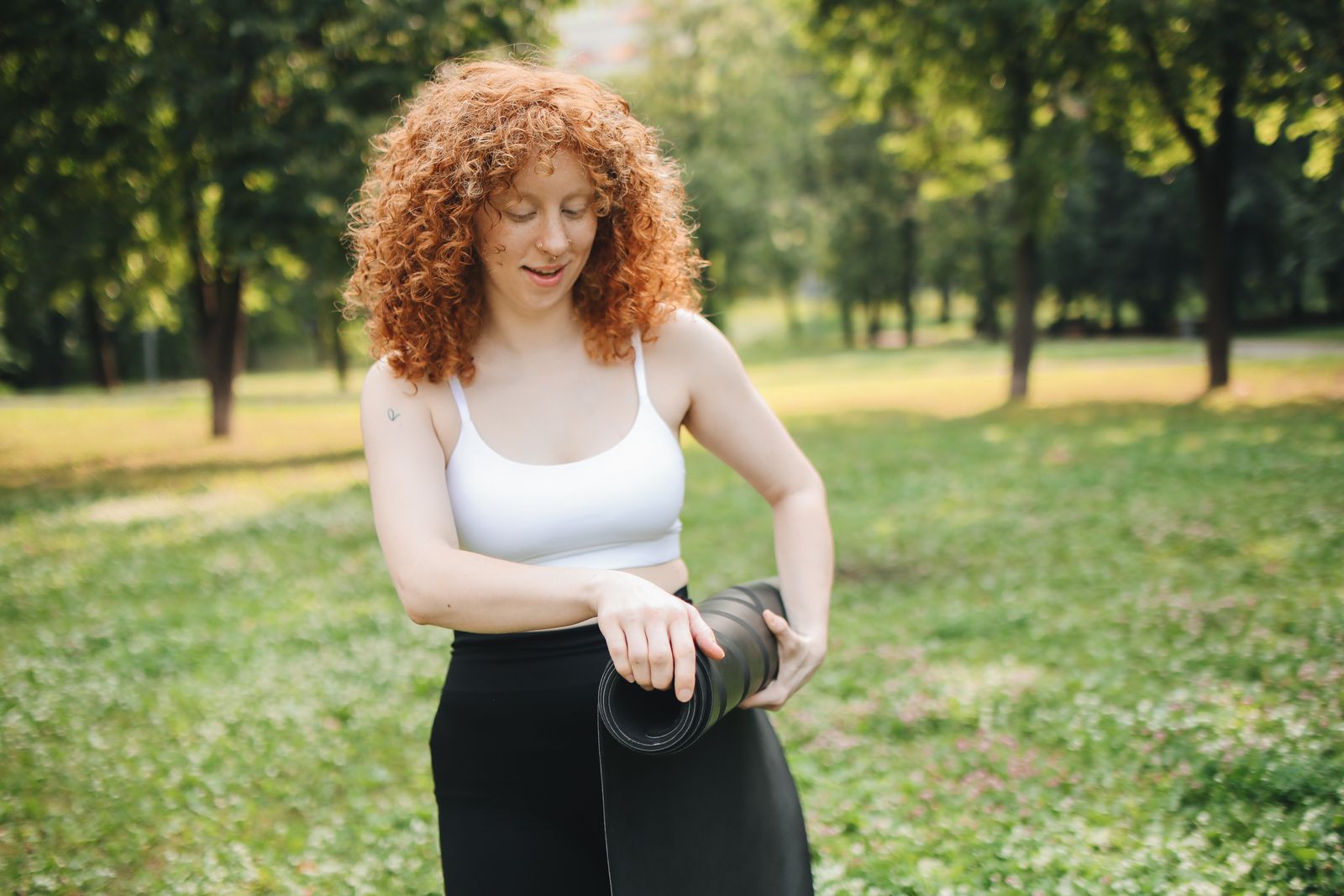
Major physical or emotional stress can push many hair follicles into their resting phase at once, and the extra shedding appears about two to three months later. Yoga cannot remove life stress, but slow breathing, gentle movement and a fixed wind-down time can lower your day-to-day tension and support better sleep.
If your hairfall began a few months after exams, a job change, a bereavement or a rough illness, stress is a reasonable suspect, and a calm daily practice is a sensible thing to add. Our guide to yoga for anxiety covers the breathing and slow-movement side in more depth.
A gentle 25-minute sequence, pose by pose
This routine avoids shoulder stand and headstand on purpose. Those poses load the neck, carry the most risk, and are not needed for the calming effect that matters here. If you are brand new, start with our guide to yoga for beginners and keep the holds short.
| Step | Pose or practice | How long | Form cue | Skip or modify if |
|---|---|---|---|---|
| 1 | Neck and shoulder rolls | About 2 min | Move slowly, jaw soft, shoulders away from ears | You have an acute neck injury |
| 2 | Cat-cow | 8 to 10 slow rounds | Move with your breath, not faster than it | Wrist pain: rest on fists or forearms |
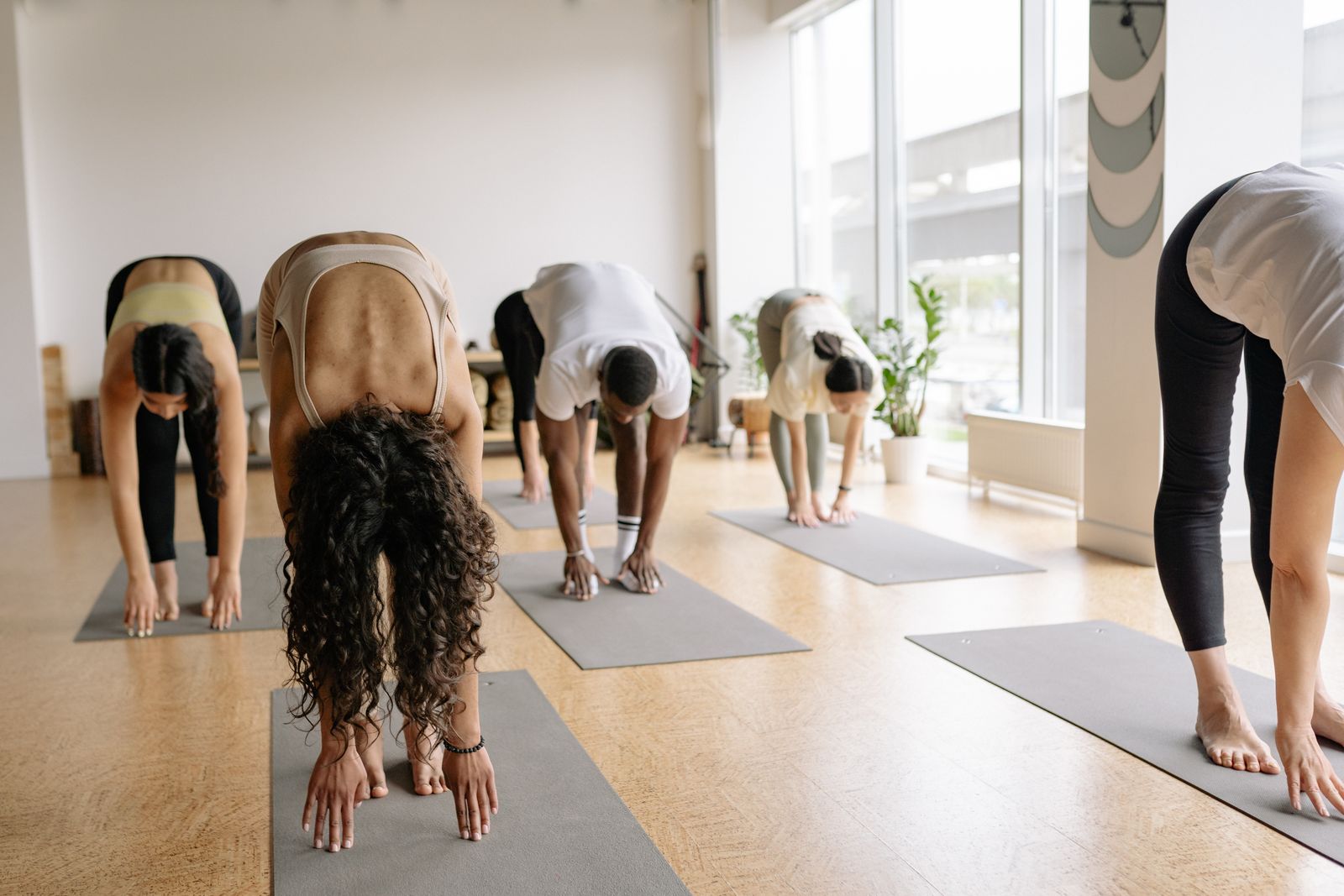
| 3 | Uttanasana (standing forward bend) | 5 to 8 breaths, twice | Bend your knees, let the head hang, weight in the middle of the feet | You have glaucoma, uncontrolled high blood pressure or dizziness: use a half fold with the head at or above heart level |
| 4 | Adho Mukha Svanasana (downward dog) | 5 to 8 breaths, 2 to 3 times | Press the floor away, keep the spine long, heels may stay lifted | Same cautions as step 3, or wrist or shoulder pain |
| 5 | Balasana (child’s pose) | 1 to 2 min | Rest the forehead on a cushion, breathe into the back ribs | Knee pain, or late pregnancy: keep knees wide |
| 6 | Viparita Karani (legs up the wall) | 3 to 5 min | Hips a few cm from the wall, a folded blanket under the lower back | You have glaucoma, uncontrolled high blood pressure or heart disease, or have been told to avoid inversions |
| 7 | Anulom Vilom (alternate nostril breathing) | 3 to 5 min | Equal, soft inhale and exhale. Do not hold the breath | Blocked nose: breathe normally instead |
| 8 | Bhramari (humming bee breath) | 5 to 6 rounds | Low, smooth hum, face relaxed, no pressure on the ears | You have an ear infection or pain |
| 9 | Savasana | About 5 min | Let the breath go back to normal, cover up if you feel cold | Lying flat is uncomfortable: use a bolster |
Practise four to five days a week, ideally at the same time. Mornings on a light stomach suit the forward bends. A short vinyasa yoga flow before this sequence is fine too. You can also explore types of yoga to find a style you will actually keep doing, and yoga at home has tips on setting up a space.
Why Kapalbhati is not in the routine
Kapalbhati, the rapid forceful exhale, is often marketed for hair. It is a strong practice and not a beginner one. It should be avoided in pregnancy, with high blood pressure, heart conditions, hernia, or after recent abdominal surgery, and it should never be done through dizziness. Gentle alternate nostril breathing and humming are the safer start.
Who should avoid these poses, and when should you see a doctor?
Skip inversions and forward bends with the head below the heart if you have glaucoma, uncontrolled high blood pressure, a recent eye or neck injury, vertigo, or a heart condition, unless your doctor has cleared them. Skip forceful breathing in pregnancy, with high blood pressure, hernia or after abdominal surgery. If unsure, ask your doctor before starting.
- Pregnancy: avoid inversions and forceful breathing; use only practices your doctor and a qualified teacher approve.
- Menstruation: many teachers advise skipping inverted poses on heavy days.
- Eye conditions, retinal problems or recent eye surgery: avoid head-down positions.
- Neck, spine or shoulder injury: avoid weight on the neck and any pose that causes pain or tingling.
- Uncontrolled blood pressure or heart disease: get medical clearance and avoid breath-holding and forceful breathing.
See your doctor first if any of this applies to you. Book an appointment with a doctor or dermatologist if your hair is falling in clumps, you notice sudden or patchy bald spots, your scalp is itchy, red or scaly, your parting is visibly widening, or shedding has continued for more than two to three months. See them sooner if hairfall comes with tiredness, feeling unusually cold, weight change, irregular periods or breathlessness. Never stop or change any prescribed medicine or treatment because of yoga, and do not start supplements on your own.
What should you get checked before blaming stress?
Persistent hairfall deserves a proper look at common medical causes before stress is blamed. Doctors often check haemoglobin and iron stores, thyroid function, vitamin D and vitamin B12, depending on your symptoms and diet. Treatment decisions belong to your doctor, not to a yoga routine or a social media tip.
| What you notice | Possible non-yoga cause | Who to see |
|---|---|---|
| Sudden heavy shedding 2 to 3 months after fever, surgery, childbirth, crash dieting or a big shock | Temporary stress-type shedding | A doctor or dermatologist to confirm. It often settles over months once the trigger passes |
| Slow thinning, wider parting, receding temples or crown, with a family history | Genetic pattern hair loss | A dermatologist, because treatment is medical |
| Shedding with tiredness, feeling cold, weight change or irregular periods | Thyroid or hormonal issue | A doctor for blood tests. See also yoga for thyroid for gentle supportive practice |
| Shedding with fatigue, breathlessness, heavy periods or a very limited diet | Low iron, B12 or vitamin D | A doctor for tests, and a registered dietitian for food planning |
| Round bald patches, or an itchy, scaly scalp | Patchy hair loss or a scalp infection | A dermatologist soon |
Eating for hair: what matters alongside yoga
Hair is mostly protein, so regular protein at each meal matters more than any single “hair food”. In an Indian diet that means dal, curd, paneer, eggs, fish or chicken if you eat them, sprouts, soy and chana, with leafy greens, nuts and seeds alongside.
Very low-calorie dieting is a classic trigger for shedding, so if you are trying to lose weight, keep the pace gentle. Our piece on yoga for weight loss explains how to do that sensibly. If your diet is restricted, vegetarian with little variety, or you suspect a deficiency, a one-to-one plan from an online nutritionist consultation is more useful than guessing.
Troubleshooting: why is hair still falling after weeks of yoga?
If hairfall continues after four to six weeks of regular yoga, that is not a sign you are doing it wrong. Shedding runs on a delay of months, and yoga only addresses stress. Check sleep, diet and iron or thyroid status, and see a doctor if shedding has lasted beyond two to three months or is getting worse.
- Nothing has changed yet: hair grows roughly 1 cm a month, so any change takes months to be visible. Compare monthly photos of your parting rather than counting hairs daily.
- You are doing it irregularly: one long session a week does less than short daily practice. Four to five days a week is a realistic target.
- Your hair care is harsh: daily heat styling, tight ponytails and aggressive towel drying cause breakage that looks like hairfall. Use a gentle shampoo and loose styles.
- The cause is medical: persistent or patchy loss needs a test, not more poses.
Yoga for hairfall in real life: students, professionals and new mothers
Students and professionals: a five-minute routine of Balasana, Anulom Vilom and Bhramari between study or work blocks is more realistic than a full hour.
New mothers: shedding a few months after delivery is very common and usually temporary, but get your iron and thyroid checked if it is heavy. Wait for your doctor’s clearance before starting yoga after childbirth, and begin with breathing and gentle stretches.
Men with a receding hairline: if there is a family pattern, yoga will not change the outcome. Use yoga for stress and sleep, and see a dermatologist early. If skin is also a concern, yoga for glowing skin and yoga for uneven skin tone cover related routines, with the same honest limits.
How long before you notice any difference?
Expect a minimum of two to three months of regular practice before judging, and often longer. Hair grows roughly 1 cm a month and shedding runs on a delay, so any improvement shows up slowly, usually as less hair on the pillow or in the drain. There is no guaranteed timeline, and results vary with the underlying cause.
Frequently asked questions
Can yoga stop hairfall completely?
No. Yoga may help with stress-related shedding by supporting calmer routines and better sleep, but it cannot stop genetic hair loss or fix medical causes like low iron or thyroid problems. Some daily hairfall is normal, and a doctor should check persistent or heavy shedding.
Does headstand or shoulder stand help hair growth?
There is no good proof that headstand or shoulder stand regrows hair. Both load the neck and carry real risk, especially for beginners and for people with eye, blood pressure or neck problems. A gentler option such as legs up the wall gives a calming effect with far less strain.
How many days a week should I practise yoga for hairfall?
Four to five days a week, for 20 to 30 minutes, is a realistic target that you can keep up. Regular short practice does more for stress and sleep than one long weekly session. Keep it going for at least two to three months before judging results.
Is yoga enough if my hairfall is genetic?
No. Pattern hair loss is driven by genes and hormones, and yoga does not change that. It can still help you manage stress and sleep, but you should discuss medical options with a dermatologist rather than relying on yoga alone.
Which blood tests should I ask about for hairfall?
Your doctor decides, based on your symptoms and diet. Commonly discussed checks include haemoglobin and iron stores, thyroid function, vitamin D and vitamin B12. Do not start iron or other supplements on your own, and never change prescribed medicines without your doctor.
Want a routine that suits your body and keeps inversions safe? Book a session with FitStrot’s online yoga classes and tell your instructor about any health conditions on day one.


