

If you want yoga for flat tummy results, here is the honest version: yoga firms the muscles that hold your stomach in, improves posture and calms bloating, but it cannot pull fat from one spot. Done four to six days a week for 20 to 30 minutes, alongside sensible eating, it can make your midsection look and feel tighter. This guide gives you the poses, a timed sequence, a weekly plan and clear safety limits.
Can yoga really give you a flatter tummy?
Yes, partly. Yoga firms the abdominal muscles, improves posture and eases bloating, so the stomach often looks flatter within two to four weeks. It cannot burn fat from the belly alone. Visible fat loss needs an overall calorie deficit, usually about 0.25 to 0.5 kg a week, and takes roughly eight weeks or more to show.
Spot reduction does not exist: your body decides where fat comes off, mostly by genetics, not by which muscle you just worked. What yoga does well is threefold. It strengthens the deep abdominal wall, it burns some calories (more in flowing styles such as Vinyasa yoga), and it targets two quiet causes of a puffy belly, which are stress and poor digestion. If you are new to all this, start with yoga for beginners, and see the benefits of yoga for the wider picture beyond the waistline.
Flat tummy yoga poses: what each one trains and how to hold it
Choose poses that either load the abdominal muscles, gently compress the digestive area, or both. Move slowly, breathe continuously and stop if you feel pinching in the back or neck.
| Pose | Main target | Hold | Form cue |
|---|---|---|---|
| Boat Pose (Navasana) | Rectus abdominis, hip flexors | 20-30 sec | Chest lifted, spine long; bend the knees if the back rounds |
| Plank (Phalakasana) | Transverse abdominis (deep core) | 20-40 sec | Straight line head to heels; no sagging or piking hips |
| Side Plank (Vasisthasana) | Obliques, waist sides | 15-30 sec each side | Stack the hips; drop the lower knee to modify |
| Bow Pose (Dhanurasana) | Back chain, front-body stretch | 10-20 sec | Lift chest and thighs together; skip if the lower back complains |
| Wind-Relieving Pose (Pawanmuktasana) | Lower abdomen, trapped gas | 30-60 sec | Hug the knees in, relax the shoulders, breathe slowly |
| Cat-Cow (Marjaryasana-Bitilasana) | Abdominal wall, spine warm-up | 8-10 breaths | Move with the breath, not faster than it |
| Seated Twist (Ardha Matsyendrasana) | Obliques, spinal mobility | 20-30 sec each side | Lengthen first, then rotate; never force the twist |

Boat Pose is the classic yoga pose for belly fat conversations because it holds your whole upper body against gravity; our guide to yoga for core strength goes deeper on progressions. If Boat or Bow leaves your lower back sore, check yoga for back pain before repeating them.
A 20-minute yoga for a flat stomach at home, minute by minute
A fixed routine removes the daily question of what to do. You need a mat and a clear patch of floor. Do this five or six days a week, at least two to three hours after a meal, and keep one lighter day for stretching.
| Minutes | Block | What to do |
|---|---|---|
| 0-3 | Warm-up | Cat-Cow for 8-10 breaths, then gentle side stretches |
| 3-6 | Heart-rate raiser | 2-3 rounds of Surya Namaskar (Sun Salutation) at an easy pace |
| 6-11 | Core holds | Boat Pose and Plank, alternating, 3 rounds of about 30 seconds each |
| 11-14 | Obliques | Side Plank, both sides, 2 rounds with the knee down if needed |
| 14-16 | Back-body balance | Bow Pose, 2 short holds, resting in Child’s Pose between them |
| 16-18 | Twists | Seated twist, both sides, plus a lying supine twist |
| 18-20 | Cool-down | Wind-Relieving Pose, then slow belly breathing |
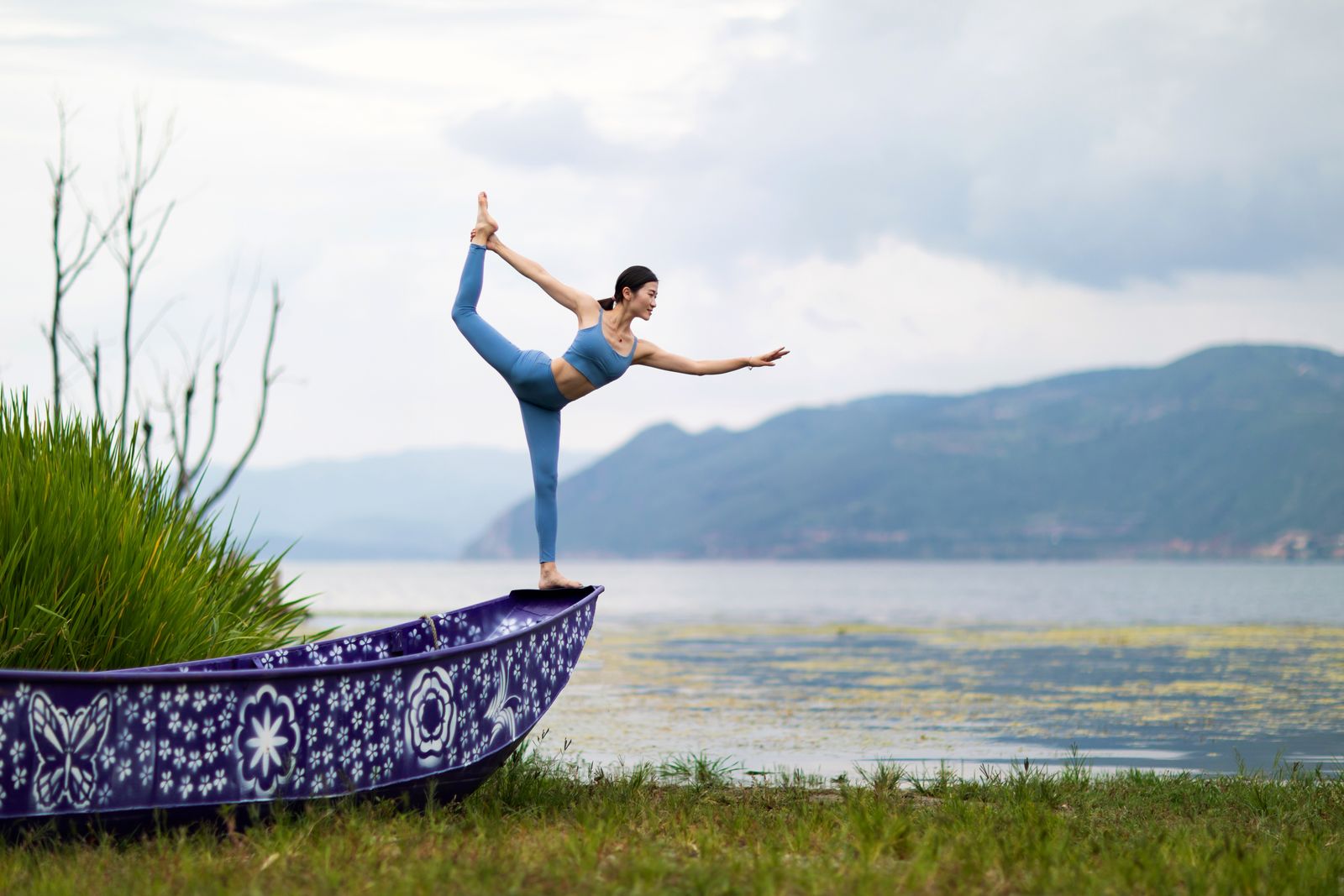
Thirty minutes of moderate yoga burns roughly 100 to 200 kcal depending on style and body weight, so treat the calories as a bonus, not the main event. The main events are core endurance and consistency.
Is there a 7 day yoga plan for a flat stomach?
Yes, but a week builds a habit, not a new body. In seven days of regular practice you can expect less bloating, a taller posture and a core that feels more switched on. Real changes in belly fat take about four to eight weeks of consistent practice plus steady eating habits.
| Day | Focus | Time | Effort |
|---|---|---|---|
| Day 1 | Core basics: Boat, Plank, Cat-Cow | 20 min | Moderate |
| Day 2 | Twists and side body | 20 min | Moderate |
| Day 3 | Digestion day: Wind-Relieving, Child’s Pose, supine twist | 15 min | Gentle |
| Day 4 | Core basics again, slightly longer holds | 20-25 min | Moderate |
| Day 5 | Add Side Plank and Bow Pose | 25 min | Moderate to firm |
| Day 6 | Full 20-minute flow from above | 20-30 min | Firm |
| Day 7 | Stretching and slow breathing | 10-15 min | Easy |
Repeat the week for a month and add a faster flowing session or a brisk walk on one or two days. That mix of static strength and movement covers more ground than holds alone. For a wider calorie-burning plan, see yoga for weight loss.
Myth check: do twists and core poses burn fat from your stomach?
No. Twisting poses and core holds strengthen the muscles under the fat, but they do not remove fat from that area. A firmer core makes the waistline look more defined once overall body fat comes down, and twists support spinal mobility and digestion, but the fat itself leaves through an overall calorie deficit.
That is good news in one way: you do not need to chase the perfect “belly burning” pose. Oblique work such as Side Plank and twists is useful for waist shape, and our guide to yoga for love handles adds more waist-focused options. If your goal is a larger weight reduction under medical guidance, yoga for obesity covers a gentler, steadier approach.
Where do Kapalbhati and Uddiyana Bandha fit, and when should you skip them?
Kapalbhati and Uddiyana Bandha train the deep abdominal wall through forceful or held breathing, so people search for kapalbhati for belly fat. They can tone the area, but they are advanced, should be learned from a qualified teacher, and should be skipped by anyone pregnant, with high blood pressure, a hernia, ulcers or recent abdominal surgery.
Kapalbhati uses short, sharp exhales through the nose with the navel drawn in; Uddiyana Bandha draws the belly up and in after a full exhale, held on an empty stomach. Both reduce the benefit and can cause dizziness when forced. If you are unsure, or if any condition on the avoid list below applies, replace them with slow diaphragmatic breathing: inhale so the belly softens outward, exhale so it gently draws in. It is safe for nearly everyone and still trains the deep core to engage.
Stress, sleep and food: the habits that decide how flat your tummy looks
Yoga poses alone rarely flatten a tummy because food and lifestyle drive most of the visible change. Aim for 7 to 9 hours of sleep, enough water through the day, slower meals, and less salty, fried and packaged food. These habits reduce bloating and overeating, which show up around the waist first.
Chronic stress is commonly linked with cravings for comfort food and with fat storage around the abdomen, so a routine that only pushes hard core work and ignores recovery works against itself. Close sessions with five to ten minutes of restorative yoga or seated breathing, and explore yoga for stress for more calming sequences.
On the plate, think Indian and simple: roti or rice in sensible portions, a dal or paneer or egg at every meal, one or two vegetable servings, curd for gut comfort, and fewer namkeen, bhujia and sugary chai breaks. Dinner two to three hours before sleep also helps morning bloating. You do not need a crash diet, and extreme calorie cutting backfires by wearing you out and shrinking muscle.
Troubleshooting: why your tummy is not changing
If a few weeks have passed with little change, check these common culprits before you add more poses:
- Only static holds: add a flowing session or brisk walk two to three days a week so your heart rate actually rises.
- Holding your breath: it pushes the belly outward under pressure; keep breathing steadily in every hold.
- Front-only ab work: neglecting the back and sides creates imbalance and poor posture.
- Waiting for spot reduction: judge progress by how clothes fit and how you feel, not by one pose.
- Stop-start practice: short, regular sessions beat one long weekend session every time.
- Bloating mistaken for fat: a belly that is flat in the morning and round by evening is often gas or water, so try the gentler poses in our guide to yoga for bloating.
Posture matters too. A slumped upper body pushes the belly forward and down even in lean people, so standing taller with a lightly engaged core can change the profile within days, long before body fat changes.
Yoga for a flat tummy: beginners, desk workers and new mothers
Beginners: bend the knees in Boat Pose, keep the knees down in Plank and Side Plank, and shorten holds to 10 to 15 seconds. Add time each week, not each day.
Desk workers: long sitting weakens the core and tightens the hips, so add two short movement breaks through the workday, stand up and twist gently, and finish the day with Wind-Relieving Pose and Cat-Cow.
After pregnancy: return slowly and only once your doctor says you can. Start with breathing, Cat-Cow and gentle pelvic floor awareness, and build to harder poses over several weeks. If you notice a gap or doming along the middle of your belly when you lift your head, stop core work and ask a doctor or physiotherapist to check for diastasis recti first.
Who should avoid or modify these poses, and when to see a doctor
Yoga here is a supportive fitness practice, not a treatment for any medical condition. Please skip or modify the poses above if any of these apply:
- You are pregnant, or within the first weeks after delivery or a C-section.
- You have had recent abdominal, spinal or hernia surgery, or have a known hernia.
- You have diastasis recti, or notice doming or a gap along the midline of the belly.
- You have high blood pressure, heart disease, glaucoma or a hiatus hernia, which matters most for breath-holding and forceful breathing.
- You have a disc problem, sciatica or ongoing back pain; avoid Boat and Bow Poses until cleared.
- You have stomach ulcers, severe acid reflux or any other condition affecting digestion.
See your doctor or a registered dietitian if your belly is swollen, hard or painful; the bloating is persistent and not linked to meals; you have unexplained weight gain or weight loss; you notice blood in stools, ongoing vomiting or changes in your bowel habits; or you have a diagnosed condition such as thyroid disease, PCOS or diabetes. A stomach that will not flatten can have medical causes, and please never change or stop any medication because of a yoga routine. Stop any pose that causes sharp pain, dizziness, shortness of breath or chest discomfort, and get checked.
Frequently asked questions
Can yoga alone give you a flat stomach without dieting?
Yoga can improve core tone, posture and bloating without diet changes, which often makes the stomach look flatter. Meaningful fat loss around the midsection still needs a calorie deficit, so pairing yoga with reasonable eating gives faster, more complete results than yoga by itself.
How many days a week should I do yoga for a flat tummy?
Four to six days a week for 20 to 30 minutes is a good balance of results and recovery. Short daily sessions of 15 to 20 minutes usually beat one long weekly session, because consistency drives both the toning and the stress-reduction benefits.
Which yoga pose is best for belly fat?
Boat Pose is the most commonly recommended single pose because it keeps the abdominal muscles under sustained tension. No single pose outperforms a mixed routine of core holds, twists and breathing, since belly fat responds to overall consistency rather than one movement.
Can yoga give a flat tummy in 7 days?
A week of regular practice can reduce bloating and improve posture, which makes the stomach look flatter quickly. Real fat loss is slower, usually four to eight weeks, so treat a flat tummy in 7 days as a tone and bloating change, not a fat-loss guarantee.
Is core yoga safe after pregnancy or for beginners?
Beginners can start safely with modified poses, shorter holds and steady breathing. After pregnancy, wait for your doctor’s clearance, begin with gentle breathing and easy poses, and check for diastasis recti before harder moves such as full Boat Pose or Kapalbhati.
Next step: if you would like live feedback on alignment and pacing, book a session in FitStrot’s online yoga classes and build a routine around your current fitness level.


