

Done well, yoga for fatty liver is a supportive daily habit, not a treatment. Gentle movement and slow breathing help you stay active, manage stress and stick to the food and weight plan your doctor has given you. This guide gives a 20-minute home sequence, shows who should skip or modify it, and lists the symptoms that mean you should see a doctor first.
Is Yoga Good for Fatty Liver, and What Can It Realistically Do?
Yoga is a reasonable, low-impact activity for many adults with fatty liver, but it supports the main plan rather than replacing it. It can add regular movement, calm your stress response and make daily routines easier to follow. Food choices, body weight and medical follow-up remain the main levers.
Fatty liver means extra fat is stored in liver cells. It is usually linked to excess body weight, a sedentary routine, blood sugar and cholesterol problems, and in some people alcohol. Doctors generally treat it with food changes, weight management and more physical activity, and they track it with scans and blood tests. Yoga earns its place in the activity part of that plan, particularly for people who find gym workouts or running hard to stick with.
What yoga genuinely offers is practical. It gets you moving on days when you would otherwise sit, and it is easy on the joints. Slow breathing can take the edge off stress, which often drives late-night snacking and poor sleep.

Myth Check: What Yoga Will Not Do for Your Liver
A lot of online advice about fatty liver yoga promises more than any exercise can deliver. Keep your expectations honest, because disappointment is the main reason people quit.
- “Twisting poses wring out the liver.” Twists move your spine and tone your trunk muscles. They do not squeeze toxins out of an organ, and the liver does not need to be flushed.
- “Yoga detoxes the liver.” Your liver does its own processing. No pose, breath or drink speeds that up, and the word detox here is marketing, not medicine.
- “Do this routine and your reports will be normal.” Nobody can promise what your scan or blood tests will show. Changes depend on food, weight, alcohol, medicines and other health conditions.
- “More intense is better.” Forceful breathing and deep abdominal compression are not a shortcut. For most people with fatty liver, gentle and regular beats dramatic and occasional.
- “Yoga lets me skip the doctor.” It does not. Follow-up visits are how anyone finds out whether the liver is actually improving.
Fatty Liver Yoga Asanas: A 20-Minute Sequence at a Glance
This sequence uses gentle yoga poses for fatty liver that are suitable for most beginners. Move slowly, breathe through the nose, and stay in the comfortable range of every pose. A breath here means one full inhale and exhale.
| Pose | Hold or reps | Form cue | Skip or modify if |
|---|---|---|---|
| Tadasana (mountain pose) | 5 slow breaths | Feet hip-width apart, tall spine, shoulders relaxed | Dizzy on standing: do it near a wall |
| Marjariasana (cat-cow) | 8 to 10 slow rounds | Match the movement to your breath, keep the neck long | Wrist pain: use fists or do it seated |
| Bhujangasana (half cobra) | 3 rounds of 5 breaths | Elbows bent, low-back long, lift only as far as comfortable | Back pain or abdominal tenderness: skip |
| Pavanmuktasana (knee to chest) | 5 breaths each leg | Hug one knee at a time, keep your head down | Recent abdominal surgery or hernia: skip |
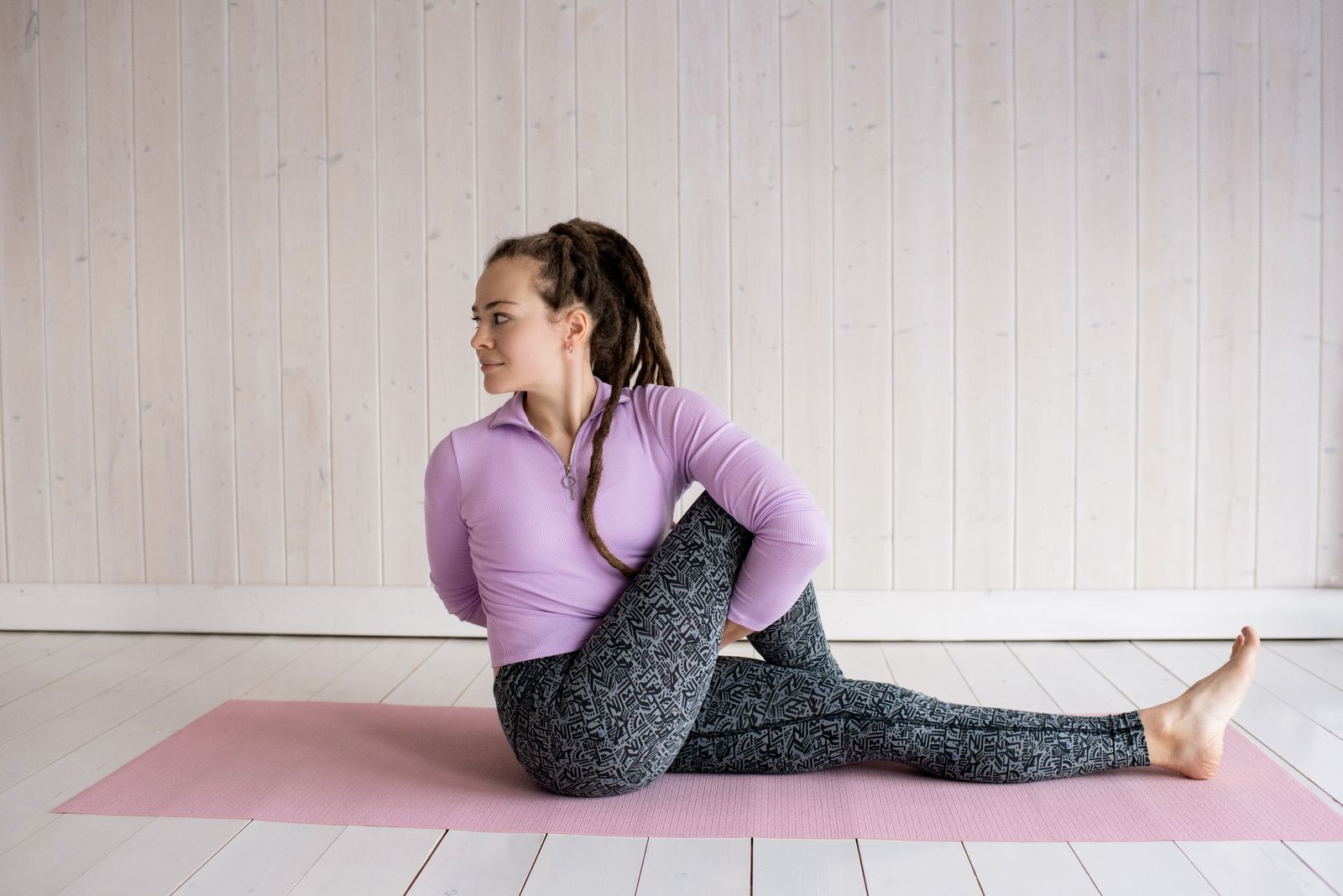
| Ardha matsyendrasana (mild seated twist) | 5 breaths each side | Sit tall first, then twist from the upper back, never force | Abdominal discomfort: keep the twist very small |
| Setu bandhasana (bridge) | 3 rounds of 5 breaths | Press through the feet, keep knees parallel | Neck problems or high blood pressure: ask your doctor |
| Vajrasana (diamond sit) | 1 to 3 minutes | Sit on the heels, straight back, relaxed hands | Knee or ankle pain: sit cross-legged |
| Shavasana (relaxation) | 3 to 5 minutes | Lie flat, let the breath settle on its own | Rarely needs changing; use a pillow under the knees if the back is sore |
Practise on an empty or light stomach, roughly two to three hours after a main meal. Early morning, before breakfast, suits many people in India, but any quiet slot works as long as you are not full.
How Do You Build Up a Home Routine Step by Step?
Start with 10 to 12 minutes, three days a week, and add time slowly over four weeks. A gradual build lowers the risk of soreness and dropout. If you are doing yoga for fatty liver grade 1 at home, treat the table below as an example and stay below any limit your doctor has set.
| Week | Days | Session length | What to include |
|---|---|---|---|
| Week 1 | 3 days | 10 to 12 minutes | Mountain pose, cat-cow, knee to chest, shavasana, 3 minutes of slow breathing |
| Week 2 | 4 days | About 15 minutes | Add half cobra and diamond sit |
| Week 3 | 5 days | About 20 minutes | Add the mild seated twist and bridge |
| Week 4 | 5 to 6 days | About 20 minutes | Full sequence, with a gentle walk on non-yoga days if your doctor agrees |
Lay the mat out the night before, pair the session with something you already do, such as morning tea, and track the days you completed rather than how deep the poses felt. For guidance on pace and form, a live online yoga class lets a teacher adjust you in real time.
Which Breathing Practice Is Safest for People With Fatty Liver?
Slow, relaxed breathing such as belly breathing or anulom vilom is the safer choice. Spend 5 to 10 minutes on it after your poses. Forceful techniques like kapalbhati squeeze the abdomen hard and are better avoided unless a doctor and a qualified teacher have both approved them for you.
Pranayama for fatty liver does not need to be dramatic. Try this simple pattern. Sit comfortably, rest a hand on your belly, breathe in through the nose for a count of four, and breathe out for a count of six. Repeat for two to three minutes, then move to anulom vilom for another few minutes. The longer exhale tends to settle the body, and that is the real benefit: calmer evenings, steadier sleep and fewer stress-driven food choices. Our general guide to pranayama explains the other techniques and their cautions.
If you feel lightheaded, stop and breathe normally. Never hold your breath hard, and never push through chest tightness.
Troubleshooting: Common Problems and What to Change
- Dizziness when standing up or in poses. Move slower, shorten holds, and keep a wall or chair nearby. If it repeats, tell your doctor.
- Lower-back ache after cobra or bridge. Reduce how high you lift, or swap in cat-cow and knee-to-chest only for a week.
- Discomfort in the upper right abdomen. Do not push through. Stop the abdominal and twisting poses, and mention it to your doctor, especially if it persists.
- Breathlessness. Your pace is too fast. Cut the session in half and rebuild gradually, and see a doctor if breathlessness comes with minimal effort.
- Nothing seems to be changing. That is normal. Yoga rarely produces visible change on its own, and changes in the liver are measured by tests, not by how you feel. Review food, sleep and weight habits with a professional.
- You keep skipping days. Shorten the session to 8 minutes rather than skipping it.
Who Should Avoid or Modify Yoga for Fatty Liver?
People with warning symptoms, advanced liver disease, regular alcohol use, a hernia, recent abdominal surgery, uncontrolled blood pressure or pregnancy should not start this routine without medical clearance. Others can usually practise with modifications. Get your doctor’s approval first, and tell your teacher about your diagnosis.
- Anyone with yellow eyes or skin, dark urine, swollen legs or belly, or unexplained weight change.
- People with cirrhosis, known liver scarring, portal hypertension or any advanced liver condition.
- Anyone who drinks alcohol regularly or heavily. Yoga is not a substitute for cutting down, and your doctor needs to know.
- People with a hernia, recent abdominal surgery, or ongoing abdominal pain.
- Those with uncontrolled high blood pressure, heart disease, or dizziness and fainting episodes.
- People who are pregnant. A dedicated prenatal yoga class is the better route.
- Anyone on several medicines or with diabetes, since exercise can change how you feel and how blood sugar behaves. Ask your doctor about timing.
See Your Doctor First If You Notice Any of These
Get medical advice before starting, or stop and get checked, if you have:
- Yellowing of the eyes or skin (jaundice).
- Swelling or fluid in the abdomen, or swollen ankles and legs.
- Persistent pain, especially in the upper right abdomen, or pain that wakes you at night.
- Regular alcohol use. Be honest with your doctor about how much, because it changes the advice.
- Vomiting blood, black stools, extreme tiredness, or confusion. Treat these as emergencies.
Do not change or stop any medicine because of a yoga routine. If your doctor or registered dietitian has set limits on exercise, follow those over anything in this article.
How Does Yoga Fit Alongside Food, Weight and Check-Ups?
Yoga fits as the activity piece, next to food, weight management, sleep and medical follow-up. It cannot do the work of the other pieces. Think of the table as a division of labour, not a ranking, and let your doctor set priorities for your case.
| Part of the plan | What it covers | Where yoga helps | Where to read more |
|---|---|---|---|
| Food pattern | Less sugar, fried food and refined flour; more vegetables, dal and whole grains | Little directly; routine can support mindful eating | Food side of fatty liver care, yogic diet |
| Body weight | Gradual, sustainable weight management guided by a professional | Adds regular, low-impact movement | Yoga for weight loss |
| Other movement | Walking, cycling, light strength work | Complements it; do not replace it | Power yoga once you are fitter and cleared |
| Stress and sleep | Fixed bedtime, wind-down habits, manageable workload | Slow breathing and relaxation support an evening routine | Pranayama basics |
| Medical follow-up | Scans, blood tests, medicines, alcohol review | None. Yoga cannot replace this | Your doctor or hepatologist |
Fatty liver often comes with other digestive complaints. Related routines such as yoga for digestion, yoga for constipation, yoga for acidity and yoga for gas use many of the same gentle poses, so you can borrow from them. For personalised meal guidance, ask your doctor for a referral to a registered dietitian rather than copying a generic chart.
How Often Should You Practise, and How Will You Know It Is Helping?
Practise 3 to 6 days a week for 10 to 20 minutes, building up gradually. You will notice softer changes first, such as easier movement or better sleep. Whether the liver is improving can only be confirmed through the tests your doctor orders, usually at intervals they decide.
Judge the routine by what you control: sessions completed, hours slept, and whether you are eating the way your plan says. Leave the liver verdict to your reports. If follow-up shows no improvement, do not push yoga harder. Go back to your doctor and review food, weight, alcohol and medicines.
Questions People Ask About Yoga for Fatty Liver
Can yoga cure fatty liver?
No. Yoga does not cure fatty liver and it is not a treatment for it. It is a supportive activity that helps you stay consistently active and manage stress, alongside the food changes, weight management and medical follow-up your doctor recommends.
Which yoga poses are safe for fatty liver?
Gentle, low-pressure poses are the usual starting point: mountain pose, cat-cow, half cobra, knee-to-chest, a mild seated twist, a supported bridge and relaxation. Skip deep twists, forceful abdominal work and long inversions unless your doctor and a qualified teacher have cleared them for you.
Is kapalbhati good for fatty liver?
Kapalbhati is a forceful breath that squeezes the abdomen, and it is not a sensible first choice here. Slow breathing such as anulom vilom or simple belly breathing is gentler. Anyone with abdominal discomfort, high blood pressure, a hernia or recent surgery should avoid kapalbhati.
Can I practise yoga for fatty liver grade 1 at home?
Yes, most people with grade 1 fatty liver and no warning symptoms can start a gentle home routine of 10 to 20 minutes, after checking with their doctor. Begin with three days a week, keep every pose comfortable, and stop if you feel pain, dizziness or breathlessness.
How long before I notice a difference from yoga for fatty liver?
Many people notice easier movement, better sleep or lower stress within a few weeks, but that is not a measure of liver health. Whether the liver itself is improving can only be judged through the scans and blood tests your doctor orders, so keep those follow-up appointments.
Start With a Teacher Who Knows Your Condition
If you want a gentle routine with someone watching your form, book a live session through Fitstrot’s online yoga classes and tell the instructor about your fatty liver diagnosis before the first class.


