
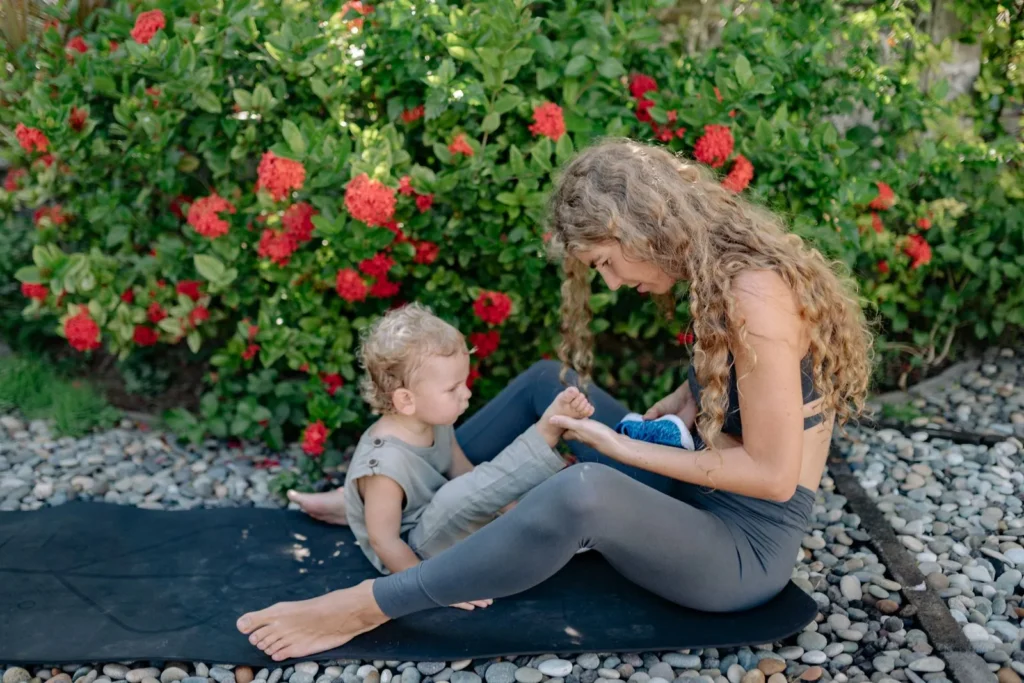
Starting yoga after delivery can be a gentle way to bring your breath, posture and deep core back into working order while your body is still healing. It is not a fitness comeback, and it is not a race. In the early weeks the aim is simple: breathe well, move without pain, and stop the moment something feels wrong. Your start date is whatever your own doctor says after examining you, and it differs between a normal delivery and a C-section. This guide covers when to ask for clearance, which poses are usually gentle, and the warning signs that mean you stop.
When can you start yoga after delivery?
There is no single safe date. You can usually begin yoga after delivery once your doctor or midwife has examined you and cleared you for exercise, and that clearance comes at different times after a normal delivery, a delivery with tears or stitches, and a C-section. Until then, walking and gentle breathing are the usual limit.
Ask for that clearance in person, and be specific. Say you want to start gentle yoga, and ask what you should avoid in your case. Things that change the answer include how you delivered, whether you had stitches or a surgical wound, how much you bled, whether you had a long labour or a complicated birth, and whether your abdominal muscles have separated.
If you practised prenatal yoga or followed yoga during pregnancy routines, do not assume you can pick up where you stopped. Restart as a beginner, even if you were advanced before.
See your doctor first, and stop if any of this happens
Please read this before your first session. Yoga is not a substitute for postnatal medical care. Stop and contact your doctor or midwife if you notice any of the following, before or during your practice:
- Bleeding that becomes heavier, turns bright red again after it had lightened, or comes with large clots.
- Pain that is sharp, getting worse, or in your abdomen, pelvis, or stitches or scar.
- Fever (about 38 degrees C or 100.4 degrees F or above), chills, or a foul-smelling discharge.
- A wound, whether a C-section scar or a tear, that is red, hot, swollen, leaking, or opening.
- Leaking urine or stool, a feeling of heaviness or something bulging in the vagina, or pain during urination.
- Pain, swelling or warmth in one calf or leg, chest pain, or breathlessness. Treat these as urgent and seek emergency care.
- Severe headache, vision changes, or dizziness that does not settle.
- Low mood, constant worry, or feeling numb that lasts more than about two weeks or is getting worse, or any thought of harming yourself or your baby. Tell your doctor or a mental health professional promptly. This is common, it is treatable, and it is not a failure.
Normal delivery vs C-section: what changes
The main difference is what is healing. After a vaginal birth it is mostly the pelvic floor and any tears. After a C-section it is a surgical wound through the abdominal wall plus the same pregnancy changes. The table shows how the early approach differs, but your own surgeon or doctor’s instructions always come first.
| Topic | After normal (vaginal) delivery | After C-section |
|---|---|---|
| Main area healing | Pelvic floor, and any tear or episiotomy stitches | Abdominal incision through several tissue layers |
| Usual early movement | Short walks, belly breathing, gentle pelvic floor awareness | Short walks, belly breathing, very light movement, watching the scar |
| What the doctor checks | Bleeding, stitches, pelvic floor, abdominal separation | Wound healing, abdominal separation, pain level |
| Poses to bring in last | Deep squats, strong core work, impact | Deep forward folds, planks, anything pulling on the lower belly |
| Extra caution | Leaking, heaviness or pain in the pelvis means pause | Pulling, burning or numbness at the scar means pause |
General yoga for women programmes are rarely designed for a body that has just given birth, so check with your doctor and instructor first.
Myth check: yoga is a quick way to get your old body back
This is the most common wrong idea, and it pushes mothers to start too early. Your body spent months changing and needs time to recover. Postnatal yoga is about function: breathing, posture, comfort when carrying your baby, and a steady core. It is not a weight-loss or tummy-flattening programme, and nobody can promise a result or a timeline.
Chasing a flatter stomach is where mistakes happen, because crunches and forceful belly-tightening load a core that is not ready. Measure progress by how you feel instead: less back ache, easier feeding, better sleep, or climbing stairs without strain.
How do you progress postpartum yoga safely?
Progress by how your body responds, not by the calendar. A sensible pattern is to move up a stage only when the current one feels comfortable for several sessions in a row, with no leaking, no doming along the belly line, no pain, and no increase in bleeding. Short sessions of 10 to 15 minutes, three or four days a week, are enough at the start.
| Stage | What you do | Move on when |
|---|---|---|
| 1. Breath and walking | Belly breathing, gentle pelvic floor awareness, short easy walks | Doctor has cleared exercise and breathing feels easy |
| 2. Floor basics | Pelvic tilts, cat-cow, supported child’s pose, legs up the wall | No pain, leaking or belly doming for several sessions |
| 3. Gentle standing and strength | Mountain pose, short supported squats, small bridge lifts, shoulder and chest openers | You can hold the pose and keep breathing evenly |
| 4. Slow flows | Short, slow sequences with rests between rounds | Energy is steady, and your doctor or physio is happy with core and pelvic floor |
Flowing styles such as vinyasa yoga belong at the end of this list. Jumping transitions, long plank holds and deep twists are last to return, and for some mothers that takes many months.
Which postpartum yoga poses are gentle enough to start with?
The usual starting poses are belly breathing, pelvic tilts, cat-cow, a supported child’s pose with knees wide, a small supported bridge, and legs up the wall. They are low-load, keep you close to the floor, and let you stop easily. Move slowly, breathe out on the effort, and keep every range small and comfortable.
| Pose | Why it is useful | Form cue | Pause if |
|---|---|---|---|
| Belly breathing (360 degree breath) | Reconnects deep core and pelvic floor, calms the body | Lie with knees bent, let ribs and belly widen as you inhale, gently draw in as you exhale | You feel dizzy or hold your breath |
| Pelvic tilts | Wakes up the lower belly without strain | Small rock of the pelvis, exhale to flatten the back, no clenching of the bottom | Pulling at the scar or pelvic pain |
| Cat-cow | Eases back and shoulder stiffness from feeding | Hands under shoulders, move slowly with the breath, keep the range small | Belly pushes outwards in a ridge |
| Child’s pose, knees wide | Rests back and hips | Knees wide, a pillow or bolster under the chest, belly free | Pressure on the incision or breasts |
| Small supported bridge | Builds glutes and back of the thighs | Feet hip-width, lift only a little, exhale as you rise | Back pinching or pelvic heaviness |
| Legs up the wall | Restful, can ease tired legs | Hips near the wall or on a folded blanket, arms relaxed | Calf pain, numbness or tingling |
The gentlest of these overlap with restorative yoga, where props do the work and you simply rest. If you are new to yoga altogether, read yoga for beginners first so basic alignment is familiar, and see types of yoga to understand which styles suit a recovering body.
Diastasis recti and pelvic floor: what to watch for
Diastasis recti is a gap between the two halves of the rectus abdominis, the “six-pack” muscle, that commonly appears during pregnancy. In many women it narrows over the following months, but not always. The pelvic floor, the sling of muscle supporting your bladder, uterus and bowel, is also stretched by pregnancy and birth. Both need gentle, gradual loading.
These are the signs that you are doing too much too soon:
- Doming or coning: a ridge or bulge pushing out along the middle of the belly when you sit up, twist or lift your head. Back off the movement.
- Leaking: urine escaping when you cough, sneeze or move. It is common, but it is not something you should simply put up with. Mention it to your doctor.
- Heaviness or dragging in the pelvis, especially later in the day.
- Back or pelvic pain that gets worse after a session.
If any of these appear, step back to an easier stage and ask your doctor about seeing a pelvic floor physiotherapist. A physiotherapist can measure the gap, check how your pelvic floor works, and tell you which exercises help and which to skip. Poses that are usually postponed include full sit-ups and crunches, strong twists, deep backbends such as wheel, and long planks. Avoid holding your breath or squeezing hard, which adds pressure.
Gentle spinal work can also help with the upper back and neck ache that comes from feeding. The ideas in yoga for back pain are a good guide, as long as you cut out deep twists and strong backbends for now.
Can you do yoga with your baby, or online at home?
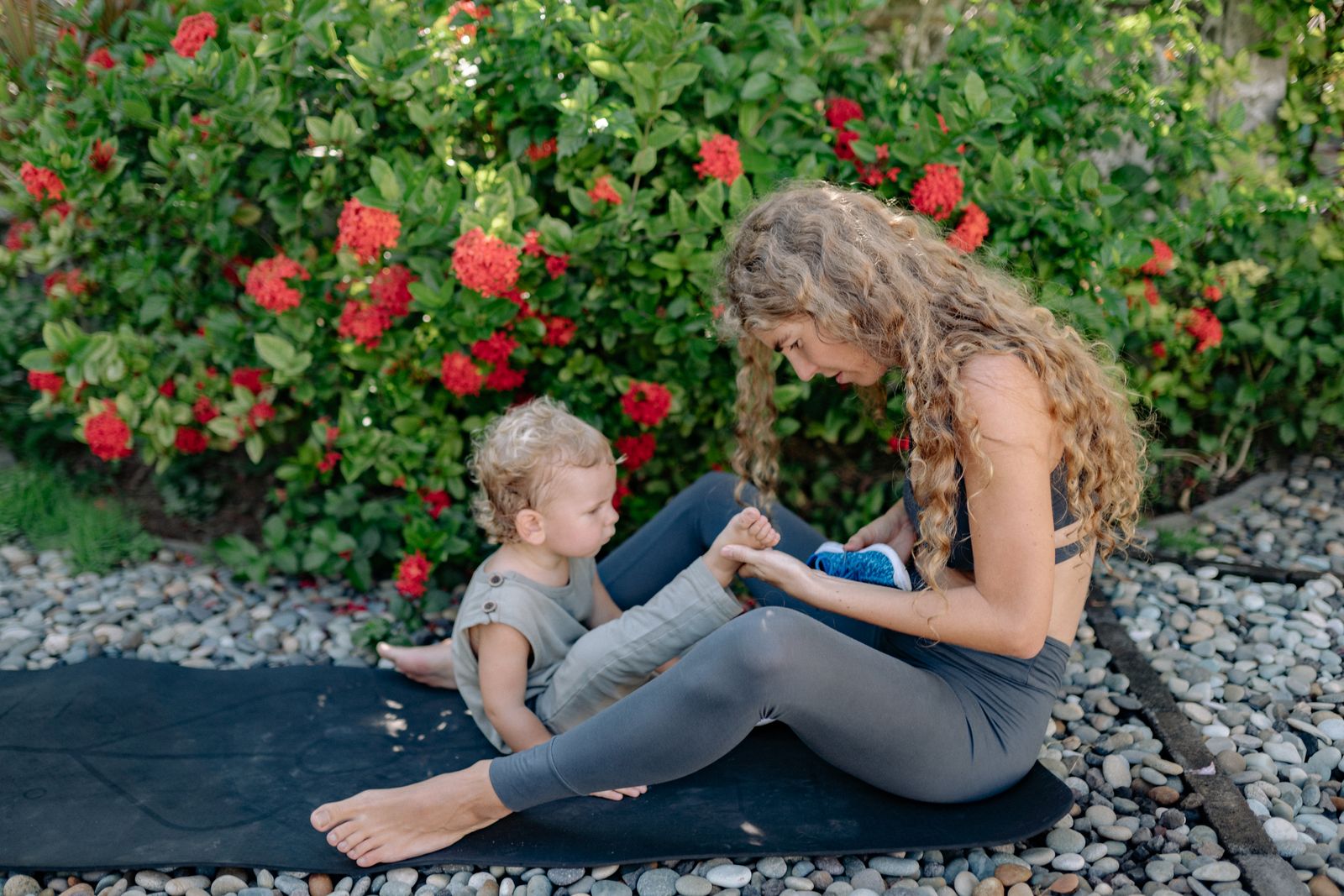
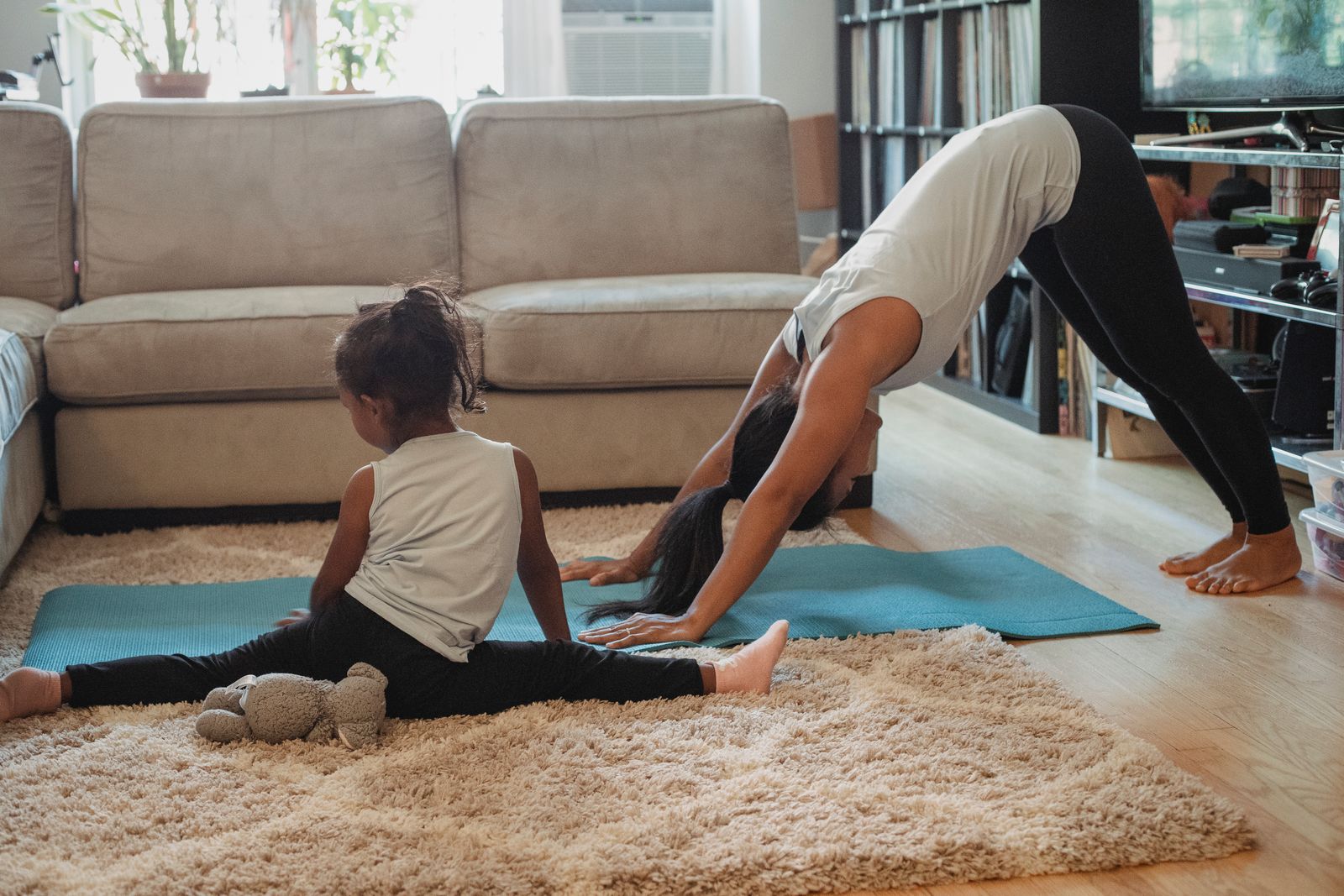
Yes to both. Short sessions at home often fit better than travelling to a studio, because feeds and naps are unpredictable. You can practise while your baby sleeps nearby, lies on a mat watching you, or is held during simple movements. Pick a flat, quiet space and keep the baby on a surface where they cannot roll or fall.
Online classes let you pause when the baby wakes, and a live instructor can adjust poses if you share your delivery type and your doctor’s advice. To see how this works day to day, read online yoga for stress relief.
Troubleshooting: when a session does not go to plan
Most early problems are about pacing, not poses. Use this as a quick guide before you give up:
- You are too tired to do anything. Do three minutes of belly breathing lying down, and call that a session. Sleep matters more than any pose.
- The baby interrupts constantly. Split the session into two or three short blocks across the day.
Yoga for the mind in the early months
Broken sleep and constant feeding are hard on mood. Slow breathing with a longer exhale can help your body settle, and a short quiet session gives you a few minutes that belong to you. Ideas from yoga for mental health and yoga for anxiety fit well here, alongside, never instead of, support from your doctor. Feeling tearful in the first couple of weeks is common, but low mood that lasts or deepens needs professional care.
Frequently asked questions
Is it safe to do yoga immediately after giving birth?
Gentle belly breathing and short walks are usually fine early on, but structured yoga poses should wait until your doctor or midwife has examined you and cleared you. The timing is different after a normal delivery, a delivery with stitches, and a C-section, so follow the advice for your own birth.
When can I start yoga after a C-section?
Wait for your surgeon or doctor to confirm that your scar is healing well and that your abdominal muscles are fit for exercise. A C-section is major abdominal surgery, so the wait is usually longer than after a normal delivery. Start with breathing and walking, and avoid deep folds and planks until you are told otherwise.
Can yoga help with diastasis recti after pregnancy?
Gentle breathing and pelvic tilts are often used to retrain the deep core, but they are not a guaranteed fix, and some movements can make a separation worse. Have the gap checked by a doctor or pelvic floor physiotherapist, and avoid crunches, strong twists and any movement that makes your belly bulge.
Can I do yoga with my baby on the mat?
Yes, once you are cleared. Keep the practice simple and close to the floor, and make sure the baby is always safe and supervised. Many mothers use feed and nap windows for short sessions, and a calm baby nearby is a fine reason to keep the poses small and slow.
What if I feel low or my body feels different after birth?
Feeling tired, tearful or unlike yourself in the first weeks is common, and the body takes time to recover. If sadness, worry or numbness lasts more than about two weeks, gets worse, or you have thoughts of harming yourself or your baby, speak to your doctor or a mental health professional promptly.
Next step: once your doctor has cleared you, try a short, instructor-led session from home. Explore Fitstrot’s online yoga classes, and tell your instructor your delivery type and any advice from your doctor before the first class.


