
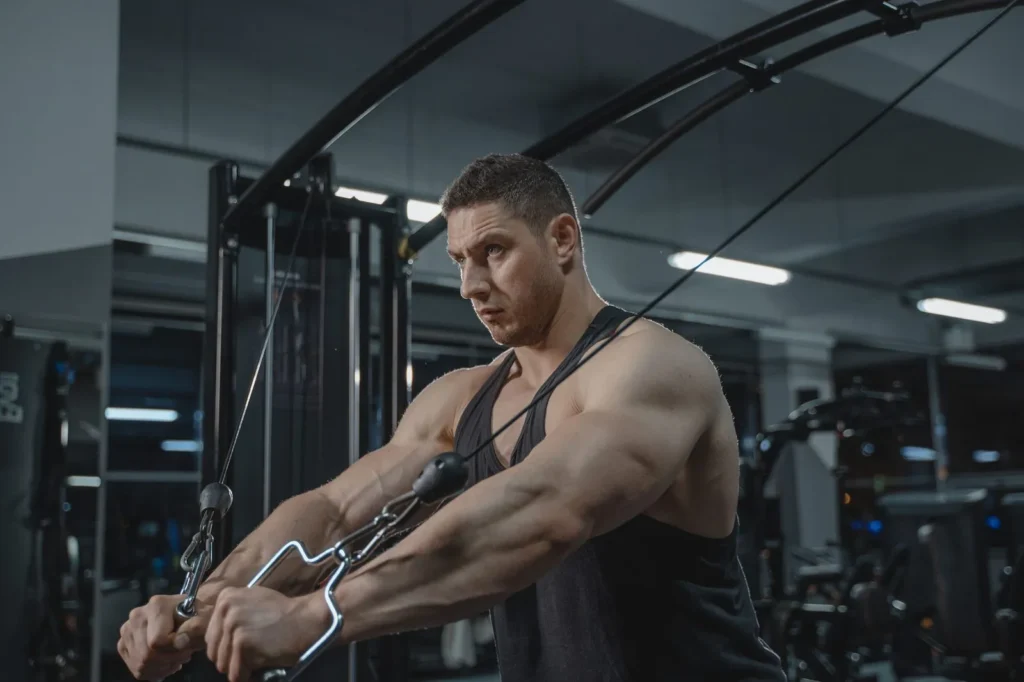
A woodchopper workout trains your core to rotate and to resist rotation in one diagonal movement. You pull a cable, dumbbell or medicine ball from high to low (or low to high) across your body, like swinging an axe. Done well, it works your obliques, deep abdominals, hips and shoulders together. This guide gives you the form, sets and reps, a four-week beginner progression, and a plain list of who should wait or get cleared first.
What does a woodchopper workout actually train?
A woodchopper trains the obliques (the diagonal muscles along your sides) and the deep transverse abdominis, while your glutes, hips, lats and shoulders drive and guide the arc. Because your core must create the turn and also stop extra twisting, one set of about 10 controlled reps gives a stability and strength stimulus most crunches never reach.
- Obliques: rotate and bend the trunk, and take most of the work.
- Transverse abdominis and rectus abdominis: brace the spine so the turn happens at the right place.
- Glutes and hip rotators: start the movement from the back foot, the same muscles a hip thrust workout loads in a straight line.
- Lats and shoulders: steer the load along its diagonal path.
This mix is why the woodchopper exercise feels different from a plank or a sit-up. A plank resists movement and a crunch bends the spine. The woodchopper asks you to move through the hips and upper back while the lower back stays calm. That is closer to how you really turn to lift a bag or swing a bat.
Woodchopper variations compared: which one should you pick?
Pick the version that matches your equipment and your skill. A dumbbell version is the easiest to start at home, a cable woodchopper gives smooth, even tension in a gym, and a medicine ball version adds speed and power. The table below gives starting numbers for each.
| Variation | Equipment | Sets x reps (per side) | Rest | Key cue |
|---|---|---|---|---|
| Dumbbell woodchopper (high to low) | 1 light dumbbell or a water-filled bottle | 2-3 x 8-12 | 45-60 sec | Turn the hips and chest together, arms stay long |
| Cable woodchopper (high to low) | Cable machine, single handle | 3 x 8-12 | 60 sec | Pull with the trunk, not the elbows |
| Reverse woodchopper (low to high) | Cable at the lowest setting | 3 x 8-12 | 60 sec | Sit slightly into the hips, finish tall |
| Half-kneeling cable chop | Cable and a mat | 2-3 x 8-10 | 60 sec | Squeeze the glute of the kneeling leg |
| Medicine ball woodchopper | 2-4 kg ball | 3 x 6-10 | 60-75 sec | Fast and smooth, then reset fully each rep |
| Bodyweight chop (no load) | None | 2 x 10-12 | 30-45 sec | Clasp hands, trace a clean diagonal |
Dumbbells are heaviest when the weight is at the top or bottom of the swing and lightest mid-arc, so the tension is uneven. That is fine for learning. Cables keep tension steady the whole way, which is why most gym programs lean on them once the pattern is solid.
How do you do a cable woodchopper step by step?
Set the pulley high, stand sideways about 60 cm from the stack with feet shoulder-width apart, grip the handle with both hands, and pull diagonally down across your body to the opposite hip. Pivot the back foot, keep arms mostly straight, and return slowly. Do 8-12 reps, then switch sides.
- Set up. Pulley at the top, light weight to start. Stand side-on, knees soft, ribs stacked over hips.
- Grip. Both hands on the handle, arms reaching up and toward the machine. Brace your abdominals as if about to be lightly poked.
- Chop. Rotate through the hips and chest together, pulling the handle down and across to the outside of your opposite knee. Let the back heel lift and the back foot pivot.
- Pause. Hold for a beat at the bottom. Your hips and ribcage should face the same way, not the lower back alone.
- Return. Take about 2-3 seconds to come back. Do not let the stack yank you around.
- Switch. Finish every rep on one side before turning around, then match the number on the other side.
For the reverse woodchopper, set the pulley at its lowest point and pull up and across to above the opposite shoulder, keeping your chest tall and your eyes on the handle.
Woodchopper at home: dumbbell and bodyweight versions
You do not need a gym for a woodchopper at home. A single dumbbell of 2-5 kg, a filled water bottle or a school bag with a few books works. Start in a split stance, bring the weight beside one hip, and chop up and across, then reverse it. Keep the movement smooth and the arms long.
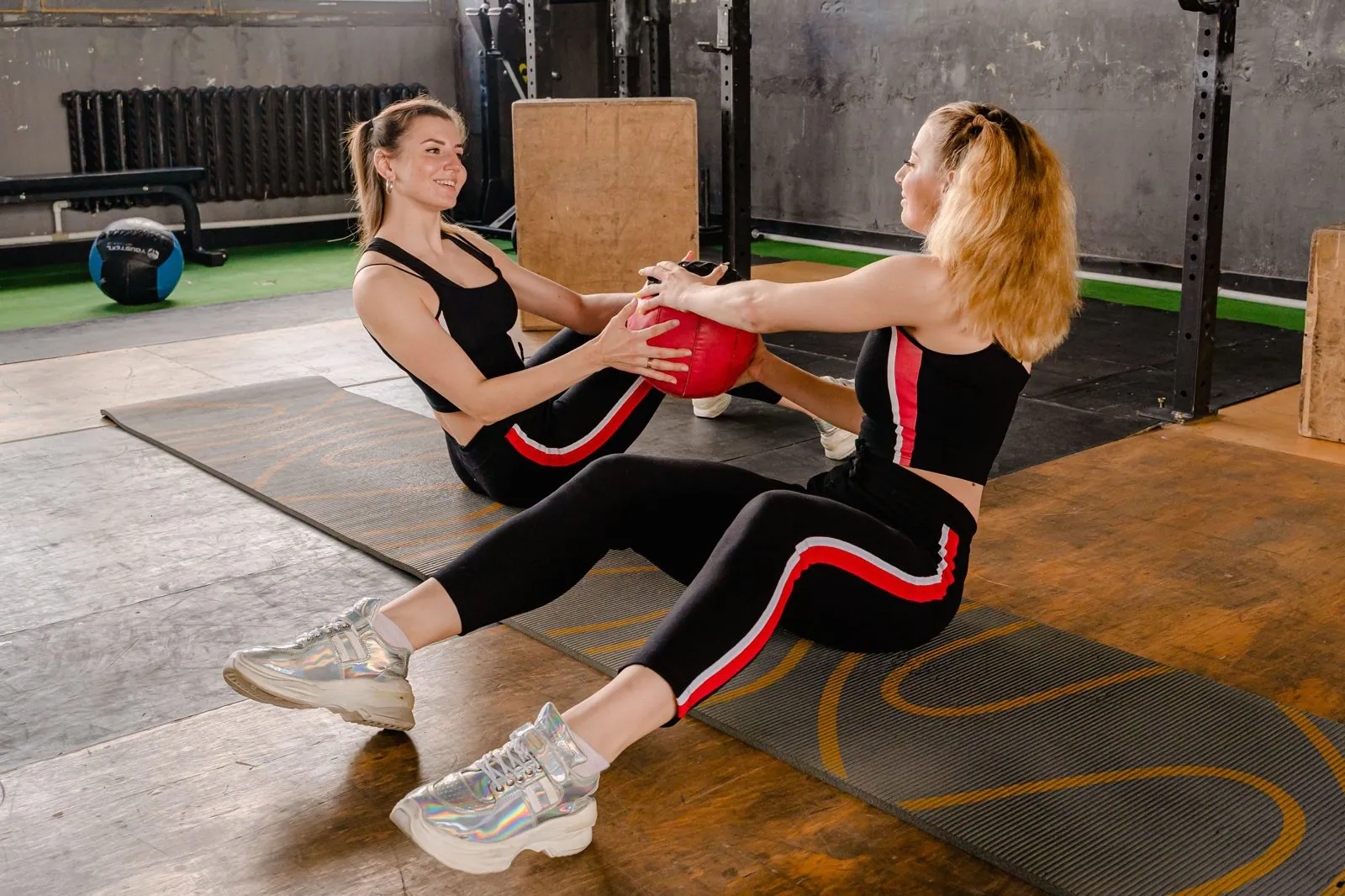
A few ways to make the dumbbell woodchopper work at home:
- Stand on a non-slip floor in flat shoes.
- Choose a weight you can move for 12 clean reps with 3-4 reps left in the tank.
- Let the back foot pivot so the hips join the turn.
If you do not own any weight, a bodyweight chop with clasped hands teaches the same path. If you want a full routine around it, our home workout guide shows where a short core block can sit.
Myth check: does a woodchopper burn belly fat or slim the waist?
No exercise burns fat from one spot, and the woodchopper is no exception. A set of 10 reps on each side uses only a small amount of energy, about the same as a short walk of a minute or two. Waist size changes mainly through a long-term calorie deficit, protein, sleep and whole-body training.
- “Twisting makes the waist smaller.” Loaded oblique work can build the muscle at your sides, which for some people makes the waist look thicker, not thinner.
- “Heavier is always better.” The woodchopper is a control exercise. A weight you can move smoothly and stop at will beats a heavy weight you swing with momentum.
The honest use of this exercise is a stronger, steadier core that helps your other lifts and daily movement. If body fat loss is your main goal, a nutrition plan and regular training matter far more, and our online weight loss trainer programs are built around that.
Troubleshooting: common woodchopper mistakes and fixes
Most woodchopper problems come from twisting the lower back, bending the elbows, using momentum or locking the hips. Fix them by lowering the load, slowing the tempo and thinking “hips first, then chest”. The table pairs each fault with how it looks and how to fix it.
| Mistake | What it looks like | Fix |
|---|---|---|
| Twisting from the lower back | Hips stay square, lower back curls around, a pinch low in the spine | Let the back foot pivot and the hips turn with the chest. Reduce the load. |
| Bending the elbows | The move turns into a row or a pull-down | Keep arms long, as if your hands are hooks on a rope. |
| Swinging with momentum | Weight flies up and the return is a drop | Count 1 second down, 2-3 seconds back, and cut the weight by about a third. |
| Locked hips | Only the upper body twists | Bend the knees slightly and let the back heel come off the floor. |
| Leaning or sliding away | The torso tilts toward the stack, a sign the weight is too heavy | Stand tall, squeeze the glutes, move the load only through its arc. |
| Holding the breath | Face reddens, ribs flare | Breathe out as you chop, in as you return. |
How many sets and reps should a beginner do? A four-week progression
A beginner should start with 2 sets of 8-10 reps per side using a very light weight or no weight, 2 days a week with at least a day between. Add reps first, then a set, then a little weight, only when every rep looks clean. Four weeks is a sensible first block.
| Week | Exercise | Sets x reps (per side) | Rest | Focus |
|---|---|---|---|---|
| 1 | Bodyweight chop | 2 x 10 | 30-45 sec | Learn the diagonal path and the hip pivot |
| 2 | Light dumbbell woodchopper (about 2 kg) | 2 x 10 | 45 sec | Keep arms long, slow return |
| 3 | Dumbbell or cable (light) | 3 x 8-10 | 60 sec | Add the third set before adding weight |
| 4 | Cable high-to-low plus reverse | 2-3 x 10 each | 60 sec | Add a small plate only if form stays perfect |
Progress by changing one thing at a time: reps, then sets, then a small bump in weight (about 1-2 kg on a cable stack), then a harder stance such as half-kneeling. If your form slips, drop back one step. Mild soreness in the sides is normal. Sharp pain is a reason to stop.
Where does the woodchopper fit in your weekly routine?
Place woodchoppers after your main lifts, when you are warm but still fresh enough to control them. Two sessions a week is plenty for most people. Use them in a core finisher or at the end of a full-body day, paired with a bracing drill like a Pallof press or a plank.
A few simple ways to program them:
- Full-body days: chops after squats or hinges, followed by a plank for 30-40 seconds.
- Upper-body days: a light block after pressing, then arm work such as the curls in our preacher curl workout.
- Shoulder-focused days: the controlled arcs of an around the world workout sit well next to chops, since both train the shoulders through a path.
- Home routine: add 2 sets of chops to a bodyweight session. Our workout routine guide and workout plan guide show how to place them across a week.
Hip and spine mobility makes chops smoother, and our online yoga classes are a gentle way to build it on rest days.
Who should be careful with woodchoppers?
People with a current back, hip, shoulder or neck injury, a herniated disc, or ongoing lower back pain should not start loaded rotation on their own. Speak to your doctor or physiotherapist first. The same applies after recent surgery, with osteoporosis, and during pregnancy, especially in later months.
See your doctor or a physiotherapist before doing this exercise if you have any of these:
- Back pain that lasts more than a few days or travels down a leg.
- Numbness, tingling or weakness in the legs or arms.
- A recent injury, surgery or a diagnosed disc problem.
- Pregnancy, or any condition where a doctor has limited twisting or core work.
Stop the set and get medical advice if you feel sharp pain, pins and needles, or pain that stays after you finish. Beginners with no injuries can start with the bodyweight version above. This is also a good place for coaching, because someone watching your form can adjust the load and range to your body. Our 1-on-1 personal training sessions are built for this kind of individual guidance.
Frequently asked questions
What is a woodchopper workout?
A woodchopper workout is a rotational core exercise where you move a cable, dumbbell or medicine ball diagonally across your body, from high to low or low to high. It trains the obliques and deep core to create and control rotation, and it uses the hips and shoulders as well.
How many reps and sets should I do for woodchoppers?
Most people do 2-3 sets of 8-12 controlled reps on each side, with about 45-60 seconds of rest. Beginners can start with 2 sets of 8-10 using no weight or a very light weight. Add reps first, then sets, and only then a little more weight.
Can I do woodchoppers at home without a cable machine?
Yes. Use a light dumbbell of about 2-5 kg, a water bottle, a medicine ball or just your clasped hands. The path and the cue stay the same: hips and chest turn together, arms stay long, and the return takes 2-3 seconds.
Are woodchoppers good for abs and obliques?
They are very good for the obliques and for deep core control, and they also use the front abs as stabilisers. They will not remove belly fat on their own, because fat loss comes from your overall eating and training. Think of them as strength and control work.
How often should I train woodchoppers each week?
Two sessions a week is enough for most people, with at least a day between them. The core recovers fairly fast, but loaded rotation stresses the spine and hips, so avoid heavy chops every day. If you feel stiff or sore in the lower back, take an extra rest day.
Next step: book a 1-on-1 session with a Fitstrot coach and have your woodchopper form checked on video before you add weight. Book a 1-on-1 personal training session.


