
The around the world exercise is not one move but a family of them. In most gyms it means a light plate or dumbbell traced in a wide circle from your hips to overhead and back, a shoulder drill that works the front, side and rear deltoid in a single arc. The same name is also used for a lying dumbbell chest arc, a lunge circuit, a side-to-side pull-up, a travelling push-up and a kettlebell pass around the waist. Below: all six, with form cues, sets and reps, and where the shoulder version can go wrong. All you need to start is a single plate or a pair of light dumbbells, the cheapest kit in any Indian home setup.
What is the around the world exercise, in one sentence?
The around the world exercise is a circular movement pattern in which you move a load, or your own body, through a full arc instead of a straight line. The classic version uses a 2.5–5 kg plate or two light dumbbells swept from the thighs, out to the sides and overhead, training all three heads of the deltoid plus the rotator cuff and upper trapezius in one continuous rep.
Most shoulder exercises move in one plane: a front raise goes forward, a lateral raise sideways, a press up. An around the world rep passes through all of those angles, so the muscles that position your shoulder blade keep adjusting. That makes it a good control drill and a poor choice for heavy weight.
Six around the world workout variations, compared
Search “around the world workout” and you will find six different exercises sharing one name. Match a variation to your goal here.
| Variation | Equipment | Main muscles | Level | Best used for |
|---|---|---|---|---|
| Standing shoulder circle (plate or dumbbells) | 2.5–5 kg plate or 1–4 kg dumbbells | Anterior, lateral and posterior deltoid; rotator cuff; upper trapezius | Beginner–intermediate | Shoulder warm-up, light finisher |
| Lying dumbbell around the world | Flat bench, two light dumbbells | Pectorals, latissimus dorsi, anterior deltoid | Intermediate | Chest and lat stretch under load |
| Around the world (abs pass) | One dumbbell, plate or kettlebell | Obliques, transverse abdominis, grip | Beginner | Core warm-up, anti-rotation control |
| Around the world lunges | Bodyweight or light dumbbells | Quadriceps, glutes, adductors, calves | Beginner–intermediate | Leg day, multi-direction balance |
| Around the world pull-ups | Pull-up bar | Latissimus dorsi, biceps, rear deltoid, core | Advanced | Progressing past standard pull-ups |
| Around the world push-ups | Floor (optional: yoga mat) | Pectorals, triceps, deltoids, core | Intermediate–advanced | Push strength with shoulder stability |
Walkthrough: the around the world shoulder exercise with a plate
The plate around the world is the friendliest starting point: one plate in both hands keeps the arms working as a unit, so neither side drifts or overreaches.
- Set up. Stand tall, feet hip-width apart, knees soft. Hold a 2.5 kg or 5 kg plate by its edges at arm’s length in front of your thighs, elbows slightly bent.
- Brace. Pull your lower ribs down towards your hips and lightly squeeze your glutes. This stops the lower back arching when the plate goes overhead.
- Sweep to one side. Move the plate in an arc out to the right until it is roughly at shoulder height, keeping your elbows soft rather than locked.
- Continue overhead. Keep the arc going up and over your head. Your arms stay long and your chin stays level, so the plate passes just in front of or above your forehead.
- Come down the other side. Finish the circle down the left side back to your thighs. That is one rep. Alternate directions each rep or complete all reps one way, then reverse.
- Breathe and slow down. Exhale as the plate rises, inhale as it lowers. A full circle should take 6–8 seconds.
The single most useful cue: if your shoulders rise towards your ears to finish the top half, the plate is too heavy or your overhead mobility is not there yet. Drop to a lighter load or stop the circle at shoulder height.
Around the world dumbbell version (standing)
The standing around the world dumbbell version uses one light dumbbell in each hand, palms facing forward. Start with the dumbbells in front of your thighs, raise them out to the sides like a lateral raise, then keep going until they nearly meet overhead, and reverse the path. Because each arm moves independently, this version exposes left-right differences quickly; if one arm lags or wobbles, that is the side to work on.
Around the world exercise dumbbell version (lying on a bench)
Bodybuilders use a different around the world exercise dumbbell variation: lying face-up on a flat bench, a light dumbbell in each hand at the hips, palms up. Keeping the elbows slightly bent, sweep the dumbbells out wide, along the floor-side of the bench and up behind your head, then reverse. Think fly plus pullover: it loads the chest and lats in a stretch. Keep it light and skip it if reaching overhead already hurts.
Around the world exercise abs version (the waist pass)
The around the world exercise abs version is the simplest of all. Stand tall with a dumbbell, plate or kettlebell in your right hand. Pass it to your left hand behind your back, bring it round to the front and pass it back to the right. Keep hips and shoulders square so the obliques and deep abdominals resist twisting. Do 8–10 passes, then reverse.
Around the world lunges
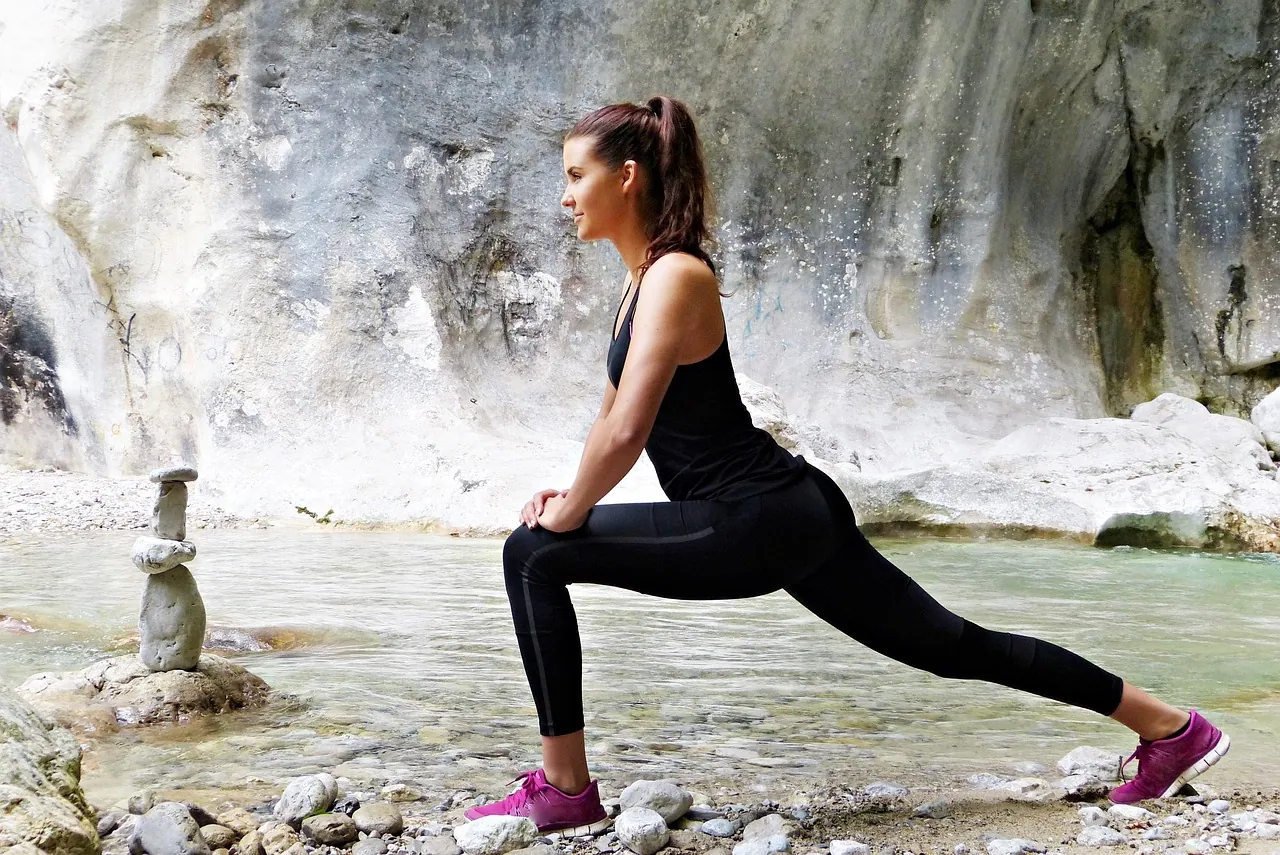
Around the world lunges string together four lunges in a circle on one leg: a forward lunge, a side (lateral) lunge, a reverse lunge, and often a curtsy lunge, returning to standing between each. Then switch legs. One full circle on both sides counts as one round. The side lunge is the piece most people skip in normal training, and it is where the adductors (inner thigh) and glute medius get their work. Beginners can hold a chair at first; add 2–5 kg dumbbells only when every lunge lands balanced.
Form cue: keep your front knee tracking over your second and third toes in every direction. If it caves inward on the side lunge, shorten the step.
Around the world pull-ups
Around the world pull-ups are an advanced bodyweight move. From a dead hang with a wide overhand grip, pull up and towards your right hand, travel across the bar so your chin passes the bar in the middle, shift towards the left hand, then lower. Each rep loads one arm, then the other, so it is harder than a regular pull-up.
The primary mover is the lats. In a 2010 surface electromyography study of 25 adults in the Journal of Strength and Conditioning Research, latissimus dorsi activity reached roughly 117–130% of maximal voluntary contraction across pull-up and chin-up variations, and a rotating-handle device produced no extra muscle activation over the standard versions (Youdas et al., PubMed). Fancy variations add coordination, not extra muscle activation. Master 8 strict pull-ups first.
Around the world push-ups
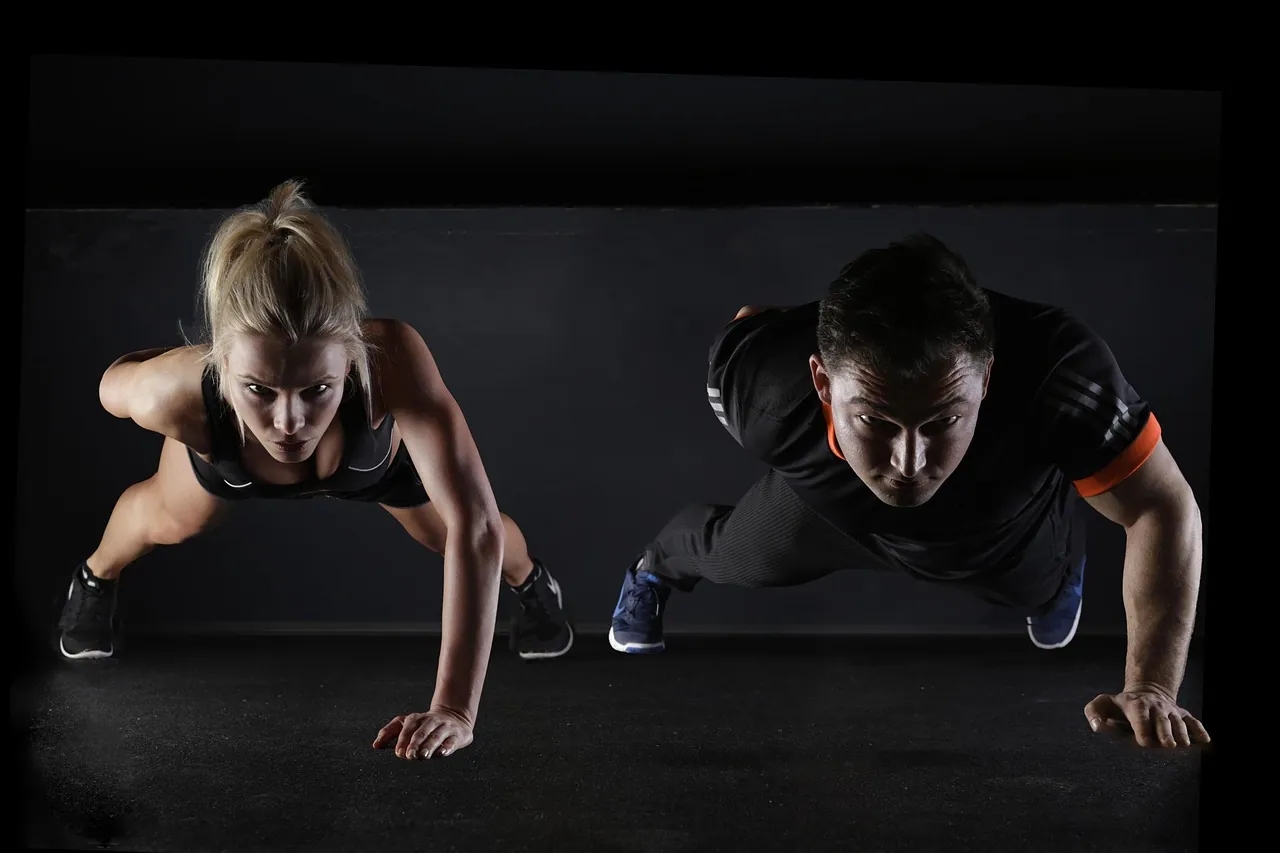
There are two common versions. In the first, you do one push-up, walk your hands a step to the right, do another, walk back to centre, do another, walk left, and so on, tracing an arc. In the second, you lower yourself in a circular path, shifting your chest towards one hand, across to the other and back up.
Push-up strength is also worth tracking for health. In a 10-year study of 1,104 male firefighters published in JAMA Network Open in 2019, those who could complete 40 or more push-ups had a 96% lower risk of cardiovascular events than those who managed 10 or fewer (Harvard Health Publishing). That is an association, not proof of cause, but upper-body strength clearly matters.

Kettlebell around the world
The kettlebell around the world is the waist-pass drill described above, done with a kettlebell. The handle makes the hand-off smoother, so it is the version most coaches use in a kettlebell warm-up before swings or goblet squats. Start with an 8 kg bell (6 kg if you are new to lifting), keep your chest up and knees soft, and hand the bell off close to your body behind your back.
Around the world exercise muscles worked: what the shoulder version really trains
The standing plate or dumbbell around the world trains all three heads of the deltoid, with the side (lateral) head doing the most work between shoulder and overhead height. The rotator cuff and serratus anterior control the shoulder blade throughout, the upper trapezius helps near the top, and the abdominals brace to stop the lower back arching.
- Front, side and rear deltoid: front head early in the arc, side head from hip to overhead height, rear head controlling the descent.
- Rotator cuff (supraspinatus, infraspinatus, teres minor, subscapularis): keeps the ball of the upper arm centred in its socket.
- Serratus anterior and trapezius: rotate the shoulder blade upwards so the arm can get overhead without pinching.
For a full deltoid session built around presses and raises, see our guide to deltoid workouts; the around the world works best as a warm-up inside that kind of session rather than a replacement for it.
Around the world exercise benefits and three myths to drop
The real benefits are modest but useful: controlled movement through a large range, exposing left-right differences, a quick shoulder warm-up, and almost no equipment. Here is what it does not do.
Myth 1: “It builds big shoulders on its own”
Because the top of the arc is so hard, loads stay very light, and you can usually do far more reps than you would in a normal hypertrophy set. That does not mean light loads are useless. A 2017 meta-analysis of 21 studies found that muscle growth was similar whether people trained with loads at or below 60% of their one-rep max or above it, as long as sets were taken close to failure, while maximal strength gains favoured heavier loads (Schoenfeld et al., 2017, PubMed). But a slow, controlled around the world set rarely gets near failure, and pushing it there invites sloppy form overhead. For size, dumbbell presses and lateral raises do the heavy lifting; the around the world supports them.
Myth 2: “The abs version burns belly fat”
No exercise burns fat from the area it works. Waist passes train core control. Fat loss comes from an overall energy deficit sustained over weeks, which is a nutrition question more than an exercise-choice question.
Myth 3: “Circles are always safe because the weight is light”
Light weight lowers risk; it does not remove it. The overhead part of the arc is exactly the position that aggravates an irritated shoulder (see troubleshooting below).
The World Health Organization reports that 31% of adults worldwide, about 1.8 billion people, were not physically active enough in 2022 (WHO physical activity fact sheet). If a five-minute around the world circuit gets you training at all, that is its biggest benefit.
How many sets and reps? A programming table you can screenshot
For most adults, 2–3 sets of 6–10 slow reps per direction, with 45–60 seconds of rest, is enough for the shoulder around the world. Use it at the start of an upper-body session as a warm-up or at the end as a light finisher, 2 days a week, in line with the guideline of strength work on at least 2 days per week.
That weekly target comes from public health guidance: the CDC recommends muscle-strengthening activity on at least 2 days a week that works all major muscle groups, including the shoulders, chest, back, abdomen, hips and legs (CDC adult activity guidelines). The NHS gives the same 2-day minimum and lists push-ups, yoga and lifting weights among qualifying activities (NHS physical activity guidelines).
| Variation | Starting load | Sets × reps | Rest | Form cue |
|---|---|---|---|---|
| Plate around the world | 2.5–5 kg plate | 2–3 × 6–8 each direction | 45–60 s | Ribs down; no shrug at the top |
| Standing dumbbell around the world | 1–4 kg each hand | 2–3 × 6–10 each direction | 45–60 s | 3–4 s up, 3–4 s down |
| Lying dumbbell around the world | 2–5 kg each hand | 2–3 × 8–12 | 60 s | Soft elbows; stop before pain behind the head |
| Around the world abs pass | 4–8 kg dumbbell or kettlebell | 2–3 × 8–10 each direction | 30–45 s | Hips and shoulders stay square |
| Around the world lunges | Bodyweight, then 2–5 kg dumbbells | 2–3 × 3–4 circles per leg | 60–90 s | Knee tracks over 2nd–3rd toe |
| Around the world pull-ups | Bodyweight | 3 × 2–5 (each rep covers both sides) | 2–3 min | Full hang between reps; no kipping |
| Around the world push-ups | Bodyweight (knees for regression) | 3 × 4–8 arcs | 60–90 s | Body stays a straight plank |
If you train on a push, pull and legs split, slot the shoulder and push-up variations into push day, pull-ups into pull day and lunges into leg day. Our push pull legs workout guide shows the full weekly layout, and the legs and abs workout is a natural home for around the world lunges and waist passes.
Troubleshooting: why does my shoulder pinch at the top?
A pinch or sharp pain as your arm goes overhead is a signal to stop that part of the arc, not to push through it. The overhead range is where irritated rotator cuff tendons get compressed. Keep training the pain-free half circle, and see a doctor or physiotherapist if pain persists beyond a week or two, wakes you at night, or comes with weakness.
Cleveland Clinic describes shoulder impingement (rotator cuff tendinitis) as an overuse problem that typically hurts when you raise the arm above the head or lift and lower it, and notes that recovery can take weeks to months (Cleveland Clinic). Mayo Clinic notes that rotator cuff tears are most common in people older than 50 and that weightlifting is among the activities that raise the risk (Mayo Clinic). A circular overhead drill is exactly the kind of movement to respect.
| What you notice | Likely cause | Fix |
|---|---|---|
| Shoulders creep up to the ears near the top | Load too heavy or limited overhead mobility | Halve the weight or stop at shoulder height |
| Lower back arches as the weight goes overhead | Ribs flaring, weak brace | Squeeze glutes, exhale fully, try it half-kneeling |
| Clicking without pain | Usually harmless joint noise | Slow down; stop if pain appears |
| Sharp pinch between shoulder and overhead height | Possible impingement or irritated tendon | Stop the overhead part; see a physiotherapist if it persists |
| One arm lags or shakes | Side-to-side strength or control difference | Do an extra set on the weaker side with a lighter dumbbell |
| Weight swings through the bottom | Tempo too fast, using momentum | Count 3–4 s each half of the circle |
Who should modify it: beginners, desk workers and lifters over 40
Complete beginners should begin with the half circle and the waist pass, and add the full overhead arc only after two weeks of pain-free practice. Desk workers who sit with rounded shoulders for 8–10 hours often lack overhead range; mobility work helps, and our online yoga classes are one structured way to build it.
Adults over 40, and anyone who has had a shoulder injury, should treat the overhead portion as optional and keep loads at the lowest end of the table. Anyone who is pregnant, recovering from surgery, or has a diagnosed shoulder, neck or heart condition should get clearance from their doctor first. And if you are not sure which variation fits your joints, a coach watching your form live is more useful than any written cue; that is exactly what 1-on-1 personal training at Fitstrot is for.
Frequently asked questions
What is the around the world exercise?
It is a circular movement in which a load or your body travels through a full arc. The most common version is the shoulder exercise: a light plate or dumbbells swept from the thighs, out to the sides, overhead and back down, training all three deltoid heads plus the rotator cuff.
What muscles does the around the world exercise work?
The shoulder version mainly works the front, side and rear deltoids, with the rotator cuff, serratus anterior, trapezius and core stabilising. The lying dumbbell version adds the chest and lats, lunges train the legs and glutes, and the waist pass works the obliques.
What weight should I use for the around the world dumbbell exercise?
Start with 1–4 kg dumbbells or a 2.5–5 kg plate. If your shoulders shrug or your back arches to finish the overhead part, the load is too heavy. Add 1 kg only after every rep stays smooth for 3 sets.
Is the around the world exercise bad for your shoulders?
Not for most healthy shoulders when done light and slow. It is not a good choice if raising your arm overhead already causes pain. In that case, stop at shoulder height and see a physiotherapist or doctor.
Is the around the world exercise good for abs?
The waist-pass version trains the obliques and deep core to resist twisting, making it a good warm-up or finisher. It will not burn belly fat or build visible abs by itself; body-fat levels determine that.
How many reps of around the world should I do?
For the shoulder version, 2–3 sets of 6–10 slow reps per direction with 45–60 seconds of rest. Use it 2 days a week as a warm-up or finisher alongside your main pressing and pulling exercises.
Are around the world pull-ups harder than regular pull-ups?
Yes. Each rep shifts more of your bodyweight onto one arm, then the other, so it demands more strength and control. Build up to at least 8 clean, strict pull-ups before trying them.
Want someone to check your overhead range before you load it? Book a 1-on-1 session with a Fitstrot trainer and get a shoulder routine matched to how your joints actually move.


