

Searching for online yoga classes india usually comes down to four practical questions: which timing works with my day, which language will the teacher use, what do I need at home, and how do I know a class is any good? This guide answers those four in order, with sample IST schedules, a language-batch comparison, a home-setup checklist and a fix-it table for the problems Indian homes actually face, such as power cuts and patchy internet.
What do online yoga classes in India actually include?
A good live online yoga class runs 45-60 minutes over video call: a short check-in, 5-10 minutes of breathing and warm-up, 25-35 minutes of postures, and 5-10 minutes of relaxation. The teacher watches your camera and corrects your alignment in real time. That live feedback is what separates a class from a recorded video.
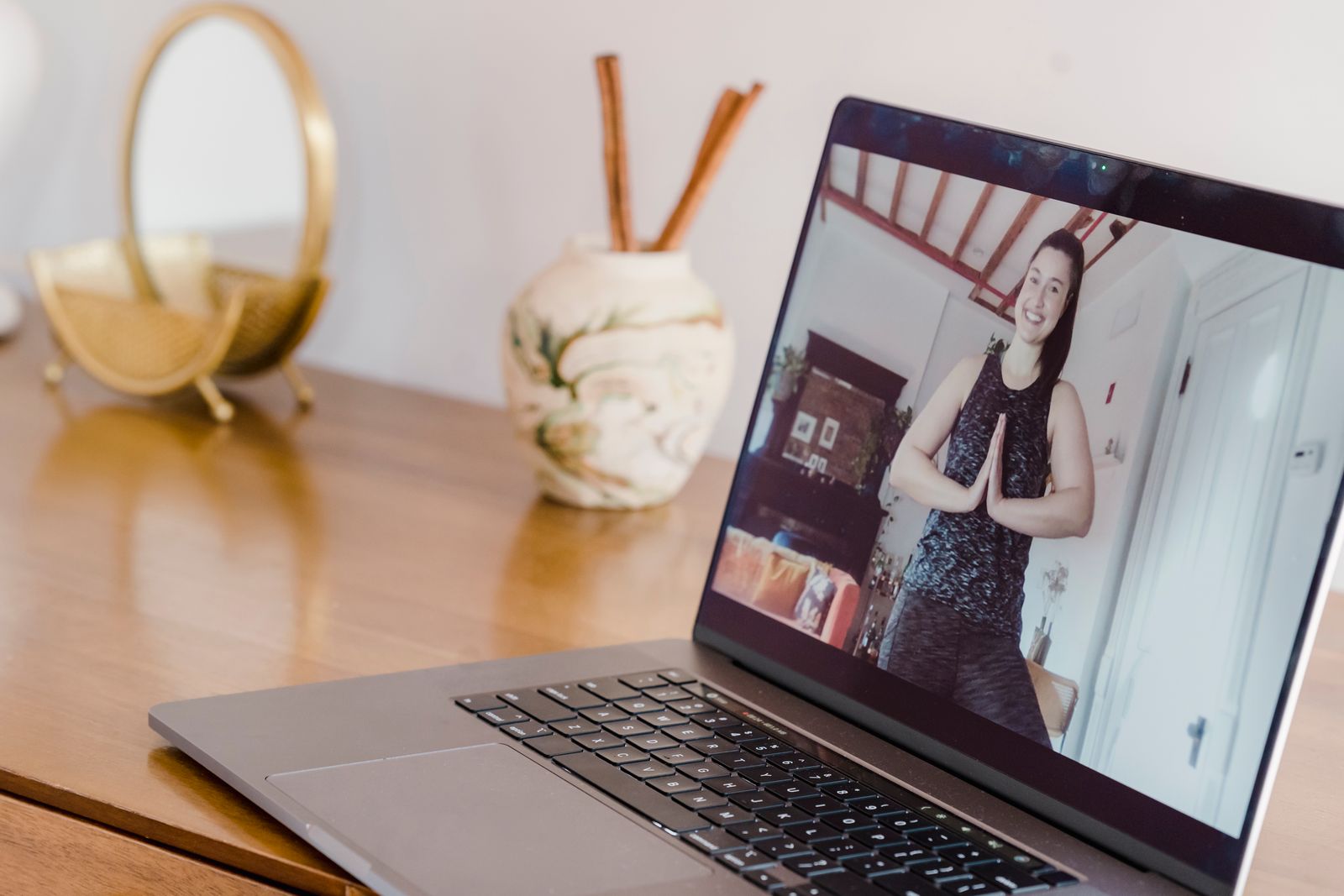
Here is how a typical session flows, so nothing surprises you on day one:
- Join 5 minutes early. Test your camera angle and sound while the teacher greets the batch.
- Check-in. Tell the teacher about any pain, injury, pregnancy or recent surgery before you start. Do this even if you told them at sign-up.
- Warm-up and breathing. Neck, shoulder and spine mobility, then slow breathing to settle the mind.
- Main sequence. Standing, seated and floor postures, matched to the batch level.
- Cool-down and relaxation. Lying-down rest, usually with guided breathing.
Most students in India join from a bedroom or living room in an apartment, which is perfectly workable. You do not need a studio-sized space. If you are new to the vocabulary, our guide to types of yoga will help you follow what the teacher says.
Which class timings suit Indian routines?
All classes in India run on a single time zone, IST (UTC+5:30), so there is no daylight-saving confusion. The most popular slots are early morning (about 6-8 a.m.) and early evening (about 6-8 p.m.), because they sit either side of the working day. Choose the slot you can attend four or more times a week.
| Slot (IST) | Who it suits | Practical tip | Watch out for |
|---|---|---|---|
| 5:30-7:00 a.m. | Office-goers, parents of school-age children | Gentle mobility and breathing wake the body up | Stiff spine on waking; warm up for longer |
| 7:00-9:00 a.m. | Homemakers, freelancers, work-from-home staff | Finish before the day’s cooking and calls begin | Do not practise on a full stomach |
| 12:30-2:00 p.m. | Hybrid teams, shift workers, students on break | A short stretch-and-breathe class resets a desk-bound day | Post-lunch heaviness; keep lunch light |
| 6:00-8:00 p.m. | Most working professionals | Good for releasing neck, back and hip tightness | Commute delays; keep a catch-up option |
| 8:30-10:00 p.m. | Late workers, night owls, people abroad | Slow, restorative classes help you unwind | Avoid intense flows right before bed |
Two scheduling rules help. Leave about 2-3 hours after a full Indian meal, or 30-45 minutes after a light snack such as a banana, before you practise. And if you live abroad, remember IST is roughly 1.5 hours ahead of the UAE and about 5 hours ahead of the UK (it shifts by an hour when the UK changes its clocks), so confirm the converted time before booking.
Should you pick a Hindi, English or bilingual batch?
Pick the language in which you can follow a cue without thinking. Instructions such as “lengthen the spine” or “soften the knees” need to land instantly, because you are watching your own body, not translating. Beginners usually learn faster in their strongest language, while Sanskrit pose names stay the same either way.
| Batch language | Best for | Advantages | Trade-offs |
|---|---|---|---|
| Hindi | Beginners, older adults, first-time online learners | Easy to follow cues; relaxed, familiar tone | Fewer technical anatomy terms |
| English | Urban professionals, students, NRIs | Clear alignment vocabulary; easy to match with videos and books | Can feel formal for some beginners |
| Bilingual (Hindi + English) | Mixed groups, families practising together | Each cue is repeated, so nobody is lost | Slightly slower pacing |
| Regional language | Students who think in Gujarati, Marathi, Tamil, Bengali, etc. | Most natural for home-language learners | Smaller choice of timings; ask what is on offer |
Ask for a trial class in your preferred language and notice whether you spend the session understanding or just copying. If you have been typing “online yoga classes near me” because you want a teacher who knows your local routine and language, our note on online yoga classes near me explains how that works in practice.
How do you set up a home space for online yoga?
You need roughly 2 m by 1 m of clear floor, a non-slip mat, a propped-up device that shows your whole body, and steady internet. Everything else is optional. A folded blanket, a thick towel and a dupatta or cotton belt can stand in for blocks, a bolster and a strap while you decide whether to buy props.
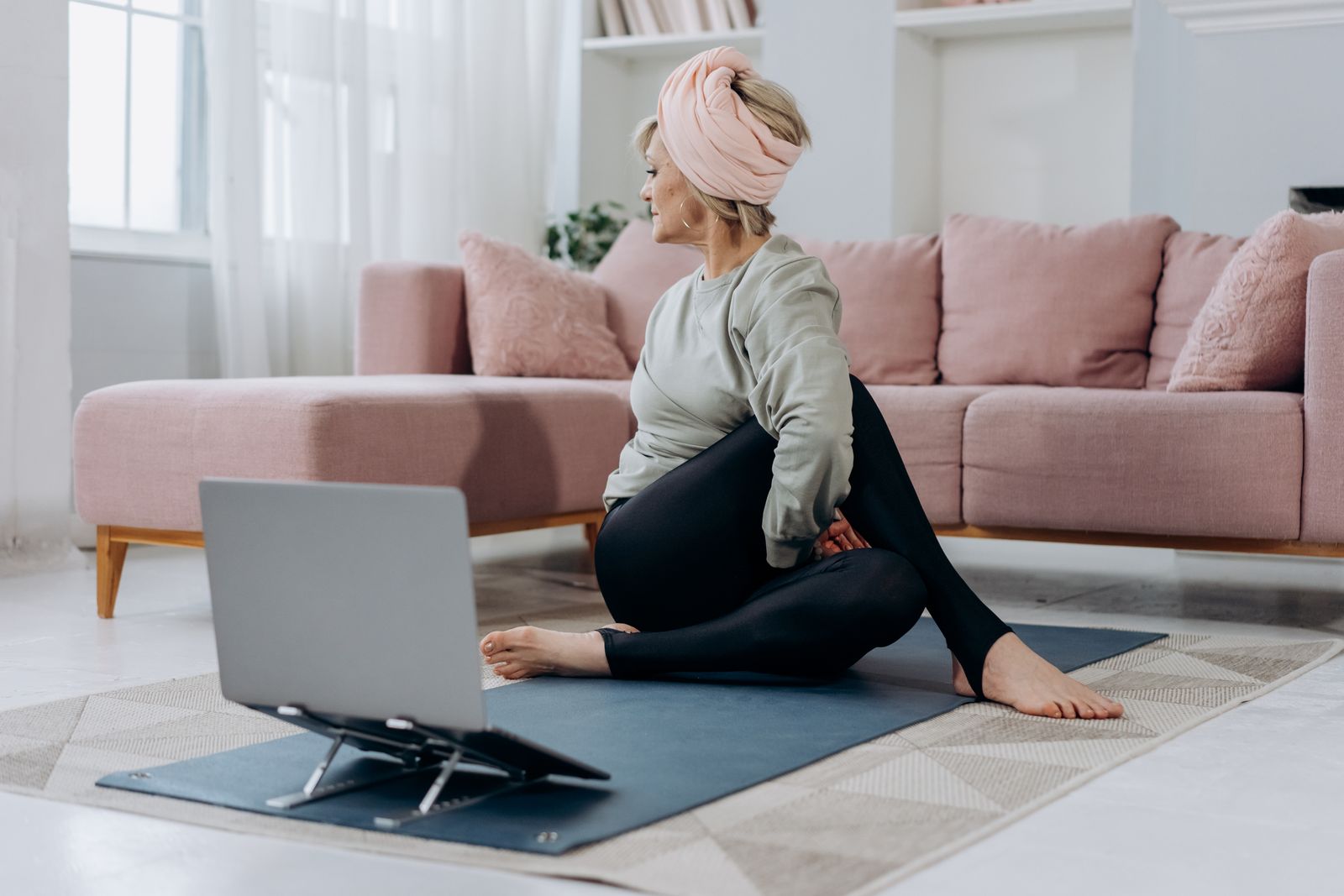
- Mat on tiles: most Indian flats have tile or marble floors. Use a grippy mat, never a bedsheet, and wipe both feet and mat before class.
- Camera angle: place the laptop or phone about 2-3 m away, at hip height, ideally sideways to your mat so the teacher can see your spine in profile and front-on poses alike.
- Lighting: face a window or lamp so you are not a silhouette. Close curtains if the sun is directly behind you.
- Clothing: close-fitting stretchable wear, so the teacher can see your knees, hips and shoulders. Loose kurtas hide alignment errors.
- Family and noise: tell the household your class timing, and use headphones if the house is busy.
- Climate: in peak summer, practise before 8 a.m. or after sunset with a fan on low, and keep water nearby. In monsoon humidity, keep a small towel on hand for sweaty palms and slippery hands.
Troubleshooting: what if the power or internet fails mid-class?
Most online class problems in India are connectivity or power issues, and each has a quick fix. Keep a mobile hotspot ready, charge your device before class, and tell the teacher if you drop out so you can rejoin without disrupting the batch. Rejoining within 5 minutes usually costs you only the warm-up.
| Problem | Likely cause | Quick fix |
|---|---|---|
| Video freezes or lags | Weak Wi-Fi, other devices streaming | Sit closer to the router, pause downloads, turn your camera resolution down |
| Power cut during class | Local outage, inverter not covering the router | Switch to phone hotspot; keep the router on a small UPS if you can |
| Teacher cannot see your full body | Camera too close or too high | Move the device back, tilt it down, and keep your mat fully in frame |
| You cannot hear cues while moving | Phone speaker is too quiet, or there is room echo | Use wired earphones, or put the speaker near your head |
| Mat slides on the floor | Smooth tiles, no anti-slip layer | Place a damp towel or rubber mat underneath, or use a heavier mat |
| You missed a live class | Travel, work or illness | Ask the teacher for a catch-up batch or a recording, then practise lightly the same day |
How do you choose between providers? A six-point checklist
Choose a provider by checking six things: whether classes are live and interactive, whether teachers hold a recognised teacher-training certification, the batch size, whether a trial class is available, whether timing and language fit, and whether there is a clear progression plan. Batches of about 4-8 students allow real correction; hundreds does not.
- Live, not pre-recorded. You should be able to ask a question mid-class and hear the answer.
- Teacher credentials. Ask what training they completed and how long they have taught beginners.
- Batch size. Smaller groups give each person individual attention.
- Trial class. Try one before paying for a package, and judge teaching style as much as syllabus.
- Timing and language. Choose the batch you can attend consistently.
- Progression. A good programme moves from foundations to harder poses over weeks. It does not repeat one generic session.
Pricing differs a great deal between group and one-to-one formats, so ask for a clear fee and a refund or pause policy in writing before you commit. As a rule, group batches suit steady learners, while one-to-one suits injuries, pregnancy and specific goals. You can compare formats on Fitstrot’s online yoga classes page, and our broader post on online yoga classes covers the general case outside India.
Myth check: three beliefs that stop people from starting
Online yoga works for most healthy adults when classes are live and the teacher can see you. The usual objections, that you must be flexible, that you need a big room, or that a free video does the same job, are mostly wrong. Flexibility is an outcome of practice, and a small clear space is enough.
- “I am too stiff for yoga.” Stiffness is the reason to start, not a reason to wait. Good teachers give easier options for every pose, and you can use a chair, wall or props.
- “Apps and recordings are enough.” They are useful on non-class days, but they cannot see your knee collapsing in a lunge. Use them as a supplement; see our guide to yoga apps.
- “Online yoga is only a pandemic habit.” Many students have kept it because the time saved on commuting makes consistency easier, and consistency is what produces results.
Which styles and goals suit online delivery?
Slower, alignment-focused styles translate best to video. Hatha suits most beginners, Vinyasa suits those who already know the basic postures, and restorative or breath-led classes work well for stress and sleep. Very advanced or acrobatic practice benefits from some in-person guidance, though it is also teachable online.
- Beginners: start with Hatha yoga for slow pacing, then try Vinyasa yoga once the postures feel familiar.
- Desk workers with back or neck tightness: look for batches built around spine mobility; see yoga for back pain. If pain is sharp, spreads down a leg or does not improve, see a doctor before practising.
- Weight management: yoga supports consistency, stress control and mobility, and it burns fewer calories than brisk cardio. Read yoga for weight loss for realistic expectations.
- Cardio variety: many students alternate yoga with online Zumba classes or strength sessions, using yoga as recovery and mobility work.
- Pregnancy, recent surgery or a diagnosed condition: get your doctor’s approval and tell the teacher, who should offer modifications. Do not push through pain.
What results can you realistically expect?
With 3-4 sessions a week, most people notice easier movement and less everyday stiffness within 3-4 weeks, and often calmer sleep and mood within 4-8 weeks. Strength, balance and posture changes usually take about 2-3 months. Results vary, and no class can promise a particular body outcome.
The simplest way to build the habit is to book fixed slots, treat them like meetings, and track attendance rather than flexibility. Our overview of the benefits of yoga explains what regular practice tends to do over time.
Frequently asked questions
Are online yoga classes as effective as in-person classes?
For most healthy adults, yes, when the class is live and the teacher can watch you and correct your form. The gap is small for breathing, standing and seated work, and larger for advanced postures where a hands-on adjustment helps. Practising consistently matters more than where the class takes place.
Do I need to be flexible or experienced to join?
No. Beginner batches start with breathing and basic postures, and teachers offer easier variations. Share any injury, pregnancy or health condition with the teacher before the first session so poses can be modified safely from day one.
Can I join Indian yoga classes from abroad?
Yes. All you need is a stable connection and a time slot that works across time zones. Classes run on IST, so convert the time carefully, and ask whether the provider offers late-evening or early-morning IST batches that suit the UAE, UK or US.
How many sessions a week should a beginner start with?
Two to three live sessions a week is a sensible start, with 10-15 minutes of gentle practice on some other days. Build to four sessions only if you are recovering well. Missing an occasional class is fine; regularity over months is what counts.
What if I miss a live class?
Ask your provider about catch-up batches or a recording of the session. Use a recording to practise lightly the same day, but keep live classes as your main practice, because only a live teacher can correct your form as you move.
The easiest way to judge any class is to try one. Book a live trial through Fitstrot’s online yoga classes page, tell the teacher your preferred language and timing, and see how it fits your week.


