

If you are stuck choosing between live vs recorded zumba classes, the short version is this: pick live if you need a fixed appointment and a person who can correct you, and pick recorded if your day is unpredictable and you want to repeat tricky steps at your own pace. Most people do best with a mix. Below, the two formats are compared on feedback, flexibility, cost, calories and consistency, with a sample week you can copy.
Which is better, live or recorded Zumba classes?
Neither is better for everyone. Live Zumba classes suit beginners and people who skip workouts without a fixed slot, because an instructor can see and correct you in real time. Recorded Zumba classes suit shift workers and busy parents, because you can start at any hour, pause, and replay a 45 to 60 minute session as needed.
The physical workout is the same music, the same moves and the same effort. What changes is the support around you: who notices your mistakes, who expects you to turn up, and how easily you can fit a class into an Indian workday that rarely runs on schedule. Those support factors, not the format itself, decide whether you are still dancing three months from now.
Live vs recorded Zumba classes at a glance
| Factor | Live Zumba classes | Recorded (on-demand) Zumba classes |
|---|---|---|
| Timing | Fixed slot, such as 7 pm IST | Any time, including 5:30 am or 11 pm |
| Instructor feedback | Real-time cues, name-calling, corrections | None, you self-correct against the screen |
| Pause and replay | No, the class keeps moving | Yes, loop a 16-count combination as often as you like |
| Accountability | High, someone expects you | Low, entirely self-driven |
| Group energy | Strong, other people on screen | Quiet, you are alone with the video |
| Cost pattern | Usually priced per month or per batch | Often cheaper per session, but unused libraries are wasted money |
| Missed session | Gone unless a replay is offered | Still there tomorrow |
| Best for | Beginners, people who need structure | Irregular schedules, people who like to rehearse |
Pricing differs a lot between platforms, so compare the cost per class you will actually attend, not the headline fee.
What a live class gives you that a video cannot
The biggest advantage of live Zumba classes is correction. Zumba moves look simple on screen, but small errors build up: knees that cave inward in a side step, a lower back that arches during hip rolls, a bounce that lands on the heels. A live instructor can spot this and say so within a few seconds. A video cannot.
Live classes also fix the appointment. When a class starts at 7 pm and the instructor knows the regulars, skipping becomes awkward. That social pressure is mild, but for many people it is the difference between going three times a week and going twice a month.
Instructor quality matters more than the label “live”. Fitstrot’s lead Zumba trainer, Yash Pathak, is ZIN Licensed, ACE Certified and Strong Nation Certified, and that is the kind of credential worth asking about for any instructor you consider, in either format. Our guide on how to choose an online Zumba class lists what else to check before you commit.
Where recorded classes win
Recorded Zumba classes beat live ones on three practical points: timing, repetition and privacy. If your day ends at 9:30 pm after a long commute, a 7 pm live class is useless, while a recorded one starts when you do. You can also replay a difficult combination five times without holding anyone up.
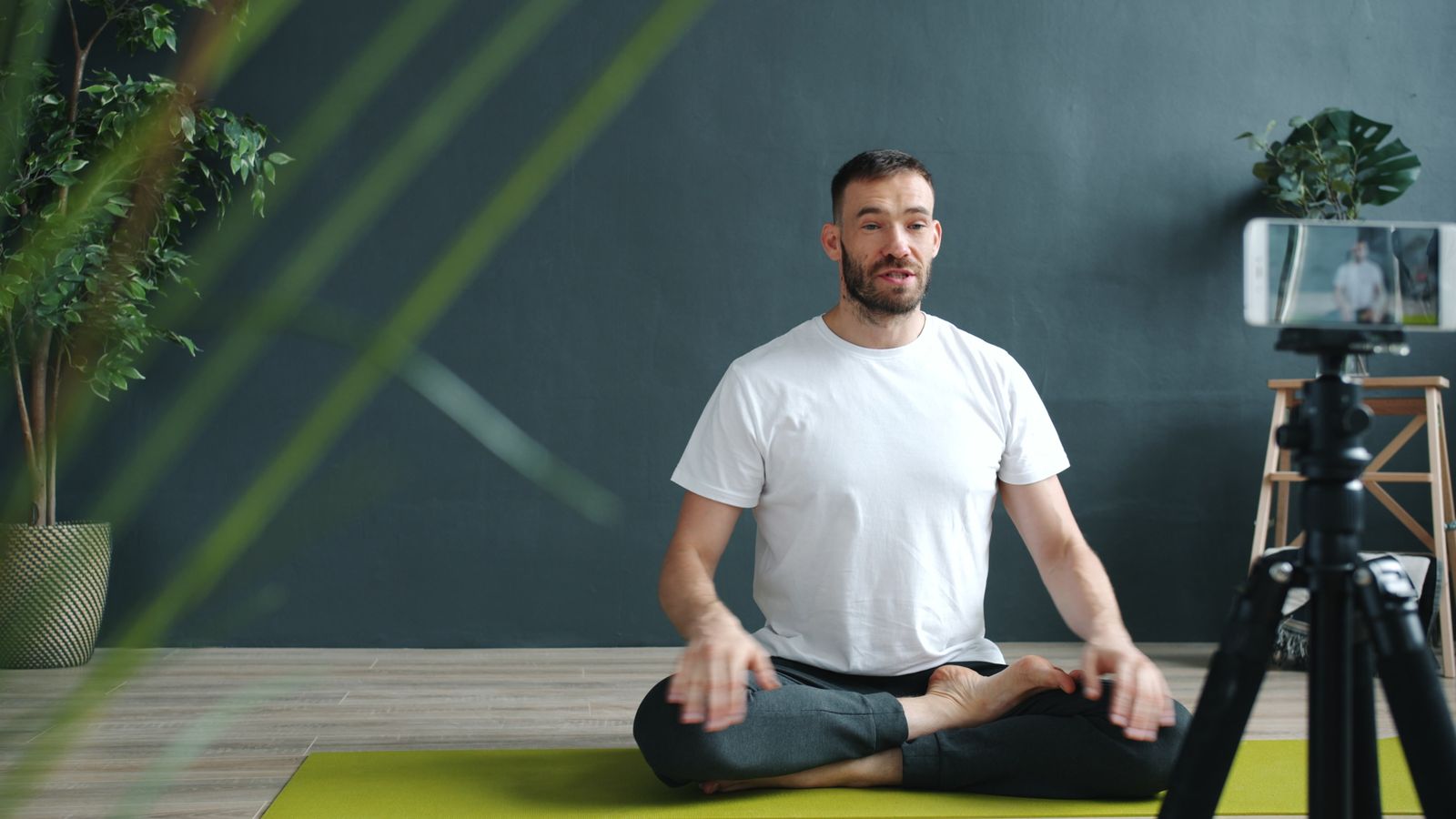
Privacy is underrated. Many first-timers feel self-conscious dancing on camera, and on-demand Zumba classes let you learn the steps in your living room with the camera off, then move to a live session when you feel more confident. Recorded sessions also come in different lengths, from about 20 minutes on a busy day to a full hour on a free Sunday, which makes it easier to keep the habit alive when time is short.
The weakness is the lack of a safety net. Nobody tells you your form has drifted, and nobody notices you have not played a video in ten days. If you choose recorded, build your own accountability by booking the time in your calendar like a meeting.
Do recorded Zumba classes burn fewer calories?
No. A 60-minute Zumba class burns about 300 to 600 kcal depending on body weight, effort and how much you commit to the big movements, and that range applies whether the class is live or recorded. Your body only responds to the movement, not to whether the instructor was recorded or streaming at that moment.
The myth survives because live classes often feel harder. Group energy and an instructor calling the next move make people push through the last ten minutes, while a recorded class is easier to quit early or do at half effort. If you choose recorded, treat the full duration as the standard. The real difference is effort and consistency, which both come from you.
For fat loss, the format matters far less than showing up three to five times a week and keeping food intake sensible. For a deeper look at class types, see our overview of Zumba classes.
Which format should you pick for your situation?
Pick live if you are a beginner or tend to skip workouts without a fixed slot; pick recorded if your hours change weekly or you feel shy on camera. If you are unsure, start with one live and one recorded class a week for two weeks, then keep whichever you actually attended.
Be honest about your own habits. Do not choose the format you wish you would follow; choose the one you have followed before with other workouts.
| Your situation | Better starting pick | Why |
|---|---|---|
| Complete beginner, never danced | Live, with a few recorded sessions on the side | Early corrections stop bad habits forming; recordings let you practise basic steps |
| Work shifts change every week | Recorded | A fixed slot will clash with work within a month |
| You skip workouts when nobody is watching | Live | A booked slot and a person expecting you changes behaviour |
| New mother or caregiver with unpredictable hours | Recorded, 20 to 30 minute sessions | You can pause when the baby wakes and resume later |
| Shy on camera | Recorded first, live later | Build confidence privately, then add a live class |
| Returning after a long break or injury | Live, after clearing it with your doctor | An instructor can offer low-impact options when you ask |
| Already fit and wanting variety | Both | Recorded for extra volume, live for fresh choreography |
If you are also comparing Zumba against other workouts, our pages on Zumba vs dance and other options help you decide whether Zumba is the right activity in the first place.
How to mix live and recorded Zumba in one week
A simple hybrid plan is two live classes and two recorded sessions per week, with at least two lighter days. That gives you about 3 to 4 hours of dancing, accountability on the days it matters most, and flexibility on the days it does not. Adjust the slots to match your own day.
| Day | Format | Length | Purpose |
|---|---|---|---|
| Monday | Live, evening | 45 to 60 min | Start the week with a fixed commitment |
| Tuesday | Rest or a 20-minute walk | 20 min | Recovery, joints and calves settle |
| Wednesday | Recorded | 30 min | Rehearse the steps from Monday |
| Thursday | Live, evening | 45 to 60 min | Second accountability session |
| Friday | Rest or light stretching | 15 min | Mobility for hips and lower back |
| Saturday | Recorded, any hour | 45 to 60 min | Longer session when time allows |
| Sunday | Rest | – | Full recovery |
Beginners can start with one live and one recorded class per week for the first two weeks and add sessions gradually. A sudden jump from nothing to six days a week is a common way to end up with sore shins and a lost habit. Our guide to online Zumba classes explains what to expect from a typical session.
Troubleshooting online Zumba at home
Most complaints about both formats come from setup, not from the class. A few fixes cover nearly all of them.
- The stream lags or freezes. Move closer to the router, close other apps, and keep mobile data as a backup. Roughly 5 Mbps is enough for a standard live stream; a recorded video buffers less because it can load ahead.
- You cannot see the instructor properly. A phone propped on a shelf is too small for fast footwork. Cast it to a TV or use a laptop placed about 2 metres away at eye level.
- Your room is tight. Clear a space of about 2 by 2 metres, move low tables, and choose smaller side steps rather than skipping the class.
- The floor is slippery. Tiles and Zumba do not mix well in socks. Wear cushioned sports shoes, and avoid dancing barefoot on hard flooring.
- You keep abandoning recorded sessions. Choose a fixed daily time, lay out your shoes and water the night before, and commit to ten minutes. Starting is the hard part; most people carry on once they are moving.
- You feel lost in a live class. That is normal in the first two or three sessions. Follow the footwork first, add the arms later, and tell the instructor you are new so cues can be adjusted.
Safety notes before you start
Zumba is a moderate to high-intensity cardio workout with plenty of jumping, turning and hip movement. Speak to your doctor before starting if you have joint problems, a heart condition, high blood pressure, are pregnant, or have not exercised for a long time. Stop if you feel chest pain, dizziness or sharp joint pain.
No format guarantees weight loss or toning; results depend on how often you train, what you eat and how you sleep. If you need individual attention that neither a class nor a video can offer, 1-on-1 personal training is a better fit, and the online weight loss trainer programme can help when fat loss is the main goal.
Frequently asked questions about live vs recorded Zumba classes
Are live Zumba classes better for beginners than recorded ones?
Usually yes. A live instructor can correct your footwork and posture in the first sessions, before habits form. Even so, a couple of recorded sessions help because you can pause and replay the basic steps. Many beginners do best with one or two live classes a week plus a short recorded practice session.
Do recorded Zumba classes burn as many calories as live ones?
They can. A 60-minute class burns about 300 to 600 kcal in either format, depending on your weight and effort. The difference is that people often push harder in a live class. If you follow a recorded class for the full length at full effort, the energy burned is similar.
Which is better for staying consistent: live or recorded?
It depends on your habits. If you need a booked slot and someone expecting you, live classes keep you consistent. If your schedule changes every week, recorded sessions are easier to fit in, provided you schedule them yourself. Pick whichever you will realistically attend four times a week.
Can I mix live and recorded Zumba classes in the same week?
Yes, and it works well. Use live classes for the days you need accountability and instructor feedback, and recorded sessions for busy days or extra practice. A common pattern is two live and two recorded sessions a week, with rest days in between.
What do I need to join an online Zumba class at home?
You need a clear space of about 2 by 2 metres, a phone, laptop or TV with a steady internet connection of roughly 5 Mbps, cushioned sports shoes, a water bottle and a towel. Check the class timing in IST before you book, and test your screen position before the first session.
Try one class this week
Pick one format, book it for this week and see how you feel afterwards. Browse Fitstrot’s online Zumba classes to choose your first session, and check the class page for current formats and timings.


