
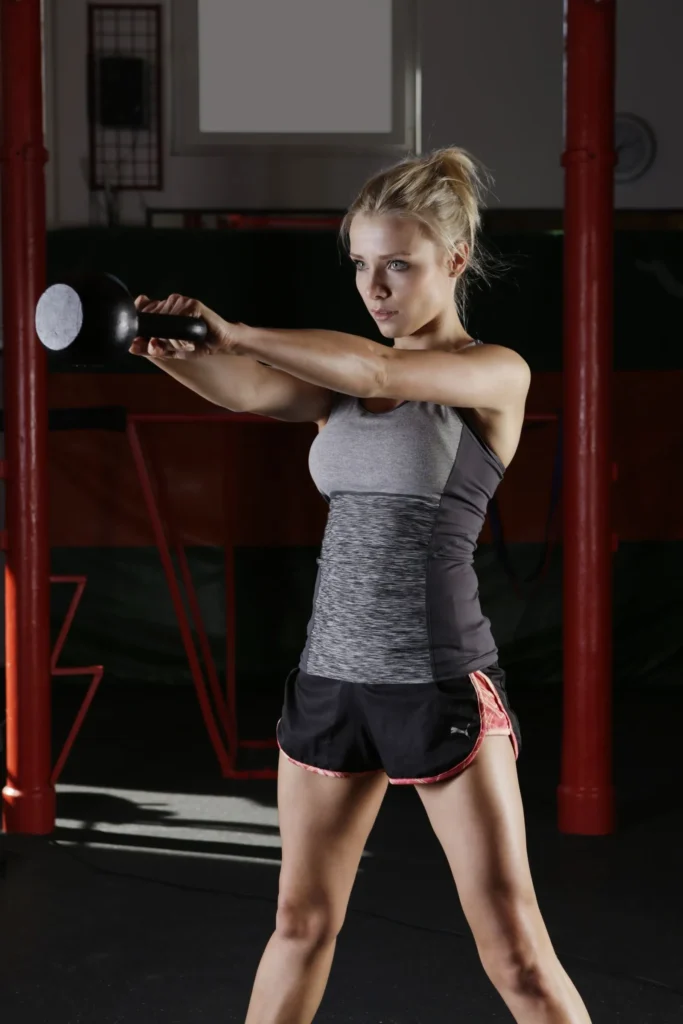
A kettlebell workout is one of the simplest ways to build strength, stamina and core control with a single piece of equipment, and it fits into the corner of a small Indian flat as easily as a gym floor. The bell’s weight hangs below and away from the handle, so your hips, back and grip have to work together to control it. That is why 25 minutes with one 8 to 16 kg bell can feel harder than an hour on machines. This guide gives you the key exercises, a plan you can follow, weights in kg, form fixes and the honest limits of the tool.
What is a good kettlebell workout?
A good kettlebell workout combines four patterns: a hip hinge (swing or deadlift), a squat (goblet squat), a push or pull (press, clean or row) and a core move (Turkish get-up or carry). Done for 25 to 35 minutes, two to three times a week, it trains strength, conditioning and trunk stability together.
Kettlebell vs dumbbell: which does what?
Neither is better in general. Kettlebells suit swings, cleans and carries because the offset load builds hip power and grip. Dumbbells suit presses, curls and rows because the weight sits evenly in your hand.
| Feature | Kettlebell | Dumbbell |
|---|---|---|
| Where the weight sits | Below and away from the handle | Centred in the hand |
| Best movements | Swing, clean, goblet squat, get-up, carry | Press, curl, row, lunge, fly |
| Main strength | Hip power, grip, conditioning | Controlled muscle building, easy isolation |
| Learning curve | Steeper, the swing needs coaching | Gentler, easier to self-teach |
| Space needed | About 2 m by 2 m clear floor | Very little, even beside a bed |
| Typical home use | One or two bells, short intense sessions | Adjustable pair, longer split sessions |
If you want the dumbbell side of the comparison, our guide to dumbbell workouts covers where those win, especially for single-arm strength and muscle size.
The four kettlebell exercises to learn first
Learn these in this order. Each one builds the pattern for the next, and together they cover almost every beginner kettlebell workout you will meet.
1. Kettlebell deadlift (the hinge)
Stand with the bell between your feet, push your hips straight back, keep your spine long and stand up by squeezing your glutes. This is the swing without the speed. Spend your first week here until your hips move back instead of your knees bending forward.
2. Goblet squat
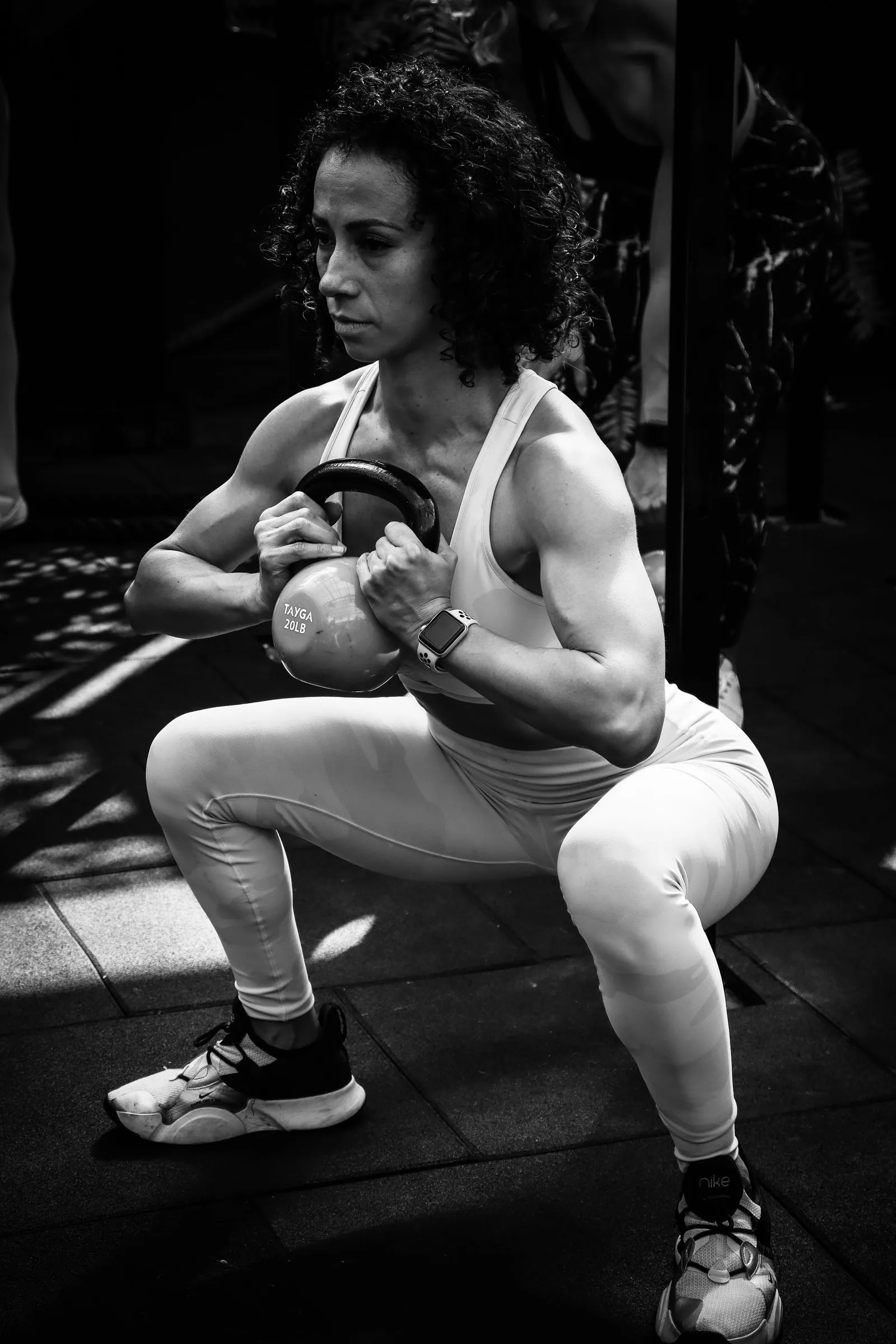
Hold the bell by the horns at chest height, elbows pointing down, and sit between your knees with your heels flat. The weight in front acts as a counterbalance, so most people find an upright squat easier here than with no weight at all.
3. Kettlebell swing
Hike the bell back between your thighs, then snap your hips forward so the bell floats to chest height. Your arms are only ropes. The power comes from the hinge, and the bell should hang weightless for a moment at the top. A kettlebell swing workout done in intervals, such as 30 seconds of swings and 30 seconds of rest, lifts your heart rate quickly.
4. Turkish get-up
You rise from lying down to standing while keeping the bell locked out overhead. Learn it with no weight first, then a light bell, and move slowly. It builds shoulder stability and body awareness better than most single exercises, but it punishes rushing.
Beginner kettlebell workout: a full session with sets, reps and cues
This is a complete kettlebell workout for beginners that takes about 30 to 35 minutes including a short warm-up. Do it on three non-consecutive days, for example Monday, Wednesday and Saturday.
| Exercise | Sets x reps | Rest | Form cue |
|---|---|---|---|
| Kettlebell deadlift | 3 x 10 | 45 sec | Hips back, shins near vertical, flat back |
| Goblet squat | 3 x 10-12 | 60 sec | Elbows inside knees, heels flat |
| Kettlebell swing | 4 x 15 | 45 sec | Snap the hips, arms stay loose |
| Single-arm row | 3 x 10 per side | 45 sec | Pull the elbow to the hip, no twisting |
| Clean and press | 3 x 6 per side | 60 sec | Keep the bell close, press with ribs down |
| Suitcase carry | 3 x 20 steps per side | 45 sec | Stand tall, do not lean toward the bell |
Warm up first with five minutes of hip circles, bodyweight squats, cat-cow and a few light deadlifts. When the plan feels manageable, change one thing only: add a fifth round of swings, or move up one bell size. Do not do both in the same week.
A simple 4-week progression
| Week | Focus | What changes |
|---|---|---|
| 1 | Learn the hinge and squat | Replace swings with deadlifts, 3 sets each, light bell |
| 2 | Add the swing | Swings 3 x 10, then add rows and carries |
| 3 | Full session | Follow the table above exactly |
| 4 | Build volume | Swings 5 x 15, or try a bell 2 kg heavier |
How heavy should your kettlebell be?
Most beginner women start with an 8 to 12 kg kettlebell and most beginner men with 12 to 16 kg, though someone brand new to lifting may start at 6 kg. Pick a weight you can swing for 15 clean reps without your lower back rounding, then size up when the last reps feel easy.
These numbers are starting points, not rules. Your past training, body weight and grip all matter. Goblet squats and deadlifts can take a heavier bell than swings or presses. If your back rounds or your arms lift the bell, the weight is too heavy that day, whatever the number on it says.
Myth: women need a different kettlebell workout
A kettlebell workout for women uses the same movements as one for men: hinge, squat, press, row, carry. The hinge in a swing works the same way in every body. What changes is starting strength, training history and recovery, not the exercise list.
In practice, the real difference is how you set load. A woman who has done years of yoga or Pilates may pick up the hinge faster than a man who has only bench pressed, because she already has body awareness. A man with a desk job and tight hips may struggle with the same swing. Base your weight and volume on where you are starting, not on a “for women” or “for men” label.
Kettlebell workout at home: setting up a small Indian space
You need roughly a 2 m by 2 m clear patch, a non-slip surface and one bell between 8 and 16 kg. A rubber mat or thick exercise mat protects both your tiles and your feet.
- Floor: avoid polished marble or wet bathroom tiles. Wear flat shoes or go barefoot on a grippy mat.
- Noise: if you live in a flat with neighbours below, place the mat on the floor and lower the bell gently instead of dropping it.
- Ceiling and fans: keep overhead moves like presses and get-ups away from ceiling fans and low lights.
For ideas that need no equipment on lighter days, see our home workout guide,.
How do you build a kettlebell abs workout without crunches?
A kettlebell abs workout works best with anti-rotation and anti-extension moves: halos, suitcase carries and dead bugs, 3 sets each, finishing your main session. These train your core to resist movement, which protects your spine, rather than bending it repeatedly as crunches do.
- Halo: circle the bell around your head slowly, ribs stacked over your hips, 8 per direction.
- Suitcase carry: walk 20 steps holding the bell in one hand and keep your shoulders level. Your opposite-side obliques fire hard to stop you tipping.
- Dead bug with the bell: lie on your back, hold the bell above your chest, and lower opposite arm and leg while your lower back stays pressed down.
Pick two of these after your main session. Core work does not need its own hour.
Can a kettlebell workout help with fat loss?
Yes, as one part of the plan. A 30-minute swing and squat session burns roughly 200 to 350 kcal depending on your body weight and effort, but fat loss still needs a sustained calorie deficit of about 300 to 500 kcal a day. Most beginners lose roughly 0.25 to 0.5 kg a week this way.
That means a kettlebell workout for fat loss cannot out-train a diet that is too generous. It also cannot spot-reduce belly or thigh fat. What it does well is preserve muscle while you eat less and raise your conditioning.
Protein helps. Active people usually do well on roughly 1.2 to 1.6 g of protein per kg of body weight, which in Indian meals might come from eggs (about 6 g each), paneer (about 18 g per 100 g), dal, curd and sprouts. If you want a food plan fitted to your routine, our online nutritionist consultation builds one around your schedule, and the online weight loss trainer program pairs training with accountability.
Troubleshooting: why does my swing feel wrong?
Almost every swing problem is a hinge problem. If your back aches, your arms burn or the bell feels wild, the fix is usually less weight, a stronger hip drive and a slower setup. Match your symptom to the cause below.
- Lower back aches the next day: you are rounding, over-leaning at the top, or using a bell that is too heavy. Go lighter and finish in a tall standing position, not a back bend.
- Arms and shoulders tire first: you are lifting with your arms. Think of the bell as being thrown forward by your hips.
- It looks like a squat: your knees are bending too much. Push your hips back as if closing a car door with your backside.
- Forearm bruises on the clean: the bell is crashing onto your arm. Slow down, keep it close to your body and let it rotate around your hand.
Who should be careful with kettlebell training?
Kettlebell work is not right for everyone on day one. See your doctor or a physiotherapist first if you have a history of back or disc problems, a recent shoulder injury, uncontrolled high blood pressure, heart conditions, or if you are pregnant or recently postpartum.
Stop a set if you feel sharp pain, tingling, chest tightness or dizziness. Muscle burn is normal; joint pain is not.
How to combine kettlebells with the rest of your training
Kettlebells work well on two or three days a week alongside other lifting. Keep hard swing days apart. A seated cable row workout and a cable crossover workout balance the ballistic bell work with controlled back and chest training, and our workout plan guide shows how to space the week.
Get your form checked by a coach
If you want feedback on your swing, squat and weight progression instead of a generic PDF, Fitstrot coaches build kettlebell training into 1-on-1 personal training sessions online. Book a trial and send a short video of your swing for your first form check.
Frequently asked questions
What is a good kettlebell workout for beginners?
A good beginner kettlebell workout uses a light bell for deadlifts, goblet squats, swings, single-arm rows and carries, in 3 to 4 sets each over 25 to 35 minutes, three days a week. Start with the hinge and squat before adding speed, and stop each set while your form is still clean.
How often should you do a kettlebell workout?
Two to three full-body sessions a week suits most beginners, with at least one rest or light activity day between sessions. Advanced lifters may train up to four times, but swings and cleans load your glutes, hamstrings and lower back, so recovery matters more than extra volume.
Is a kettlebell workout enough to lose weight?
It helps, but it is not enough alone. A kettlebell session burns roughly 200 to 350 kcal in 30 minutes, while weight loss depends on a steady calorie deficit of about 300 to 500 kcal a day. Combine training with a food plan and daily walking for the best results.
Which kettlebell weight should a beginner start with?
Women usually start with 8 to 12 kg and men with 12 to 16 kg, though complete beginners can begin at 6 kg. Choose a bell you can swing for 15 clean reps. If your back rounds or your arms do the lifting, switch to a lighter one.
Can I do a kettlebell workout at home without a gym?
Yes. You need about 2 m by 2 m of clear floor, a non-slip mat and one bell between 8 and 16 kg. Most people get a full session in 25 minutes using deadlifts, goblet squats, swings, rows and carries, away from fans and low ceilings.


