
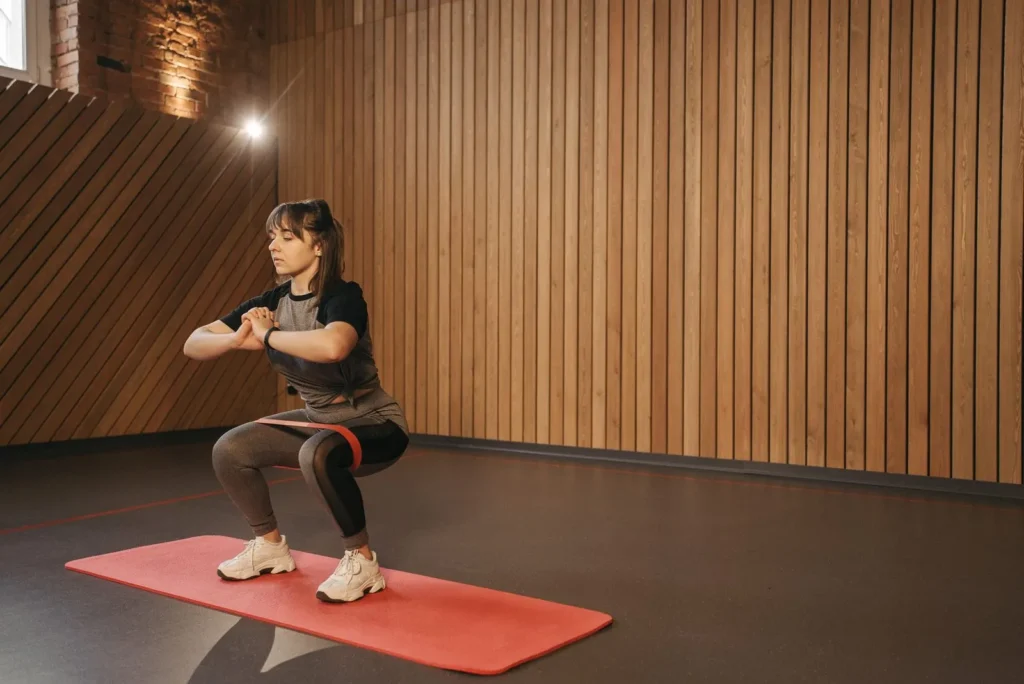
A good inner thigh workout trains the adductors, the five muscles that pull your leg towards the midline, using three kinds of work: a direct adduction move, a wide-stance compound lift and a stability hold. Two sessions a week for six to eight weeks is a realistic block before you judge the results. Below you get the full session with sets, reps and form cues, a home version, a weekly schedule, fixes for common problems, and a straight answer on what these inner thigh exercises can and cannot do for fat.
Which Muscles Does an Inner Thigh Workout Train?
An inner thigh workout trains the hip adductors: adductor magnus, adductor longus, adductor brevis, gracilis and pectineus. Their main job is pulling the thigh inward, but they also help the hips flex and extend, steady your pelvis when you stand on one leg, and control sideways movement. The adductor magnus is the largest of the group.
Most gym leg days are built around squats, leg presses and curls, which move you forwards and backwards. The adductors work best when your legs move sideways or step wide. Without that, they get only indirect stimulus, which is why many people feel strong on leg day and still feel nothing inside the thigh.
This group also matters beyond looks. Weak adductors are commonly linked to groin strains in people who sprint, kick or change direction quickly, which is why some version of the Copenhagen plank turns up in most injury prevention programmes for football and cricket players. If you want the wider picture of quads, hamstrings and glutes, our guide to thigh workouts covers the whole leg.
The Inner Thigh Workout: Sets, Reps and Form Cues
Here is a session we would program for someone who wants dedicated adductor work. It mixes one isolation exercise, one heavy compound lift, one single-leg move and a stability finisher, and takes about 35 to 40 minutes including warm-up. Choose weights that leave you two or three reps short of failure on every set.
| Exercise | Sets x Reps | Rest | Form cue |
|---|---|---|---|
| Cable or band hip adduction | 3 x 12-15 per leg | 45 sec | Stand tall, cross the working leg in front, and take 2-3 seconds to return |
| Sumo squat (dumbbell or barbell) | 4 x 8-12 | 60-90 sec | Toes out 30-45 degrees, knees follow toes, sit straight down between the feet |
| Curtsy lunge | 3 x 8-10 per leg | 45-60 sec | Step back and across, keep the front knee stable, drive through the front heel |
| Copenhagen plank (bent-knee version first) | 3 x 15-20 sec per side | 45 sec | Top leg on the bench, hips stacked, squeeze the inner thigh to stay level |
| Side-lying leg lift (bottom leg) | 2 x 12-15 per leg | 30 sec | Top leg bent in front on the floor, lift the straight bottom leg with the heel leading |
Warm up first with five minutes of easy cycling or brisk walking, then leg swings front to back and side to side, and a set of bodyweight lateral lunges. Do the whole circuit once a week as its own session, or split the exercises across two lower-body days if you already train legs twice a week.

Myth Check: Do Inner Thigh Exercises Burn Inner Thigh Fat?
No. Spot reduction does not work: training a muscle does not make the body burn the fat sitting directly over it. Fat comes off across the whole body depending on overall energy balance, hormones and genetics. Inner thigh exercises build the adductor muscle underneath; they do not choose where fat leaves.
What the exercises do give you is a firmer, stronger muscle. As your overall body fat falls through eating slightly below maintenance and training consistently, that muscle becomes more visible.
Many women want inner thigh exercises mainly for leaner-looking legs. That goal is better served by full lower-body training plus a modest calorie deficit, rather than isolating one muscle. Our leg workout guide for women in the gym and the leg day workout for men go deeper on volume, and a coach on our online weight loss trainer programme can set the eating side with you.
A note on the “thigh gap”: it depends mostly on pelvis width and bone structure, which no exercise changes. Aim for strength and comfort, not a gap your skeleton may not allow.
How to Do the Key Moves Properly
Banded or cable hip adduction
Loop a resistance band around a sturdy pole or the leg of a heavy bench at ankle height, with the other end around your inner ankle. Stand on the far leg, hold a wall for balance and sweep the working leg across in front of the standing leg. Pause for a second, then take two to three seconds to let it return.
Sumo squat
Set your feet about one and a half times shoulder width with toes turned out. Hold a dumbbell vertically between your legs, keep your chest tall and lower until your thighs are roughly parallel to the floor. Push the floor apart with your feet as you stand.
Copenhagen plank
Lie on your side with your top foot or knee on a bench or sturdy chair and your elbow under your shoulder. Lift your hips so the body forms a straight line, with the bottom leg hanging or tucked beneath the bench. Start with the top knee on the bench and the bottom leg off the floor for 15 seconds a side. Move to the full straight-leg version only when the short version feels easy.
Curtsy lunge
Step one foot back and diagonally behind the other as if curtsying, lowering until the front thigh is close to parallel. Keep your front knee pointing the same way as your toes and your torso upright. Drive through the front heel to return.
Can You Do an Inner Thigh Workout at Home?
Yes. An inner thigh workout at home works well with one resistance band, a towel and a sturdy chair. Bodyweight sumo squats, curtsy lunges and side-lying lifts need only floor space, and a band replaces the cable machine for adduction. Progress by adding reps, slowing the lowering phase to 3 seconds, or moving to a stronger band.
| Gym exercise | Home swap | How to make it harder |
|---|---|---|
| Cable hip adduction | Resistance band hip adduction | Slower return, thicker band, 2-second pause at the end |
| Barbell or dumbbell sumo squat | Bodyweight sumo squat, or a backpack or filled water can held at the chest | 3-second lowering, 2-second pause at the bottom, single reps with a heavier bag |
| Adductor machine | Pillow or ball squeeze between the knees, lying on your back with feet flat | 5-second squeezes, 10 reps, add a hip bridge |
| Copenhagen plank | Same move with the top leg on a chair or sofa edge | Longer holds, then the straight-leg version |
| Slider lateral lunge | Sliding lunge with a towel under the working foot on a smooth tile floor | Slide further out, slow the return, add light dumbbells |
If you want a complete beginner-friendly plan around these moves, our home workout guide shows how to build a full week with no equipment. Pick a band thick enough that the last three reps feel hard.
How Often Should You Train Your Inner Thighs?
Train your inner thighs directly two times a week with at least 48 hours between sessions. The adductors are a smaller muscle group and already get indirect work from squats, lunges and deadlifts. Two sessions of 6 to 10 hard sets each, repeated for six to eight weeks, is enough to build strength without overuse.
| Day | Session | Adductor work |
|---|---|---|
| Monday | Lower body (squat, hinge, lunge) | Sumo squat and curtsy lunge, 4 + 3 sets |
| Tuesday | Upper body or yoga | None |
| Wednesday | Brisk walk or easy cardio, 30-40 min | None |
| Thursday | Lower body (hinge, step-ups, glutes) | Band adduction, Copenhagen plank, side-lying lifts |
| Friday | Upper body | None |
| Saturday | Zumba, cycling or sport | Lateral movement counts as light adductor work |
| Sunday | Rest or gentle stretching | Butterfly stretch, 2 x 30 sec |
If you are rebuilding after a mild groin strain that a doctor or physiotherapist has cleared you to train, three lighter sessions a week focused on slow, controlled work, such as short Copenhagen holds, usually suit better than two heavy ones. Sharp pain high on the inner thigh or near the groin should send you to a physio, not back to the gym.
Recovery matters as much as the sets. Sleep seven to eight hours, eat a protein source at every meal (dal, paneer, curd, eggs, chicken or fish, depending on your diet), and aim for roughly 1.2 to 1.6 grams of protein per kg of body weight if you are training hard. For a 60 kg person that is about 72 to 96 grams a day.
Troubleshooting: Why Don’t My Inner Thighs Feel It?
Most “no feeling” problems come down to speed, range or stance. If you rush reps, use a band that is too light, or stop the squat well above parallel, your quads and glutes take over. Slow down, go lower, widen the stance slightly and pause at the point where the inner thigh feels stretched.
- Knees hurt in sumo squats or curtsy lunges: your toes are turned out further than your hips allow. Bring the feet in a little and keep knees tracking over the middle toes.
- Lower back takes over in Copenhagen planks: your hips are sagging. Raise the bench height only after you can hold a straight line, and shorten the hold.
- Inner thigh cramps mid-session: you probably skipped the warm-up or went too heavy too fast. Drop the load by about 20 per cent and rebuild over two weeks.
- No visible change after a month: check food intake and total weekly steps first. Strength in the adductors usually shows up before any visible change.
Who Needs a Modified Inner Thigh Workout?
Beginners: Start with bodyweight sumo squats, side-lying leg lifts and ball squeezes for two weeks, then add bands. Women after pregnancy: pelvic floor and abdominal separation can make wide-stance and adduction work uncomfortable, so get clearance from your doctor first and begin with ball squeezes. People with hip, knee or groin pain: do not train through pain; see a doctor or physiotherapist first. Runners and sports players: prioritise Copenhagen holds and lateral lunges.
If you carry extra weight and want something low impact to start with, online yoga classes train hip mobility and adductor flexibility without any load, which pairs well with the strength work above.
Where Inner Thigh Work Fits in a Full Leg Programme
Inner thigh work should sit beside your regular leg day, not replace it. If you only do adductor isolation and skip squats, hinges and step-ups, you leave most of your leg muscle undertrained. Add the session above after you already have a basic lower-body routine, and use a structured workout plan to keep the week balanced.
Expect slow feedback. Adductor strength is harder to feel than quad or glute strength because the muscle is smaller. Track something measurable, such as band thickness, sumo squat weight or Copenhagen plank seconds, and judge progress week to week.
If you would rather have a coach set this around your strength, schedule and any past groin or knee trouble, 1-on-1 personal training with Fitstrot gives you a live-checked plan that changes as you improve.
Inner Thigh Workout FAQs
How long does it take to see results from inner thigh exercises?
Most people feel stronger in the adductors within three to four weeks, and see firmer-looking thighs after six to eight weeks of two sessions a week. Visible fat change depends on overall diet and activity, so timelines vary and nothing here is guaranteed.
Do inner thigh exercises reduce inner thigh fat?
No. Fat loss happens across the whole body, not in the area you train. Inner thigh exercises build and firm the muscle underneath, and that muscle looks more defined as overall body fat drops through a modest calorie deficit and regular training.
Is the adductor machine worth using?
It is useful for beginners because it is stable and easy to learn, and it loads the adductors directly. It should not be your only exercise, though. Combine it with sumo squats, lunges and Copenhagen planks so the muscles also work through sideways and balance-based movement.
Why do my inner thighs hurt after an inner thigh workout?
Dull soreness for one to three days is normal, especially after the first few sessions or after stretched-position work like sumo squats. Sharp pain near the groin, swelling or pain that worsens over days is not normal; stop training and see a doctor or physiotherapist.
Are inner thigh exercises useful for sports?
Yes. The adductors help you sprint, kick, cut and change direction, and weak ones are linked to groin strains. Copenhagen planks, lateral lunges and band adduction are common choices for football, cricket, badminton and dance, but build load gradually and warm up well.


