
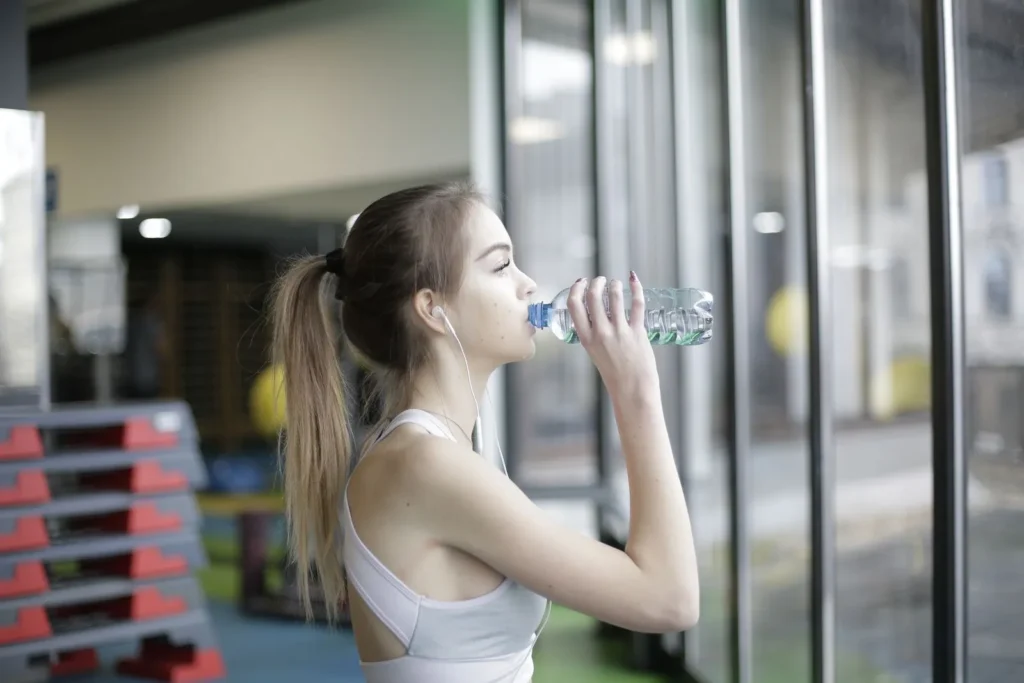
Good hydration for zumba comes down to three windows: sip steadily in the 2 to 3 hours before class, take small sips every 15 to 20 minutes while you dance, and replace what you sweated out over the next few hours. For most adults that means about 400 to 600 ml before, about 150 to 200 ml at each pause, and roughly 1.25 to 1.5 litres for every kilogram of sweat lost afterwards. In an Indian summer, with a ceiling fan instead of air conditioning, you will sweat more than you expect.
This guide gives you the numbers, the desi drinks that fit each moment, the role of salt, and the signs that tell you to slow down. Treat every figure as a starting point; your size, the room and the class will move it. If you have a heart, kidney or blood pressure condition, or a doctor has limited your fluids, read the doctor note near the end first.
How much water should you drink before, during and after Zumba?
Drink about 400 to 600 ml (two glasses) of water 2 to 3 hours before Zumba, a top-up of 150 to 200 ml about 20 minutes before, about 150 to 200 ml every 15 to 20 minutes during class, and roughly 1.25 to 1.5 litres for every kilogram of sweat lost afterwards, spread over a few hours.
| When | About how much | How to do it |
|---|---|---|
| The day before | Steady sipping through the day | Aim for pale straw-coloured urine by evening, not clear and not dark |
| 2 to 3 hours before class | About 400 to 600 ml (2 glasses) | Sip over 10 to 15 minutes, which leaves time to absorb it and use the bathroom |
| 20 to 30 minutes before | About 150 to 200 ml (1 small glass) | Only if you are thirsty or your urine is dark; skip it if you feel full |
| During class, every 15 to 20 minutes | About 150 to 200 ml | A few mouthfuls at natural pauses, not one big gulp |
| First 30 minutes after | About 300 to 500 ml | Sit, cool down, then drink slowly |
| Next 2 to 4 hours | About 1.25 to 1.5 litres per kg of sweat lost | Spread across water, a meal, chaas or coconut water |
A standard Indian glass holds roughly 200 to 250 ml, so “two glasses” before class is a practical way to measure without a jug. Over a 60-minute class, the during-class sips add up to about 450 to 800 ml, which is a bottle of 750 ml finished or nearly finished.
To find your own sweat loss, weigh yourself in light clothing before and after a class. A drop of 0.5 kg means you lost about half a litre of fluid, and you would aim to drink roughly 600 to 750 ml over the next few hours. That weight is water, not fat, and it returns once you rehydrate. If you finish class more than about 2 percent lighter than you started, you are probably under-drinking during it.
Nimbu pani, coconut water, ORS-style drinks or chaas: which one, and when?
For most classes under an hour, plain water is enough. Add a salty-sweet drink when the class is longer, the room is hot or you sweat heavily. Nimbu pani and homemade ORS-style drinks suit sipping during class; coconut water and chaas suit the hour after it.
| Drink | Rough recipe or serving | Best moment | Watch out for |
|---|---|---|---|
| Plain water | As per the timing table | Always | On its own it replaces fluid but not salt after very heavy sweating |
| Nimbu pani with salt | 1 glass (200 to 250 ml): juice of half a lemon, a small pinch of salt, about 1 teaspoon sugar or jaggery | During or just after class | Too much sugar can upset a moving stomach; go easy if you get acidity |
| Tender coconut water | 1 glass, about 200 to 250 ml | After class, or 30 to 60 minutes before a long one | Rich in potassium but low in sodium; add a tiny pinch of salt after a very sweaty session |
| Homemade ORS-style drink | 1 litre water, juice of 1 lemon, about 2 to 3 teaspoons sugar or jaggery powder, about a quarter teaspoon salt | Sipped during classes of 60 minutes or more, or in intense heat | This is lighter than a medical rehydration recipe and is not a treatment for illness; ask your doctor if you have diabetes |
| Chaas (buttermilk) | 1 glass, about 200 ml, thin, with a pinch of salt and roasted jeera | Within an hour after class, with food | Too heavy to drink during dance; choose thin chaas over thick, creamy versions |
You do not need to buy anything special. These drinks come from the kitchen, cost very little and work with the way Indian meals are built. What you eat around class matters too, and our guide to pre and post-workout nutrition for Zumba shows how a light snack beforehand and a dal, curd or khichdi meal afterwards also bring back water and salt. If you want a plan built around your own food habits and health, an online nutritionist consultation can map it out.
Sweat and salt: why water alone sometimes falls short
Sweat is mostly water, but it carries sodium and smaller amounts of potassium and other minerals. A lively Zumba hour can cost roughly 0.5 to 1.5 litres of sweat, and more in a hot room. Sodium in sweat varies a lot between people, often somewhere around 0.5 to 1 g per litre.
When the class is short, the food you eat later covers the salt you lost. When the class is long or sweaty, drinking large amounts of plain water can leave the remaining sodium in your blood more dilute, which is why a pinch of salt in nimbu pani or a salted homemade drink helps. You might be a salty sweater if you see white marks on your clothes after they dry, your eyes sting from sweat, or you crave something salty after class.
Intensity also changes the picture. A high-energy format such as Zumba in the circuit raises your sweat rate, so lean toward the upper end of the ranges above. A gentler format such as Zumba Gold usually produces less sweat, so the lower end is often enough.
Myth check: “The more water I drink, the better I dance”
More is not better. Drinking far beyond what you sweat out can dilute the sodium in your blood, causing a sloshing stomach, nausea, headache and, in rare severe cases, confusion. The goal is to match your losses, not to beat them. Pale straw urine and comfortable sips are the finish line.
Two related corrections are worth making. First, a bigger drop on the scale after class does not mean you burned more fat; it only shows how much water you lost. Second, forcing down a litre in the ten minutes before class does not “pre-load” you. The extra mostly sits in your stomach or leaves as urine, and it makes spins and jumps uncomfortable. Spread your intake, and stop when your stomach says enough.
What dehydration looks like mid-class, and what to do
| What you notice | What it may mean | What to do |
|---|---|---|
| Dry mouth, strong thirst, dark yellow urine | Mild fluid shortfall | Sip now and drink the full pre-class amount next time |
| Headache or tiredness out of proportion to the workout | Fluid and salt running low | Switch to low-impact steps, sip, and have nimbu pani or chaas afterwards |
| Calf or thigh cramps | Can be linked to fatigue, fluid and salt loss | Pause, stretch gently, sip a lightly salted drink |
| Dizziness or a heartbeat that does not settle | Significant strain or heat stress | Stop, sit somewhere cool, sip slowly, and do not return until you feel steady |
| Confusion, fainting, vomiting, or stopping sweating in the heat | Possible heat illness | Stop immediately, cool the body, and get medical help |
| Bloated sloshing stomach, nausea, headache after drinking a lot of plain water | Possibly too much fluid | Stop drinking for a while, have something lightly salty, and seek help if it worsens |
The first two rows are the usual ones, and they are fixed by planning. The last three need a different response: stop, rest and get help, not a quick sip and a return to the floor.
A walkthrough: hydrating for a 7 pm class at home
- At lunch, eat normally with dal, curd or chaas, and sip water through the afternoon.
- Between 4 and 5 pm, drink about 400 to 600 ml in small sips, roughly two glasses.
- At 6:40 pm, have about 150 to 200 ml if you are thirsty, and use the bathroom.
- During class, keep a marked 750 ml bottle within reach. Take a few mouthfuls every 15 to 20 minutes and aim to finish about half to three-quarters of it.
- At 8 pm, weigh yourself, then have a glass of coconut water or nimbu pani.
- With dinner, drink to thirst. By bedtime your urine should be pale straw.
Our live online classes are led by Yash Pathak, Fitstrot’s lead Zumba trainer, who is ZIN Licensed, ACE Certified and Strong Nation Certified. Keep your bottle in frame, sip during the slower tracks or the cool-down, and treat a quick water break as part of dancing well. If you are new to dancing from home, our guide to online Zumba classes explains what a session looks like.
Mornings, monsoon and summer: adjusting your hydration
You wake up a little dry after a night without fluids, so for a morning class have a glass or two of water on waking and a small top-up about 20 minutes before you start. Do not gulp it while you are changing.
In peak summer, start at the top of each range and sip more often. In monsoon humidity, sweat evaporates poorly, so you may feel less sweaty on the skin while losing just as much fluid. An air-conditioned room does not cancel sweat loss either; it only hides how much you are losing. Heavy cotton or layered clothing traps heat, so lighter, breathable clothes make the same class feel easier and reduce how much you need to replace.
After the last track: hydration and recovery
Fluid balance supports how well you bounce back the next day. If you finish a class dry, you tend to feel flatter, heavier-legged and hungrier than you should. Our guide to recovery and rest days for Zumba places hydration alongside sleep, food and rest days, and the benefits of Zumba are easier to enjoy when you are not starting every class under-hydrated.
See your doctor first if you have heart, kidney or blood pressure conditions
Everything above is general information for healthy adults. If you have a heart condition, kidney disease, high or low blood pressure, or a doctor has told you to limit fluids or salt, check with your doctor before using these amounts, the salted drinks or the ORS-style recipe. If you have diabetes, ask how sugar in drinks fits your plan. If you are pregnant or breastfeeding, your fluid needs differ, so ask your doctor too.
Frequently asked questions
How much water should I drink during a Zumba class?
About 150 to 200 ml every 15 to 20 minutes, which is roughly 450 to 800 ml across a 60-minute class. Take a few mouthfuls at natural pauses rather than one big gulp, and adjust for heat and how much you are sweating.
Is coconut water enough for Zumba?
Coconut water is a good drink for the hour after class because it gives fluid and potassium. It is low in sodium, so after a long or very sweaty session add a tiny pinch of salt or have a salty meal.
Can I drink only nimbu pani during class?
You can sip nimbu pani with a small pinch of salt and about 1 teaspoon of sugar per glass, but keep some plain water too. Large amounts of sugary drinks can unsettle your stomach while you are jumping and turning.
How do I know if I am dehydrated after Zumba?
Dry mouth, strong thirst, a headache, unusual tiredness, cramps and dark yellow urine are common signs. Dizziness, confusion or fainting need you to stop and get medical help, not just drink water.
Can you drink too much water during Zumba?
Yes. Drinking well beyond what you sweat can dilute blood sodium and cause bloating, nausea and headache. Match your losses with sips, stop when your stomach feels full or sloshy, and ask your doctor if you have a fluid limit.
Join a live session in Fitstrot’s online Zumba classes and try the sipping routine from this guide from your very first warm-up.


