
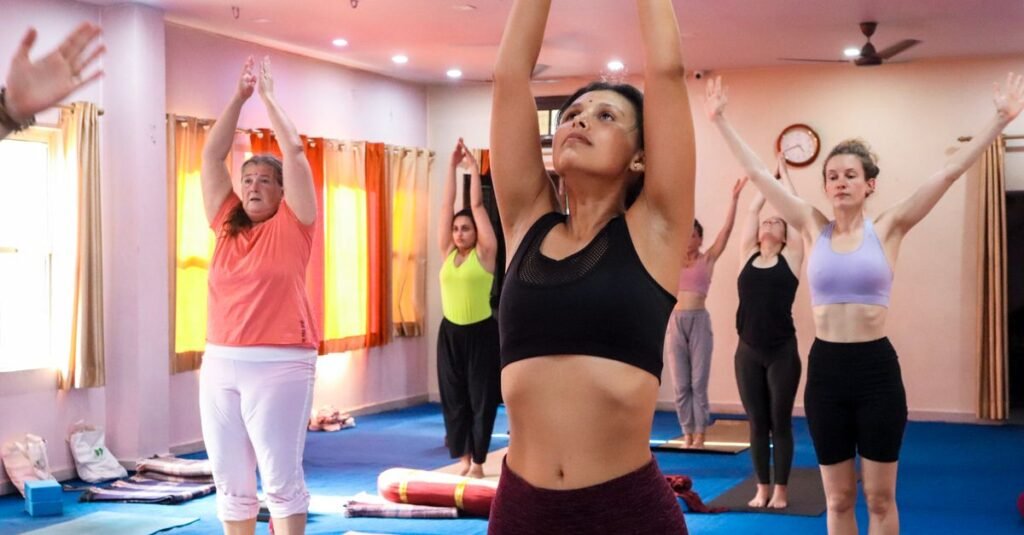
If you want to know how to become a yoga instructor in India, the short version is this: build a steady personal practice, complete a structured teacher training of at least 200 hours, pass a recognised certification, and then log real teaching hours under feedback. The part most guides skip is that India has two parallel credentials, a government one and an international one, and they open different doors. This guide lays both out side by side with the actual hours, exam rules and fees published by each body, so you can plan the route that fits your goal.
Most people who search how to become yoga teacher are already regular practitioners who want a clear sequence and an honest picture of cost, time and pay. Nothing here is a promise of income. Teaching yoga well is a skilled job; the paperwork is the easy part.
How long does it take to become a yoga instructor?
Plan on 4 to 12 months for a first credential. A residential 200-hour course runs about 3 to 4 weeks full time; weekend formats take 4 to 9 months. India’s Yoga Certification Board rates its entry certificate as equivalent to not less than 200 hours of training, and you sit a separate theory and practical exam before you can call yourself certified.
The clock starts before the course: reputable schools expect six months to a year of regular practice. After it, budget three to six months of low-stakes teaching before you run a mixed-level class alone.
A realistic timeline with a full-time job:
- Months 1 to 6: practise 4 to 5 days a week, try several styles, read the basics of yoga’s background (our guide to the history of yoga is a good start).
- Months 7 to 12: complete a weekend or online 200-hour training.
- Month 12 or 13: register with Yoga Alliance or sit the YCB exam, or both.
- Months 13 to 18: teach friends, a housing society group or a free community class, and collect feedback.

Yoga teacher certification in India: Yoga Alliance RYT or YCB?
The two main credentials serve different markets. The Yoga Certification Board (YCB) was set up in March 2018 by the Ministry of Ayush and certifies teachers through an exam. Yoga Alliance is a US-based registry: you complete a course at a Registered Yoga School, then pay to list yourself as an RYT 200.
Neither is a legal licence like a medical registration. Both signal to studios, schools and students that your training met a defined standard, and many Indian teachers hold both.
| Factor | YCB (India) | Yoga Alliance RYT |
|---|---|---|
| Who runs it | Board set up by the Ministry of Ayush, Government of India (2018) | Non-profit membership registry based in the USA |
| How you qualify | Pass a theory exam and a practical exam, either as an open candidate or through an accredited institute | Graduate from a Registered Yoga School (RYS); no separate exam |
| Entry level | Yoga Protocol Instructor (YPI), equivalent to at least 200 hours | RYT 200, after a 200-hour RYS course |
| Pass mark | 70% in theory and 70% in practical, scored separately | Set by your school |
| Upfront fee | Enrolment Rs 500 (YPI) to Rs 1,500 (YT&E) per the 2023 leaflet, plus an exam fee paid to the assessing institute | USD 50 application fee plus USD 65 yearly dues (USD 115 in year one) |
| Validity and renewal | 3 to 5 years depending on level; renew through Continuing Yoga Education | Annual dues plus 75 hours of continuing education every 3 years |
| Best for | Schools, colleges, Ayush institutes, government and CSR programmes in India | International studios, retreats, foreign students online |
The Yoga Alliance figures come from its 2025 guide to the RYT application process, which lists the USD 50 application fee, USD 65 annual dues and the rule that every RYT must log 75 continuing-education hours in each three-year cycle, of which 45 are teaching and 30 are further training. Note that YCB has since issued a notification revising its enrolment fees, so check the current amount on the YCB website before you pay.
Yoga teacher qualification ladder: what each YCB level lets you teach
YCB does not issue a single “yoga teacher” certificate. It runs a ladder, and each rung defines where you are allowed to work. The detail below comes from YCB’s own Guideline for Yoga Professionals, which states that certification of yoga professionals began on 1 April 2019.
| Level | Training equivalent | Credits | Validity | Enrolment fee (2023 leaflet) | Where you can teach |
|---|---|---|---|---|---|
| Yoga Protocol Instructor (YPI) | Not less than 200 hours | 12 | 5 years | Rs 500 | Basics and the Common Yoga Protocol in parks, societies and community groups |
| Yoga Wellness Instructor (YWI) | Not less than 400 hours | 24 | 3 years | Rs 1,000 | Wellness and prevention classes in schools, studios and workplaces |
| Yoga Teacher & Evaluator (YT&E) | 800 hours | 46 | 3 years | Rs 1,500 | Master trainer on teacher-training courses; can assess other candidates; colleges and universities |
| Yoga Master (YM) | Highest level | n/a | n/a | Rs 2,500 | Master educator who can teach, evaluate and assess at all levels |
The exam format is the same shape for the first two levels: 200 marks in total, with a 60-question multiple-choice theory paper of two hours and 140 marks of practical covering demonstration, teaching skill, application of knowledge and field experience. There is no negative marking, and the paper is bilingual in English and Hindi. If you clear the practical but fail theory, you can resit theory once within three months; fail the practical and you start the assessment again.
For most new teachers, YPI is the sensible first target. YWI is the level that matches what studios and corporate wellness programmes usually want, so treat it as your second-year goal once you have teaching hours behind you. YCB also lists separate therapy-track certificates, such as Yoga Therapist, which require working alongside a physician. A 200-hour course does not qualify you to treat illness, and you should never present yourself as a therapist without that training.
How to become a yoga instructor in India, step by step
This is the order that wastes the least money and time.
1. Practise across styles before you choose one
Take hatha, vinyasa, Iyengar-influenced alignment classes and at least a few weeks of a set sequence such as Ashtanga yoga. You will teach best the style you love practising, and a hatha yoga instructor course is a different experience from a power vinyasa one. Keep a simple log: date, class type, what felt hard.
2. Decide who you want to teach
Office workers on Zoom, school children, seniors in a housing society, and foreign students in Rishikesh all need different skills. This choice tells you which credential matters most.
3. Shortlist schools and verify them
If a school claims to be a Yoga Alliance RYS, search for it in the Yoga Alliance directory rather than trusting a logo on its website. If it claims YCB accreditation, check the YCB list of accredited institutions. A school that cannot show either should explain clearly what its certificate is worth.
4. Complete a 200-hour training
Yoga Alliance’s 2025 standards for registered schools set the core split for a 200-hour course: 75 hours of techniques, training and practice, 30 hours of anatomy and physiology, 30 hours of yoga humanities and 50 hours of professional essentials, which now includes teaching methodology and practicum. For a full module-by-module breakdown, read our 200 hour yoga teacher training guide.
5. Get certified and registered
Register as an RYT 200 if your school is an RYS, and enrol with YCB to sit the YPI exam. The YCB exam rewards precise knowledge of the Common Yoga Protocol, so revise its sequence and timings specifically.
6. Add first aid and CPR
Not glamorous, but useful. In the US, the Bureau of Labor Statistics notes that fitness instructors typically need CPR, first aid and AED certification, and Indian corporate clients increasingly ask for the same.
7. Teach small, collect feedback, then scale
Start with 4 to 8 people you know. Record a session (with permission) and watch it back; most new teachers talk too fast and demonstrate too much.
Choosing a yoga instructor course in India: Rishikesh, online or close to home?
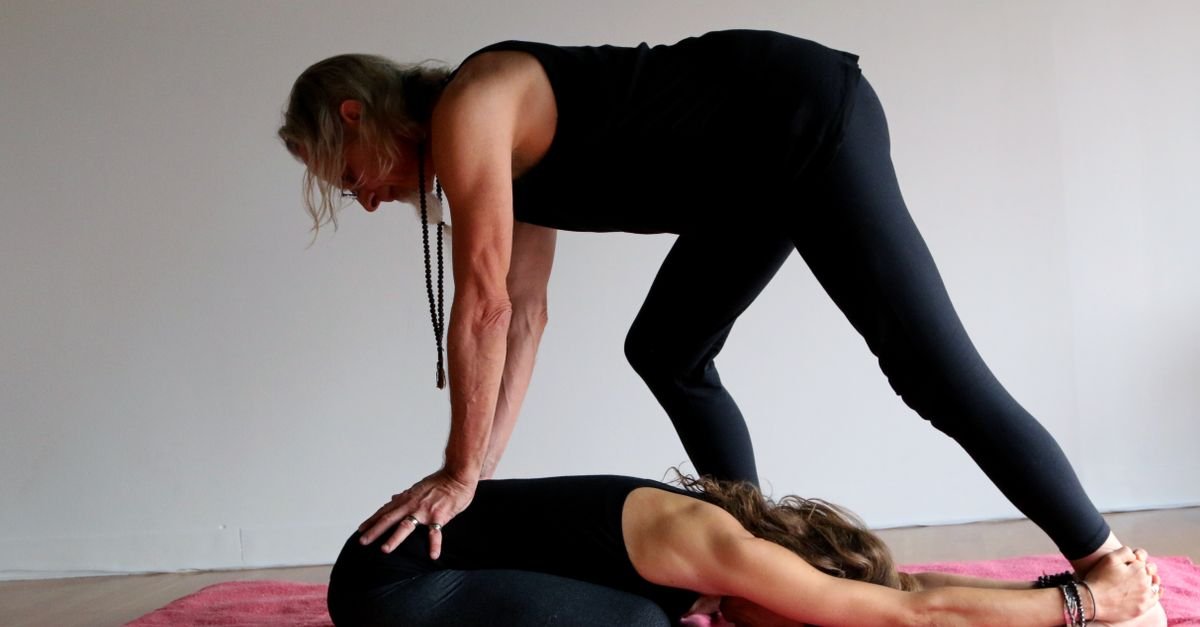
Where you train shapes your network, your cost and how you learn. There is no single best yoga instructor course in India; there is a best fit for your job, family and budget.
| Format | Typical length for 200 hours | Works well for | Trade-off | What to verify |
|---|---|---|---|---|
| Residential intensive (Rishikesh, Goa, Kerala, Mysuru) | 3 to 4 weeks full time | People who can take leave; those wanting immersion | Little time to digest material; travel and stay add cost | RYS or YCB status, daily schedule, teacher-to-student ratio, whether stay and meals are included |
| Weekend or evening course in your city | 4 to 9 months | Working professionals; parents | Slower; needs discipline between sessions | Total contact hours, makeup policy for missed days |
| Online or hybrid | 2 to 6 months, self-paced parts | Small towns, shift workers, anyone who wants to teach online | Less hands-on adjustment practice | Live (synchronous) hours, live teaching practicum with feedback |
| University or Ayush institute certificate or diploma | 6 months to 1 year or more | School, college and government-linked roles | Fixed admission cycles; more theory | Recognition by UGC or YCB, exam pattern |
Yoga instructor course fees: what you can and cannot compare
Course fees vary so widely between a city studio, a Rishikesh school and a university diploma that any single “average” number would mislead you. Instead, compare offers line by line. Ask what is included (manual, stay, meals, exam fee, certificate fee), how many hours are contact hours with the lead trainer, and whether the YCB or Yoga Alliance registration fee is extra. The certification fees themselves are small and public: Rs 500 to Rs 1,500 for YCB enrolment per the 2023 leaflet, or USD 115 for the first Yoga Alliance year. The course is where the real money goes.
A yoga instructor course in Rishikesh offers immersion and an international peer group, but not automatically better teaching. A well-run weekend course near home, with time to practise between modules, can produce a more confident teacher.

Myth: “Once you’re certified, you’re a safe teacher”
A certificate shows you finished a course. It does not prove you can spot a student who is about to strain a back. The safety data are reassuring for yoga overall, but they also show exactly where teachers matter.
A 2015 meta-analysis of 94 randomised trials with 8,430 participants, published in the American Journal of Epidemiology, found yoga about as safe as usual care and exercise. Injuries still happen, though. A US study of hospital emergency departments counted 29,590 yoga-related injuries between 2001 and 2014. The trunk accounted for 46.6% of them and sprains or strains for 45.0%. In 2014 the injury rate for people aged 65 and over was 57.9 per 100,000 participants, against 11.9 per 100,000 for those aged 18 to 44.
The US National Center for Complementary and Integrative Health notes in its yoga safety guidance that learning yoga on your own without supervision has been linked with increased risk, and that pregnant people should avoid hot yoga. That is the case for a good teacher in one line. Your job is to:
- ask about injuries, pregnancy, blood pressure and recent surgery before the first class;
- offer a regression for every peak pose, not just the full version;
- slow the pace with older groups, since their injury rate is roughly five times higher;
- refer students with medical conditions to their doctor rather than “treating” them yourself.
Can you do a yoga instructor course online and still get registered?
Yes, with one condition. Yoga Alliance now lets registered schools deliver a 200-hour course 100% by distance learning, but at least 15% of hours, or 30 hours for an RYS 200, must be synchronous: trainer and trainees online at the same time and interacting live. Pre-recorded videos alone will not meet the standard.
When comparing a yoga instructor course online, ask three questions. How many hours are live, not recorded? Will I teach at least a few full classes to real people on camera and get written feedback? Who are the lead trainers, and how long have they taught? A good one also teaches camera framing and verbal cueing that works without demonstration.
If online teaching is your goal, take a few live classes as a student first and watch what the teacher does differently on screen. Fitstrot’s online yoga classes are one place to observe this from the student’s side.

Yoga instructor salary in India: what the published data actually say
There is no official government survey of yoga instructor pay in India, and salary aggregator figures vary too much to quote responsibly. What we can say with confidence is how teachers earn and what the market signals look like.
The clearest public benchmark is from the US. The Bureau of Labor Statistics reports a median wage of USD 47,160 a year, or USD 22.67 an hour, for fitness trainers and instructors in May 2025, with employment projected to grow 7% from 2025 to 2035. That is a US figure for all fitness instructors, not a forecast for Indian yoga teachers, but it shows that instructor income is usually built from hours taught, not a fixed salary.
Demand is also growing. NCCIH reports that the share of US adults who practise yoga rose from 5.0% in 2002 to 15.8% in 2022, and international students remain a large market for Indian teachers who work online. In India, income typically comes from a mix of these routes:
- Studio or gym classes: paid per class or per month; steady but capped by the number of slots.
- Private one-to-one sessions: higher per hour, but each client needs travel or a reliable online setup.
- Corporate and housing-society groups: fewer, larger contracts; often ask for certification and first aid.
- Schools, colleges and Ayush programmes: where YCB certification counts most.
- Online classes for Indian and overseas students: scalable, but you also handle marketing and payments.
Expect the first year to be about building hours and reputation rather than income. Teachers who earn well typically combine two or three of these routes and specialise, for example in prenatal, seniors or desk-worker back care, after further training.

Troubleshooting your first year as a new yoga teacher
Almost every new teacher hits the same problems.
- “My students look lost.” You are probably cueing the shape, not the action. Say “press your right heel down” before “come into Warrior 2”. Use the same three cues for each pose for a month so you stop improvising.
- “I run out of sequence ideas.” Build classes from a small library of 25 to 30 poses you can teach well, using a reference like our yoga poses guide, and vary the order and holds rather than adding harder poses.
- “Mixed levels terrify me.” Teach the middle option first, then give one easier and one harder version. Never make the hardest version the default.
- “Nobody books.” Start where you already have trust: your office, society or family WhatsApp groups. Ask the first 10 regulars for a short written review.
- “A student says a pose hurts.” Stop the pose, offer a gentler alternative and suggest they speak to a doctor or physiotherapist if pain persists. Never push through pain.
Who this path suits, and how to adapt it
Working professionals
Choose a weekend or hybrid course and keep your job while you build hours. Corporate wellness is a natural first market because you already know how offices work.
Homemakers and parents returning to work
Morning slots in housing societies and online evening classes fit around family schedules. YPI certification gives you credibility with resident welfare associations and local schools.
Fitness trainers adding yoga
Your anatomy and coaching skills carry over, but do not skip philosophy and breathing; students notice when yoga is taught as stretching alone.
Retirees and people over 50
Age is not a barrier to teaching. Many students prefer a teacher close to their own life stage, and seniors’ classes are a real gap. Given the higher injury rate among people over 65, extra training in chair and gentle yoga is worth the investment.
Frequently asked questions
Is a degree required to become a yoga instructor in India?
Neither YCB’s guideline for yoga professionals nor Yoga Alliance’s RYT 200 process lists a degree as a requirement, and YCB lets open candidates apply directly for its exam. Some school, college and government posts do ask for a yoga diploma or degree, so check the specific job notice.
Which is better, YCB or Yoga Alliance certification?
Neither is better in every case. YCB, set up by the Ministry of Ayush, carries more weight with Indian institutions and government-linked programmes. Yoga Alliance is better known by international studios and overseas students. Many Indian teachers hold both.
How much does YCB certification cost?
YCB’s 2023 leaflet lists enrolment fees of Rs 500 for Yoga Protocol Instructor, Rs 1,000 for Yoga Wellness Instructor and Rs 1,500 for Yoga Teacher and Evaluator, plus a separate exam fee paid to the assessing institute. YCB has since revised its fees, so confirm the current amount before paying.
What is the pass mark for the YCB exam?
You need 70% in the theory paper and 70% in the practical, scored separately. The theory paper is multiple choice with no negative marking, and the practical tests demonstration, teaching skill and applied knowledge.
Can I become a yoga teacher entirely online?
Yes. Yoga Alliance allows registered schools to run 200-hour courses fully online, provided at least 30 hours are live and interactive. Choose a course that includes a live teaching practicum with feedback, not just recorded lectures.
Do I need to renew my certification?
Yes, for both. YCB certificates are valid for three to five years depending on level and are renewed through Continuing Yoga Education. Yoga Alliance requires annual dues and 75 hours of continuing education every three years.
Can a 200-hour certified teacher do yoga therapy?
No. A 200-hour course prepares you to teach general classes. YCB runs separate therapy-track certificates, such as Yoga Therapist, that involve working with a physician. Refer students with medical conditions to their doctor.
Next step: before you pay for any course, take a month of live sessions with Fitstrot’s online yoga classes and note how the teacher cues, sequences and modifies for different bodies. It is the cheapest teacher-training research you can do.


