

A good forearm workout is not three sets of wrist curls tacked onto the end of arm day. It is a small, deliberate block of grip-loaded work — carries, hangs, curls in a neutral or pronated grip, and pinch holds — trained two or three times a week alongside your main lifts. Done that way it fixes the thing most Indian lifters complain about at the 100 kg deadlift mark: the bar slips out of your hands long before your back gives up.
This guide breaks down forearm anatomy, gives you ten exercises with sets, reps, rest and one form cue each, a six-week plan, gym and home versions, and the elbow-pain warning signs that mean you should stop and see a doctor rather than push through.
What muscles does a forearm workout actually train?
A forearm workout trains three functional groups: the flexors on the palm side that close your fingers and bend your wrist, the extensors on the back that open your hand and straighten your wrist, and the brachioradialis plus pronators and supinators that rotate your forearm. Cleveland Clinic lists flexor carpi ulnaris, palmaris longus and pronator teres among the superficial flexors, and brachioradialis and extensor carpi ulnaris on top.
Three practical consequences follow from that anatomy. First, the flexors get heavy indirect work from every pull you already do — rows, pull-ups, deadlifts — while the extensors get almost none, which is why a balanced programme deliberately includes reverse wrist curls and reverse curls. Second, the brachioradialis sits across the elbow as well as the wrist, so it responds best to neutral-grip and pronated-grip elbow flexion (hammer curls, reverse curls) rather than wrist movement. Third, most forearm muscles are small and cross two joints, so they recover fast — but the tendons at the elbow do not, and that mismatch is where injuries come from.
Grip strength is a health marker, not just a gym number
The largest study on this, the Prospective Urban Rural Epidemiology (PURE) study in The Lancet (2015), followed 139,691 adults across 17 countries including India for a median of four years. Every 5 kg reduction in grip strength was associated with a 16% higher risk of death from any cause (hazard ratio 1.16, 95% CI 1.13–1.20) — a stronger predictor of mortality than systolic blood pressure.
That is an association, not proof that squeezing a gripper extends your life. The researchers themselves said further work is needed to test whether improving strength changes outcomes. What it does establish is that grip is a cheap, reliable proxy for whole-body muscular health — which is exactly why it is worth measuring and worth training.
| Source | Population / scope | Key finding |
|---|---|---|
| PURE study, The Lancet, 2015 | 139,691 adults, 17 countries (India included), median 4-year follow-up | Each 5 kg drop in grip strength linked to 16% higher all-cause mortality; outperformed systolic BP as a predictor |
| Indian Journal of Plastic Surgery, 2024 | 1,019 healthy Indians aged 18–60, three tertiary centres | Mean right-hand grip strength 38.77 kg in men and 24.81 kg in women |
| Harvard Health | General adult guidance | Weak grip interferes with everyday mobility and is flagged alongside heart attack and stroke risk |
| NHS physical activity guidelines | Adults aged 19–64 | Strengthening work for all major muscle groups on at least 2 days a week |
| ACSM resistance training position stand, 2026 | 137 systematic reviews, 30,000+ participants | Roughly 10 sets per muscle group per week for growth; 2–3 sets at about 80% of 1RM for strength |
Those Indian averages are useful context. If you are a 30-year-old man in Pune reading 28 kg on a dynamometer at the physio’s clinic, you are well below the 38.77 kg mean reported in the 2024 Indian normative dataset — that is a training gap, not a diagnosis. Harvard Health makes the same point from the other direction: weak grip shows up first as difficulty with ordinary tasks — jars, shopping bags, a suitcase up a flight of stairs.
Ten forearm workout exercises with sets, reps, rest and a form cue
These are the movements worth your time. Pick three to four per session, not all ten. The loads below assume a lifter who can already perform a controlled bodyweight row; beginners should start at the bottom of every rep range and add load only when the last rep of the last set still looks like the first.
| Exercise | Equipment | Sets × reps | Rest | Form cue | Primarily trains |
|---|---|---|---|---|---|
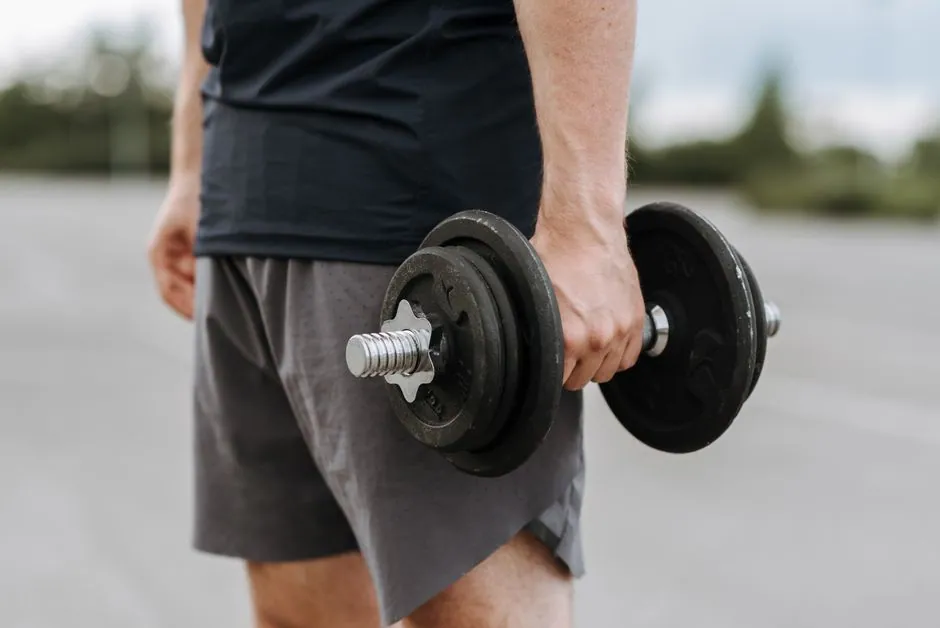
| Farmer’s carry | Dumbbells or trap bar | 3 × 30–40 m | 90 s | Ribs down, shoulders packed — walk tall, do not lean back | Support grip, flexors |
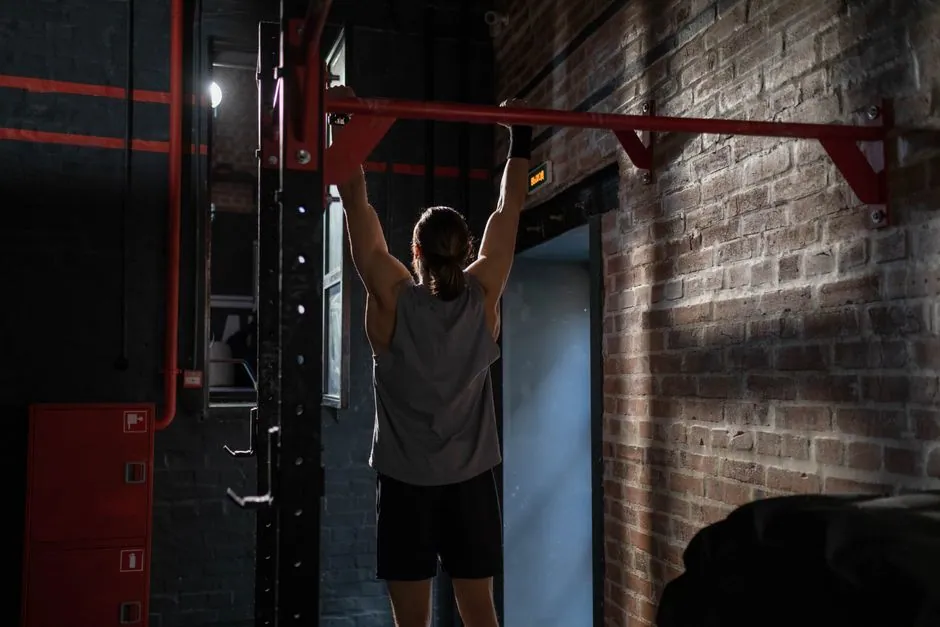
| Dead hang | Pull-up bar | 3 × 20–45 s | 90 s | Active shoulders, thumbs wrapped around the bar | Support grip, flexors |
| Dumbbell wrist curl | Dumbbells, bench | 3 × 12–15 | 60 s | Let the bell roll to the fingertips, then close the hand first | Wrist flexors |
| Reverse wrist curl | Light dumbbells or EZ bar | 3 × 15–20 | 45 s | Go far lighter than you think — 2–5 kg is normal here | Wrist extensors |
| Reverse curl | EZ bar or barbell | 3 × 10–12 | 60 s | Knuckles lead the way up; elbows pinned to the ribs | Brachioradialis, extensors |
| Hammer curl | Dumbbells | 3 × 8–12 | 60 s | Neutral grip throughout — no rotation at the top | Brachioradialis, brachialis |
| Plate pinch hold | Two 5–10 kg plates, smooth side out | 3 × 20–30 s per hand | 60 s | Thumb pad flat, not hooked; stand over a mat | Pinch grip |
| Wrist roller | Roller or broomstick + rope + plate | 2–3 × up-and-down | 90 s | Arms at shoulder height, elbows locked straight | Flexors and extensors |
| Towel hang | Two gym towels over a bar | 3 × 15–25 s | 90 s | Thick, unstable grip — stop the set before the hands open | Crush grip |
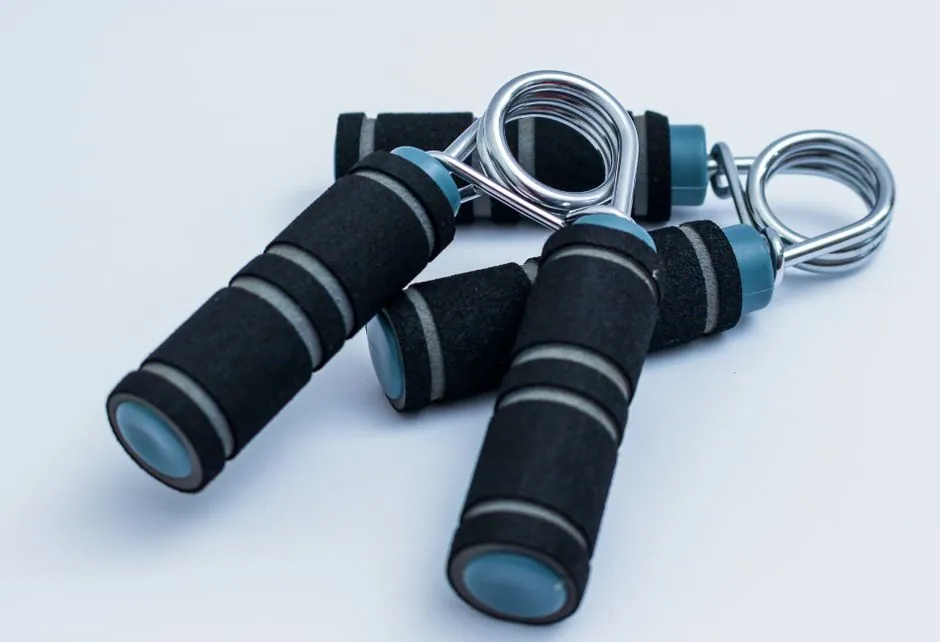
| Hand gripper | Spring gripper | 2 × 8–12 per hand | 45 s | Full close, full open — half-reps build nothing | Crush grip |
Two rules govern that table. Carries and hangs are timed, so progress them by adding 5 seconds or 2.5 kg per hand before you add sets. Wrist curls and reverse curls are small-muscle isolation work, so progress them by reps first and load second — jumping the dumbbell from 6 kg to 10 kg on a reverse wrist curl is how elbows start aching.
Forearm exercises gym: a 12-minute finisher for any training day
A forearm block belongs at the end of a session, never the start — gripping hard beforehand will cost you reps on rows and deadlifts. Twelve minutes is enough. After your last main lift, run this: farmer’s carry 3 × 30 m, dumbbell wrist curl 3 × 15, reverse wrist curl 3 × 20, plate pinch 3 × 25 seconds per hand. That is roughly 12 working sets a week if you do it twice, sitting comfortably inside the ACSM 2026 position stand‘s ~10-sets-per-muscle-group weekly guidance for growth.

Forearm exercises with dumbbell only
If your gym is a single rack and a dumbbell set, you still have everything you need. A dumbbell-only rotation of hammer curl 3 × 10, seated wrist curl 3 × 15, seated reverse wrist curl 3 × 20 and a heavy dumbbell farmer’s carry 3 × 30 m covers flexors, extensors and brachioradialis in one pass. Use a bench for the wrist curls so your forearm is supported and only the hand moves — standing versions turn into a shoulder shrug within three reps. The same logic applies to your other arm days; our guide to dumbbell workouts covers the supporting lifts.
Forearm workout home: what works without a rack
You can train forearms effectively at home with a doorway pull-up bar, two towels and a bucket of rice. The weak point is load — you cannot progressively overload a rice bucket past a point — so home training leans on time under tension and volume instead. Expect slower size gains than a gym plan and honest strength gains that transfer to carrying groceries, a laptop bag and a child.
Forearm exercises no equipment: rice bucket, towel and bodyweight
With nothing at all, three drills still work. A rice-bucket routine — open-hand digs, squeezes and wrist rotations, 45 seconds each way for 3 rounds — hits flexors and extensors with almost no joint stress, which makes it the best option for anyone rehabbing sore elbows. Towel wringing (twist a wet towel in opposite directions, 10 slow reps each way) trains pronation and supination directly. And a knuckle or fingertip plank held for 20–30 seconds loads the whole forearm isometrically. For structuring the rest of the week around these, see our home workout plan and the bodyweight back workout, both of which are grip-heavy by design.
How to build grip strength without wrecking your elbows
Build grip strength by adding load in small jumps, training it two to three days a week with a full day between sessions, and stopping any set the moment your wrist position collapses. The Mayo Clinic advises strengthening major muscle groups at least twice a week and resting one full day between sessions for the same group — forearms are no exception.

The injury to respect is lateral epicondylitis — tennis elbow. The NHS describes it as pain on the outside of the elbow that worsens when you grip or lift, caused by repeated gripping and wrist twisting. It usually settles with rest over several weeks but can last more than a year if you keep provoking it. The NHS advises seeing a GP if pain has not improved after about two weeks of self-care, with physiotherapy considered at six weeks.
Practical translation for lifters: sharp, point-specific pain on the outer elbow during reverse curls means stop that exercise — not push through it. Drop back to pain-free isometric holds and rice-bucket work, keep training everything else, and get it assessed if it has not settled in two weeks. Forearm training is not worth a year of elbow pain, and nothing in this article replaces advice from a doctor or physiotherapist who has actually examined you.
A 6-week forearm workout chart you can actually finish
This runs two forearm sessions a week, attached to days you are already training. Day A follows a pull or back day; Day B follows a push or leg day. The whole block adds 12–15 minutes per session. It assumes you are already meeting the NHS baseline of strengthening all major muscle groups on at least two days a week.
| Week | Day A (after pull day) | Day B (after push day) | Progression rule |
|---|---|---|---|
| 1 | Farmer’s carry 3 × 30 m; dead hang 3 × 20 s | Wrist curl 3 × 12; reverse wrist curl 3 × 15 | Establish a baseline. Leave 2 reps in reserve on everything. |
| 2 | Farmer’s carry 3 × 35 m; dead hang 3 × 25 s | Wrist curl 3 × 15; reverse wrist curl 3 × 18 | Add distance and time only. Same loads as week 1. |
| 3 | Farmer’s carry 3 × 35 m (+2.5 kg/hand); hammer curl 3 × 10 | Wrist curl 3 × 12 (+1–2 kg); plate pinch 3 × 20 s | First load increase. Reps reset to the bottom of the range. |
| 4 | Farmer’s carry 3 × 40 m; towel hang 3 × 15 s | Reverse curl 3 × 10; reverse wrist curl 3 × 18 | Introduce thick-grip work. Extensor volume stays high. |
| 5 | Farmer’s carry 3 × 40 m (+2.5 kg/hand); dead hang 3 × 35 s | Wrist roller 2 × up-down; hammer curl 3 × 12 | Second load increase. Drop a set if sleep or appetite dips. |
| 6 | Retest: max dead hang, heaviest 30 m carry | Retest: plate pinch hold, then 2 easy sets of everything | Deload and measure. Compare against your week-1 numbers. |
Realistic expectation: six weeks of consistent grip work typically produces a clear jump in hang time and carry distance, and a modest rise in dynamometer reading. Visible forearm size change takes longer — think months, driven mostly by total training volume and eating enough protein, not by wrist curls alone. Anyone promising you forearm transformation in 21 days is selling something.
Four forearm training myths, corrected
Myth: straps are cheating. Straps are a tool. Use them on your heaviest top sets of deadlifts and shrugs so your back gets the stimulus it needs, and train grip separately and deliberately. Refusing straps just means your deadlift is capped by your weakest link. Our guide to the deadlift workout covers where straps belong in a programme.
Myth: high reps only. Forearms have a mixed fibre profile like any other muscle. Carries and pinch holds are heavy, low-time work; wrist curls sit in the 12–20 range. You need both.
Myth: grippers alone build forearms. A spring gripper trains crush grip in one narrow hand position. It does nothing for extensors, pronators or brachioradialis — which is why gripper-only trainees often develop the elbow pain described above.
Myth: a biceps and forearm workout every day builds size faster
Training arms daily does not build them faster. Small muscles recover quickly, but the tendons and the elbow joint do not, and daily loaded gripping is the classic setup for tendinopathy. Two or three sessions a week, separated by at least one full rest day, gives you the ACSM’s ~10 weekly sets without the overuse risk. If you want more arm work, add it to existing sessions rather than adding days.
Who benefits most from forearm training
Desk workers. Eight hours on a keyboard shortens the flexors and leaves the extensors weak and irritable. Reverse wrist curls, rice-bucket extensions and open-hand work are corrective, not cosmetic, for this group.
Cricketers and racquet-sport players. Bat and racquet control is a pronation-supination problem. Wrist rollers, towel wringing and reverse curls transfer more directly than any gripper.
Climbers and calisthenics lifters. Dead hangs, towel hangs and pinch holds are the whole game. Build hang time before you add weight.
Adults over 50. This is where the grip-strength evidence matters most. Loaded carries with a 5–10 kg bag in each hand, done twice a week, are safe, scalable and require no gym. If you have arthritis, osteoporosis or a previous wrist fracture, clear the plan with your doctor first.
Frequently asked questions
How often should I do a forearm workout?
Two to three sessions a week, with at least one full rest day between them. Mayo Clinic advises strengthening each major muscle group at least twice weekly and resting a full day in between. Twelve to fifteen minutes attached to the end of existing training days is enough — around 10 working sets per week.
How to increase hand grip strength at home?
Use a doorway pull-up bar for dead hangs (3 sets of 20–45 seconds), towel hangs for thick-grip work, and a rice bucket for 45-second digs and rotations. Add a spring gripper for 2 sets of 8–12 full closes per hand. Progress by adding seconds before adding resistance.
Do forearm workouts increase forearm size?
They can, but slowly and modestly. Forearm size is heavily influenced by genetics, total training volume across all pulling movements, and overall body composition. Direct work of around 10 sets a week over several months produces measurable change; six weeks mostly improves strength and endurance, not circumference.
Is grip strength really linked to health?
Yes, as a marker. The PURE study of 139,691 adults found each 5 kg reduction in grip strength was associated with a 16% higher risk of all-cause death, outperforming systolic blood pressure as a predictor. It is an association rather than proof that training grip extends life.
What is a normal grip strength in India?
A 2024 study of 1,019 healthy Indian adults aged 18–60 reported mean right-hand grip strength of 38.77 kg in men and 24.81 kg in women. Readings vary with age, hand dominance and the dynamometer used, so treat a single measurement as a baseline rather than a verdict.
My elbow hurts during reverse curls. Should I keep going?
No. Sharp pain on the outside of the elbow during gripping or lifting is the classic presentation of tennis elbow. The NHS advises resting from the aggravating activity and seeing a GP if it has not improved after about two weeks of self-care. Switch to pain-free isometric holds meanwhile.
Can I train forearms on the same day as biceps?
Yes, and it is the most efficient option. Put biceps work first, forearm isolation second, and carries or hangs last. Training both on the same day preserves a genuine rest day for the elbow, which daily arm training does not.
Grip is the cheapest strength upgrade available to you — a bar, two towels and twelve minutes twice a week. If you want that block programmed around your actual lifts and your actual elbow history, a Fitstrot coach can build it for you in 1-on-1 personal training.


