
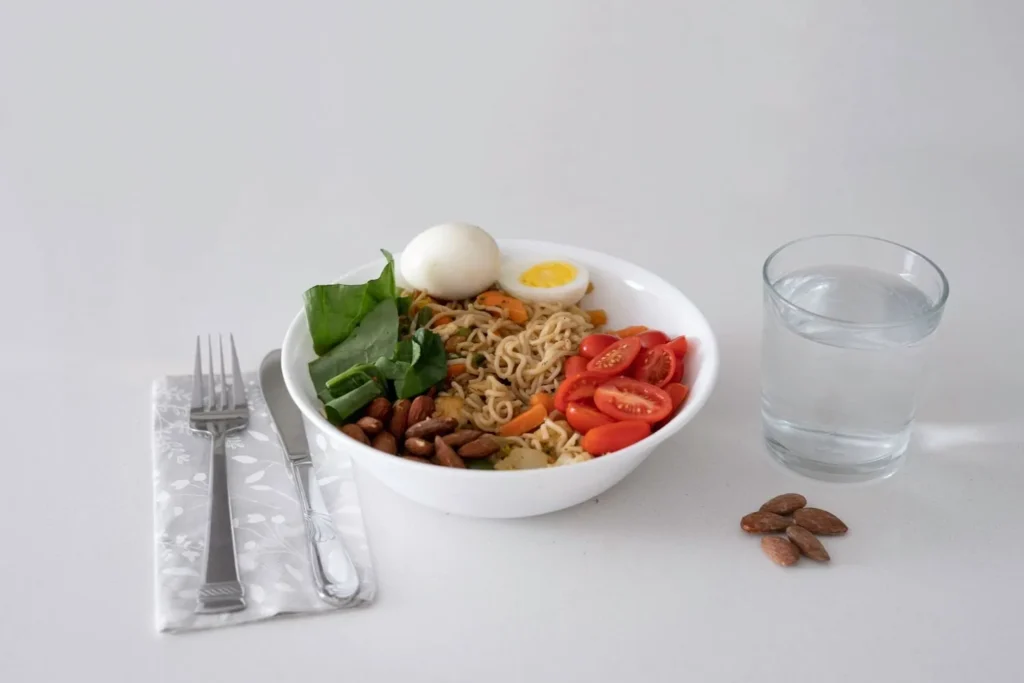
The foods that help you sleep are mostly ordinary Indian kitchen staples: a glass of warm milk, a small handful of almonds or pumpkin seeds, a banana, a bowl of oats or curd. They work by supplying tryptophan, magnesium and slow carbohydrates, the raw materials your body uses to settle the nervous system and make melatonin. None of them is a sedative, and the effect is modest and cumulative. What you cut out matters just as much as what you add.
If poor sleep is also stalling your weight loss, the two problems feed each other, and we explain that loop in how sleep affects weight loss. This guide stays on the plate: what to eat in the evening, how much, when, and what to skip.
Which foods help you sleep best?
The most useful foods for sleep are milk, almonds, pumpkin seeds, bananas, oats and curd. Together they provide tryptophan, magnesium and slow-digesting carbohydrates. A small portion roughly two hours before bed, about 100 to 150 kcal, is enough. Large portions work against you because digestion keeps the body active.
Here is a practical shortlist with portions you can actually measure at home. All values are approximate.
| Food | Portion | What you get (approx.) | Easy Indian way to eat it |
|---|---|---|---|
| Warm toned milk | 200 ml | About 7 g protein, tryptophan, roughly 120 kcal | Plain, or haldi doodh with little or no sugar |
| Almonds | 10 nuts (about 12 g) | Roughly 30 mg magnesium, about 70 kcal | Soaked overnight, eaten as an evening snack |
| Pumpkin seeds | 1 tablespoon (about 10 g) | Roughly 50 mg magnesium, tryptophan, about 55 kcal | Roasted, sprinkled on curd or poha |
| Banana | 1 medium | About 30 mg magnesium, carbohydrate, roughly 105 kcal | On its own, or sliced into warm oats |
| Rolled oats | 40 g dry | Slow carbohydrate, roughly 150 kcal | Cooked in milk, lightly sweetened with fruit |
| Curd | 1 small bowl (150 g) | About 5 g protein, roughly 90 kcal | Plain, or as a light curd rice at dinner |
| Cooked spinach (palak) | 1 cup (about 180 g) | Roughly 150 mg magnesium | Palak dal at lunch or an early dinner |
| Moong dal khichdi | 1 katori (about 200 g) | Gentle carbohydrate and protein, roughly 200 kcal | A light, soft dinner |
Pumpkin seeds and almonds appear on most sleep-food lists because they carry both tryptophan and magnesium. That overlap makes a small handful an efficient evening snack.
How does food actually change how you sleep?
Food affects sleep through three routes. Tryptophan is an amino acid your body turns into serotonin and then melatonin. Magnesium supports muscle relaxation and a calmer nervous system. Carbohydrates help tryptophan reach the brain. The effect is gradual, so consistent habits across weeks matter more than any single snack.
Tryptophan is an essential amino acid, meaning you can only get it from food. Your body converts it to serotonin, and serotonin to melatonin, the hormone that signals night-time. That chain needs magnesium and B vitamins to run properly, which is why a plate that combines protein, whole grains and nuts does more than any one food alone.
The honest limit: only a small fraction of the tryptophan you eat reaches the brain, because it competes with other amino acids for entry. A modest portion of carbohydrate alongside it, such as milk with oats or a banana, helps it get through. So a glass of milk will not knock you out. It simply nudges the system in the right direction, night after night.

On magnesium, adults generally need somewhere around 310 to 420 mg a day depending on age and sex. A diet light in nuts, seeds, leafy greens and whole grains can fall short, and an evening snack is an easy place to close part of that gap. If you want a broader look at how micronutrients and hormones interact, our hormone-balancing diet guide covers it.
Myth check: warm milk, haldi doodh and tart cherries
Three popular claims deserve a straight answer.
Myth: warm milk is a sleeping pill. Reality: milk contains tryptophan and a little protein and carbohydrate, and the ritual of a warm drink also relaxes people. The effect is mild. If milk upsets your stomach or you are lactose intolerant, skip it. Curd, a banana or a few almonds do a similar job.
Myth: haldi doodh is guaranteed to fix insomnia. Reality: turmeric in milk is a comforting, low-risk habit, but there is no reliable evidence that it treats sleeplessness. Enjoy it for what it is, keep the sugar low, and do not expect it to override a late coffee.
Myth: you must buy tart cherry juice. Reality: tart cherries contain a little natural melatonin and are often discussed in sleep research, but the trials are small and short, and the fruit is not easy to find in India. You lose nothing by skipping it. The ordinary foods in the table above cover the same ground.
What should you eat for dinner and before bed to sleep well?
Finish a light, balanced dinner about three hours before bed, with roughly 400 to 600 kcal built around dal, vegetables, a small portion of rice or roti, and curd. If you are hungry later, keep the snack under 150 kcal, such as warm milk or a few almonds. Skip anything fried or heavy.
Here is how an evening looks for someone going to bed at 10:30 pm.
| Time | What to do | Why it helps |
|---|---|---|
| 3:30 pm | Last chai or coffee of the day | Leaves about 7 hours for caffeine to clear |
| 7:30 pm | Dinner: dal, sabzi, 1 to 2 rotis or a small cup of rice, curd | Gives about 3 hours for digestion before lying down |
| 8:15 pm | Ten-minute slow walk or light stretching | Eases digestion and lowers evening stress |
| 9:30 pm | Optional snack: 200 ml warm milk, or 10 almonds with a banana | Tryptophan, magnesium and a little carbohydrate |
| 10:00 pm | Dim the lights, put the phone away, brush your teeth | Lets melatonin rise without light interference |
| 10:30 pm | In bed at a consistent time | A regular schedule anchors your body clock |
Shift the whole schedule earlier or later to match your bedtime. The gaps matter, not the exact clock times.
What foods and drinks should you avoid before bed?
Avoid caffeine for at least 6 to 8 hours before bed, alcohol for 3 to 4 hours, and large, fried or very spicy meals for 3 hours. These disrupt sleep depth and continuity even when you fall asleep quickly. Cutting them often helps more than adding any sleep-friendly food.
| Item | Typical amount | Stop before bed | What goes wrong |
|---|---|---|---|
| Filter coffee or instant coffee | 1 cup, roughly 60 to 100 mg caffeine | 8 hours or more | Slower sleep onset, lighter sleep |
| Masala chai | 1 cup, roughly 30 to 50 mg caffeine | 6 to 8 hours | Same effect, milder |
| Cola or energy drink | 330 ml cola, about 30 to 40 mg; 250 ml energy drink, about 80 mg | 8 hours | Caffeine plus sugar spikes |
| Alcohol | Any amount | 3 to 4 hours | Fragmented sleep, early waking |
| Fried, oily or very spicy dinner (biryani, butter paratha, pav bhaji) | A full plate | 3 hours | Reflux, heat, slow digestion |
| Sweets and desserts | 1 to 2 pieces | 2 hours | Blood sugar swings, restless sleep |
| Large glass of water | 500 ml or more | 1 hour | Night-time bathroom trips |

Alcohol is the one people misjudge. It makes you drowsy and shortens the time to fall asleep, so it feels like a sleep aid. As your body clears it, though, sleep becomes lighter and more broken, and you wake feeling less rested. Treat it as a sleep disruptor, not a nightcap. Evening stress drinking is a related trap, covered in how stress affects your diet and weight.
Still waking at 3 am? Troubleshooting the usual causes
If you eat well and still sleep badly, work through the likely culprits one at a time rather than changing everything at once.
- You fall asleep fine but wake in the early hours. Check alcohol first, then a late or heavy dinner. Move dinner earlier by 30 minutes for a week and see.
- You wake hungry. A dinner that is too light or too low in protein can leave you hungry at night. Add a katori of dal or a bowl of curd, and keep the late snack small.
- You wake with a burning chest. Reflux is common after oily, spicy or late meals. Eat earlier, sit upright after dinner, and raise the head of the bed slightly. If it happens often, speak to a doctor.
- You cannot switch off. This is usually stress, not food. A short wind-down helps, and so does gentle movement; try our guide to yoga for sleep, or read foods that help reduce stress and anxiety.
- You are tired all day despite 7 to 8 hours in bed. Loud snoring, gasping at night or morning headaches can point to sleep apnoea. Food will not fix that.
Persistent sleeplessness lasting several weeks, or sleep problems alongside low mood, calls for a conversation with your doctor. Diet is a helpful support, not a replacement for medical care.
Sleep-friendly eating for different situations
If you are losing weight. Do not cut dinner to nothing. Going to bed very hungry fragments sleep and raises next-day cravings. Plan a 400 to 500 kcal dinner and a 100 kcal snack within your daily target. Our online weight loss trainer programme builds this around your calorie goal.
If you work out in the evening. Intense exercise can leave you wired for an hour or two. Finish at least 2 hours before bed, then eat a balanced meal. Dance workouts can actually help you wind down afterwards, as we discuss in Zumba and better sleep.
If you work night shifts. Apply the same rules to your own sleep window, counting from when you plan to sleep, not from the clock. Keep caffeine to the first half of your shift and eat a light meal before you go to bed.
If you are a student or work late. Replace the 11 pm chai and namkeen with warm milk and a banana, and set a hard stop on caffeine. It is a small swap that works well with an irregular schedule.
If you practise yoga. A light dinner and a calm evening pair well with an evening session. Pick a class time that leaves at least an hour between practice and bed so your body has time to cool down.
FAQ: Foods that help you sleep
Which fruit is best before bed for sleep?
A banana is a practical choice. A medium banana gives about 30 mg of magnesium, some carbohydrate and roughly 105 kcal, and it is easy to digest. Papaya and a small bowl of berries are also gentle options. Avoid very sugary or acidic fruit late at night if you get reflux.
Does warm milk help you sleep?
It can help a little. Warm milk provides tryptophan, protein and carbohydrate, and the calming routine itself matters. A 200 ml glass is about 120 kcal. The effect is mild, so do not expect it to cancel out late caffeine or a heavy dinner. If you are lactose intolerant, use curd or almonds instead.
How long before bed should I eat dinner?
Aim to finish dinner about 3 hours before bed. That gives digestion time to settle and your body temperature time to drop. If you get hungry later, a small snack of about 100 to 150 kcal, such as warm milk or a few almonds, is fine.
Can I eat almonds at night to sleep better?
Yes. About 10 almonds provide roughly 30 mg of magnesium and about 70 kcal, along with some tryptophan. Soaking them makes them easier to digest. Treat them as a small supporting habit, and do not eat large handfuls, since the calories add up quickly.
What should I avoid eating if I cannot sleep at night?
Avoid caffeine for 6 to 8 hours before bed, alcohol for 3 to 4 hours, and heavy, fried or very spicy meals for 3 hours. Sweets and large glasses of water close to bedtime can also disturb sleep. Cutting these first usually helps more than adding new foods.
If you want an evening eating plan matched to your bedtime, your weight goal and your food preferences, book an online nutritionist consultation and we will work out the first three changes to make.


