
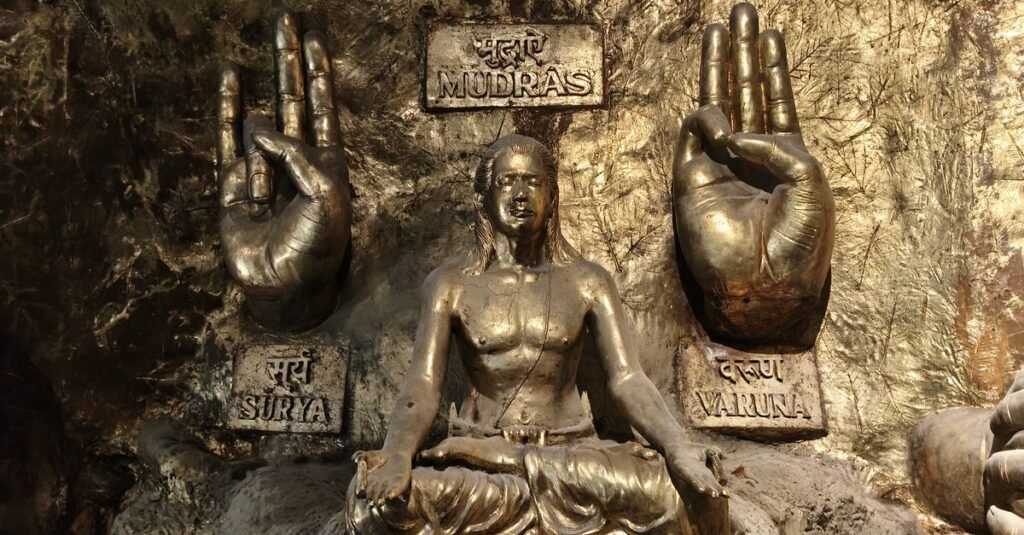
Ask a room of yoga teachers who the father of yoga is and you will get at least three confident answers. A school GK book says Maharishi Patanjali. A Shaiva tradition says Lord Shiva, the Adiyogi. A teacher from Mysore or Chennai will name T. Krishnamacharya. None of them is wrong, because each is answering a different question: who systematised yoga, who first taught it in sacred tradition, and who shaped the posture-based yoga most people now practise.
This guide separates those answers, puts dates and evidence next to each name, and flags where the historical record is solid and where it is faith or legend. If you are preparing for an exam, beginning a teacher training, or just curious about the lineage behind your morning practice, you will know exactly which answer fits which context.
Who is the father of yoga? The short answer
Maharishi Patanjali is most widely called the father of yoga because he compiled the Yoga Sutras, 195 aphorisms in four chapters that most scholars date to roughly the 1st–2nd century CE. He did not invent yoga; he organised existing practice into a system. In tradition, Lord Shiva (Adiyogi) is the first yogi, and T. Krishnamacharya (1888–1989) is the father of modern yoga.
The Internet Encyclopedia of Philosophy states this distinction plainly: the Yoga Sutra contains 195 sutras across four padas, and Patanjali systematised existing practices rather than founding yoga, while the tradition itself credits a legendary figure, Hiranyagarbha, with yoga’s actual origin. So the honest answer to “who is the founder of yoga” is that no single historical founder can be identified. There are, instead, several “fathers” for several stages.
| Figure | Era | Title usually given | What he contributed | Type of evidence |
|---|---|---|---|---|
| Lord Shiva (Adiyogi) | Mythic, before recorded history | First yogi, Adi Guru | In yogic lore, taught yoga to the Saptarishis (seven sages) | Scripture, oral tradition, faith |
| Hiranyagarbha | Legendary | Original teacher of yoga (traditional) | Named by the yoga tradition as its first expounder | Textual tradition |
| Maharishi Patanjali | c. 2nd century BCE to 5th century CE (debated) | Father of yoga; father of classical yoga | Compiled the Yoga Sutras; defined yoga and the eight limbs | Surviving text, commentaries |
| T. Krishnamacharya | 1888–1989 | Father of modern yoga | Taught the teachers behind Iyengar, Ashtanga Vinyasa and Viniyoga styles | Documented history, film, students |
| Swami Vivekananda | 1863–1902 | Not a “father”, but the bridge to the West | Brought yoga philosophy to Western audiences from 1893 | Documented history |
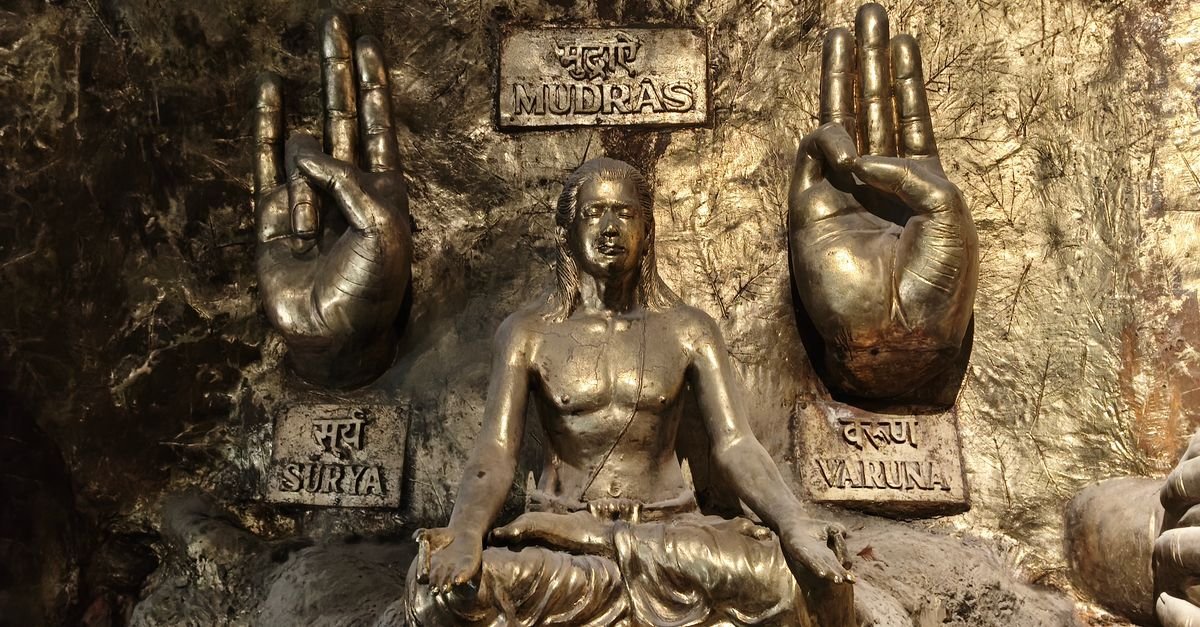
Patanjali the father of yoga: what he actually did
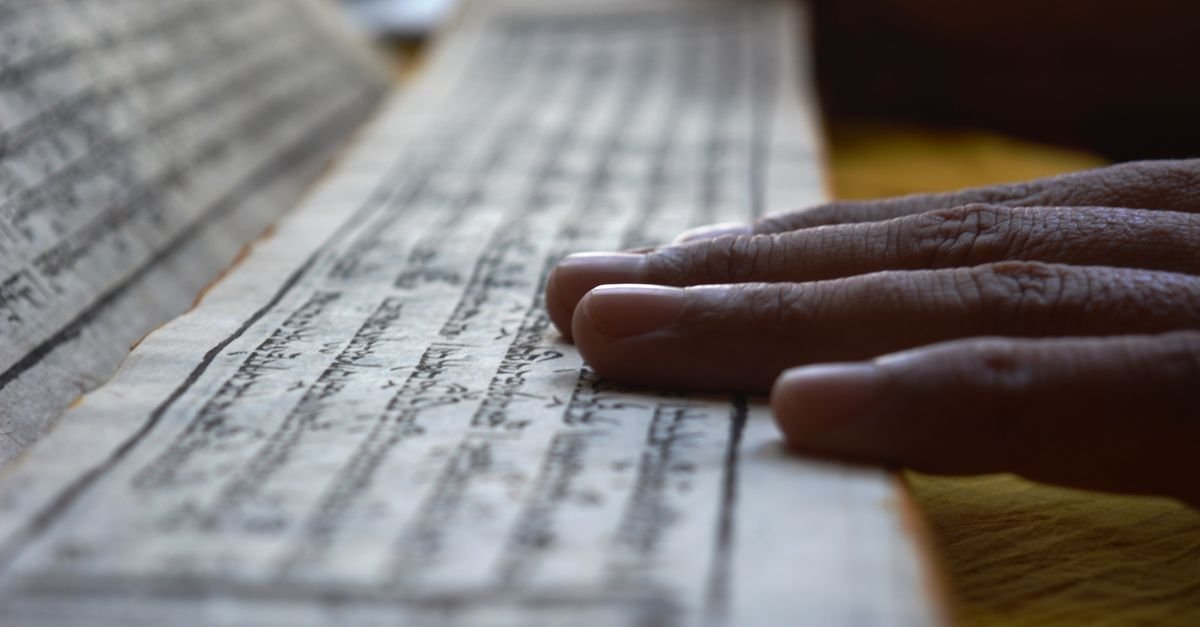
Patanjali earned the title not by inventing postures but by writing the first compact, systematic manual of yoga as a path of mind training. Before him, yogic ideas were spread across the Vedas, the Upanishads, the Mahabharata and the Bhagavad Gita. After him, there was a single short text that every later school had to reckon with.
Who wrote the Yoga Sutras, and was it one person?
Tradition says one sage, Patanjali, wrote the Yoga Sutras. Modern scholarship is less sure. Britannica dates Patanjali to the 2nd century BCE or the 5th century CE, and notes that the text may span several centuries, with authorities tending to credit more than one author writing under the name. The same name is attached to the Mahabhashya, a famous commentary on Panini’s Sanskrit grammar, and Indian tradition often treats the grammarian and the yogi as one person. Whether they were the same man is still argued.
The Internet Encyclopedia of Philosophy narrows the likely window to about the 1st–2nd century CE and says the text does not postdate the 5th century CE. That spread, roughly 700 years, is normal for ancient Indian texts. What matters more for practitioners is that the text itself survived intact and was explained by a long line of commentators, starting with the Yoga Bhashya attributed to Vyasa.
Patanjali Yoga Sutras at a glance
The Yoga Sutras are tiny. Each sutra is a thread of a few words, meant to be memorised and unpacked by a teacher. Sutra I.2 gives the most quoted definition in all of yoga: yogas chitta vritti nirodhah, yoga is the stilling of the movements of the mind. Notice what is missing: there is almost nothing about stretching, flexibility or fitness.
| Pada | Approx. sutras | Theme | Key idea for practitioners |
|---|---|---|---|
| 1. Samadhi Pada | 51 | Absorption and the nature of yoga | Defines yoga as stilling the mind; practice (abhyasa) plus non-attachment (vairagya) |
| 2. Sadhana Pada | 55 | Practice | Introduces kriya yoga and the eight limbs (ashtanga) |
| 3. Vibhuti Pada | 55 | Powers and inner limbs | Concentration, meditation and absorption; warns against chasing powers |
| 4. Kaivalya Pada | 34 | Liberation | Freedom of pure awareness from the mind’s patterns |
| Total | 195 | Counts vary by one or two between editions; 195 is the standard figure | |
The eight limbs in one line each
The Sadhana Pada lays out ashtanga, the eight-limbed path that later schools adopted as the standard map of yogic practice. Here is the sequence in plain language:
- Yama: five restraints, including non-violence (ahimsa) and truthfulness (satya).
- Niyama: five observances, including cleanliness, contentment and self-study.
- Asana: a steady, comfortable seat. Patanjali gives asana just three sutras.
- Pranayama: regulation of the breath.
- Pratyahara: withdrawing the senses from their objects.
- Dharana: concentration on one point.
- Dhyana: unbroken meditation.
- Samadhi: complete absorption.
The eight limbs deserve their own walkthrough, and our guide to Ashtanga yoga covers each one with practical examples. The point for this article is simple: when people call Patanjali the father of yoga, they mean the father of this framework.
Why is Lord Shiva called the founder of yoga?
In Hindu yogic tradition, Lord Shiva is Adiyogi, the first yogi, and Adi Guru, the first teacher, who passed yoga to the Saptarishis. This is a sacred, not historical, claim. No archaeological record names a founder, and the claim predates any datable text, so it sits alongside Patanjali rather than competing with him.
Shiva is everywhere in yoga culture. He is depicted as an ascetic and the supreme yogi, and many practitioners in India begin their practice with a chant to him. For millions of Indians, “lord Shiva founder of yoga” is not a historical hypothesis but a matter of faith, and it deserves respect on those terms.
Who was Adiyogi?
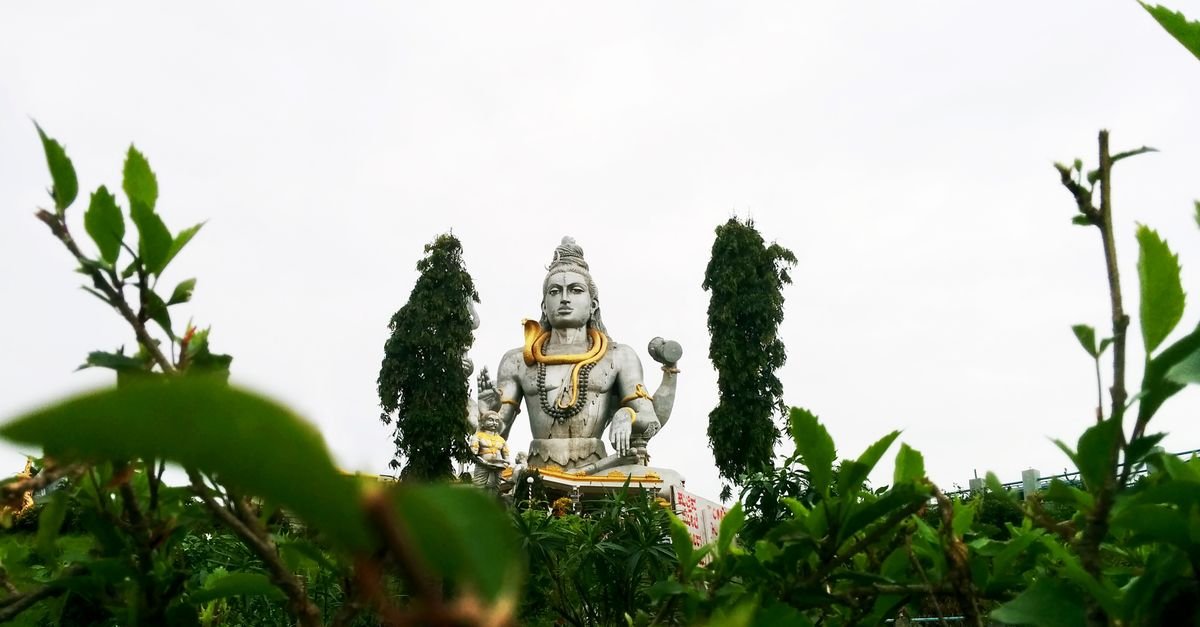
“Adiyogi” simply means “the first yogi”. In yogic lore, Shiva sat in meditation in the Himalayas, and seven sages, the Saptarishis, became his first disciples and carried his teaching to different parts of the world. The story explains why so many Indian lineages trace themselves back to Shiva rather than to a human founder.
The idea gained national visibility in 2017. On Mahashivratri, 24 February 2017, the Prime Minister unveiled a 112-feet face of Adiyogi in Coimbatore, saying it would inspire many generations to take up yoga. A second Adiyogi bust now stands near Chikkaballapur in Karnataka. Both are pilgrimage and tourist sites, which is why searches about the statue far outnumber searches about the philosophy behind it.
What the Indus Valley “yogi seal” does and does not prove
You will often read that a seal from Mohenjo-daro proves yoga, and Shiva worship, existed 4,500 years ago. The seal is real. Smarthistory dates it to c. 2500–2400 BCE and describes a figure seated with heels together in a yogic pose, but notes that scholars disagree about the figure’s features and whether it represents yoga at all.
The strongest academic challenge came from Doris Srinivasan in the Journal of the Royal Asiatic Society in 1984, who called the Harappan finds suggestive evidence rather than proof of an Indus origin for Shiva. The fair summary: the seal suggests that seated, inward-turned postures had meaning very early in Indian history. It does not prove a fully formed yoga system, and it does not name a founder.
Myth vs fact: five claims you will hear about the father of yoga
Because the topic mixes history, faith and exam trivia, a lot of half-truths get repeated. Here are the ones worth correcting.
- Myth: Patanjali invented yoga. Fact: he compiled and systematised it. Yogic ideas appear in earlier texts such as the Katha Upanishad and the Bhagavad Gita.
- Myth: Patanjali taught the postures you do in class. Fact: the Yoga Sutras give asana three sutras and name no specific pose. Most modern sequences come from hatha yoga texts, usually dated to the 15th century onward, and from 20th-century teachers.
- Myth: Patanjali was definitely one man who lived in 200 BCE. Fact: dates range from the 2nd century BCE to the 5th century CE, and some scholars think several authors used the name.
- Myth: the Indus seal proves yoga is 5,000 years old. Fact: it is suggestive, not conclusive, and specialists still debate it.
- Myth: Swami Vivekananda is the father of modern yoga. Fact: he popularised yoga philosophy abroad. The posture-led practice you see in studios traces far more directly to Krishnamacharya.
The deeper story of how yoga moved from Vedic ritual to Upanishadic philosophy to hatha practice is covered in our history of yoga guide. Here we stay focused on who gets the “father” title and why.
Who is the father of modern yoga?
Tirumalai Krishnamacharya (1888–1989) is known as the father of modern yoga. From 1933 he ran a yoga school in a wing of Mysore’s Jaganmohan Palace, and his students B.K.S. Iyengar, K. Pattabhi Jois, T.K.V. Desikachar and Indra Devi spread the posture-based yoga that most studios and online classes teach today.
Krishnamacharya was a Sanskrit scholar as well as a yogi, which is why he could connect old texts to a new physical practice. The Wellcome Collection records that the Maharajah of Mysore invited him to teach, and in 1933 he was given a wing of Jaganmohan Palace to run a yoga school. Krishnamacharya credited his methods to his own guru and to ancient texts, while openly adapting sequences for the young students in front of him.
Krishnamacharya: the lineage behind today’s styles
The best way to see why he earns the title is to look at who he taught. The Smithsonian’s National Museum of Asian Art lists his extraordinarily influential students, with their dates, and Krishnamacharya’s own life as 1888–1989.
| Student | Dates | Style or legacy | Where it shows up today |
|---|---|---|---|
| K. Pattabhi Jois | 1915–2009 | Ashtanga Vinyasa, a set, breath-linked series | Mysore-style classes, power and vinyasa flow |
| B.K.S. Iyengar | b. 1918 | Iyengar yoga: precise alignment, use of props | Blocks, belts and wall ropes in almost every studio |
| Indra Devi | 1899–2002 | Early teacher of yoga to women and to the West | Yoga for general fitness and wellbeing |
| T.K.V. Desikachar (his son) | b. 1938 | Viniyoga: yoga adapted to the individual | Yoga therapy and one-to-one practice |
His work continues in Chennai at the Krishnamacharya Yoga Mandiram, established by T.K.V. Desikachar in 1976 as a non-profit public charitable trust, which describes Krishnamacharya’s name as practically synonymous with contemporary yoga. If you have ever been told to modify a pose to suit your body, that idea runs straight back through this lineage.
Swami Vivekananda: the bridge to the West
Swami Vivekananda (1863–1902) is often mentioned in the same breath, but his role was different. At the 1893 World’s Parliament of Religions in Chicago he appeared as a spokesman for Hinduism, and Britannica quotes a newspaper calling him an orator by divine right and undoubtedly the greatest figure at the Parliament. His later book Raja Yoga (1896) introduced Patanjali’s philosophy to English readers. He opened the door; Krishnamacharya’s students largely shaped the physical practice that walked through it.
Timeline: from Indus seal to International Day of Yoga
Dates in early Indian history are approximate, and the further back you go, the wider the range. Use this table as a map of when each “father” enters the story, not as a precise chronology.
| Approx. date | Milestone | Certainty |
|---|---|---|
| Before recorded history | Adiyogi (Shiva) teaches the Saptarishis, in yogic lore | Tradition and faith |
| c. 2500–2400 BCE | Mohenjo-daro seal of a seated figure | Object is real; meaning debated |
| c. 1500–500 BCE | Vedic texts mention ascetics and ecstatics who may be early yogis | Textual, interpretive |
| c. 500 BCE onward | Upanishads and Bhagavad Gita describe yoga as discipline of mind and senses | Textual |
| c. 2nd century BCE to 5th century CE | Patanjali compiles the Yoga Sutras (195 sutras) | Text certain; date debated |
| c. 15th century CE | Hatha Yoga Pradipika gives postures and breathwork a central place | Textual |
| 1893 | Vivekananda speaks at the Chicago Parliament of Religions | Documented |
| 1933 | Krishnamacharya’s yoga school opens at Jaganmohan Palace, Mysore | Documented |
| 1976 | Krishnamacharya Yoga Mandiram founded in Chennai | Documented |
| 11 Dec 2014 | UN declares 21 June the International Day of Yoga | Documented |
| 24 Feb 2017 | 112-feet Adiyogi face unveiled in Coimbatore | Documented |
The last two rows show how the question has become global. On 11 December 2014, the President of the UN General Assembly noted that more than 170 member States co-sponsored the resolution, and that the International Day of Yoga would be observed every year on 21 June. Each June, interest in “who is the father of yoga” spikes in India, largely from students and quiz takers.
Which “father” matters for your practice?
Knowing the lineage is not just trivia. It tells you what kind of class to look for and what to expect from it.
If you are a beginner doing yoga for health
Your class is almost certainly in the Krishnamacharya lineage: standing poses, sun salutations, alignment cues, maybe blocks and straps. That is fine. Just know that the breath work and the few minutes of stillness at the end are the most Patanjali-like part of the session, so do not skip them.
If you are drawn to philosophy and meditation
Go to the source. Read a translation of the Yoga Sutras with commentary, one sutra a day. Patanjali’s framework sits alongside the other classical paths, such as jnana yoga, the yoga of knowledge, and karma yoga, the yoga of selfless action, which come mainly from the Bhagavad Gita.
If you plan to teach
Most recognised teacher trainings in India and abroad include the Yoga Sutras and the eight limbs in their philosophy module, and you will be expected to explain the difference between classical and modern yoga. Our guide on how to become a yoga instructor covers the courses and certifications.
If you follow a Shaiva or devotional path
Honouring Shiva as Adiyogi and studying Patanjali are not in conflict. Many traditional teachers open with an invocation to Patanjali and still regard Shiva as the ultimate source. History and devotion answer different questions.
Troubleshooting: “my book says a different father of yoga”
Conflicting answers usually come from the question, not the source. Use this checklist before you argue with a quiz key.
- The question says “father of yoga” with no qualifier. For Indian school, GK and competitive exams the expected answer is almost always Maharishi Patanjali.
- The question says “father of modern yoga”. Answer T. Krishnamacharya. Some older sources name Vivekananda; that reflects his role in spreading yoga philosophy, not posture practice.
- The question asks “who was Adiyogi” or “who is the first yogi”. Answer Lord Shiva, as per yogic tradition.
- The question asks “who wrote the Yoga Sutras”. Patanjali, with the caveat that scholars debate whether one person wrote all four chapters.
- The question asks for the founder of hatha yoga. That is a separate thread, often linked to the Nath yogis such as Matsyendranath and Gorakhnath, not to Patanjali.
- The question asks who is father of yoga in India versus the world. The answer does not change: Patanjali is credited in both contexts.
Frequently asked questions about the father of yoga
Who is known as the father of yoga?
Maharishi Patanjali is known as the father of yoga because he compiled the Yoga Sutras, a 195-sutra text in four chapters that systematised yoga as a path of mind training. He organised existing knowledge rather than inventing yoga.
Who is known as the father of modern yoga?
T. Krishnamacharya (1888–1989) is known as the father of modern yoga. His students, including B.K.S. Iyengar, K. Pattabhi Jois, Indra Devi and T.K.V. Desikachar, spread the posture-based yoga practised in most classes today.
Who is the founder of yoga?
No historical founder of yoga can be identified. In tradition, Lord Shiva as Adiyogi is the first yogi, and the classical texts also name Hiranyagarbha. Patanjali is the systematiser, not the founder.
Why is Lord Shiva called Adiyogi?
Adiyogi means first yogi. In yogic lore, Shiva was the first to attain yoga and taught it to the seven sages, the Saptarishis, who spread it. This is a matter of faith and tradition rather than datable history.
When did Patanjali write the Yoga Sutras?
Estimates range from the 2nd century BCE to the 5th century CE. Many scholars favour roughly the 1st–2nd century CE, and some think more than one author contributed to the text.
Is Patanjali the father of yoga in India?
Yes. In Indian textbooks and competitive exams, Patanjali is the standard answer to “who is father of yoga”, while Krishnamacharya is the answer for modern yoga and Shiva for the first yogi in tradition.
Did Patanjali teach yoga asanas?
Only briefly. The Yoga Sutras give asana three sutras, describing it as a steady, comfortable seat for meditation. The many named poses taught today come from later hatha yoga texts and 20th-century teachers.
Practise the lineage, not just the poses
The best way to understand Patanjali, Krishnamacharya and Adiyogi is to sit, breathe and move with a teacher who knows where each part of the class comes from. Book a trial session of Fitstrot’s online yoga classes and ask your instructor to include ten minutes of pranayama and meditation.


