
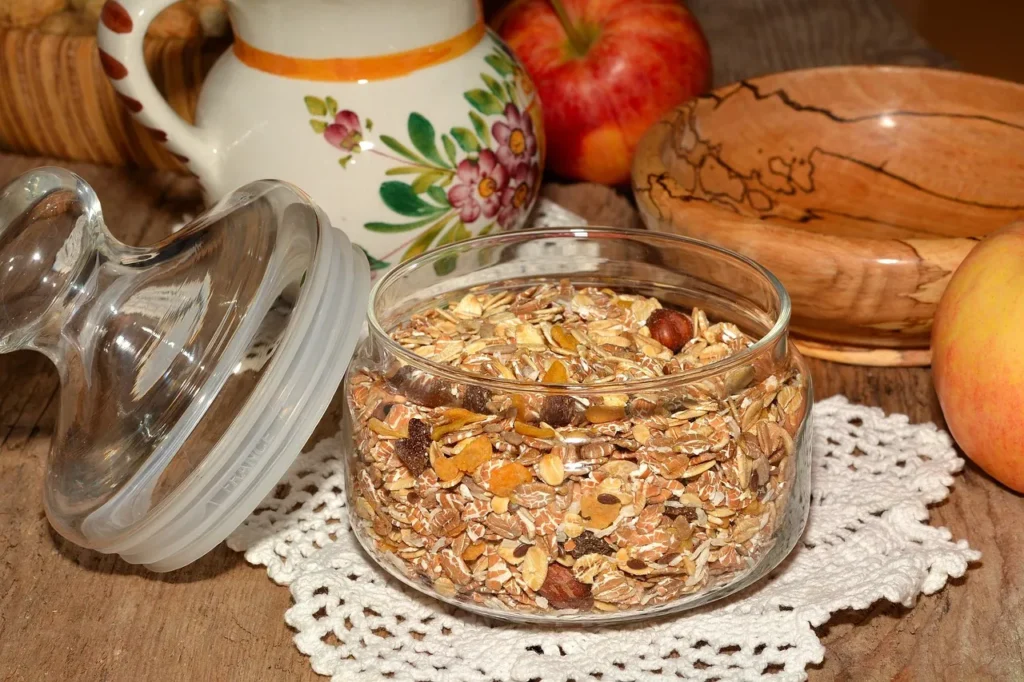
A good cholesterol diet chart does three things at once: it cuts the saturated fat that pushes LDL (“bad”) cholesterol up, it adds foods with measured LDL-lowering effects (oats, dal, nuts, isabgol, plant sterols), and it fits the way an Indian household actually eats — poha, roti, sabzi, dal, curd. This page gives you all three: target numbers, the foods with real trial data behind them, and a 7-day Indian meal chart you can print and stick on the fridge.
One thing first. High cholesterol is a medical condition, not just a diet problem. If your report shows an LDL above 190 mg/dL, you have diabetes, heart disease, or a parent or sibling who had a heart attack young, see a doctor before you change anything — and never stop or reduce a prescribed medicine because your diet has improved. Food works alongside treatment, not instead of it.
What is a good diet to lower cholesterol?
A good diet to lower cholesterol keeps saturated fat under 10% of daily calories (about 22 g on a 2,000 kcal day, per WHO), removes trans fat, and adds 5–10 g of soluble fibre, a 30 g handful of nuts and plant protein like dal and soy. Combined, these “portfolio” foods cut LDL by about 17% in trials.
That 17% figure comes from a 2018 systematic review and meta-analysis of the Portfolio dietary pattern in 439 adults with high cholesterol, which found LDL fell by 0.73 mmol/L (roughly 28 mg/dL) compared with a standard low-fat diet alone. The Portfolio approach stacks four things — viscous fibre, nuts, soy or plant protein and plant sterols — on top of a low-saturated-fat base. No single “miracle food” does the job; the effect comes from stacking several modest ones.
The saturated-fat ceiling comes from the WHO healthy diet fact sheet, which sets saturated fat at no more than 10% of total energy and trans fat at no more than 1%, alongside at least 400 g of fruit and vegetables a day and under 5 g of salt. Those four numbers are the backbone of every row in the charts below.
Why this matters so much in India
Lipid problems are extremely common here. The ICMR-INDIAB study (2014), which tested 16,607 adults across Tamil Nadu, Maharashtra, Jharkhand and Chandigarh, found 13.9% had high total cholesterol, 11.8% had high LDL, 29.5% had high triglycerides and 72.3% had low HDL — and 79% had at least one lipid abnormality. Urban residents generally fared worse than rural ones. In other words, an Indian diet to lower cholesterol is not a niche need; it is relevant to most families.
Your lipid report, decoded: the numbers a cholesterol diet plan is aiming at
Before any cholesterol diet plan, you need a baseline — a fasting or non-fasting lipid profile. The table below lists the general adult reference ranges published by the US National Library of Medicine (MedlinePlus). Your own target may be stricter: people with diabetes, kidney disease or existing heart disease are often given much lower LDL goals, and only your doctor can set that number.
| Test | Healthy range (adults 20+) | What diet can realistically change |
|---|---|---|
| Total cholesterol | Below 200 mg/dL | Falls when saturated fat drops and soluble fibre rises |
| LDL (“bad”) cholesterol | Below 100 mg/dL | The main target of this diet chart — typically a 5–17% drop depending on how many changes you stack |
| HDL (“good”) cholesterol | 60 mg/dL or more is best; below 40 (men) or 50 (women) is low | Responds more to regular exercise, weight loss and not smoking than to specific foods |
| Non-HDL cholesterol | Below 130 mg/dL | Moves with LDL and triglycerides |
| How often to test | Every 5 years for younger adults; every 1–2 years for men 45–65 and women 55–65; yearly after 65 | Retest after a diet change only when your doctor advises |
Notice the HDL row. Low HDL was the single most common problem in the ICMR-INDIAB data, but no food raises it dramatically. Physical activity matters more — the NHS cholesterol guidance recommends at least 150 minutes of moderate exercise or 75 minutes of vigorous activity a week, plus stopping smoking and keeping alcohol under 14 units a week. Diet and movement are a pair; this page focuses on the diet half.
Foods to lower cholesterol, ranked by the strength of evidence
Plenty of foods are marketed as “cholesterol busters”. Only a handful have controlled-trial data with a specific dose. This table sticks to those, with Indian ways to eat them.
| Food / nutrient | Dose studied | LDL effect in trials | Indian way to eat it |
|---|---|---|---|
| Oat beta-glucan | 3 g or more per day | −0.25 mmol/L (about 10 mg/dL); 28 trials, 2014 meta-analysis | Oats upma, oats chilla, overnight oats with curd — roughly 3 servings of 28 g each across the day |
| Soluble fibre (oats, psyllium, pectin) | 2–10 g per day | About −0.057 mmol/L (about 2.2 mg/dL) per gram; 67 trials | Isabgol in water or curd, rajma, chana, apples, guava, bhindi |
| Nuts | Average 67 g per day | −10.2 mg/dL (7.4%); 25 trials, dose-related | Almonds, walnuts, peanuts — a 30 g handful replacing namkeen or biscuits |
| Plant sterols / stanols | 0.6–3.3 g per day | 6–12% reduction, plateauing near 3 g/day; 124 studies | Hard to reach from normal food; usually via fortified products — ask your doctor or dietitian |
| Portfolio pattern (all of the above + soy/dal protein) | Combined, on a low-saturated-fat diet | About −17% LDL | The 7-day chart below is built on this idea |
Oats and other breakfast foods to lower cholesterol
Breakfast is the easiest place to fix, because it is often the least varied meal. A 2014 meta-analysis of 28 randomised trials in the American Journal of Clinical Nutrition found that at least 3 g of oat beta-glucan a day lowered LDL by 0.25 mmol/L and total cholesterol by 0.30 mmol/L versus control. You won’t get 3 g from one small bowl; you need oats at more than one meal, or a larger portion. Choose plain rolled or steel-cut oats rather than sugary flavoured sachets.
Other strong Indian options: moong or besan chilla with vegetables, vegetable poha with peanuts, and idli with sambar. Drop puri-bhaji, bread with butter and vanaspati bakery items.
Soluble fibre: dal, rajma and isabgol
Soluble fibre forms a gel in the gut that binds bile acids, forcing the liver to pull cholesterol out of the blood to make more. A 1999 Harvard meta-analysis of 67 controlled trials put the effect at about 0.057 mmol/L of LDL per gram of soluble fibre, and noted that oat, psyllium and pectin worked about equally. The authors were honest that the effect is small on its own — which is why you stack it with the other changes. For a deeper look at fibre types, read our guide to fibre in nutrition.

Nuts: the snack swap with real numbers
A pooled analysis of 25 nut trials (Archives of Internal Medicine, 2010) found that eating an average of 67 g of nuts a day lowered LDL by 10.2 mg/dL (7.4%), with the effect growing with dose and being strongest in people who started with higher LDL. Different nuts worked similarly, so plain peanuts are a fine budget choice. 67 g is a lot of calories, though — most people do better with a 30 g handful that replaces a fried snack.
Plant sterols: effective, but hard to get from Indian food
A 2014 meta-analysis of 124 studies in the British Journal of Nutrition found that 0.6–3.3 g of plant sterols or stanols a day lowered LDL by 6–12%, with the benefit levelling off around 3 g. Normal diets supply far less, so trial doses usually come from fortified foods or supplements — discuss them with your doctor or dietitian first.
The 7-day Indian diet chart to lower cholesterol
This high cholesterol diet chart is built on the portfolio idea: oats or dal at breakfast, a nut handful, a fibre-rich lunch, a light dinner, and unsaturated oil throughout. Quantities are a starting point for an average adult; your calorie needs depend on your size, activity and whether you also need to lose weight. Cook with about 3–4 teaspoons of mustard, groundnut, rice bran or olive oil per person per day, and keep ghee to an occasional teaspoon.
| Day | Breakfast | Mid-morning | Lunch | Evening | Dinner |
|---|---|---|---|---|---|
| Mon | Vegetable oats upma (40 g oats) + 1 cup low-fat milk tea, no sugar | 1 apple + 30 g almonds | 2 multigrain rotis, rajma (1 katori), cucumber-tomato salad, curd | Roasted chana (30 g) + green tea | Moong dal, lauki sabzi, 1 roti |
| Tue | 2 besan chillas with spinach + mint chutney | 1 guava | Brown rice (1 katori), sambar, beans poriyal, buttermilk | Overnight oats (30 g) with curd and seeds | Vegetable dalia khichdi + salad |
| Wed | Overnight oats (40 g) with low-fat milk, walnuts, banana slices | 1 orange | 2 rotis, chole (1 katori), bhindi sabzi, salad | Sprouts chaat | Tofu or paneer (low-fat) bhurji, 1 roti, mixed-veg soup [grilled fish] |
| Thu | 2 idlis + sambar + coconut-free tomato chutney | 30 g peanuts (unsalted, roasted) | Jowar roti, palak dal, carrot-cabbage salad, curd | 1 pear + green tea | Oats-vegetable soup + moong chilla |
| Fri | Vegetable poha with peanuts + 1 cup milk | 1 apple | Brown rice, masoor dal, mixed-veg sabzi, salad [chicken curry, skinless, in 1 tsp oil] | 1 tsp isabgol in water or curd + roasted makhana | 2 rotis, soya chunk curry, salad |
| Sat | Oats-moong chilla (2) + curd | Papaya bowl | Rajma or lobia, 2 rotis, salad, buttermilk | 30 g mixed nuts | Vegetable dalia + dal soup [egg-white bhurji] |
| Sun | Methi thepla (2, less oil) + curd | 1 guava | Vegetable pulao (brown rice), raita, chana salad | Sprouts + lemon | Light dal-vegetable soup, grilled paneer tikka [grilled fish] |
How to use this cholesterol diet chart without getting bored
- Rotate the pulses. Rajma, chole, moong, masoor, lobia and soya each bring fibre and plant protein. Aim for a pulse at two meals every day.
- Hit the 400 g produce target. WHO’s 400 g of fruit and vegetables is about five katoris a day — one fruit at each snack plus sabzi and salad at meals gets you there.
- Count oats across the day. To approach the 3 g beta-glucan dose, oats need to appear more than once on most days (breakfast plus evening oats or oat soup).
- Watch the salt. Pickles, papad and packaged namkeen push you past WHO’s 5 g salt limit. For heart health, blood pressure matters as much as LDL.
Control cholesterol diet chart: what to limit and what to swap in
Adding good foods only works if the saturated fat comes down too. A 2020 Cochrane review of 15 randomised trials (about 59,000 people) found that cutting saturated fat for at least two years reduced combined cardiovascular events by 21%, and that replacing it with polyunsaturated fat or carbohydrate (ideally whole grains) both helped. The NHS lists butter, ghee, lard, cream, cheese, fatty meat, cakes, biscuits, and foods made with coconut or palm oil as the main things to cut back.
| Limit | Why | Swap in |
|---|---|---|
| Vanaspati, bakery biscuits, puffs, khari | Sources of trans and saturated fat | Roasted chana, makhana, a handful of nuts |
| Ghee and butter used daily in dal/roti | High in saturated fat | Mustard, groundnut, rice bran or olive oil; ghee only occasionally |
| Full-fat paneer, cheese, cream-based gravies | Saturated fat from dairy fat | Low-fat paneer, tofu, curd- or tomato-based gravies |
| Deep-fried samosa, pakora, puri, bhature | Large amounts of fat, often reused oil | Air-fried or tawa versions; baked samosa; steamed dhokla |
| Processed meats, fatty mutton | Saturated fat | Skinless chicken, fish, egg whites, pulses |
| Coconut- and palm-oil-heavy snacks | Named by the NHS as foods to cut back | Home snacks made in unsaturated oil |
| Sugary drinks, mithai, refined maida | Mostly raise triglycerides and add calories | Fruit, whole grains, unsweetened chai |
If your report also shows high triglycerides, the priorities shift slightly towards sugar, refined carbs and alcohol — our foods to avoid with high triglycerides guide covers that side in detail.
Myths that stall cholesterol progress
“I’ve stopped eggs and ghee, so my diet is done.”
Removing a couple of foods rarely moves LDL much on its own. The trials that produced a meaningful drop combined several changes — lower saturated fat plus fibre, nuts and plant protein. Biscuits, namkeen and restaurant food often carry more hidden saturated fat than the ghee you cut.
“Refined oil is always better than traditional fats.”
Unsaturated oils are better than ghee, butter and vanaspati, but “refined” is not the point — the fat type and the amount are. Reused frying oil, and a lot of any oil, still works against you. Measure your oil by the teaspoon.
“If diet works, I can stop my statin.”
No. Even a very good diet typically lowers LDL by around 5–17%, depending on how many changes you stack. Medication decisions depend on your total cardiovascular risk and belong to your doctor. Never stop, halve or skip a prescribed medicine on your own.
Vegetarian diet to lower cholesterol: what vegetarians still get wrong
Being vegetarian gives you a head start — no processed meat, and pulses at most meals — but many Indian vegetarian diets are still high in saturated fat through ghee, full-fat paneer, cream, malai and fried snacks. A vegetarian diet to lower cholesterol should:
- Use low-fat milk and curd, and treat full-fat paneer as a once- or twice-a-week food.
- Get protein from dal, soya, tofu, sprouts and chana rather than paneer alone.
- Keep sweets and fried festival foods as occasional, not weekly.
For non-vegetarians: where fish fits
The NHS recommends oily fish such as mackerel and salmon as part of a cholesterol-lowering diet. In India, bangda (Indian mackerel), sardines (mathi) and rohu are affordable options. Grill, steam or make a light curry instead of deep-frying, and keep chicken skinless.

Is the Mediterranean diet to lower cholesterol worth copying in India?
The Mediterranean diet lowers cholesterol mainly because it is low in saturated fat and rich in vegetables, pulses, whole grains, nuts and olive oil. You don’t need imported ingredients to copy it: dal, sabzi, whole-grain roti, fish, nuts and mustard or groundnut oil give an Indian plate the same structure.
Olive oil is fine if it suits your budget, but not required — the NHS lists rapeseed and other unsaturated oils alongside it.
Troubleshooting: “I followed the plan and my LDL barely moved”
This happens more often than people expect. Work through these checks before deciding diet “doesn’t work” for you:
- Hidden saturated fat. Track one normal week honestly. Office canteen food, restaurant gravies, biscuits with tea and sweets at family events often undo the home menu.
- Too little fibre. One bowl of oats a day is well below the 3 g beta-glucan dose. Add pulses at two meals and a second oat serving.
- Nuts on top, not instead. Adding 30 g nuts while keeping the namkeen just adds calories.
- Weight is creeping up. If you also carry excess weight, gradual weight loss helps the whole lipid profile.
- No activity. Diet alone does little for HDL. Walking, yoga or any moderate exercise toward 150 minutes a week helps — you can start with online yoga classes at home.
- Genetics. Very high LDL (for example, above 190 mg/dL) or a strong family history can point to an inherited condition that diet alone cannot fix. That needs a doctor, not a stricter diet.
When a diet isn’t enough: the doctor’s decision
Diet is the foundation for everyone with high cholesterol, but it is not always the whole answer. Whether you need a statin or another medicine depends on your LDL level, age, blood pressure, blood sugar, smoking status, kidney function and family history — a combined risk only your doctor can assess. If you are already on medication, keep taking it exactly as prescribed and use this diet chart to support it. Take your food diary to your next appointment.
Also note that sugar affects your lipid profile differently from fat — that question is covered separately in does sugar raise cholesterol?
Frequently asked questions
How long does it take for a diet to lower cholesterol?
Don’t expect change in days. Doctors usually recheck a lipid profile only after a few months of consistent lifestyle change, and the timing is theirs to set. Consistency matters more than speed; a crash diet you abandon will not hold your numbers down.
How much can diet alone lower LDL?
Single changes give modest results: about 10 mg/dL from 3 g of oat beta-glucan, 7.4% from nuts, and 6–12% from plant sterols. Combining them in a Portfolio-style diet lowered LDL by about 17% in a 2018 meta-analysis.
Can I eat eggs on a cholesterol diet chart?
For most people, saturated fat has a bigger effect on LDL than the cholesterol in foods like eggs. Egg whites are a safe choice. If you have diabetes, heart disease or very high LDL, ask your doctor how many whole eggs suit you.
Is ghee completely banned for high cholesterol?
Not banned, but limited. Ghee is high in saturated fat, which the NHS lists among foods to cut down. Use unsaturated cooking oils daily and keep ghee to an occasional teaspoon.
Which cooking oil is best for lowering cholesterol in India?
Unsaturated oils such as mustard, groundnut, rice bran and olive oil are better than ghee, butter, vanaspati, coconut or palm oil. The amount matters too: about 3–4 teaspoons per person per day is a practical ceiling for most families.
Can I stop my cholesterol medicine if my diet improves?
No. Never stop or reduce a prescribed medicine on your own. Diet supports treatment; whether medication can be changed is a decision your doctor makes based on your full cardiovascular risk.
What are the best breakfast foods to lower cholesterol?
Oats (upma, chilla or overnight oats), moong or besan chilla with vegetables, vegetable poha with peanuts, and idli with sambar. Avoid puri, bakery items and bread with butter.
Want this chart adjusted to your own lipid report, food habits and medicines? Book a session with a Fitstrot online nutritionist and get a personalised plan that works alongside your doctor’s advice.


