

This diet chart for weight loss for female in 1 month gives you a four-week Indian eating plan with rounded calorie and protein ranges, a full sample day, and honest expectations: about 2 to 3 kg in a month, not 10. It uses dal, roti, curd, sprouts and sabzi, not imported foods. It is a general template for healthy adult women, so read the “who should not follow it” section before you start.
Women lose weight differently from week to week because of water shifts across the menstrual cycle, so the chart plans for that instead of expecting a straight line down.
How much weight can a woman safely lose in 1 month?
A healthy woman can usually lose about 0.25 to 0.5 kg of fat per week, so roughly 1 to 2 kg in a month, plus around 1 kg of water weight in week one. Faster loss often means muscle loss, and promises of 5 to 10 kg in 30 days are neither safe nor realistic.
That makes 2 to 3 kg on the scale a sensible one-month target. Waist measurement, how clothes fit and afternoon energy are better signals than the scale alone. Our weight loss diet plan for women covers the longer view beyond one month.
The 4-week plan at a glance
| Week | Daily calories (approx) | Protein per day | Main focus | Realistic change |
|---|---|---|---|---|
| 1 | 1,500 to 1,700 | 60 to 80 g | Fixed meal times, no sugary drinks, measure cooking oil | 1 to 1.5 kg, part of it water |
| 2 | 1,450 to 1,650 | 60 to 80 g | Add a 20 to 30 minute daily walk, earlier dinner | 0.25 to 0.5 kg |
| 3 | 1,400 to 1,600 | 65 to 85 g | Add two strength days, fibre at every meal | 0.25 to 0.5 kg |
| 4 | 1,400 to 1,600 | 65 to 85 g | Review portions, plan a gentle step up to maintenance | 0.25 to 0.5 kg |
All numbers are starting ranges, not prescriptions. If you feel dizzy, cold, constantly exhausted or your period changes, eat more and speak to a doctor.
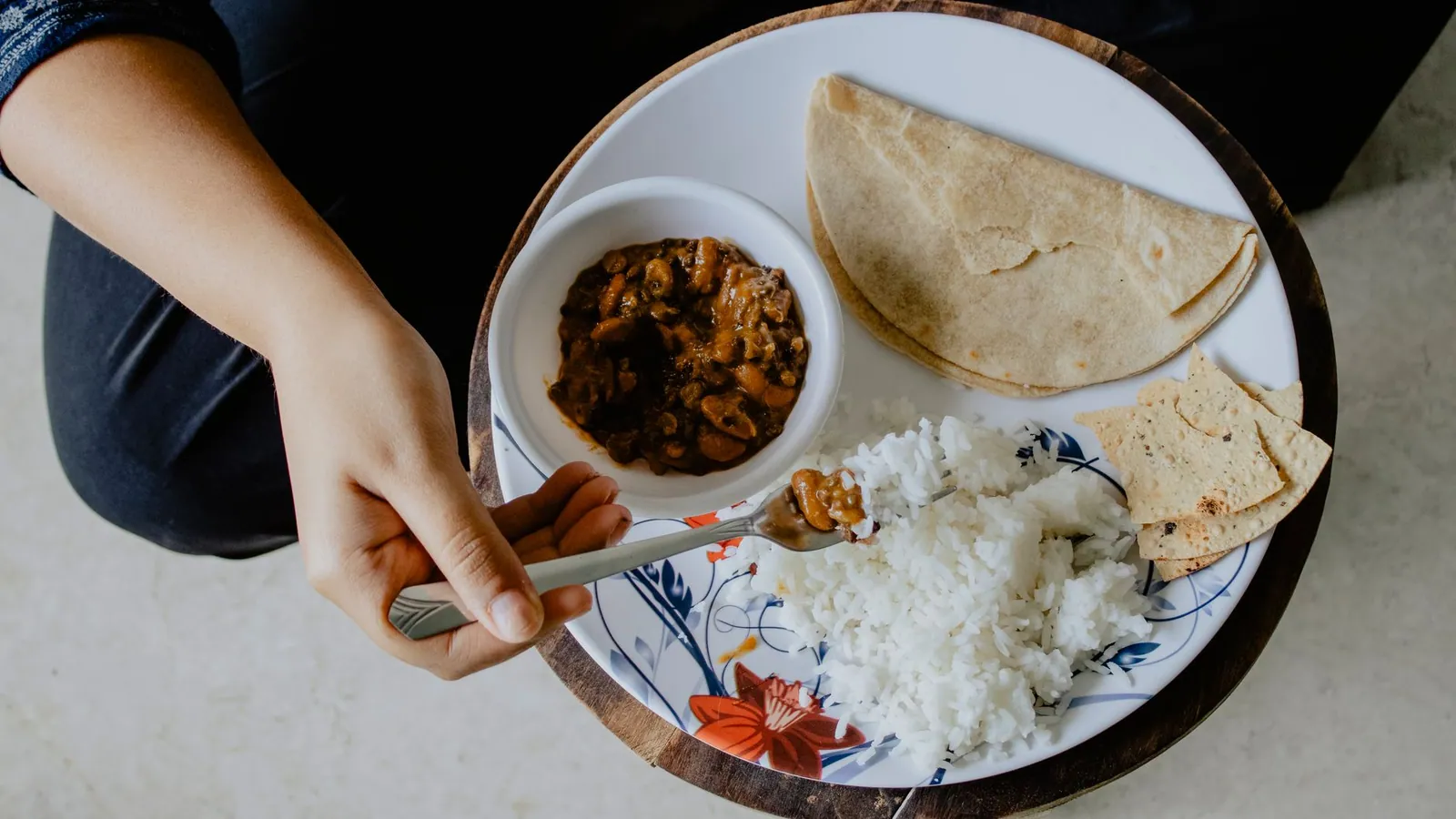
A full day on the chart: Indian meals with calories and protein
Pick either option at each meal; do not eat both. Calories are approximate and depend heavily on how much oil or ghee your kitchen uses.
| Meal | Option A | Option B | Calories | Protein |
|---|---|---|---|---|
| Early morning | Warm water, 5 soaked almonds | Green tea, 1 walnut | 40 to 60 | 1 to 3 g |
| Breakfast | 2 moong dal chilla with mint chutney | 1 katori vegetable poha plus 1 boiled egg or 100 g curd | 250 to 320 | 12 to 16 g |
| Mid-morning | 1 guava or apple | 1 glass buttermilk, unsweetened | 70 to 110 | 2 to 5 g |
| Lunch | 2 small rotis, 1 katori dal, 1 katori sabzi, salad, 100 g curd | 3/4 cup cooked rice, 1 katori rajma, sabzi, salad | 480 to 550 | 18 to 22 g |
| Evening | Tea without sugar, 25 g roasted chana | 1 bowl sprouts chaat | 110 to 160 | 5 to 8 g |
| Dinner | 1 to 2 rotis, 60 g paneer or soya sabzi, large vegetable portion | Dal khichdi with extra vegetables, 1 bowl curd | 400 to 480 | 16 to 20 g |
A day built from these lands around 1,400 to 1,650 kcal and 55 to 75 g of protein. If your protein is short, add curd at one more meal or make one dal serving larger instead of adding snacks. Vegetarians can follow this as written; our veg diet chart for weight loss goes deeper on vegetarian protein.
How many calories and how much protein should a woman eat?
Most women starting a weight loss chart eat about 1,400 to 1,700 kcal a day, set 300 to 500 kcal below maintenance, with roughly 60 to 90 g of protein. Never go below 1,200 kcal a day without medical supervision. Smaller or less active women sit at the lower end.
| Starting weight | Daily calories (starting range) | Protein per day | Note |
|---|---|---|---|
| 55 to 65 kg | 1,400 to 1,550 | 55 to 75 g | Little room to cut further; do not drop below this range |
| 65 to 80 kg | 1,500 to 1,750 | 65 to 90 g | Most common starting band |
| 80 to 95 kg | 1,650 to 1,900 | 75 to 100 g | Larger deficit is not needed; consistency matters more |
| Under 55 kg or already in a healthy weight range | Not applicable | Not applicable | Speak to a dietitian before dieting |
For a plan calculated around your exact weight, activity and routine, an online nutritionist consultation is more reliable than any generic table. You can also compare this chart with our healthy diet chart for weight loss and nutrition diet chart for weight loss.

How should you adjust the chart across your menstrual cycle?
Keep calories steady through the whole month rather than cutting further when cravings rise. Appetite often increases in the week before your period, and the scale can climb 1 to 2 kg from water alone. Add protein and fibre at meals, plan one small sweet, and judge progress by the weekly average.
In the first days of your period, energy may dip and iron is lost, so include iron-rich Indian foods such as dal, rajma, chana, spinach, methi and jaggery in small amounts, with a source of vitamin C like lemon or amla. Train a little gentler then. The days after your period are usually the easiest window for adherence and harder workouts. If you suspect anaemia, get a blood test instead of guessing.
Sunday prep that keeps the month on track
Most charts fail on weekdays, not weekends, because decisions pile up when you are tired. Ten minutes of prep helps:
- Soak and boil a large batch of chana, rajma or moong, then refrigerate in portions of about 1 katori.
- Roast chana and keep a jar of 25 g portions for the evening snack.
- Wash and chop salad vegetables for three days at a time.
- Set curd daily, so there is always a 100 g bowl for lunch and dinner.
- Keep a teaspoon next to the stove and measure cooking oil instead of pouring it; one teaspoon is about 40 kcal.
Swaps for South, North, East and West Indian kitchens
The structure stays the same everywhere: protein at each meal, a measured portion of grain, and vegetables filling about half the plate. Only the foods change.
- South: 2 small idlis with sambar and a vegetable side, or a plain or ragi dosa; keep curd rice to a small bowl.
- North: 2 rotis instead of 4, dal, rajma or chole, and a sabzi cooked in less oil; keep paratha to once or twice a week, tawa-roasted.
- East: fish or dal as the protein, with measured rice.
- West: thepla, usal or bajra bhakri with chaas; taste before adding jaggery to dal and shaak.
Keep the cooking fat you grew up with, whether mustard, groundnut, coconut or ghee, and control the quantity: about 3 to 4 teaspoons of added fat per day in total is a reasonable starting point.
Myths that wreck a one-month diet chart
- Skipping dinner speeds things up. It usually causes late-night snacking. A lighter dinner eaten 2 to 3 hours before bed works better.
- Detox water or juice cleanses burn fat. They only reduce food intake and water weight for a few days.
- Eating under 1,200 kcal gives faster results. It tends to cause muscle loss, hair shedding, tiredness and rebound eating.
- Weighing yourself daily keeps you honest. Daily readings swing 1 to 2 kg from water alone. Weigh once or twice a week, same time, and use the average.
Scale not moving? Check these before cutting calories
- Cycle timing. In the week before your period, water retention can hide fat loss and add 1 to 2 kg. It usually clears within a few days of the period starting.
- Hidden oil and sweet drinks. Extra tablespoons of oil, chai with sugar and packaged snacks can add 200 to 400 kcal a day without feeling like eating.
- Weekend drift. Five tidy days and two loose ones can erase the deficit.
- Too little protein or sleep. Both raise hunger. Aim for about 7 hours of sleep.
- Judging too early. Give it the full four weeks, then compare waist and clothes fit as well as weight.
If your cycle is irregular or absent, raise it with your doctor instead of working around it. Strength training two days a week helps keep muscle while you lose fat; a 1-on-1 personal training session can set that up safely.
Who should not follow this diet chart without medical advice?
Women who are pregnant, breastfeeding, under 18, or living with PCOS or PCOD, thyroid problems, diabetes, kidney disease, anaemia, an eating disorder history, or who take regular medication should get a doctor or registered dietitian’s input first. This chart is a general template for healthy adult women, not medical advice.
See your doctor or registered dietitian if you have a medical condition, are unsure of your safe calorie level, or notice hair loss, missed periods or persistent fatigue. Never change prescribed medication because of a diet. Specific situations have their own guides: PCOD diet chart for weight loss, PCOS weight loss in 1 month, weight loss diet chart for breastfeeding mothers and diet chart for weight loss after C-section.
What if you have a wedding or festival during the month?
Eat your planned breakfast and lunch, treat the event as one meal, fill half your plate with dal, sabzi and salad before rice or sweets, and return to the chart the next morning. One heavy meal rarely undoes a month of effort, while skipping meals beforehand usually leads to overeating.
Take one round at the buffet, choose one sweet you truly want, and skip the punishment workout the next day.
Frequently asked questions
How does a diet chart for weight loss for female in 1 month work?
It sets a moderate calorie deficit of roughly 300 to 500 kcal, adequate protein, regular meal timing and measured portions of familiar Indian foods. The result is gradual fat loss, about 2 to 3 kg in a month for many women, not a crash.
Is a 1-month diet chart for female weight loss safe?
For healthy adult women it is, provided calories stay at or above about 1,200 per day and protein is adequate. Very low-calorie plans can cause fatigue, hair shedding and missed periods. Women with medical conditions should check with a doctor or dietitian first.
How much weight can a woman realistically lose in 1 month?
About 2 to 3 kg is realistic for many women, including some water weight in week one. Larger numbers are usually muscle or water and are hard to keep off. Individual results vary with starting weight, sleep, activity and cycle.
Can beginners follow this diet chart?
Yes. It uses everyday foods and a repeatable structure, so you do not need special ingredients or supplements. Start with the sample day, weigh your oil, and add the walk and strength days gradually over the four weeks.
Should I exercise while following this chart?
Light daily walking of 20 to 30 minutes plus two strength days from week three is a sensible, sustainable addition. Exercise is not required for results, but it helps preserve muscle and improves mood and sleep during a calorie deficit.
Want the numbers calculated for your body? Start online weight loss coaching with Fitstrot’s online weight loss trainer and get a plan adjusted every week.


