

A chest shoulder tricep workout trains every muscle that pushes a weight away from your body in one session: the pectorals, the front and side deltoids, and the triceps. Lifters call it push day. It works because these three muscles already fire together in every press, so grouping them wastes less recovery than scattering them across the week. This guide gives you a gym session and a home session with exact sets, reps, rest and a form cue for every exercise, then shows how much weekly volume you need and how to add weight for eight weeks without wrecking your shoulders.
An honest note first: no single session builds a chest. The same well-ordered chest shoulder and tricep workout, repeated for months with the load creeping up, does.
What is a chest, shoulder and tricep workout, and who should do one?
A chest, shoulder and tricep workout is one strength session of 6–8 pressing and isolation exercises, done in that muscle order, 1–2 times a week. It suits anyone training 3–6 days a week on a push/pull/legs or upper/lower rotation. Beginners need only 4–5 exercises; the 2009 ACSM position stand recommends 8–12-rep loads for novices.
The logic is mechanical. A bench press also loads the front deltoid and triceps; an overhead press also loads the triceps and upper chest. Train all three on the same day and they share one 48–72-hour recovery window, instead of the triceps getting hit on Monday with chest and again on Tuesday with shoulders.
This is the push third of the split explained in our push pull legs workout guide. If you run PPL, this is your push session. If you run upper/lower or a full-body plan, you can still borrow the exercise order and the volume targets below.
The order that protects your bench: chest first, shoulders second, triceps last
Order matters more than most people think. A 2012 review of exercise-order research in Sports Medicine found that whichever exercise you place first gets the most total reps across its sets, and over time the first exercise in a sequence gains the most strength while the last one gains the least (Simão et al., Sports Medicine, 2012). The American College of Sports Medicine gives the same instruction in its resistance-training position stand: large muscle groups before small, multi-joint before single-joint, and heavier work before lighter work (ACSM position stand, 2009).
Applied to push day, that gives you a simple walkthrough:
- Heavy chest press first. It uses the most muscle and load, so do it while triceps and front delts are fresh.
- Second chest movement at an angle. An incline press shifts the work toward the upper (clavicular) chest while you still have energy.
- Overhead or seated shoulder press. Your front delts are partly tired, so expect slightly lighter weights than on a shoulder-only day.
- Isolation for chest and side delts. Flyes and lateral raises need little triceps help.
- Triceps last. They have done indirect work on every press; two direct exercises finish them.
The exception: if your shoulders are the lagging body part, the same 2012 review supports putting your priority exercise first. Swap the shoulder press into slot one for a 6–8-week block, then swap it back.
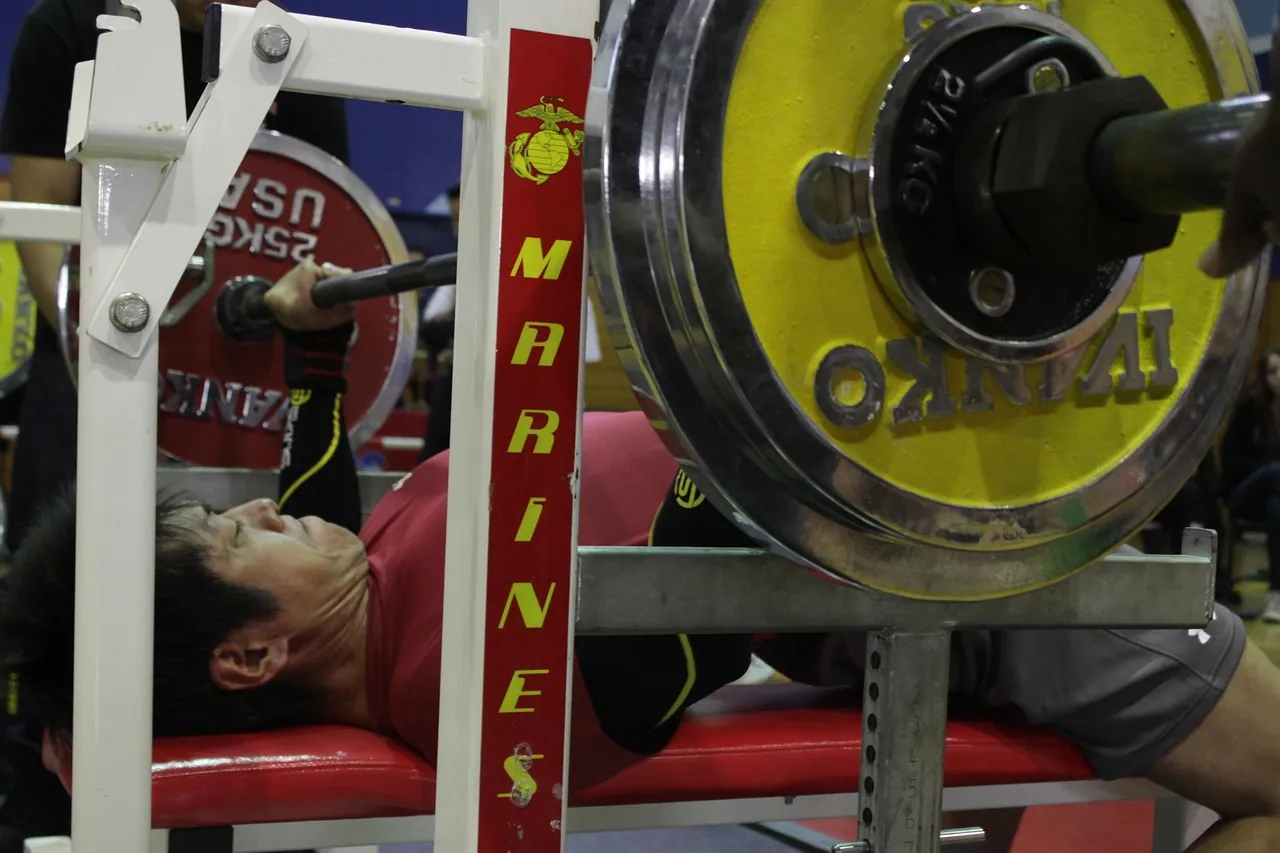
Push day workout at the gym: sets, reps, rest and a form cue
This is the full session for a lifter with at least 3–6 months of consistent training. Pick a weight that leaves 1–2 reps in reserve on the last set of each exercise. If you can do more than the top of the rep range on every set, the weight is too light.
| # | Exercise | Sets | Reps | Rest | Form cue |
|---|---|---|---|---|---|
| 1 | Barbell bench press | 4 | 5–8 | 2–3 min | Shoulder blades squeezed back and down; bar touches mid-chest, forearms vertical |
| 2 | Incline dumbbell press (30°) | 3 | 8–10 | 2 min | Elbows about 45° from the torso, not flared straight out |
| 3 | Seated dumbbell shoulder press | 3 | 8–10 | 90–120 sec | Ribs down; don’t arch the lower back to finish the rep |
| 4 | Cable or pec-deck fly | 2–3 | 12–15 | 60–90 sec | Soft bend in the elbows; stop when hands meet, don’t clap them |
| 5 | Dumbbell lateral raise | 3 | 12–20 | 60 sec | Lead with the elbows and stop at shoulder height, with no swinging |
| 6 | Overhead cable or dumbbell triceps extension | 3 | 10–12 | 60–90 sec | Elbows point forward and stay close; get a full stretch at the bottom |
| 7 | Rope triceps pushdown | 2–3 | 12–15 | 60 sec | Upper arms pinned to the sides; spread the rope at lockout |
Total: 20–22 working sets. That sounds like a lot, but it’s split across three muscle groups, and the triceps and front delts also get indirect work from every press. Rests are longest at the top for a reason. In a 2016 trial on trained men, the group resting 3 minutes between sets gained more bench-press strength and more muscle thickness than the group resting 1 minute, with a trend toward more triceps growth (Schoenfeld et al., J Strength Cond Res, 2016). Short rests belong on the small isolation moves at the end, not on your heaviest press.

The shoulder and tricep workout block: why the finish matters
Exercises 5–7 form a short shoulder and tricep workout that people often rush. Lateral raises train the side deltoid, which gives shoulders their width and which pressing barely reaches, so it’s the one shoulder isolation move that earns its place. The triceps’ long head is stretched most with the arm overhead, so the overhead extension comes before the pushdown, while you have more energy.
Push day exercises worth keeping, and the ones to swap
Pick one option per slot and keep it for 6–8 weeks. Changing exercises every session makes progress impossible to track.
- Main chest press: barbell bench press, dumbbell bench press, or machine chest press. Dumbbells are kinder to cranky shoulders because each arm finds its own path.
- Angled chest press: incline dumbbell press, incline barbell press, or low-to-high cable fly.
- Shoulder press: seated dumbbell press, standing barbell overhead press, or machine shoulder press.
- Side delt: dumbbell lateral raise, cable lateral raise, or machine lateral raise.
- Triceps (stretched position): overhead cable extension, single-arm dumbbell overhead extension, or EZ-bar skull crusher.
- Triceps (shortened position): rope pushdown, straight-bar pushdown, or close-grip bench press.
A note on dips
Parallel-bar dips train all three push muscles and can replace exercise 2 or 6, but a deep dip loads the front of the shoulder in a heavy stretch. If it pinches, stop with your upper arm parallel to the floor or switch to bench dips. A dull muscle ache is normal; a sharp or catching joint pain is not.

Chest shoulder tricep workout at home: what works with dumbbells, bands or nothing
You can build real pushing strength at home, and the data backs this up. In a 2015 study, trained adults who did band-resisted push-ups at muscle-activation levels matched to a 6-rep-max bench press gained as much strength over five weeks as the bench-press group (Calatayud et al., J Strength Cond Res, 2015). The key word is matched: the push-ups were hard enough to fail around 6 reps. Twenty easy push-ups won’t do the same job.
A loop-band set (roughly ₹500–1,500 in India) and a pair of adjustable dumbbells cover almost everything.
| # | Exercise | Sets | Reps | Rest | Form cue | Make it harder |
|---|---|---|---|---|---|---|
| 1 | Push-up (band across the back, or feet raised) | 4 | 6–12 | 2 min | Body in one straight line; chest touches a fist-height object | Add band tension or a backpack with books |
| 2 | Floor dumbbell press | 3 | 8–12 | 90 sec | Pause the elbows on the floor for a second; no bouncing | Slow 3-second lowering |
| 3 | Pike push-up | 3 | 6–10 | 90 sec | Hips high, head moves in front of the hands | Raise feet on a chair or bed |
| 4 | Dumbbell or band lateral raise | 3 | 12–20 | 60 sec | Stop at shoulder height; control the lowering | Add a 1-second hold at the top |
| 5 | Bench or chair dip | 3 | 8–15 | 60–90 sec | Hips close to the chair; stop at a 90° elbow bend | Straighten the legs, then add a weight on the lap |
| 6 | Overhead dumbbell triceps extension | 3 | 10–15 | 60 sec | Elbows stay pointed up; full stretch behind the head | Single-arm version with a heavier dumbbell |
If you have no equipment at all, keep exercises 1, 3 and 5, and swap the rest for diamond push-ups and slow-lowering (3–4 second) push-ups. The rule doesn’t change: finish each set within 1–3 reps of failure, or the work is too easy to count.
How many sets per week does push day actually need?
For muscle growth, aim for roughly 10 or more hard sets per muscle group per week, spread over at least 2 sessions. A 2017 meta-analysis found that each extra weekly set added about 0.37% more growth, with 10+ sets per muscle doing best. A 2016 meta-analysis found that training a muscle twice weekly beat once weekly.
Those two findings come from Schoenfeld, Ogborn and Krieger (J Sports Sci, 2017) on volume and the same group’s 2016 frequency meta-analysis in Sports Medicine. In practice, one push day a week, however brutal, leaves progress on the table. Two moderate push days beat one huge one. The NHS baseline for general health is lower: strengthening activities for all major muscle groups, chest, shoulders and arms included, on at least 2 days a week (NHS physical activity guidelines for adults).
| Level | Training days/week | Push sessions/week | Chest sets | Shoulder (side delt) sets | Direct triceps sets | Suggested split |
|---|---|---|---|---|---|---|
| Beginner (0–6 months) | 3 | 2 (as part of full-body or upper days) | 6–9 | 4–6 | 3–4 | Full body × 3 |
| Intermediate (6–24 months) | 4 | 2 (upper days) | 10–14 | 6–9 | 6–8 | Upper/lower × 2 |
| Intermediate | 3 | 1 | 7–9 | 3–4 | 5–6 | PPL × 1 (add push-ups on another day) |
| Advanced (2+ years) | 6 | 2 | 12–18 | 8–12 | 8–12 | PPL × 2 |
Front-delt sets are missing from that table on purpose. Every chest press and shoulder press already trains them hard, so most lifters need zero direct front-raise work. If you are unsure how the sets add up in a single session, our guide on how many sets per workout breaks down the per-session ceiling.
Push day workout plan: an 8-week progression
The ACSM progression rule is precise and easy to use: when you can do 1–2 reps more than your target on two consecutive sessions, add 2–10% to the load (ACSM, 2009). For the upper body, that usually means the smallest step your gym allows: 2.5 kg total on a barbell, or the next dumbbell up. This is called double progression: reps first, then weight.
| Week | Focus | Bench press | Accessories | Effort (reps in reserve) |
|---|---|---|---|---|
| 1 | Find working weights | 4 × 8 with a weight you could do for 10 | Bottom of each rep range | 3 RIR |
| 2–3 | Add reps | Same weight, work toward 4 × 8 with cleaner reps | +1 rep per set where possible | 2 RIR |
| 4 | First load jump | +2.5 kg, drop to 4 × 6 | Heavier dumbbell on any exercise that hit the top of its range | 2 RIR |
| 5–6 | Build back up | Work from 4 × 6 back to 4 × 8 | Add a 3rd set to the fly or lateral raise if recovery is good | 1–2 RIR |
| 7 | Second load jump | +2.5 kg, 4 × 5–6 | Hold volume steady | 1 RIR |
| 8 | Deload | 2–3 × 6 at about 60% of week 7 load | Half the sets | 4+ RIR |
Keep a log, even on your phone. Newer lifters often add 5 kg or more to the bench across a block like this; advanced lifters may add 2.5 kg or nothing, and that is normal. Nobody can promise a number. Sleep, food and consistency matter as much as the plan.
Myth check: do you need a separate chest and shoulder workout day?
No. Many Indian gym programmes pair a “chest and shoulder workout” day with a separate arms day, so the triceps get trained twice within 48 hours and the front delts take bench and shoulder press back to back. One push day, repeated twice a week, fixes both problems. Four other myths come up a lot:
- “Pre-exhaust with flyes first to grow your chest.” The 2012 exercise-order review found that pre-exhausting the pecs with a single-joint fly before bench press does not increase chest recruitment on the press. It mainly makes your bench weaker.
- “More shoulder exercises = bigger shoulders.” Your front delts already work through 7–10 pressing sets on push day. Adding front raises and upright rows usually brings joint irritation, not growth. Spend those sets on side delts, and train rear delts on pull day. Our deltoid workouts guide maps all three heads across the week.
- “The pump or burn means it’s working.” The burn is metabolic by-products building up. It feels productive, but growth over months tracks with load, sets and closeness to failure, not with how burnt your triceps feel on the drive home.
- “The best chest and shoulder workout is the one a famous bodybuilder uses.” The best one is the one you can progress for 8 weeks without pain. Use the templates above and change one variable at a time.
Troubleshooting: when push day stalls or your shoulders ache
Your bench press hasn’t moved in 3+ weeks. Check sleep (7+ hours) and protein first. Then drop the load 5–10% and rebuild with double progression, and move any hard shoulder session that falls within 48 hours of push day.
The front of your shoulder aches after pressing. Flared elbows are the most common cause. Tuck them to about 45° from the torso, keep your shoulder blades pinned back, and swap the barbell for dumbbells for a few weeks. Pain that persists more than a week, wakes you at night, or comes with weakness or numbness needs a physiotherapist or doctor, not a program change.
The upper chest lags behind. Use a lower incline. A 2020 EMG study of 30 trained adults found that upper-chest activation peaked at a 30° bench. Above 45°, the front deltoid took over and pectoral performance dropped (Rodríguez-Ridao et al., IJERPH, 2020). Most gym benches click from flat straight to 45°, so check the angle.
Your triceps are too tired for the finish, or the session runs long. Use lighter loads rather than skipping them, or superset lateral raises with pushdowns and drop the fly.

Adjusting push day for beginners, women and lifters over 40
Beginners
Start with 4 exercises (chest press, shoulder press, lateral raise, one triceps movement) for 2–3 sets of 8–12 reps, the range ACSM recommends for novices. Spend 2–3 weeks learning the movements before adding sets.
Women
There is no separate “toning” version. Women respond to the same sets, reps and progression. If pressing strength starts low, begin with incline push-ups, dumbbell presses and 2–3 kg lateral raises from the home table.
Lifters over 40
Warm up longer, with band pull-aparts and 2–3 ramp-up sets before the bench. Favour dumbbells and machines if your shoulders are sensitive, and keep most sets at 8–15 reps. With high blood pressure or a heart condition, get medical clearance before heavy pressing.
Fuel for recovery
The muscle comes from recovery, not from the session itself. The International Society of Sports Nutrition recommends 1.4–2.0 g of protein per kg of body weight per day for people who strength train, spread over meals of roughly 20–40 g each (ISSN position stand, 2017). For a 70 kg lifter, that’s about 100–140 g a day. That’s hard to reach on a typical dal-roti-sabzi day without planning in paneer, curd, eggs, soya chunks, chicken or whey. If you would rather have a plan built around your own food habits, our online nutritionist consultation sets protein targets around Indian meals.
Frequently asked questions
What is the best chest shoulder tricep workout for beginners?
Four exercises, 2–3 sets each of 8–12 reps: dumbbell bench press, seated dumbbell shoulder press, lateral raise and rope pushdown. Train it twice a week with at least 48 hours between sessions, and add weight only after you hit the top of the rep range with good form.
Is it good to train chest, shoulders and triceps together?
Yes. All three muscles work in every pressing movement, so training them together gives them one shared recovery window instead of hitting the triceps and front delts on consecutive days. It is the basis of the push day in a push/pull/legs split.
How many exercises should a push day have?
Six to eight for intermediate lifters: two chest movements, one shoulder press, one side-delt raise and two triceps movements, plus an optional fly. Beginners do well with four or five. More exercises rarely help if the sets aren’t close to failure.
How often should I do a chest, shoulder and tricep workout?
Twice a week is ideal for muscle growth. A 2016 meta-analysis found training a muscle twice weekly produced better growth than once weekly. On a 6-day push/pull/legs split, that means two push days; on 3 days, add push-ups on another day.
Can I do a chest shoulder tricep workout at home without a gym?
Yes. Push-ups, pike push-ups, chair dips and dumbbell or band work cover all three muscles. A 2015 study found push-ups loaded to match a 6-rep-max bench press produced similar strength gains, so the key is making each set hard, close to failure.
Should I train shoulders before chest?
Only if your shoulders are your priority. Exercise-order research shows the first exercise gets the most reps and the most strength gain, so the default is chest first. For a 6–8-week shoulder-focused block, putting the shoulder press first is a reasonable swap.
How long should a push day workout take?
About 60–75 minutes for the full gym session, including 2–3 minute rests on the heavy presses. If you’re short on time, superset the lateral raises with triceps pushdowns and cut the fly. That keeps the session under 50 minutes without losing the main lifts.
If you want someone to check your pressing form and adjust the weights each week, a coach from our 1-on-1 online personal training can build this push day into your full week and review your lifts over video.


