

A good cable back workout keeps tension on your lats, mid-back, rear delts and traps through the whole rep, and lets you change the line of pull just by moving a pulley. This guide takes the back region by region. For each area you get the cable moves that suit it, the sets, reps and rest, the attachment to use and one form cue. Then it combines them into a timed session you can run at any Indian gym with a lat pulldown, a low row or a dual-pulley station.
This page covers cables only, not barbell back days. If you’re still choosing how to split your week, the push pull legs workout shows where a cable back session fits.
What makes a cable back workout different from dumbbells and barbells?
A cable back workout keeps resistance on the muscle along a line of pull you choose, including at the stretched bottom of the rep where free weights go slack. You can pull high, low or one-armed. A 2017 meta-analysis of 21 studies found similar muscle growth across light and heavy loads when sets were taken close to failure.
That finding comes from a systematic review by Schoenfeld and colleagues in the Journal of Strength and Conditioning Research. It matters because many Indian gyms have stacks that jump in 5 kg steps, and dual-pulley stations often use a 2:1 ratio, so the number on the pin isn’t the load you feel. What counts is effort: the last two or three reps should be hard while your form holds.
Cables also give you three practical advantages. Direction: the same machine becomes a face pull at head height or a shrug at the floor. Unilateral loading: single-handle work shows up your weaker side. Lower spinal load: seated and kneeling moves train the upper back hard without loading a lower back that’s tired from squats or long commutes.
Your back in four regions: which cable move hits what
The lats pull your upper arm down toward your hip. The rhomboids and middle traps pull your shoulder blades together. The rear delts pull your arm out and back. The upper traps lift your shoulder blades. A session that trains only one of these jobs trains only one region, however many sets you do.
| Region | What the muscle does | Best cable moves | Pulley height | You’ll feel it… |
|---|---|---|---|---|
| Lats (latissimus dorsi, teres major) | Pulls the upper arm down and back toward the hip | Cable lat pulldown, close grip lat pulldown, straight arm pulldown, single arm cable row | High (pulldown) or mid (row) | Along the side of the ribcage, under the armpit |
| Mid-back (rhomboids, middle traps) | Squeezes the shoulder blades together | Seated cable row, wide-grip cable row, face pull | Low to mid | Between the shoulder blades |
| Rear delts | Pulls the arm out and back, opens the chest | Cable rear delt fly, cable face pull | Shoulder to head height | Back of the shoulder |
| Upper traps | Lifts and slightly rotates the shoulder blades | Cable shrugs | Floor | Top of the shoulders, side of the neck |
| Lower traps | Pulls the shoulder blades down and keeps them steady overhead | Face pull with a slight downward angle, straight arm pulldown | High | Below and between the shoulder blades |
The face pull and the straight arm pulldown each cover two regions, which is why both are in the sample session below.
The cable back exercises, region by region
For each exercise: what it’s for, how to set it up and the usual mistake. Sets, reps and rest for all of them are in the table after this section.
Lats: cable lat pulldown
The cable lat pulldown is the main vertical pull for anyone who can’t yet do several strict pull-ups. Lock your thighs under the pad, take the bar just outside shoulder width, lean back 10–15° and pull to your upper chest. A 2026 narrative review of 23 EMG studies found that pulling the bar in front of the head was the setup most consistently linked to higher lat activation, while grip width gave mixed results. Skip behind-the-neck pulldowns.

Close grip lat pulldown vs wide grip
The close grip lat pulldown uses a V-handle. Your elbows travel further down and back, and many lifters feel their lats more. Choose the grip by comfort and how well you feel the lats working, not because one is “for width” (see the myth check below).
Lats without the biceps: straight arm pulldown
The straight arm pulldown is the one cable back move the biceps can’t take over, because your elbows stay almost locked. Use a rope or bar on a high pulley, hinge forward about 30°, keep your ribs down and sweep your hands to your thighs. Go light, usually 30–50% of your pulldown weight. It makes a good warm-up because it gets your lats working before heavier pulls.
Mid-back: seated cable row
The seated cable row is the main horizontal pull. Sit tall, knees slightly bent, and pull the V-handle to your lower ribs. Let your shoulder blades move forward at the stretch and pull back at the finish, without rocking your lower back. The same 2026 review linked a narrower grip and elbows held closer to the body with greater lat activation. A wide bar with elbows flared shifts work to the mid-back and rear delts.
Mid-back and lats: single arm cable row
The single arm cable row uses a D-handle at mid-height, standing or kneeling. Working one side at a time lets you pull the elbow past your torso and shows up any imbalance. Start with your weaker side and match its reps on the other. A little trunk rotation at the stretch is fine. It gives the extra range that makes this exercise worth doing.
Rear delts: cable face pull
The cable face pull works the rear delts, mid-traps and rotator cuff together. Set a rope at forehead height, pull toward your nose while pulling the rope apart, and finish with your hands beside your ears and your elbows high. Use 12–20 controlled reps with a one-second pause. If your torso leans back to finish, the weight is too heavy.
Rear delts: cable rear delt fly
The cable rear delt fly isolates the rear delts. Set both pulleys at shoulder height, cross the cables and open your arms out to the sides with a slight elbow bend. Picture pushing your hands toward the walls rather than squeezing your shoulder blades, which shifts the work to the mid-back.
Upper traps: cable shrugs
Cable shrugs use a bar or two D-handles on the low pulleys. Standing slightly in front of the pulleys lines up the pull with the upper traps better than dumbbells do. Shrug straight up, hold for a second and lower slowly. Don’t roll your shoulders.
| Exercise | Region | Sets | Reps | Rest | Form cue |
|---|---|---|---|---|---|
| Cable lat pulldown | Lats | 3–4 | 6–10 | 2 min | “Drive elbows into back pockets”; bar to upper chest |
| Close grip lat pulldown (V-handle) | Lats | 3 | 8–12 | 90 s–2 min | Lean back 10–15°, handle to sternum |
| Straight arm pulldown | Lats | 2–3 | 12–15 | 60–90 s | Elbows soft but fixed; sweep hands to thighs |
| Seated cable row | Mid-back / lats | 3–4 | 8–12 | 2 min | Handle to lower ribs; spine still, shoulder blades move |
| Single arm cable row | Lats / mid-back | 3 per side | 10–12 | 60 s between sides | Reach long at the stretch, elbow past the torso |
| Cable face pull | Rear delts / mid-traps | 3 | 12–20 | 60–90 s | Pull the rope apart; hands finish by the ears |
| Cable rear delt fly | Rear delts | 2–3 | 12–20 | 60 s | Push hands to the walls; don’t squeeze shoulder blades |
| Cable shrugs | Upper traps | 2–3 | 10–15 | 60–90 s | Straight up, 1-second hold, no rolling |
These ranges follow the American College of Sports Medicine’s 2009 position stand on resistance-training progression, which recommends 8–12 reps for beginners and mostly 6–12 reps for hypertrophy. Don’t do all eight in one session. Pick four or five that cover all four regions.
Myth check: a wide grip doesn’t build a “wider” back
The popular belief is that a wider pulldown grip builds wider lats. In a 2014 study, Andersen and colleagues tested 15 men at 1, 1.5 and 2 times shoulder width. Lat, trapezius and infraspinatus activation were similar across all three over the whole rep. The narrow (80.3 kg) and medium (80.0 kg) grips allowed heavier 6-rep-max loads than the wide grip (77.3 kg). The authors concluded that any grip in that range should give similar growth.
Use the grip that lets your elbows travel furthest without shoulder pain. Your lats get wider from progressive overload over months, not from grip width.
Attachments guide: rope, V-handle, lat bar or D-handle?
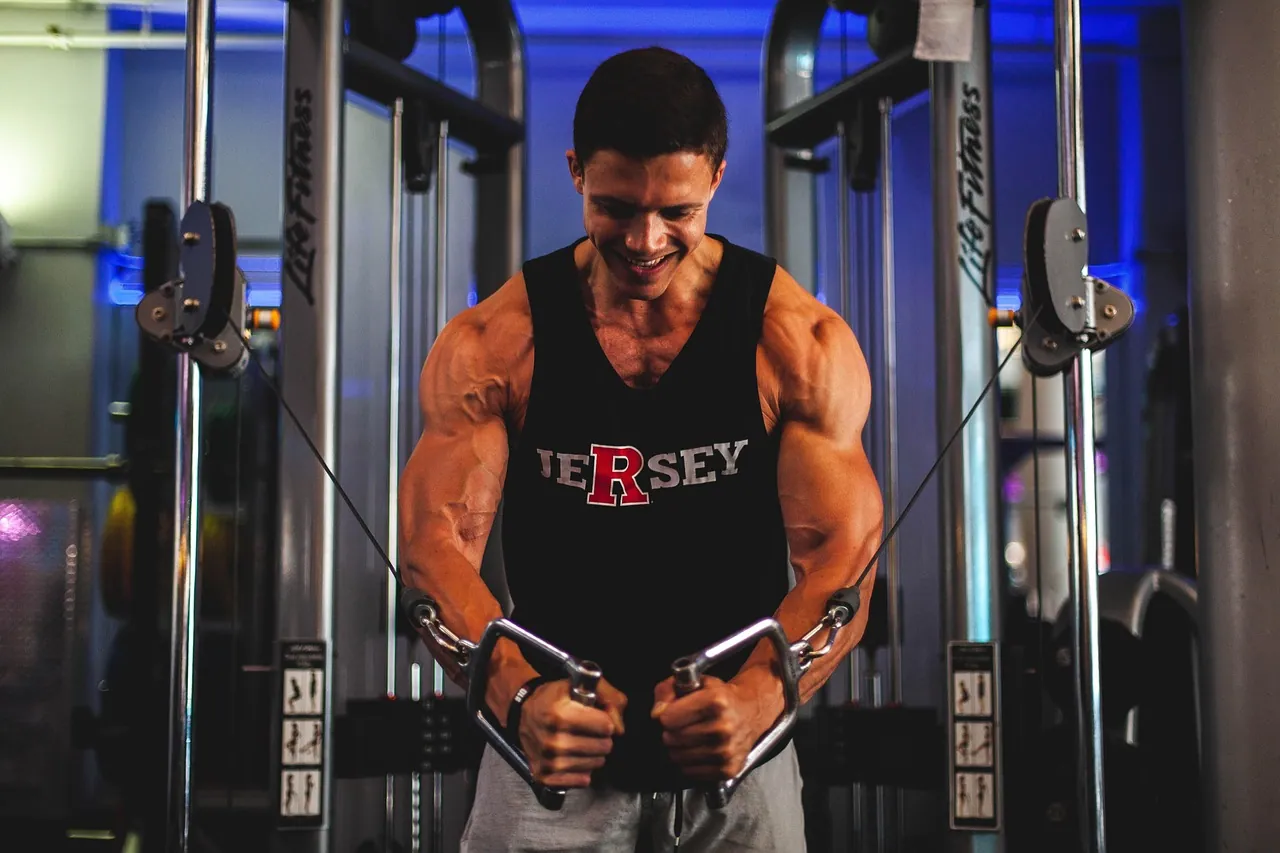
Use a lat bar for pulldowns, a V-handle for close grip pulldowns and seated rows, a rope for face pulls and straight arm pulldowns, and a single D-handle for one-arm rows, rear delt flies and shrugs. The attachment sets your grip, wrist angle and range of motion, so swapping it changes the exercise without leaving the machine.
| Attachment | Grip it gives | Best for | Watch out for |
|---|---|---|---|
| Long lat bar (straight or angled ends) | Overhand or underhand, shoulder-width or wider | Cable lat pulldown, wide-grip row, straight arm pulldown | Grips so wide that range of motion shrinks |
| V-handle (close neutral) | Palms facing, hands 10–15 cm apart | Close grip lat pulldown, seated cable row | Pulling to the chest instead of the lower ribs |
| Rope | Neutral, hands free to separate | Cable face pull, straight arm pulldown | Grip slipping at high reps; tie a knot or use chalk |
| Single D-handle | Any angle, one hand | Single arm cable row, cable rear delt fly, single arm pulldown | Twisting the torso to cheat the last reps |
If your gym has only a lat bar and one D-handle, you can still cover every region.
Walkthrough: a 55-minute cable back workout session
This session covers all four regions in about 55 minutes. Following the ACSM principle, the heavy multi-joint pulls come first and the rear delt and trap work comes last. Warm up for 5–8 minutes first. Our back workout warm-up gives you a routine you can run beside the cable station.
| Order | Exercise | Sets × reps | Rest | Effort target | Time (approx.) |
|---|---|---|---|---|---|
| 0 | Warm-up + 2 light straight arm pulldown sets | 2 × 15 | 30 s | Easy, focus on feeling the lats | 8 min |
| 1 | Cable lat pulldown | 4 × 6–10 | 2 min | 1–2 reps left in the tank | 11 min |
| 2 | Seated cable row (V-handle) | 3 × 8–12 | 2 min | 1–2 reps left | 9 min |
| 3 | Single arm cable row | 3 × 10–12 per side | 60 s | 1–2 reps left | 9 min |
| 4 | Cable face pull | 3 × 15 | 75 s | 2–3 reps left, 1-second pause | 6 min |
| 5a | Cable rear delt fly | 3 × 15 | Superset, 60 s after both | Close to failure | 7 min |
| 5b | Cable shrugs | 3 × 12 | — | 1-second hold at top | — |
| Weekly total if done once | About 10 hard sets for lats, 9 for mid-back, 6 for rear delts, 3 for traps | ||||
How to progress: once you hit the top of the rep range on every set with clean form, add weight. ACSM suggests increasing the load by 2–10% when you can do one or two reps more than your target. A 5 kg stack step is often too big for face pulls and flies, so add reps first there.
Where it fits: run this session once a week as your pull day, or twice a week with at least 48 hours between sessions if you want more back volume.

How many sets and how much rest does a cable back workout need?
Most people build back muscle on about 10–20 hard sets per week for the lats and mid-back, over one or two sessions, resting 60 seconds to 3 minutes depending on the exercise. A 2017 meta-analysis of 15 studies linked each extra weekly set to about 0.37% more muscle growth. Beginners can start at the lower end.
That figure is from Schoenfeld, Ogborn and Krieger’s dose-response meta-analysis in the Journal of Sports Sciences, which showed more sets gave more growth. But recovery limits how much you can do. If pulling strength drops from week to week, cut back. Our guide on how many sets per workout covers adjusting volume.
On rest, don’t rush. In an 8-week trial of 21 trained men published in 2016, resting 3 minutes between sets led to more strength and muscle thickness than resting 1 minute. Take about 2 minutes on pulldowns and rows, and 60–90 seconds on face pulls, flies and shrugs.
For general health, the requirement is lower. The WHO’s 2020 physical activity guidelines recommend muscle-strengthening activity for all major muscle groups on 2 or more days a week. Mayo Clinic notes that a single set of 12–15 reps with the right weight builds muscle efficiently for most people.
Troubleshooting: feeling your cable back workout in the biceps, not the back?
Technique usually fixes this. In a 2009 study by Snyder and Leech, eight women new to strength training did lat pulldowns before and after a short verbal instruction to use the lats and relax the biceps. Lat activity rose significantly after the instruction. Try these fixes:
- Biceps burning, back feels nothing: use a thumbless grip and think “elbows down and back”. Do two straight arm pulldown sets first.
- Neck and upper traps take over: pull your shoulders down away from your ears before each rep. If you still shrug, drop 5–10 kg.
- Lower back aches on seated rows: you’re swinging. Lock your torso upright, or switch to single arm rows.
- Front of the shoulder pinches on pulldowns: grip at shoulder width with a neutral handle, and stop the bar at your collarbone.
- Face pulls feel like a biceps curl: raise the rope to forehead height and cut the load by a third.
If pain continues, or you get numbness or tingling down the arm, stop and see a doctor or physiotherapist.

For beginners, desk workers and women new to the cable station
Beginners (under 6 months of training): do three exercises, cable lat pulldown, seated cable row and cable face pull, for 2–3 sets of 10–12 reps, twice a week. Spend the first four weeks on the form cues, not the numbers.
Desk workers: hours at a laptop pull the shoulders forward. Try a 2:1 ratio of horizontal pulls (rows, face pulls, rear delt flies) to pulldowns. This is a practical programming choice, not a posture cure.
Women new to back training: the same exercises and rep ranges apply. There’s no separate “toning” version of a row. Cables let you start at 5 kg and progress in small steps.
Coming back from a shoulder or back injury: get clearance from your doctor or physiotherapist first, then start with light, pain-free moves. If you’d like a coach to check your form live, our 1-on-1 personal training sessions run over video at your own gym’s cable station.
Cable back workout FAQs
Can you build a big back with only cable exercises?
Yes, for most people. Muscle grows from hard sets and progressive overload, not from the type of equipment. A 2017 meta-analysis found similar growth across a wide range of loads when sets were taken close to failure. Cables can fall short for very strong lifters who run out of stack weight on rows, and at that point barbell or machine rows help.
How many cable back exercises should I do in one workout?
Four to five is enough for most people: one vertical pull (lat pulldown), one or two rows, one rear delt move (face pull or rear delt fly), and optionally cable shrugs. That’s usually 12–16 total sets, which fits in about 45–55 minutes with proper rest.
Is the seated cable row or the lat pulldown better for the back?
Do both. They train different jobs. The lat pulldown is a vertical pull that mainly works the lats. The seated cable row is a horizontal pull that works the lats and mid-back together. A balanced cable back workout includes at least one of each.
Are face pulls a back or shoulder exercise?
Both. The cable face pull mainly works the rear delts, middle trapezius and rotator cuff muscles. That’s why it can sit in a back session or a shoulder session. Doing it on back day with lighter weights and 12–20 reps is a common, sensible choice.
How often should I do a cable back workout each week?
Once or twice a week is enough for most people. WHO recommends muscle-strengthening work for all major muscle groups on at least 2 days a week. For growth, spreading about 10–20 weekly back sets over two sessions, at least 48 hours apart, is easier to recover from than doing them all in one day.
What weight should I start with on the cable machine?
Pick a weight you can lift for the top of the target rep range with 2–3 reps left in reserve. Stacks and pulley ratios differ between gyms, so use the same machine each week and compare your numbers only on that machine, not with other gyms or other people.
Does the straight arm pulldown work the lats or the triceps?
Mainly the lats and teres major. Your triceps hold your elbows straight but aren’t the main muscle moving the weight. If you feel it in your triceps or chest instead, hinge forward a little more, keep your ribs down, and finish with your hands at your thighs rather than behind you.
Next step: take the sample session above to your next pull day and write down the weight and reps for each exercise. When you hit the top of the rep range on every set for two sessions in a row, add weight. If you’d like a coach to check your form on video and adjust the plan week by week, book a Fitstrot 1-on-1 training session.


