
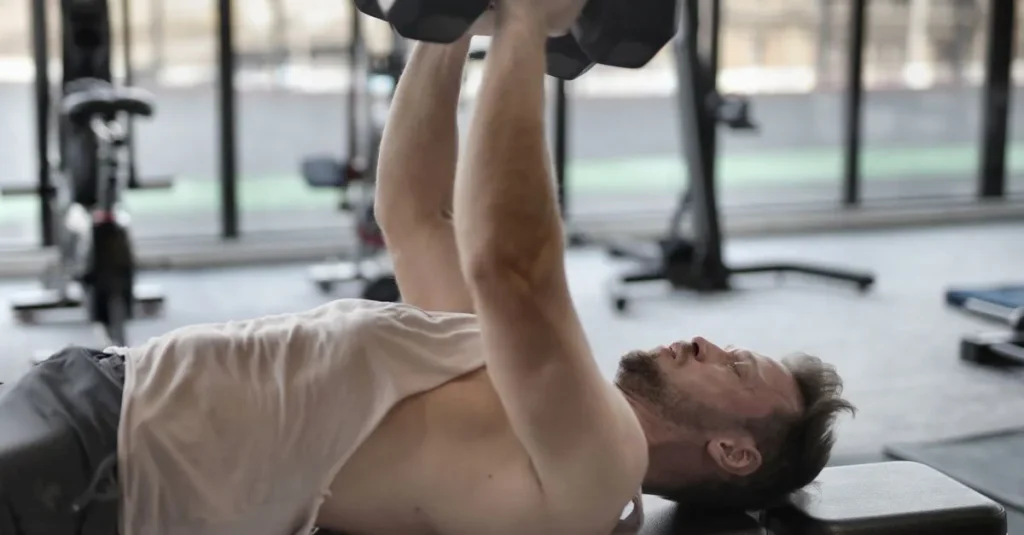
If you are looking for a breast weight loss exercise that shrinks only that area, here is the honest answer up front: no exercise can burn fat from the breasts alone. What you can change is your overall body fat, the strength of the chest and upper back around the breasts, your posture and how well you are supported. This guide covers what works, a table of exercises with sets and form cues, a weekly plan, and when a change in the breasts needs a doctor rather than a workout.
Can exercise reduce breast size?
No exercise can remove fat from the breasts alone, because the body draws fat from across the whole body in a pattern set largely by genetics and hormones. Breast size may shrink somewhat as overall body fat falls, but how much varies from person to person. Chest exercises build the muscle beneath the breast, not the breast tissue itself.
Breasts are made of glandular tissue, connective tissue and fat, and the mix differs from woman to woman. Someone whose breasts are mostly fatty tissue may notice a bigger change with weight loss than someone whose breasts are mostly glandular. Your monthly cycle, pregnancy and breastfeeding also change size and feel, which is why a scale or a bra size can mislead you from week to week.
What actually changes how the chest area looks
People often credit one thing, usually fat, for how the chest area looks. In practice, six factors are involved, and only some of them respond to training. This table shows which ones you can influence.
| Factor | Can exercise change it? | What helps in practice |
|---|---|---|
| Overall body fat | Indirectly, over months | A moderate calorie deficit, daily walking, 2-3 strength sessions a week |
| Pectoral muscle under the breast | Yes | Push-ups and presses, 2 times a week |
| Posture (upper back and shoulders) | Yes, often the biggest visible change | Rows, reverse flys and band pull-aparts |
| Bra fit and support | Not exercise, but easy to fix | A professional fitting, re-checked as your weight changes |
| Skin elasticity | Only slightly | Gradual weight loss; some of it is age and genetics |
| Hormones, pregnancy, breastfeeding | No | Patience, and a doctor if something feels unusual |
Myths about reducing breast fat
- “Push-ups burn the fat on top of the chest.” They strengthen muscle. The fat layer responds to total energy balance, not to where you do the work.
- “Special breast-reduction exercise videos work.” Be wary. No routine, massage or herbal drink selectively shrinks breast tissue.
- “A very tight bra will flatten them.” Compression changes the shape for a while, not the tissue, and a bra that is too tight can restrict your breathing and cause discomfort.
- “Training chest every day speeds things up.” It mostly adds shoulder strain and fatigue. Muscle needs rest days to adapt.
- “A 7-day plan will change this area.” Even a well-designed exercise for weight loss in 7 days routine builds habits, not visible fat change in a week.
Chest and upper-back exercises: sets, reps and form cues
These moves strengthen the chest and the muscles that hold your shoulders back, which often improves how the whole area sits. Start with light loads and add weight only when every rep is controlled. Do this block 2 to 3 times a week with at least a day between sessions.
| Exercise | Sets x reps | Rest | Form cue |
|---|---|---|---|
| Wall or incline push-up | 3 x 8-12 | 60-90 s | Body in one straight line, elbows about 45 degrees from the torso |
| Dumbbell floor press | 3 x 10-12 | 60-90 s | Elbows touch the floor, press up without shrugging the shoulders |
| Light dumbbell fly | 2 x 12-15 | 60 s | Soft elbows, small arc, stop at a stretch, never a pinch |
| Bent-over dumbbell or band row | 3 x 10-12 | 60-90 s | Pull elbows to your hips and squeeze the shoulder blades |
| Reverse fly | 2-3 x 12-15 | 60 s | Light weights, lead with the elbows, keep the neck relaxed |
| Band pull-apart or face pull | 2-3 x 12-15 | 45-60 s | Ribs down, pull to eye level, hold one second |
| Forearm plank | 3 x 20-40 s | 45-60 s | Glutes tight, no sagging at the lower back |
Progression: when you can finish every set at the top of the rep range with one or two reps still in reserve, make it harder by lowering the incline or adding 1 to 2 kg, never both in the same week. Slow lowering, about three seconds down, builds strength without extra weight.
Notice that four of the seven moves work the back and shoulders. Push-ups alone can round the shoulders forward, so the pulling work is what keeps the chest lifted. If you want someone to check your form on a video call, 1-on-1 personal training is a good way to get corrections.
A simple weekly plan that combines strength and fat loss
| Day | Session | Time | Focus |
|---|---|---|---|
| Monday | Upper-body strength (table above) | 35-40 min | Chest, back, shoulders |
| Tuesday | Brisk walk or cycling | 30-40 min | Steady cardio |
| Wednesday | Lower body and core | 35-40 min | Squats, hinges, plank |
| Thursday | Rest or gentle stretching | 15-20 min | Recovery |
| Friday | Full-body strength | 40 min | Rows plus presses |
| Saturday | Dance workout or long walk | 40-45 min | Enjoyable cardio |
| Sunday | Rest | – | Sleep and meal prep |
Short on time? Keep the two strength days (Monday and Friday) and the walks, and drop the rest. Consistency beats a perfect week you cannot repeat.
For the cardio days, Zumba for weight loss and yoga for weight loss are both lower-pressure options. A fuller strength structure is in our gym workout for weight loss guide.
How do you lose overall body fat safely?
Sustainable fat loss usually comes from a moderate daily deficit of about 300 to 500 kcal, a loss of roughly 0.25 to 0.75 kg a week, protein at every meal, regular walking and two to three strength sessions. Crash diets are not recommended, because they cost muscle, energy and mood without choosing where the fat comes from.
In an Indian kitchen this can mean keeping your usual rotis or rice in measured portions, adding a bowl of dal, curd, paneer, eggs or sprouts to each meal, and filling half the plate with sabzi. Cut liquid calories such as sweet chai, juices and cold drinks before cutting meals. Aim for a daily step count you can repeat, such as 7,000 to 10,000, rather than one heroic gym week. If you want meals matched to your health and budget, an online nutritionist consultation can build a plan around your routine, and an online weight loss trainer can pair it with your workouts.
Be realistic about the result. Fat leaves in an order you cannot choose, so some people see the face, arms or waist change first and the chest area last. That is normal, not a sign of failure. If you prefer to keep volume in this area, tell your trainer early, because it is a goal exercise cannot control and your plan should aim at posture and strength instead.
Sports bra problems and quick fixes
Support matters more than most fitness content admits, especially while your body size is changing. A poor fit also makes you skip workouts, which defeats the purpose.
- The band rides up your back. It is too loose. The band carries most of the support, so move to a smaller band size.
- Straps dig into your shoulders. The band is probably not doing enough work. Tighten the band first, then adjust the straps.
- Breast tissue spills over the cup or at the sides. The cup is too small. Try a bigger cup size.
- You still feel bounce when running or skipping. Choose a high-support style for higher-impact days, and keep lower-impact options for walking and yoga.
- Your weight changed by 4-5 kg. Get measured again. A bra that fitted three months ago may not fit now.
What to expect at different life stages
Teenagers: breasts are still developing, and aggressive dieting is not appropriate. Focus on regular movement and good sleep, and see a doctor with any concern. Our guide on weight loss in children explains the safer approach for growing bodies.
After pregnancy and while breastfeeding: size and feel change with feeding, and it has little to do with your workouts. Wait until a few months after you stop breastfeeding before judging the effect of any training, and ask your doctor when to restart upper-body exercise.
In your 40s and beyond: skin elasticity naturally reduces with age, and hormones shift around perimenopause, so the same weight loss can look different than it did at 25. Strength training matters even more now, because it protects muscle and posture.
With PCOS or hormonal conditions: weight and fat distribution can respond more slowly. Our guide to exercise for PCOS weight loss covers a gentler structure, and your doctor should guide any medical decisions.
When should you see a doctor about breast changes?
See a doctor promptly if you notice a new lump or thickening, skin dimpling or redness, nipple discharge or inversion, a change in only one breast, or pain that does not follow your cycle. Do not wait for exercise or weight loss to explain it. Men should also get unexplained chest swelling or lumps checked.
Also see your doctor if the weight of your breasts causes constant neck, shoulder or back pain, or grooves from straps that do not fade. Whether surgery or any other treatment is right for you is a medical decision that no workout can replace. Stop any exercise that causes sharp chest or breast pain, and get it checked before you resume. This guide is general fitness information, not a diagnosis, and it does not replace routine screening that your doctor recommends for your age.
Plan it with a trainer
Want a plan matched to your schedule and goals? Book a session with a Fitstrot online weight loss trainer and tell them about your posture and upper-body goals.
Frequently asked questions
Can exercise reduce breast fat?
Not directly. Exercise cannot remove fat from the breasts alone. Breast size may fall somewhat as your overall body fat comes down through a modest calorie deficit and regular activity, but the amount varies and depends on genetics, hormones and the make-up of your breast tissue.
Do push-ups make breasts smaller?
No. Push-ups strengthen the pectoral muscles under the breast, which can improve posture and the look of firmness. They do not target the fat or glandular tissue that determines breast size. Pair them with rows and pull-aparts so your shoulders do not round forward.
How long does it take to see changes from chest and posture exercises?
Many people notice better strength and posture within about 6 to 8 weeks of consistent training, two to three times a week. Changes linked to fat loss take longer, often several months, and vary from person to person. Give any routine at least three months before judging it.
Is it safe to exercise with heavy or tender breasts?
For most people, yes, with a well-fitted, supportive sports bra and lower-impact options such as brisk walking, cycling or yoga on tender days. Avoid pushing through sharp pain. If tenderness is new, one-sided or constant, or you feel a lump, see a doctor.
Why did I lose weight but my breasts stayed the same size?
Fat loss follows your genetics and hormones, so the breasts may be among the last places to change, particularly if they contain more glandular tissue. Cycle and hormonal shifts also change size. Judge progress by waist measurement, strength, energy and how your clothes fit.


