

A back and tricep workout pairs your biggest pulling muscles with the muscle that straightens your elbow. It sounds odd next to the usual “back and biceps” day, but it solves a real problem: your triceps arrive fresh instead of already tired from bench pressing, and your back work does not burn out the arm muscle you are about to train. This guide gives you a full gym session and a home version with sets, reps, rest and form cues, explains how much weekly volume the research supports, and shows where this pairing fits in a 4, 5 or 6-day week.
It is built for a typical Indian gym: busy cable stations at 7 pm and about an hour to finish before dinner.
Is it a good idea to train back and triceps together?
Yes, for most intermediate lifters it works well. Rows and pulldowns barely tire the triceps, so you can load triceps work properly afterwards. Research shows that training a muscle twice a week builds more size than once a week (Schoenfeld, 2016), and this pairing makes it easy to give triceps a second weekly hit without stacking two pressing days.
The traditional logic pairs back with biceps because biceps help you row and pull. That makes the biceps session afterwards weaker, not stronger. With back and triceps, the two halves of the session use opposite elbow actions. Your back exercises bend the elbow; your triceps exercises straighten it. The only real overlap is the long head of the triceps, which crosses the shoulder and helps pull the arm down and back during pulldowns and pullovers. That light involvement does not hurt your triceps sets.
The 2016 meta-analysis by Schoenfeld and colleagues pooled 10 studies and found that training a muscle group twice a week produced a larger hypertrophy effect size than once a week (0.49 vs 0.30) when total volume was equal, and concluded that major muscle groups should be trained at least twice weekly to maximise growth (Sports Medicine, 2016). If your triceps already get pressing work on chest day, a back and triceps session is the simplest way to reach that second exposure.
Who should skip it? Complete beginners. If you have trained for less than about six months, a full-body or upper/lower plan two to three days a week will teach the lifts faster and give every muscle more frequent practice.

The back and triceps workout for the gym, set by set
This back and triceps workout at the gym follows the exercise order the American College of Sports Medicine recommends: large muscle groups before small ones, and multi-joint lifts before single-joint lifts, so the hardest work happens while you are freshest (ACSM position stand, 2009). As on any back day workout, do one or two lighter warm-up sets before the first two exercises.
| # | Exercise | Sets | Reps | Rest | Form cue |
|---|---|---|---|---|---|
| 1 | Pull-up or lat pulldown | 3-4 | 6-10 | 2-3 min | Drive elbows down towards your back pockets; chest up, no swinging |
| 2 | Barbell bent-over row | 3 | 6-10 | 2-3 min | Hinge to about 45 degrees, flat back, pull the bar to your lower ribs |
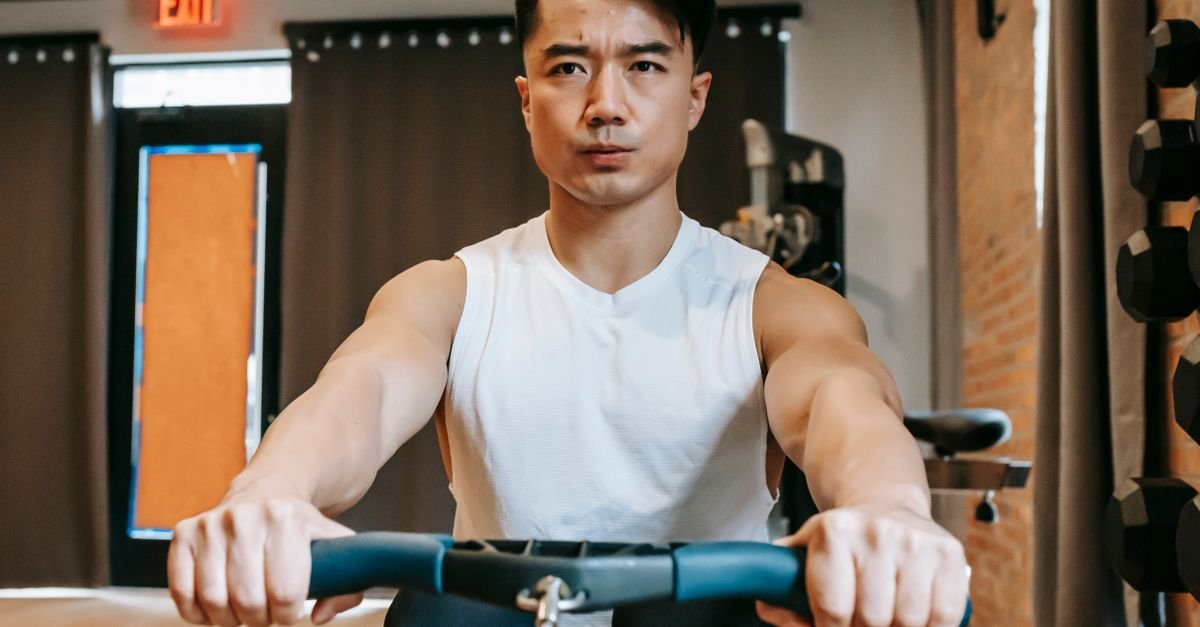
| 3 | Seated cable row | 3 | 10-12 | 90 s-2 min | Pause 1 second with shoulder blades squeezed; torso stays still |
| 4 | Close-grip bench press | 3 | 6-10 | 2 min | Hands shoulder-width, elbows tucked about 30-45 degrees from the body |
| 5 | Overhead cable or dumbbell triceps extension | 3 | 10-12 | 90 s | Elbows point forward, lower until you feel a deep stretch behind the arm |
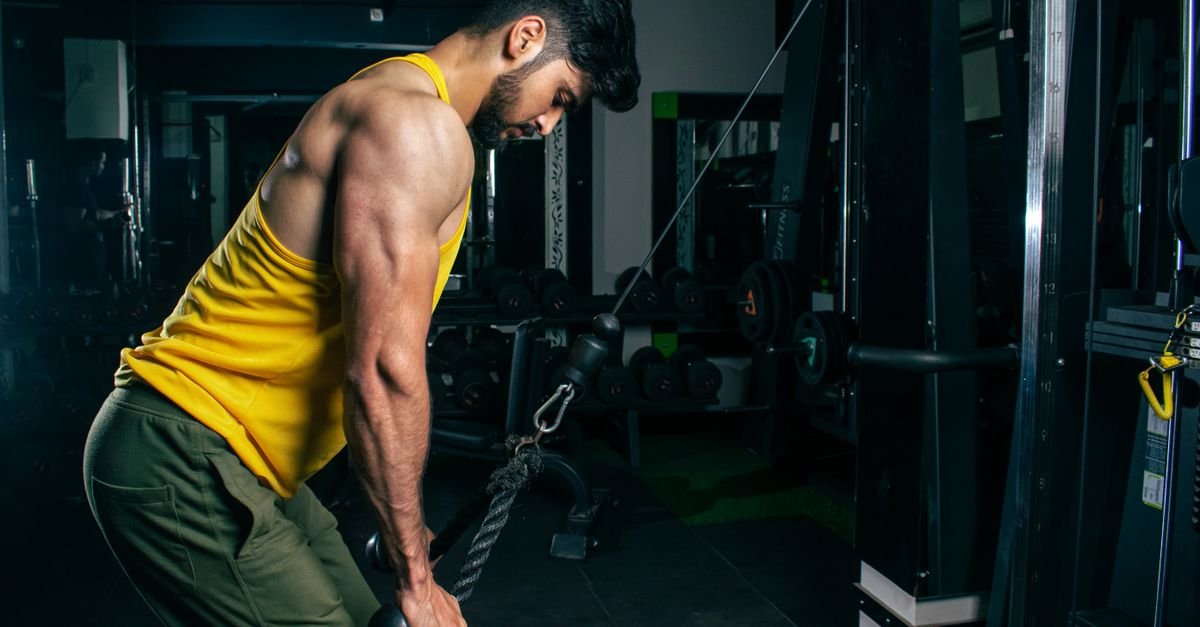
| 6 | Rope pushdown | 2-3 | 12-15 | 60-90 s | Elbows pinned to your sides; spread the rope apart at the bottom |
That is 9-10 hard sets for the back and 8-9 for the triceps, before counting any pressing you do on other days. Each set should finish with roughly one to three reps left in the tank. When you can complete the top of the rep range on every set with good form, add load. The ACSM position stand suggests a 2-10% increase once you can beat the target reps by one or two (ACSM, 2009).
Why the rest periods are longer than you might expect
Rushing the next set costs you on the big lifts. In a 2016 trial, 21 trained men doing 3 sets of 8-12 reps gained more strength with 3-minute rests than with 1-minute rests, and showed greater muscle thickness gains in the thigh plus a trend for greater triceps growth (Schoenfeld et al., 2016). Keep 2-3 minutes for pull-ups, rows and close-grip bench; 60-90 seconds is fine on cable isolation work.
Swaps when equipment is taken
- No free pull-up bar: lat pulldown with a shoulder-width grip, or assisted pull-up machine.
- Lower back tired on barbell rows: chest-supported dumbbell row on an incline bench.
- Bench occupied: parallel-bar dips with an upright torso. Our dips workout guide covers depth and shoulder safety.
- Cable station queue: do overhead extension with one dumbbell held in both hands, and do pushdowns once the cable frees up.
If you want more cable variations for the first half of the session, the cable back workouts guide lists grips and attachments in detail.

Myth: “Triceps only belong on chest day”
The chest-and-triceps pairing is popular because bench presses already use the triceps. That is exactly why it is not always the best place for direct triceps work. After four or five pressing movements, the triceps and elbows are tired, and your pushdowns become a light afterthought.
Moving direct triceps work to back day does three things:
- It gives the triceps a second weekly session (pressing on chest day, direct work on back day), which matches the twice-weekly frequency the research favours.
- It spreads elbow stress across the week instead of loading the joint heavily in one session.
- It shortens chest day, which helps when you only have an hour.
A related myth is that pull-ups “train the triceps too”. They do involve the long head slightly, because it helps extend the shoulder, but the load on the triceps is small. Pull-ups will not replace direct elbow-extension work if bigger arms are the goal.

Long head tricep workout: why the overhead extension earns its place
The long head is the largest of the three triceps heads, and it is the only one that crosses the shoulder. Raising your arm overhead stretches it. In a 2023 study, 21 adults trained one arm overhead and the other in a neutral position for 12 weeks; whole-triceps growth was about 1.4 times greater in the overhead arm (19.9% vs 13.9%).
The study by Maeo and colleagues used cable elbow extensions at 70% of one-rep max, 5 sets of 10 reps, twice a week. The long head grew 28.5% in the overhead arm versus 19.6% in the neutral arm, even though the overhead arm lifted 34-39% less weight (European Journal of Sport Science, 2023).
That is why the gym plan above places the overhead extension before the pushdown, while you are freshest. Practical points:
- Use a cable with your back to the stack, or one dumbbell held in both hands while seated with back support.
- Keep the upper arms close to your head and let the elbows bend fully until you feel a stretch, then extend without flaring the elbows.
- If your shoulders are stiff and you cannot get the arm overhead without arching your lower back, do it lying on a bench (a stretched skull crusher to behind the head) instead.

At home tricep workout plus back work: dumbbells and a band
You can run a solid back and triceps session at home with one pair of adjustable dumbbells, a long resistance band and a sturdy chair or bench. The movements change but the logic stays the same: back first, then a compound triceps move, then the overhead stretch, then a burnout.
| Exercise | Sets | Reps | Rest | Form cue |
|---|---|---|---|---|
| One-arm dumbbell row (hand on a chair or bench) | 3-4 | 8-12 each side | 90 s | Pull the dumbbell to your hip, not your chest; no twisting |
| Band lat pulldown (band anchored over a door top) | 3 | 12-15 | 60-90 s | Kneel, lean back slightly, pull elbows down to your ribs |
| Dumbbell pullover (across a bench or on the floor) | 3 | 10-12 | 90 s | Slight bend in the elbows; stop when you feel the lats stretch |
| Close-grip push-up | 3 | Stop 1-2 reps short of failure | 90 s | Hands under shoulders, elbows brush your ribs on the way down |
| Seated overhead dumbbell extension | 3 | 10-12 | 90 s | Both hands around one dumbbell, elbows pointing to the ceiling |
| Resistance band pushdown (band anchored high) | 2-3 | 15-20 | 60 s | Elbows fixed at your sides; squeeze for 1 second at full lockout |
Tricep workout with dumbbell only
No band? Replace the pushdown with a dumbbell kickback (2-3 sets of 12-15, upper arm parallel to the floor) and the band pulldown with a second set of rows using a slower 3-second lowering phase. If the dumbbells feel light, slow the lowering, pause at the stretch and take sets closer to failure.
Resistance band tricep workout for travel
A single long band is enough for a hotel-room version: band rows anchored to a door handle, band pulldowns, band overhead extensions (stand on the band, pull it up behind your head) and band pushdowns. Use 3 sets of 15-20 for each, with 60 seconds rest. Control the return rather than letting the band snap back.
A safety note: always check the door anchor before you pull, and replace bands that show nicks or fading. A band breaking at full stretch can hit your face.
How many sets of back and tricep exercises do you need per week?
More weekly sets generally build more muscle, up to a point you can recover from. A 2017 meta-analysis of 15 studies found each extra weekly set per muscle added about 0.37% to muscle growth, and that 10 or more weekly sets tended to beat fewer than 5 (Schoenfeld, Ogborn and Krieger, 2017).
That analysis showed a graded dose-response: higher volumes produced a 3.9 percentage-point larger gain than lower volumes within the same studies (Journal of Sports Sciences, 2017). It does not mean more is always better. Volume only helps if you can recover, sleep properly and keep good form. The ranges below are practical coaching ranges built from that evidence, not exact prescriptions from the paper.
| Training level | Back: hard sets per week | Triceps: direct sets per week | Times per week | Main rep range |
|---|---|---|---|---|
| Beginner (under 6 months) | 6-10 | 3-6 (pressing covers the rest) | 2-3 full-body sessions | 8-12 |
| Intermediate (6 months to 2 years) | 10-16 | 6-10 | 2 | 6-12 |
| Advanced (2+ years, consistent) | 12-20 | 8-14 | 2-3 | 5-15, varied across the week |
The beginner rep range matches ACSM guidance of 8-12 reps for novices, with intermediate and advanced lifters using a wider 1-12 rep range and emphasising 6-12 for hypertrophy (ACSM, 2009). If you only want general health and strength, the bar is much lower: Mayo Clinic notes that a single set of 12-15 reps with the right weight builds muscle efficiently for most people (Mayo Clinic).
Where a back and tricep workout fits in your weekly split
Back and triceps rarely stands alone. It is one day of a bigger split, usually paired with a chest and biceps day so that each pushing muscle meets a pulling partner. Here are three common ways to arrange the week.
| Split | Mon | Tue | Wed | Thu | Fri | Sat | Back/triceps frequency |
|---|---|---|---|---|---|---|---|
| 4-day “antagonist” split | Back + triceps | Legs | Rest | Chest + biceps | Shoulders + core | Rest | Back 1x, triceps about 2x (direct + pressing) |
| 6-day antagonist repeat | Back + triceps | Chest + biceps | Legs | Back + triceps (lighter) | Chest + biceps | Legs + shoulders | Back 2x, triceps 2x direct |
| Upper/lower, 4 days | Upper A (back + triceps focus) | Lower | Rest | Upper B (chest + biceps focus) | Lower | Rest | Back 2x, triceps 2x |
The 4-day antagonist split hits the back only once a week, which is below the twice-weekly frequency the research favours. Fix that by adding two or three sets of rows on shoulder day. If you are still deciding between structures, our guide to choosing a workout split compares them by schedule and experience, and the push pull legs workout is the main alternative that keeps triceps with chest.
Whatever you choose, leave at least one full day before you train the same muscles hard again. Mayo Clinic recommends resting one full day between sessions for any specific muscle group (Mayo Clinic). For example, avoid putting back and triceps the day after chest day if you bench heavy.
Troubleshooting: what goes wrong on back and triceps day
“My elbows ache by the end of the session”
This is the most common complaint. Swap straight-bar skull crushers for cable or rope work, use a neutral (palms-facing) grip where possible, and do one light warm-up set of pushdowns before the close-grip bench. Overhead extensions with a lighter load, as in the 2023 study above, often feel better on the elbow than heavy lying extensions. Sharp pain, swelling or pain that lasts into the next day is not normal training soreness: stop the movement and see a doctor or physiotherapist.
“My lower back gets tired before my lats on rows”
Your hinge position is probably drifting. Switch to a chest-supported row or the seated cable row for a few weeks, and rebuild the barbell row with a lighter load and a strict 2-second lowering phase.
“I can’t feel my lats working on pulldowns”
Use a thumbless grip, think about pulling with your elbows rather than your hands, and slow the lowering phase to 3 seconds.
Tricep workout cable tweaks when your arms are not growing
Check three things: are you doing an overhead movement, are you adding load or reps every week or two, and are you getting at least 6 direct sets a week? Most stalled triceps fail one of those three.
“The session takes 90 minutes in an evening gym”
Pair exercises that use the same station. Seated cable row and rope pushdown can share one cable column: do a set of rows, then a set of pushdowns while your back recovers, and repeat. This usually cuts 15-20 minutes without lowering the quality of your sets.
Adjusting the plan for beginners, women and returning lifters
Beginners: the starting point is not a split at all. The NHS advises adults to do strengthening activities that work all major muscle groups, including the back and arms, on at least 2 days a week (NHS). Two full-body sessions with one row, one pulldown and one triceps move each time will get you there. Move to a back and triceps day once you have trained consistently for about six months, which is how ACSM defines the intermediate level.
Women: the same session works with no changes to exercise choice. Triceps training will not make your arms bulky on its own; building noticeable size takes years of targeted volume and eating enough. Start with the lower end of the set ranges, and use the assisted pull-up machine or band pulldowns until you can do three strict pull-ups.
Returning after a break or over 40: take two weeks at about 60-70% of your old working weights before pushing hard sets, and spend 8-10 minutes warming up the shoulders and elbows. If you have high blood pressure, heart disease, a recent injury or a hernia, get medical clearance first and avoid holding your breath during heavy sets.
The WHO reports that 31% of adults did not meet recommended activity levels in 2022 (WHO, physical activity fact sheet). A consistent twice-weekly routine beats a perfect split you cannot keep up.
Eating to support the session
Include a protein source at every main meal (dal with curd at lunch, paneer, eggs, chicken or fish at dinner, sprouts or chana as a snack). A light snack 60-90 minutes before training, such as a banana with a glass of milk or poha with peanuts, is enough for most people.
Frequently asked questions
Is it good to train back and triceps on the same day?
Yes. Back exercises bend the elbow and triceps exercises straighten it, so the two muscle groups barely compete. Your triceps start the second half of the session fresh, and the pairing makes it easy to train triceps twice a week alongside pressing on chest day.
How many exercises should a back and tricep workout have?
Five to six exercises is enough for most people: two or three for the back (a vertical pull, a horizontal row and optionally a cable row) and two or three for the triceps (a close-grip press, an overhead extension and a pushdown). That gives about 9-10 back sets and 8-9 triceps sets.
Should I train back or triceps first?
Train back first. The back muscles are larger and the lifts are multi-joint, so they need the most energy. ACSM recommends large muscle groups before small ones and multi-joint exercises before single-joint ones. Training triceps first would also weaken your grip and pulling strength.
How long should a back and tricep workout take?
Around 60-70 minutes in a gym, including warm-up sets and 2-3 minutes of rest on the heavy lifts. A home version with dumbbells and a band takes about 45 minutes. Pairing a row with a pushdown at the same cable station can cut 15-20 minutes.
Can I do a back and tricep workout at home?
Yes. One-arm dumbbell rows, band pulldowns, dumbbell pullovers, close-grip push-ups, seated overhead dumbbell extensions and band pushdowns cover both muscle groups. Make home sets harder with slower lowering phases and pauses when your dumbbells feel light.
How many times a week should I train back and triceps?
Aim for each muscle about twice a week. A 2016 meta-analysis found twice-weekly training built more muscle than once-weekly when volume was equal. That can be one back and triceps day plus rows and pressing on other days, or two back and triceps days in a 6-day split.
Do pull-ups work the triceps?
Only a little. The long head of the triceps crosses the shoulder and helps pull the arm down, so it works lightly during pull-ups and pulldowns. That is not enough to grow the triceps, so you still need direct work such as overhead extensions and pushdowns.
Want this session adjusted to your gym, schedule and elbows? A Fitstrot coach can review your form on video and build your weekly split around it through 1-on-1 online personal training.


