
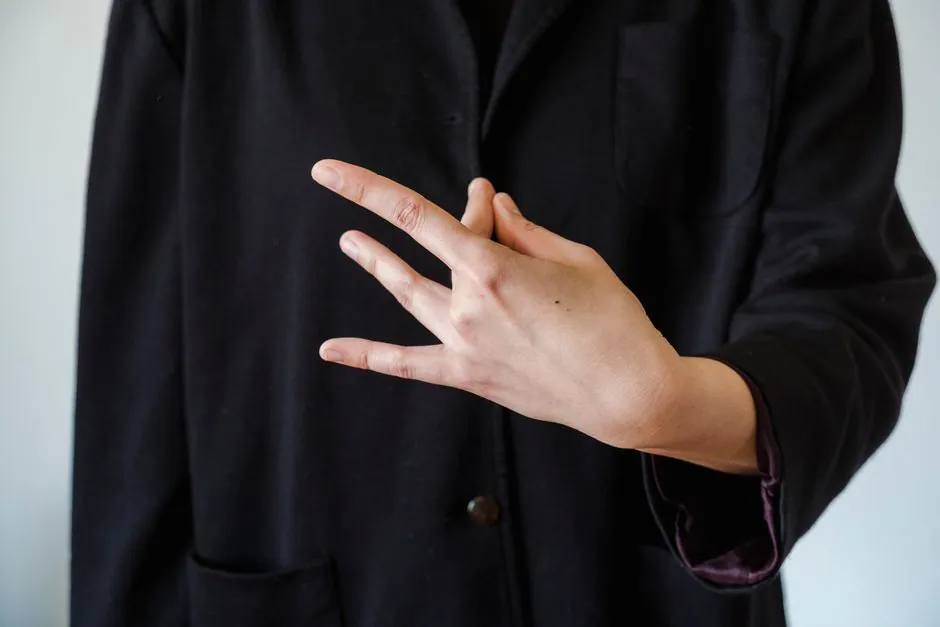
Apana mudra is a seated hand gesture in which the tips of the middle and ring fingers rest on the tip of the thumb while the index and little fingers stay straight. In hatha yoga texts it is linked to apana vayu, the downward-moving current said to govern elimination, and is usually held for 5–15 minutes on an empty stomach, most often as a quiet add-on to slow breathing rather than as a treatment in its own right.
That last clause is the part most articles skip. Search results for apan mudra promise relief from constipation, diabetes, heart trouble and toxin build-up, usually with no source attached. This guide separates three things clearly: what the gesture is, what the tradition claims, and what published research can and cannot support. You will get an exact step-by-step, a comparison with apana vayu mudra, a ten-minute daily routine you can run from a chair, and an honest verdict on the health claims.
Form the gesture correctly in six steps
To do apana mudra, sit upright, rest both hands palms-up on the thighs, then touch the pads of the middle and ring fingers to the pad of the thumb on each hand while the index and little fingers extend without stiffening. Contact should be light — the fingers meet, they do not press. Hold both hands in the gesture for 5–15 minutes, breathing slowly through the nose.
| Step | What to do | Common mistake | Correction cue |
|---|---|---|---|
| 1. Seat | Sukhasana, vajrasana, or a chair with both feet flat on the floor | Slumping into the lower back after two minutes | Sit on a folded blanket 5–8 cm high so the knees drop below the hip crease |
| 2. Hands | Palms up on the thighs, wrists soft, elbows slightly away from the ribs | Hands clamped on the knees, shoulders lifted | Let the upper arms hang; the hands should feel weightless |
| 3. Fingers | Middle and ring fingertips meet the thumb tip on both hands | Using the nails instead of the fleshy pads | Roll the thumb slightly forward until you feel pad-to-pad contact |
| 4. Free fingers | Index and little fingers extended, relaxed and slightly apart | Fingers rigid and splayed, forearm tightening | Shake the hand out, then reform with half the effort |
| 5. Breath | Nasal breathing, roughly 5 seconds in and 5 seconds out | Forcing long exhales until you feel light-headed | If you need to gasp, the breath is too long — shorten it |
| 6. Hold | 5 minutes to start, building to 15; stop at any pins-and-needles | Sitting 30 minutes on day one and quitting by day three | Fix the time to one daily anchor, such as before your first chai |
Both hands do the same thing at the same time. There is no left-hand or right-hand variation in the mainstream hatha lineages, and nothing changes if you are left-handed. If you practise other seals, the logic is the same one described in our guide to gyan mudra, where the index finger meets the thumb instead.
Apana mudra vs apana vayu mudra: one finger apart, two different reputations
Apana vayu mudra adds one change to apana mudra: the index finger folds down so its tip touches the base of the thumb, while the middle and ring fingers still meet the thumb tip and the little finger stays extended. That single fold is why it carries a separate name — mrit sanjeevani mudra, or heart mudra — and a very different set of traditional claims.
| Feature | Apana mudra | Apana vayu mudra |
|---|---|---|
| Index finger | Extended straight | Folded to the base (mound) of the thumb |
| Middle + ring fingers | Tips on the thumb tip | Tips on the thumb tip (unchanged) |
| Little finger | Extended | Extended |
| Other names | Apan mudra, the cleansing mudra | Mrit sanjeevani mudra, hridaya (heart) mudra |
| Traditional association | Downward flow, elimination, pelvic region | Chest, circulation, “emergency” first-aid folklore |
| Typical hold taught | 5–15 minutes, up to 30 in older texts | 5–15 minutes, often 3 sessions a day |
| Published clinical trials | None specific to the gesture | None specific to the gesture |
Apana vayu mudra benefits and the heart claim, handled honestly
You will find pages describing apana vayu mudra for heart attacks as a “life-saving” gesture to use while waiting for an ambulance. There is no clinical trial supporting that. Chest pain, breathlessness, jaw or arm pain and cold sweat are emergency symptoms: in India, call 108 or get to a hospital immediately. A hand position is not a substitute for emergency care, and no responsible yoga teacher will tell you otherwise. Practise apana vayu mudra as a calm sitting practice if you enjoy it — not as first aid.
What research actually shows about apana mudra benefits
No randomised controlled trial has tested apana mudra for digestion, constipation or any other outcome. The nearest published work is a 2021 trial in the Journal of Bodywork and Movement Therapies on Brahma mudra added to standard care for non-specific neck pain — a different gesture, a different outcome, and a small sample. Anyone claiming proven results for apana mudra is going beyond the literature.
The wider evidence on yoga for gut symptoms is also weaker than the internet suggests. A 2025 systematic review and meta-analysis in the American Journal of Gastroenterology pooled 11 randomised trials covering 535 people with irritable bowel syndrome and found no significant reduction in gastrointestinal symptom severity (SMD −0.66, 95% CI −1.51 to 0.18). A 2022 Cochrane review of physical activity for IBS, covering 11 trials and 622 participants, reported possible symptom improvement but rated the certainty of that evidence as very low.
Where the science is stronger is the breathing that usually accompanies the gesture. A 2020 study in the Indian Journal of Medical Research comparing 40 yoga practitioners with 40 non-practitioners found that slow breathing at about 6 breaths per minute (0.1 Hz) was associated with higher parasympathetic activity and greater baroreflex sensitivity. Separately, the US National Center for Complementary and Integrative Health cites a 2020 review of 12 studies in 672 healthy adults in which every study found a benefit of yoga on perceived stress.
The fair conclusion: the gesture itself is unproven, the slow breathing you do while holding it is not. That is still a reason to practise — just not the reason usually advertised.
Myth check: four claims about apan mudra that outrun the evidence
- “It flushes toxins from the body.” Elimination is handled by the liver and kidneys. No hand gesture alters their filtration rate, and no study has measured any such effect.
- “It cures constipation.” Constipation has definable causes — low fibre, low fluid, inactivity, medication, thyroid disease. The NHS defines it as fewer than three bowel movements in a week and advises seeing a doctor for blood in the stool, unexplained weight loss or a sudden change in habit. A mudra addresses none of those.
- “It burns fat and reduces belly size.” Sitting still does not create an energy deficit. If fat loss is the goal, the levers are diet and activity, not finger position.
- “Bloating means toxins.” Mayo Clinic notes that most people pass gas up to 20 times a day and that gas usually comes from swallowed air and normal colonic fermentation. Uncomfortable is not the same as toxic.
A ten-minute daily routine you can run from a chair
Pair apana mudra with paced breathing rather than practising it in silence. Cleveland Clinic suggests diaphragmatic breathing for five to ten minutes, three to four times a day, and that dose maps neatly onto a mudra sit. The sequence below takes ten minutes, needs no mat, no app and no ₹ spend, and works at a desk between calls.
| Minutes | What you do | Breath | Form cue |
|---|---|---|---|
| 0:00–1:00 | Sit tall, hands palms-up on the thighs, eyes soft or closed | Normal nasal breathing | Crown tall, jaw loose, tongue off the palate |
| 1:00–3:00 | Form apana mudra on both hands | 4 seconds in, 6 seconds out | Pads touching, index and little fingers long |
| 3:00–7:00 | Hold the mudra, attention on the lower belly | 5 in, 5 out (≈6 breaths per minute) | Belly expands on the inhale, not the chest |
| 7:00–9:00 | Keep the mudra, lengthen the exhale slightly | 4 in, 8 out | Stop lengthening if you feel light-headed |
| 9:00–10:00 | Release the fingers, hands rest open | Back to normal breathing | Sit for 30 seconds before standing |
What this routine will reliably do is slow your breathing and give you ten calm minutes. What it will not do is replace fibre and movement. The US National Institute of Diabetes and Digestive and Kidney Diseases recommends that adults get 22 to 34 grams of fibre a day, and the WHO advises at least 150 minutes of moderate activity a week, noting that 31 per cent of adults worldwide — 1.8 billion people — fell short in 2022. In an Indian kitchen that fibre target usually means adding a bowl of dal, a katori of sabzi at both meals, and swapping some maida for whole wheat or millet. The mudra is the calm layer on top of that, not a substitute for it.

What apana mudra images cannot show you
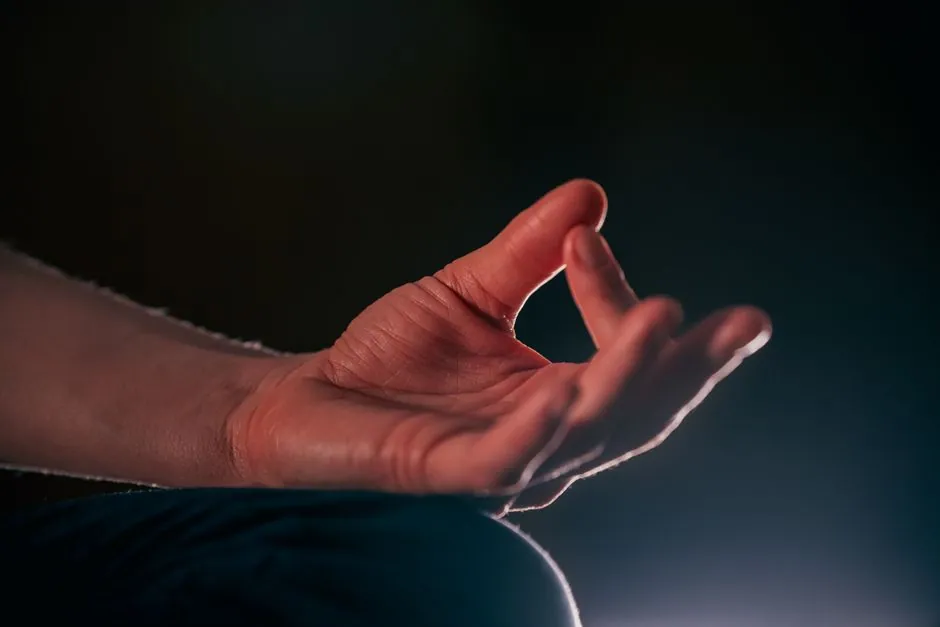
Most apana mudra images are photographed as a close-up of one hand, which hides the three things that decide whether the practice is comfortable: hip height relative to the knees, shoulder position, and breath rate. A perfect finger picture with a collapsed lower back and a 20-breaths-per-minute chest pattern is worse practice than sloppy fingers with a tall spine and slow nasal breathing. Judge your sit by how your back and breath feel at minute eight, not by how the photograph looks at minute one.
Timing: the windows that work and the ones to skip
| Window | Verdict | Why |
|---|---|---|
| On waking, before tea or coffee | Best slot | Empty stomach, quiet house, easiest habit anchor |
| 2–3 hours after a meal | Good | Digestion underway; sitting upright is comfortable |
| Immediately after a heavy thali | Skip the mudra sit | Cross-legged sitting on a full stomach is uncomfortable; a 10-minute walk does more |
| At the desk, mid-afternoon | Good | Chair version works; use it as a breathing break |
| Last 10 minutes before bed | Good | Slow exhales suit wind-down; pair with dim light |
| During acute chest pain or severe abdominal pain | Do not practise | These need medical assessment, not breathing exercises |
Apana mudra side effects, and who should be careful
The gesture itself carries essentially no risk — there are no reported adverse events from holding fingers together. The realistic apana mudra side effects come from the position and the breathing around it: numb feet from long cross-legged sitting, knee or hip discomfort, neck strain from a dropped head, and dizziness or tingling if you over-lengthen exhales or hold the breath. All four disappear when you sit in a chair, shorten the hold, and breathe normally.
Two cautions worth stating plainly. First, NCCIH notes that yoga-related injuries treated in emergency departments occur at a higher rate in adults aged 65 and over, so older beginners should use a chair rather than the floor. Second, if you are pregnant, recovering from abdominal or pelvic surgery, or being treated for a cardiac or gastrointestinal condition, ask your doctor before adding any new breathing practice, and never change or stop prescribed medication because a gesture seems to be helping.

Apana mudra spiritual benefits, and where that claim belongs
In yogic philosophy, apana is one of five vayus — prana, apana, samana, udana and vyana — and it describes the downward, outward current associated with the pelvic floor and elimination. Practitioners who talk about apana mudra spiritual benefits usually mean a felt sense of grounding and settling, often described in relation to the lower energy centres covered in our explainer on the 7 chakras. That is a subjective, traditional framing, and it is perfectly reasonable to practise for it. It is not a measurable clinical outcome, and it should not be presented as one.
Three realistic slots for an Indian working day
The 6:30 am sit. Ten minutes before the household wakes, on a folded blanket, before tea. This is the slot with the highest stick rate because nothing competes with it.
The 3 pm desk reset. Feet flat, back off the chair, hands palms-up on the thighs, five minutes of apana mudra with 5-in, 5-out breathing. No one across the office will notice.
The post-dinner wind-down. Sit at least two hours after dinner, ideally after a short walk. Pair it with the wider set of practices in our guide to meditation techniques if you want a longer evening routine.

Troubleshooting: nothing is happening, now what?
If two weeks of daily practice have produced no noticeable change, the honest answer is that this is a common and expected outcome — the gesture has no proven physiological effect, so the only reliable changes are the ones slow breathing produces. Before abandoning it, check four things.
- Breath rate. Count your breaths for one minute. If you are above 10, the slow-breathing effect is not happening. Aim for 6.
- Duration. Under 5 minutes is rarely enough to notice anything. Build to 10.
- Consistency. Three sessions a week will not establish a pattern. Daily, same time, same chair.
- The rest of the day. If fibre is under 25 g, water is under 2 litres and you sit for nine hours, no gesture will compensate. Fix the base first.
If symptoms are the reason you came — persistent constipation, recurring bloating, unexplained weight loss, blood in the stool — book a doctor’s appointment rather than extending the practice. A mudra is a wellbeing habit, not a diagnostic tool.
Questions people still ask about apana mudra
What is apana mudra used for?
Traditionally it is used as a seated gesture associated with apana vayu, the downward current linked to digestion and elimination, and it is typically practised for 5–15 minutes alongside slow nasal breathing. In modern practice it functions as a focus anchor during pranayama and meditation. No clinical trial has tested it for any medical outcome.
How long should you hold apana mudra each day?
Start with 5 minutes once a day and build to 10–15 minutes. Older hatha sources describe holds of up to 30 minutes, sometimes split into two or three sittings. Stop sooner if your fingers, knees or hips go numb — the numbness is from the sitting position, not from the gesture.
Can apana mudra be done after eating?
Wait two to three hours after a full meal. Sitting cross-legged on a full stomach is uncomfortable and most traditions specify an empty stomach. If you want something immediately after eating, a 10-minute walk is the better-supported option for digestion.
Are there any apana mudra side effects?
The gesture itself has no reported adverse effects. Problems come from the surrounding practice: numb legs from prolonged floor sitting, neck or knee strain, and light-headedness from over-lengthened exhales. Use a chair, shorten the hold, and keep the breath comfortable to eliminate all of these.
Apan mudra ke fayde: what are the claimed benefits in simple terms?
Traditional texts credit apan mudra with supporting digestion, regular elimination and a grounded, settled feeling. Read these as classical claims, not clinical findings. The measurable benefit available from the session is what slow breathing at about 6 breaths a minute does for the nervous system.
Is apana mudra the same as apana vayu mudra?
No. In apana mudra the index finger stays extended. In apana vayu mudra the index fingertip folds to the base of the thumb while the middle and ring fingers still meet the thumb tip. The second is also called mrit sanjeevani or heart mudra and carries different traditional claims, though neither has trial evidence behind it.
Can apana mudra replace medicine for constipation or heart problems?
No, and it should never be used that way. Continue prescribed treatment, and treat chest pain, severe abdominal pain, blood in the stool or unexplained weight loss as reasons to seek medical care the same day. Use the mudra as a calm daily habit alongside proper treatment, not instead of it.
Where to take it next
Pick one ten-minute slot tomorrow, sit in a chair, hold apana mudra for five of those minutes at six breaths per minute, and repeat it daily for two weeks before judging anything. If you would rather learn the seat, the breath and the mudra family with someone watching your posture, Fitstrot’s online yoga classes cover pranayama and mudra practice live, and our daily yoga guide gives you a structure to slot it into.


