
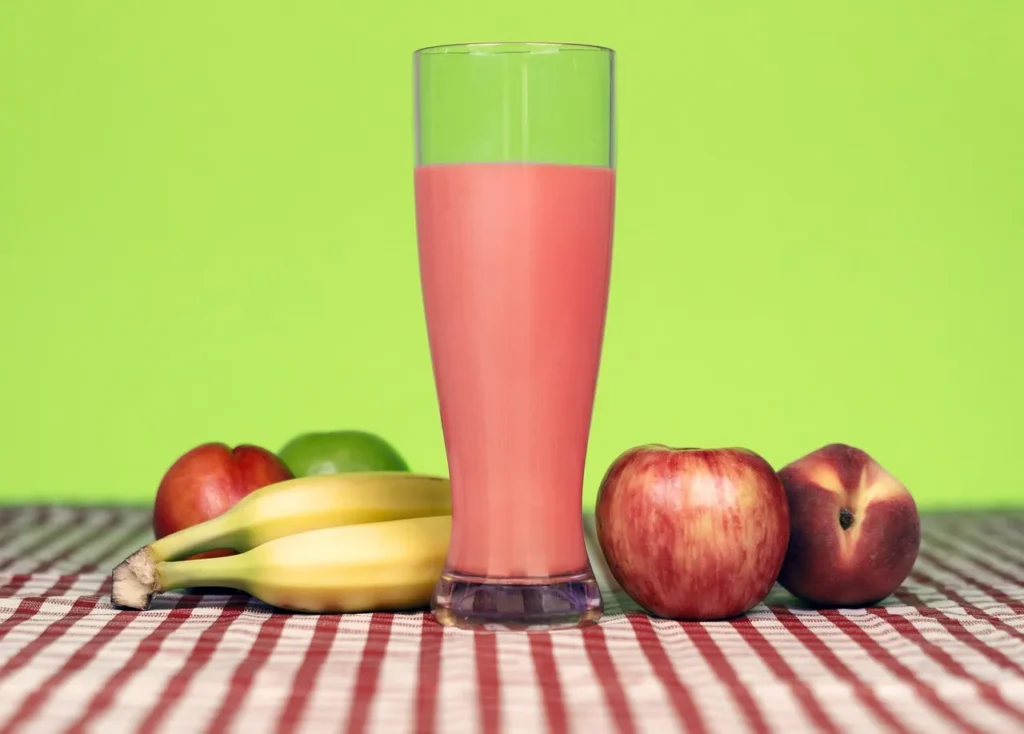
A smoothie for weight loss works when it replaces one meal and carries enough protein and fibre to keep you full until lunch. It backfires when it is a glass of blended mango, banana and honey sipped alongside a normal breakfast. This guide gives you seven Indian smoothies built from curd, sattu, oats, banana and papaya, each with its calories, protein and fibre counted, and a 7-day plan that uses one smoothie a day, not three.
The plan does not promise a number on the scale by Sunday. It swaps one meal for something easy to portion and hard to overeat, and that swap, repeated over weeks, is where results come from.
Can a smoothie for weight loss actually work?
Yes, as a partial meal replacement. A pooled analysis of six randomised trials found people who replaced one or two meals a day with a portioned shake lost about 2.5 kg more at 3 months than people on a standard reduced-calorie diet (Heymsfield, 2003). Replacing every meal with smoothies is not what that evidence supports.
The analysis, published in the International Journal of Obesity in 2003, looked at plans where one or two meals were swapped for a fortified shake and at least one regular meal stayed. Weight loss in the meal-replacement groups was roughly 7–8% of body weight, compared with 3–7% in the conventional diet groups, and drop-out at one year was lower. A fixed recipe removes portion guesswork, which a measured home smoothie can copy.
There is a catch that most smoothie articles skip. Calories you drink tend to fill you up less than calories you chew. In a 2000 Purdue crossover study, adults given 1,880 kJ (about 450 kcal) a day as a sugary drink did not eat less at other meals and gained weight over four weeks. The same calories as solid jelly beans were fully compensated for (DiMeglio & Mattes, 2000). A smoothie sits between those two extremes: it contains whole fruit, pulp and often dairy, but it is still something you drink. So the design goal is simple. Make the smoothie thick, high in protein and fibre, and big enough to count as a meal, then subtract that meal.
The 300–15–7 formula behind every recipe here
Every smoothie in this plan is built to land at roughly 300–400 kcal, at least 15 g protein and at least 7 g fibre. Those three numbers are what separate a meal replacement from a sweet drink. Here is how to build one from scratch with ingredients found in any Indian kitchen.
1. Start with a protein base (roughly 150–250 g)
Pick one: 150 g hung curd (about 10 g protein), 200 ml toned milk (about 6 g), 250 ml unsweetened soy milk (about 9 g), or 200 g plain dahi (about 7 g). Hung curd, dahi strained for two to three hours, gives the thickest texture.
2. Add a slow carb or a second protein (15–30 g)
Rolled oats (25 g adds about 3 g protein and 2.5 g fibre) or sattu (20 g adds about 4 g protein and 2 g fibre). Sattu, roasted chana flour, is the underrated one. It costs roughly ₹10–25 per 100 g in most Indian cities, has a mild nutty taste, and pushes protein up without protein powder.
3. Limit fruit to one portion (60–150 g)
Half a banana, one small apple, a bowl of papaya or a handful of berries. One portion gives sweetness and fibre. Two or three portions turn a meal into a dessert.
4. Chia seeds smoothie for weight loss: why 10 g is enough
One level tablespoon of chia (about 10 g) adds around 3.4 g fibre and 49 kcal, and it thickens the drink as it sits. Ground flaxseed does the same job at a similar calorie cost. More is not better here: 30 g of seeds adds roughly 150 kcal, which is a small meal on its own. The Harvard T.H. Chan School of Public Health puts adult fibre needs at 25–35 g a day, so one smoothie supplying 7–9 g covers roughly a quarter of it.
5. Flavour for free
Cinnamon, cardamom, ginger, mint, roasted jeera, lemon and a pinch of black salt add taste for almost no calories. Skip honey, jaggery and sugar, and skip packaged juice as the liquid.
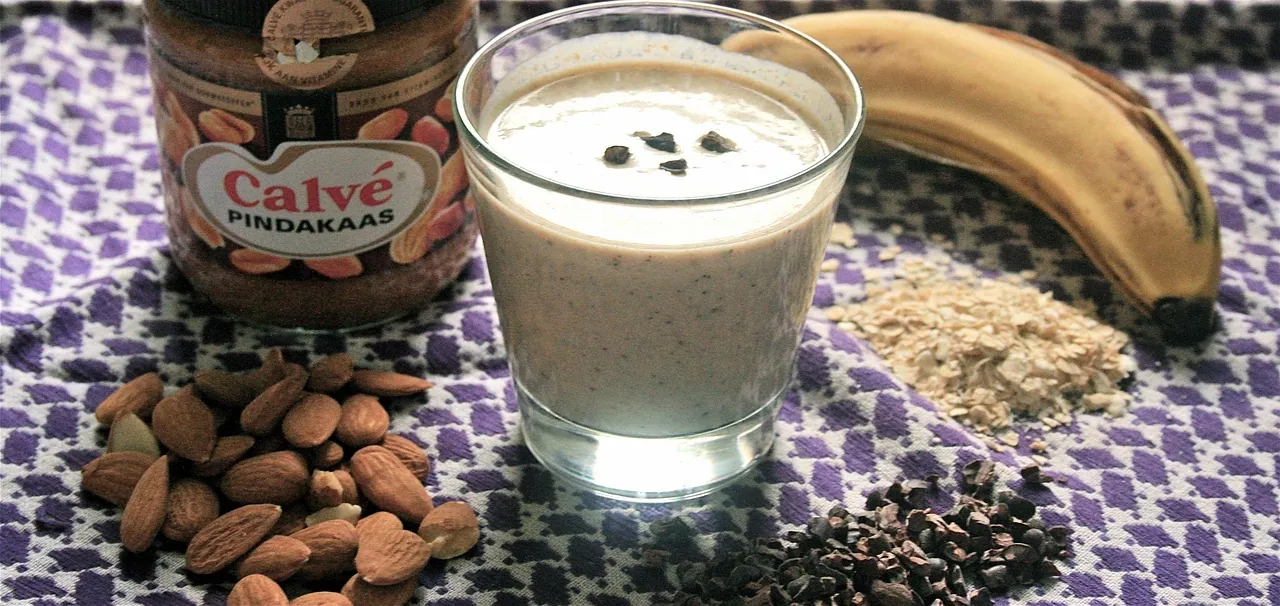
7 healthy smoothie for weight loss recipes, counted
The numbers below were calculated from standard food-composition values and rounded. Brands of oats, curd and soy milk differ, so treat them as close estimates, not lab results. Each recipe makes one glass of about 350–450 ml.
| Smoothie | Ingredients (one glass) | kcal | Protein (g) | Fibre (g) | Total sugar (g) |
|---|---|---|---|---|---|
| 1. Banana–oats–sattu | 200 ml toned milk, 25 g oats, 20 g sattu, 60 g banana, 5 g chia | ~370 | 15 | 8 | 17 |
| 2. Green (spinach–apple) | 150 g hung curd, 30 g spinach, 100 g cucumber, 100 g apple, 10 g flax, 15 g sattu, mint | ~320 | 17 | 8 | 18 |
| 3. Papaya–chia | 150 g papaya, 150 g hung curd, 10 g chia, 20 g oats, cinnamon | ~325 | 15 | 8 | 18 |
| 4. Dry fruit | 200 ml toned milk, 10 g almonds, 5 g walnuts, 1 date, 20 g oats, 15 g sattu, 5 g flax | ~400 | 16 | 7 | 17 |
| 5. Soy–cocoa protein | 250 ml unsweetened soy milk, 60 g banana, 10 g peanut butter, 5 g cocoa, 15 g whey, 10 g chia | ~335 | 27 | 9 | 10 |
| 6. Berry bowl | 150 g hung curd, 100 g frozen berries or jamun, 20 g oats, 10 g flax, 5 g pumpkin seeds | ~335 | 17 | 8 | 11 |
| 7. Sattu masala (savoury) | 30 g sattu, 200 g dahi, 100 g cucumber, 10 g chia, jeera, mint, lemon | ~305 | 16 | 7 | 10 |
Notice two things. First, most vegetarian smoothies without protein powder land at 15–17 g protein. A 2015 review in the American Journal of Clinical Nutrition suggested around 25–30 g protein per meal as the range linked with better appetite control during weight loss. To close the gap, add 15 g whey (about 12 g protein, 60 kcal), or eat two boiled eggs or 30 g roasted chana alongside. Second, the “total sugar” column includes lactose from milk and curd and the natural sugar in one portion of fruit. That is very different from the sugar bomb covered further down.
Banana smoothie for weight loss (recipe 1)
Blend 200 ml cold toned milk, 25 g rolled oats, 20 g sattu, half a medium banana (about 60 g) and 1 tsp chia with a pinch of cardamom. Let it stand for five minutes to thicken. Banana is not the enemy; one whole banana per glass is fine. Two bananas plus honey is where the calories run away.
Green smoothie for weight loss (recipe 2)
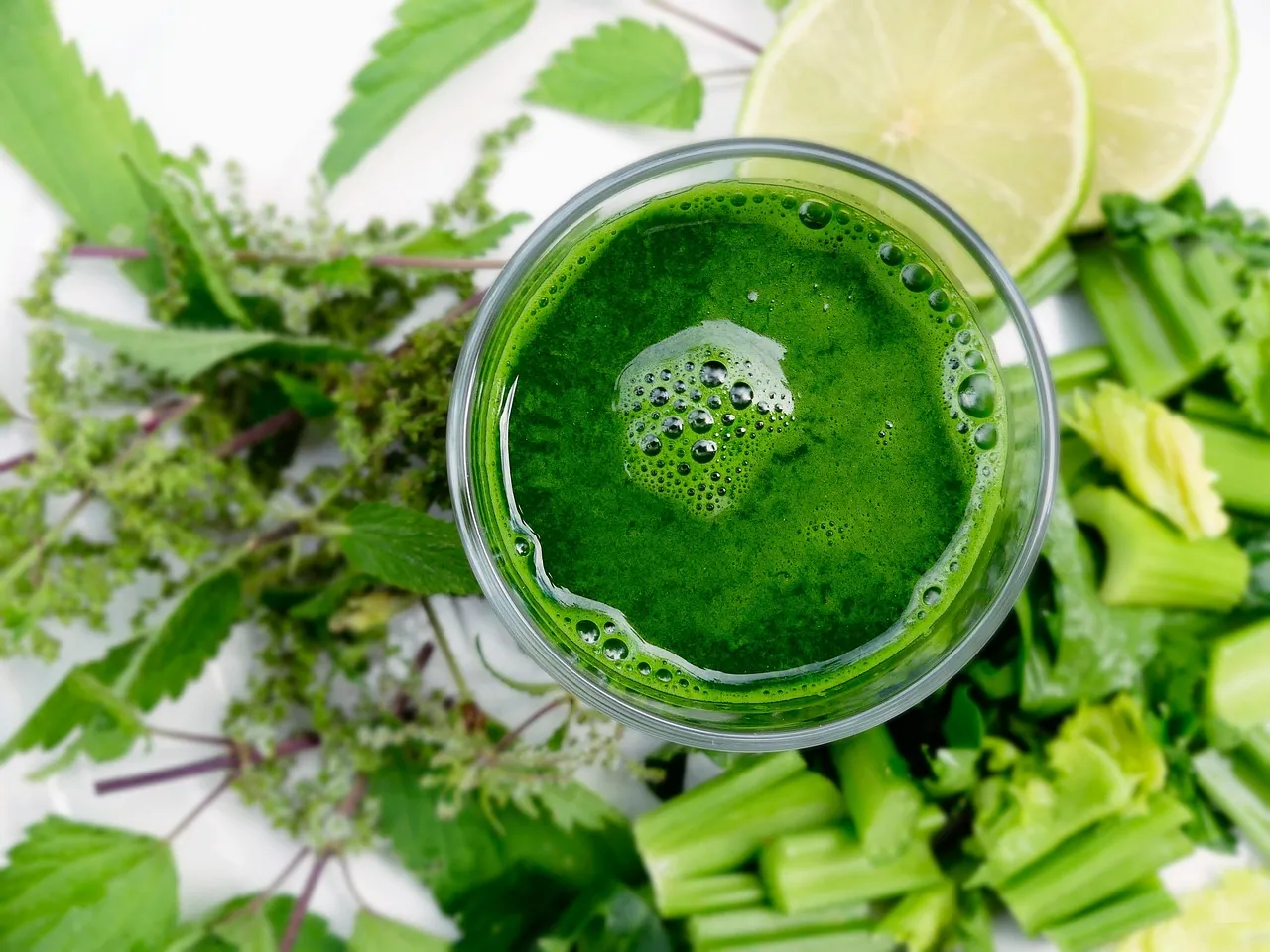
Spinach and cucumber add volume for about 20 kcal combined, but they add almost no protein. That is why this green smoothie leans on 150 g hung curd and 15 g sattu.
Oats smoothie for weight loss (recipes 1, 3, 4 and 6)
Oats appear in four of the seven recipes because 20–25 g adds beta-glucan fibre and body without much taste. Use rolled or quick oats, not flavoured instant sachets, which often carry added sugar. If raw oats upset your stomach, soak them in the milk or curd for 10 minutes before blending, or overnight in the fridge.
Dry fruit smoothie for weight loss (recipe 4)
This is the most calorie-dense glass in the set at about 400 kcal, even with just 10 g almonds, 5 g walnuts and one date. Nuts are healthy fats, but they are around 580–650 kcal per 100 g, so a “handful” tossed in without weighing can add 150 kcal.
Protein smoothie for weight loss (recipe 5)
The only recipe that clears 25 g protein, thanks to 15 g whey and soy milk. If you avoid whey, swap it for 20 g sattu (you will land nearer 20 g protein) or 100 g silken tofu.

The 7-day plan: one smoothie a day, real Indian food the rest
The smoothie replaces breakfast. Lunch, the evening snack and dinner stay normal home food at sensible portions. If mornings are not your problem but late dinners are, move the savoury sattu smoothie to an early dinner on one or two days instead.
| Day | Breakfast smoothie | Lunch | Evening | Dinner |
|---|---|---|---|---|
| Mon | Banana–oats–sattu (~370 kcal, 15 g protein) | 2 phulkas, 1 katori dal, sabzi, salad | Green tea + 30 g roasted chana | Moong dal chilla (2) with mint chutney, sautéed vegetables |
| Tue | Green spinach–apple (~320 kcal, 17 g) | 1 katori brown or regular rice, rajma, cucumber raita | 1 guava or orange | Paneer bhurji (80 g paneer) with 1 phulka, salad |
| Wed | Papaya–chia (~325 kcal, 15 g) | 2 phulkas, chole (1 katori), salad | Buttermilk + 10 almonds | Vegetable dalia khichdi, curd |
| Thu | Dry fruit (~400 kcal, 16 g) | Millet roti (2), mixed dal, bhindi sabzi | Sprouts chaat (1 katori) | Grilled fish or tofu tikka (120 g) with vegetables |
| Fri | Soy–cocoa protein (~335 kcal, 27 g) | Rice (1 katori), sambar, poriyal, curd | Masala chai (less sugar) + 1 small apple | Egg or paneer curry with 1 phulka, salad |
| Sat | Berry bowl (~335 kcal, 17 g) | Vegetable pulao (1 katori), raita, salad | Roasted makhana (20 g) | Moong dal soup, stir-fried vegetables, 1 phulka |
| Sun | Sattu masala, savoury (~305 kcal, 16 g) | Home-style thali: 2 phulkas, dal, sabzi, small sweet if planned | Fruit (1 portion) | Light: vegetable upma or idli (3) with sambar |
For most adults, a day built like this lands somewhere around 1,400–1,800 kcal depending on body size, portions and cooking oil. That is not a crash diet, and it is not meant to be. The US CDC recommends a gradual pace of about 1–2 pounds (roughly 0.5–1 kg) a week, and notes that losing just 5% of body weight can lower the risk of heart disease and type 2 diabetes. If you want the full-day structure worked out in more detail, our high-protein diet for weight loss guide covers the other meals.
Myth: there is a fat burning smoothie for weight loss
No drink burns fat. Ginger, cinnamon, green tea, lemon, apple cider vinegar and “detox” greens do not melt body fat in any amount you can blend. Fat loss comes from eating fewer calories than you use over weeks. A smoothie helps only by making one meal smaller and more filling than what it replaces.
The bigger problem is not a missing fat-burner. It is the fruit-only smoothie that looks healthy and quietly carries more sugar than a soft drink. Compare a typical café or home “fruit blast” with recipe 1 from this plan:
| Per glass | Fruit-only “sugar bomb” | Balanced banana–oats–sattu |
|---|---|---|
| Ingredients | 150 g mango, 1 banana (120 g), 200 ml packaged juice, 1 tbsp honey | 200 ml toned milk, 25 g oats, 20 g sattu, 60 g banana, 5 g chia |
| Calories | ~370 kcal | ~370 kcal |
| Protein | ~2.5 g | ~15 g |
| Fibre | ~5.5 g | ~8 g |
| Total sugar | ~75–80 g | ~17 g |
| Sugar from juice + honey alone | ~43 g | 0 g |
| Likely fullness | Lower: little protein, most calories from sugar | Higher: 6x the protein, more fibre |
Why does this matter? The WHO healthy diet fact sheet advises keeping free sugars, which include honey and fruit juices, below 10% of daily energy, about 50 g on a 2,000 kcal diet, with extra benefit below 5%. India’s own ICMR-NIN Dietary Guidelines for Indians (2024) go further, advising adults to avoid sugar or restrict it to 20–25 g a day. The juice and honey in that one fruit glass use up the whole daily allowance before 9 am.
The NHS also caps juices and smoothies at a combined 150 ml a day, which counts as one portion of your 5 A Day, because blending releases the sugars inside fruit. That is the logic behind this plan’s one-portion-of-fruit rule. And a 2009 Penn State study found that eating a whole apple before lunch cut total meal intake by 15% (about 187 kcal) compared with no preload, while the same apple as applesauce or juice was less filling (Flood-Obbagy & Rolls, Appetite, 2009). Whole fruit on the side beats extra fruit in the blender. For which fruits deserve the most caution, see 5 fruits to avoid for weight loss.
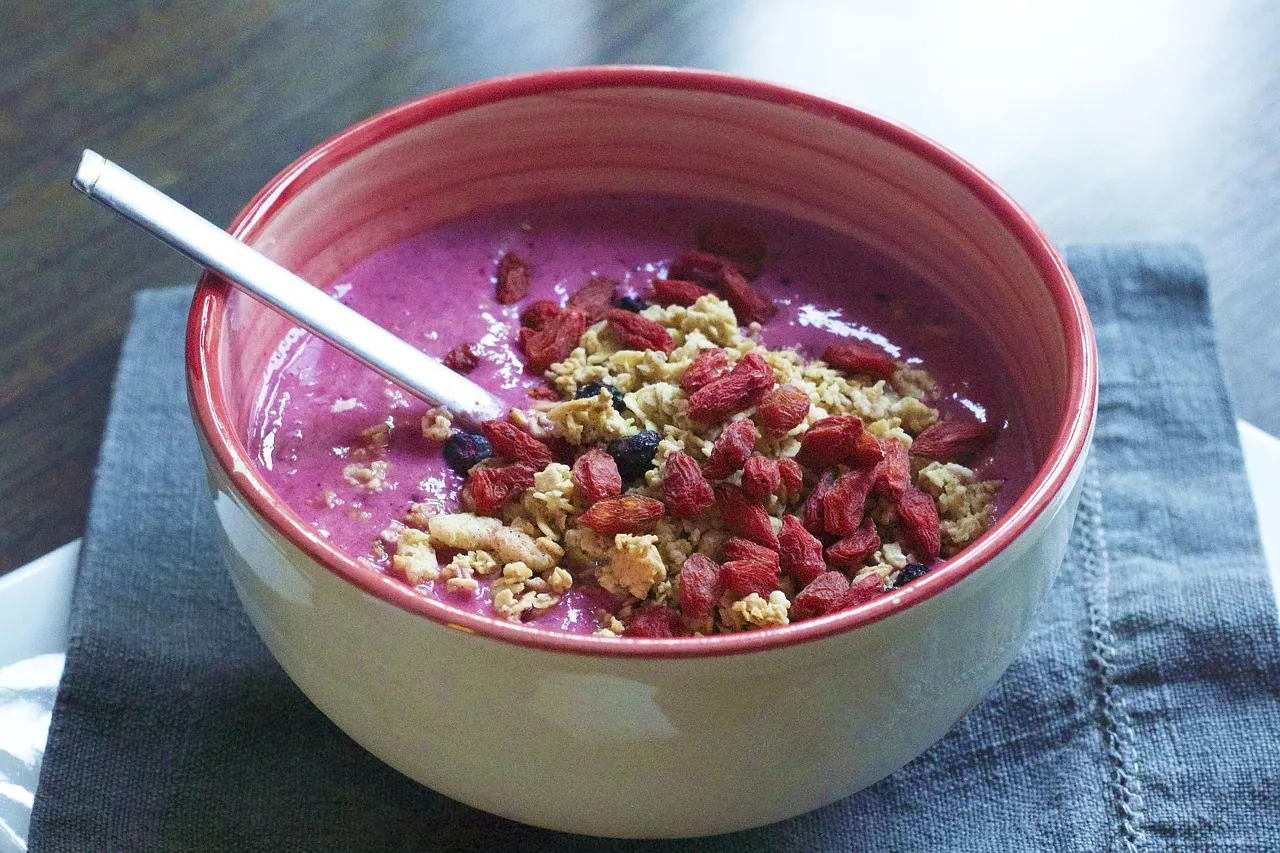
Morning smoothie for weight loss: is breakfast the best slot?
For most people, yes, because breakfast is the easiest meal to standardise. A morning smoothie for weight loss takes under five minutes and replaces the meal most often skipped or grabbed on the go, such as biscuits with tea or a bakery sandwich. The timing itself does not burn more fat; consistency does.
That said, the best slot is whichever meal you currently overeat:
- Office commute, rushed mornings: breakfast smoothie. Pre-weigh oats, sattu and seeds into small jars on Sunday.
- Late, heavy dinners after 9 pm: swap dinner for the savoury sattu masala smoothie two or three nights a week, and keep a normal breakfast.
- After a gym or Zumba session: recipe 5 works as a post-workout meal within an hour or two, but only if it replaces a meal rather than being added on top.
A breakfast fruit smoothie for weight loss is fine as long as it follows the one-portion-of-fruit rule. What it should not be is a fruit smoothie plus parathas, which is two breakfasts.
Hungry by 11 am? Troubleshooting the plan
The usual first-week snags, and their fixes:
“I’m starving two hours later”
Your smoothie is probably too thin or too low in protein. Use hung curd instead of milk, add 15 g whey or 10 g more sattu, and drink it slowly over 10–15 minutes or eat it as a bowl with a spoon. If you still feel hungry, add a solid side: two boiled eggs or a small apple.
“I feel bloated”
Raw oats, chia and flax all add fibre quickly. If your usual intake is low, start with 10 g oats and 5 g seeds and build up over a week, and drink an extra glass of water. Lactose can also be the cause; try soy milk or curd, which most people tolerate better than milk.
“The scale has not moved after a week”
One week is too short to judge. Water shifts from salt, periods and sleep can mask fat change, so track the weekly average over three to four weeks. If it truly has not moved, the smoothie is probably being added to breakfast rather than replacing it, or nut and seed portions have crept up. Weigh them again.
Who should change this plan, or skip it
Speak to your doctor or a registered dietitian first if any of these apply:
- Diabetes or prediabetes: blended fruit raises blood glucose faster than whole fruit. Use the lower-sugar recipes (5, 6, 7), keep fruit to 60–80 g, and check your readings. Do not change medication on your own.
- PCOS: the higher-protein recipes suit most people, but your overall plan matters more than one drink. Our PCOS weight loss diet guide covers the full day.
- Kidney disease: high-protein and high-potassium ingredients such as banana, whey, spinach and sattu may need limits. Ask your nephrologist.
- Pregnancy and breastfeeding: this is not a time to cut calories on your own. Smoothies can be a useful snack, but not a meal replacement without medical advice.
- Teenagers and anyone with a history of disordered eating: meal-replacement plans are not appropriate without professional support.
- Nut, soy or dairy allergies: swap ingredients accordingly; sattu, oats and seeds cover most gaps.
If you would rather have someone set your calorie and protein targets, and decide which meal to swap, an online nutritionist consultation does exactly that around your routine and food preferences.
Smoothie for weight loss: frequently asked questions
How many smoothies a day should I drink to lose weight?
One is enough for most people. Research on meal replacement supports swapping one or two meals while keeping at least one regular meal. Drinking three smoothies a day tends to leave you hungry, low in variety and likely to rebound once you stop.
Is a banana smoothie good for weight loss?
It can be, if it contains half to one banana, a protein base such as milk, curd or sattu, and no honey or sugar. A banana smoothie with two bananas, ice cream or juice is a dessert, not a meal replacement.
Can I drink a smoothie for dinner to lose weight?
Yes. A savoury option like the sattu masala smoothie works well as an early, light dinner two or three nights a week. Make sure it has at least 15 g protein so you are not hungry at bedtime.
How much weight can I lose in 7 days with smoothies?
Expect around 0.5–1 kg of real fat loss at a sensible calorie deficit, in line with CDC guidance. The scale may show more in week one because of water loss, but that is not all fat. Plans promising 5 kg in a week are unsafe and not sustainable.
Should I add protein powder to my smoothie?
It is optional. Without powder, the Indian recipes here reach 15–17 g protein. Adding 15 g whey lifts that to about 27 g, closer to the 25–30 g per meal linked with better appetite control. Sattu, hung curd and eggs on the side also work.
Are green smoothies better for weight loss than fruit smoothies?
Only if they contain protein. Spinach and cucumber add volume and very few calories, which helps. But a green smoothie made of leaves, apple and juice is still low in protein and will not keep you full for long.
Is it better to eat fruit or drink it in a smoothie?
Whole fruit is more filling. A 2009 study found a whole apple reduced lunch intake by 15%, while the same apple as juice or sauce was less satiating. Keep smoothie fruit to one portion and eat any other fruit whole.
Your next step: make recipe 1 tomorrow morning, note how long it keeps you full, and adjust from there. If you want a coach to pair your smoothie plan with workouts and weekly check-ins, see Fitstrot’s online weight loss trainer programme.


