
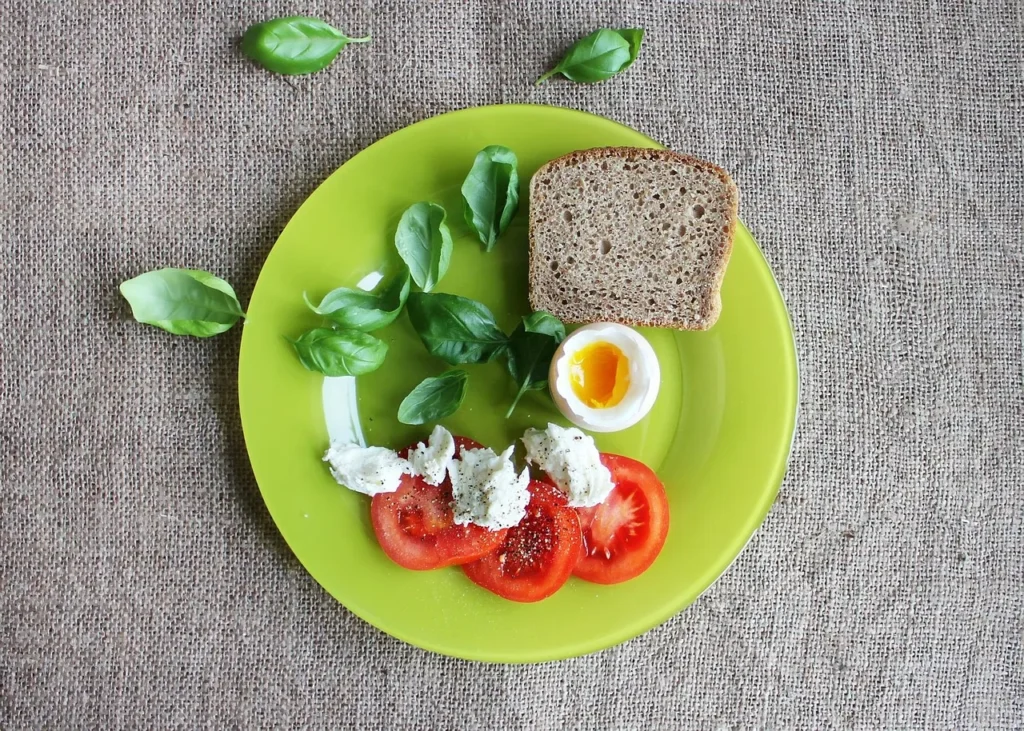
Eating eggs before workout sessions works well for most people, as long as you get two things right: the gap between eating and training, and what you pair the eggs with. A large egg gives roughly 6 g of high-quality protein and about 70 kcal but almost no carbohydrate, so eggs on their own fuel repair better than they fuel effort. Below you will find the timing windows, how many eggs to eat for your body weight, how eggs compare with poha, idli and bananas, six Indian egg dishes that sit well before training, and the honest evidence on cholesterol, raw eggs and egg allergy.
Are eggs good before a workout?
Yes, eggs are a good pre-workout food when eaten 60–90 minutes before training and paired with a carbohydrate such as roti, toast, poha or fruit. Two whole eggs supply about 12–13 g of complete protein, which supports muscle protein synthesis, but under 1 g of carbohydrate. For sessions longer than 45 minutes or high-intensity classes, the carbohydrate partner matters as much as the eggs.
Eggs earn their place for three reasons. First, the protein is complete: it carries all nine essential amino acids, including leucine, the amino acid most closely tied to switching on muscle building. The International Society of Sports Nutrition’s 2017 protein position stand notes that protein eaten either before or after resistance exercise works synergistically with the training stimulus (ISSN Position Stand: protein and exercise, 2017). Second, eggs are cheap: at roughly ₹6–8 each, two eggs cost less than a protein bar. Third, they are quick to prepare.
Where eggs fall short is fuel. Your muscles run hard efforts mainly on glycogen, stored carbohydrate, and an egg contains well under a gram of it. That is why “just eggs” before a 60-minute HIIT or Zumba class often leaves people flat by the midpoint, while eggs with a roti or a banana usually does not.
What is actually in an egg: whole egg vs white vs yolk
Before deciding how many eggs to eat, it helps to know where the protein, fat and calories sit. The white holds slightly more than half of the protein and almost no fat. The yolk holds all of the fat, the cholesterol, and most of the vitamins, choline and minerals. Harvard’s Nutrition Source puts the cholesterol in one large yolk at about 200 mg and the fat at roughly 5 g per egg, mostly unsaturated (Harvard T.H. Chan School of Public Health, The Nutrition Source: Eggs).
| Portion | Protein (g) | Fat (g) | Carbs (g) | Energy (kcal) | Digestion feel before training |
|---|---|---|---|---|---|
| 1 whole egg | 6.3 | 4.8 | 0.4 | 72 | Moderate, needs 45–60 min |
| 1 egg white | 3.6 | 0.1 | 0.2 | 17 | Light, 20–30 min is often enough |
| 1 yolk | 2.7 | 4.5 | 0.3 | 55 | Slowest part because of the fat |
| 2 whole eggs | 12.6 | 9.6 | 0.8 | 144 | Comfortable at 60–90 min |
| 1 whole egg + 3 whites | 17.1 | 5.1 | 1.0 | 123 | Good middle ground at 45–60 min |
| 4 egg whites | 14.4 | 0.4 | 0.8 | 68 | Lightest, good when time is short |
Values are rounded from standard food-composition data. Indian desi eggs and smaller eggs (40–45 g) come in about 10–15% lower. The last column is a practical guide, not a lab measurement. Individual gut tolerance varies a lot.
Pre workout meal time: how long before training should you eat eggs?
Eat whole eggs 60–90 minutes before moderate or hard training, and egg whites 20–45 minutes before if time is short. Fat in the yolk slows stomach emptying, so a three-egg omelette eaten 10 minutes before a run or HIIT class often causes heaviness or burping. Inside 15 minutes, skip eggs and use a fast carbohydrate like a banana.
The ISSN’s 2017 nutrient-timing position stand recommends carbohydrate-rich meals or snacks (1–4 g of carbohydrate per kg of body weight) for several hours before hard exercise lasting more than 90 minutes (ISSN Position Stand: nutrient timing, 2017). Most gym sessions are shorter than that, so you need far less. Still, the rule of thumb holds: the closer you are to training, the smaller and lower in fat the meal should be.
| Time before workout | Egg option | Carb partner | Approx. protein / carbs | Best suited to |
|---|---|---|---|---|
| 2–3 hours | 3 whole eggs as bhurji or omelette | 2 phulkas or 1 bowl poha + fruit | 19 g / 50–60 g | Heavy leg day, long runs, sports practice |
| 60–90 min | 2 whole eggs, boiled or scrambled | 2 slices whole wheat toast or 1 roti | 18–20 g / 25–30 g | Strength training, most gym sessions |
| 30–45 min | 1 whole egg + 2 whites | 1 banana | 13 g / 27 g | Zumba, circuit classes, moderate cardio |
| 15–30 min | 2–3 boiled egg whites only | A few dates or half a banana | 7–11 g / 15–20 g | Early-morning sessions with no time to spare |
| Under 15 min | Skip eggs | Banana, 2–3 dates or a glass of chaas | 1–3 g / 15–30 g | Anything; save eggs for after |
If you drink coffee before training too, timing it alongside eggs is simple. Our guide to coffee before workout covers caffeine doses and the 30–60 minute window.
Myth check: “Egg whites are better than whole eggs before the gym”
In a 2017 crossover trial in the American Journal of Clinical Nutrition, 10 resistance-trained men ate either whole eggs (18 g protein, 17 g fat) or protein-matched egg whites (18 g protein, 0 g fat) straight after a lifting session. Whole eggs produced a greater rise in myofibrillar muscle protein synthesis than the whites did, even though the protein dose was identical (van Vliet et al., Am J Clin Nutr, 2017). The authors suggest that nutrients in the yolk’s “food matrix” may play a part.
Two honest caveats. That study measured eggs eaten after training, not before, and it used a small group of young men. So the fair conclusion is this: whole eggs are at least as good as whites for muscle building, and the yolk is not the enemy. Whites still have a job. They are lighter when your training window is tight, and they add protein without much fat if you are keeping total calories in check.

How many eggs before a workout? A body-weight guide
Most adults do well with 2–3 whole eggs, or 1 whole egg plus 2–3 whites, before training. That gives about 12–20 g of protein. The ISSN suggests roughly 0.25 g of high-quality protein per kg of body weight per meal, or 20–40 g, spread every 3–4 hours. For a 70 kg person, that is about 18 g, or three eggs.
Protein dose per meal matters, but total daily intake matters more. The same ISSN protein position stand puts the daily range for most exercising people at 1.4–2.0 g per kg of body weight, and it describes the best time for protein as “likely a matter of individual tolerance,” because benefits come from eating it before or after training (ISSN, 2017). In practice, your pre-workout eggs are one of 4–5 protein feedings in the day, not a make-or-break moment.
| Body weight | Protein target per meal | Egg combination | Add for a strength session | Add for HIIT, Zumba or a run |
|---|---|---|---|---|
| 50 kg | ~12–13 g | 2 whole eggs | 1 roti or 1 slice toast | 1 banana |
| 60 kg | ~15 g | 2 whole eggs + 1 white | 1–2 rotis | 1 banana + 2 dates |
| 70 kg | ~17–18 g | 3 whole eggs, or 2 whole + 2 whites | 2 rotis or 2 slices toast | 1 small bowl poha |
| 80 kg | ~20 g | 2 whole eggs + 3 whites | 2 rotis + fruit | 1 bowl poha or upma |
| 90 kg+ | ~22–25 g | 3 whole eggs + 2 whites | 2–3 rotis or 1 cup rice | 1 bowl poha + banana |
These are starting points, not prescriptions. Adjust for your appetite, your total calories and how your stomach responds. If you are building muscle on a surplus, the eggs in this table fit neatly into a bulking workout plan. For a full day of protein ideas beyond eggs, see our high protein snacks list.
Best pre workout meal? Eggs vs poha, banana, idli and paneer
Eggs are not automatically the best pre workout meal. They are the best protein in this list for the price, but not the best fuel. This comparison uses common Indian foods so you can build a plate that covers both.
| Food and portion | Protein (g) | Carbs (g) | Fat (g) | kcal | Ideal gap before training | Approx. cost (₹) |
|---|---|---|---|---|---|---|
| 2 boiled eggs | 12.6 | 0.8 | 9.6 | 144 | 60–90 min | 12–16 |
| 2 eggs + 2 slices whole wheat toast | 19 | 25 | 11 | 285 | 60–90 min | 20–25 |
| 1 medium banana (~120 g) | 1.3 | 27 | 0.4 | 105 | 15–30 min | 5–8 |
| 1 plate poha (~150 g cooked) | 4 | 40 | 6 | 230 | 60–90 min | 15–25 |
| 2 medium idlis + sambar | 6 | 30 | 2 | 160 | 45–75 min | 20–40 |
| 50 g paneer | 9 | 1.5 | 10 | 130 | 60–90 min | 20–25 |
| 2 moong dal chillas | 12 | 28 | 5 | 200 | 60–90 min | 15–20 |
| 1 scoop whey in water | 24 | 3 | 1.5 | 120 | 20–45 min | 40–70 |
Two patterns stand out. Eggs plus toast gives the most balanced pre-workout profile for under ₹25. And the carbohydrate foods most Indian households already eat, like poha, idli and bananas, are excellent fuel that just need a protein partner. Vegetarians can match eggs with paneer or moong dal chilla. For a structured plan built around your food preferences and budget, an online nutritionist consultation saves a lot of trial and error.
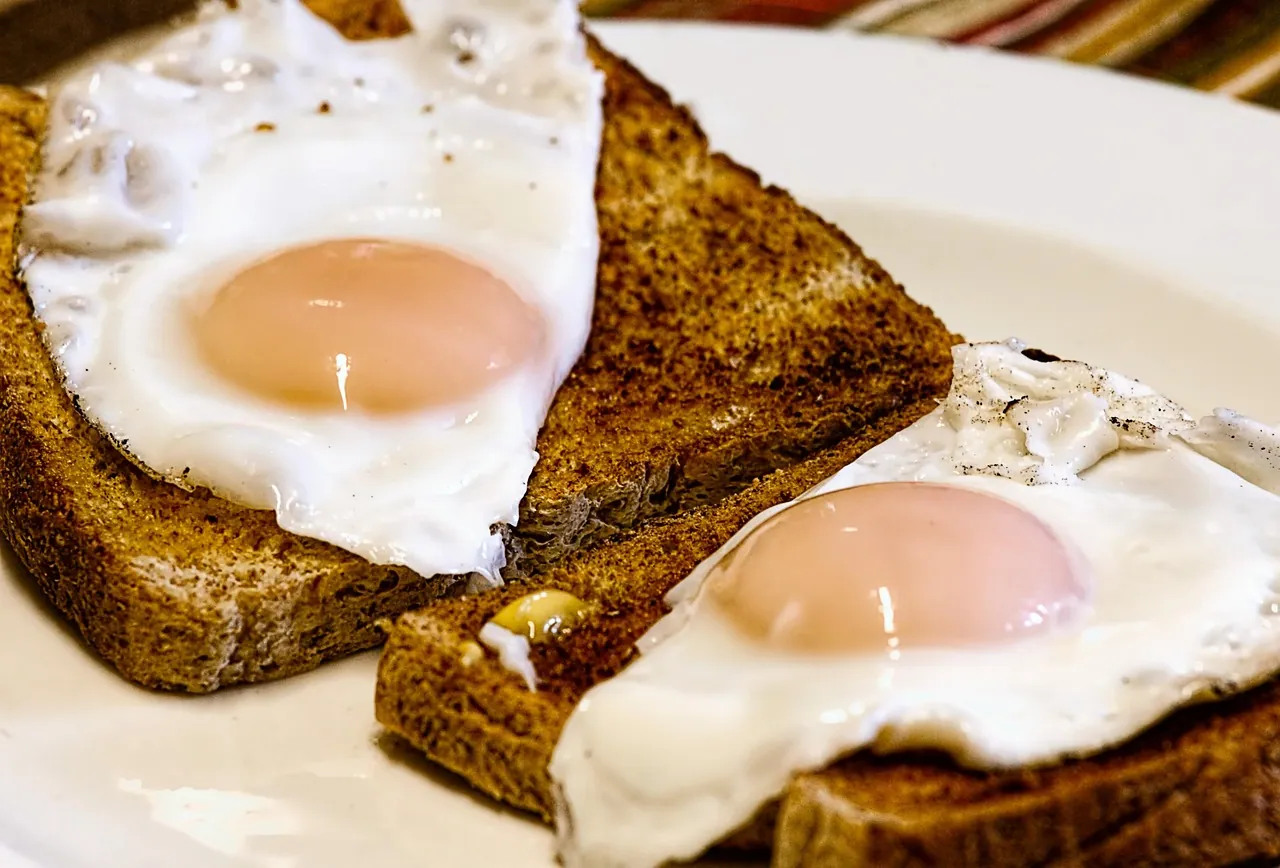
Morning pre workout meal: six Indian egg dishes that sit well
For a morning pre workout meal, the dish matters as much as the timing. Six options, lightest to heaviest:
1. Boiled eggs before workout (make-ahead)
Boiling is the lowest-effort, lowest-fat way to cook eggs, because no oil is added. Boil 6–8 on Sunday, refrigerate them in their shells, and peel two in the morning with a banana. This is the go-to for 6 a.m. trainees who want to be out the door in five minutes.
2. Egg white bhurji with a phulka
Scramble 3–4 whites with onion, tomato, green chilli and a pinch of haldi in 1 tsp oil. Wrap it in one phulka. Light enough for 30–45 minutes out.
3. Masala omelette with toast
Two eggs, chopped vegetables and two slices of whole wheat toast. This is a balanced 60–90 minute meal. Keep the oil to a teaspoon, because a butter-soaked omelette digests much more slowly.
4. Egg bhurji with roti
The North Indian classic. Two or three eggs plus 1–2 rotis covers protein and carbs together. Give it a full 90 minutes, especially before leg day.
5. Egg poha or egg upma
Stir one or two scrambled eggs into a regular bowl of poha or upma. It is an easy upgrade that turns a carb-only breakfast into a complete pre-workout meal.
6. Anda paratha (save for long sessions)
An egg-stuffed paratha is filling and calorie-dense, but the ghee and dough make it slow to digest. Eat it 2–3 hours before long sports practice or a trek, not before a 7 a.m. HIIT class.

Raw eggs pre workout: why the “Rocky” habit does not work
Raw eggs are a worse pre-workout choice than cooked eggs. A 1998 stable-isotope study in the Journal of Nutrition found the true digestibility of cooked egg protein was about 91%, compared with about 51% for raw egg protein. Raw eggs also carry a risk of Salmonella. Cook eggs until the white is set.
The study gave five participants a 25 g egg-protein meal, once cooked and once raw. Heating the egg changed its protein structure enough to nearly double how much the body absorbed (Evenepoel et al., J Nutr, 1998). In plain terms, swallowing three raw eggs gives you roughly the usable protein of one and a half cooked ones, along with a food-safety risk that is simply not worth it. A soft-boiled or half-fry egg is a reasonable middle ground for healthy adults, but pregnant women, young children and older adults should eat eggs fully cooked.

Cholesterol, heart health and egg allergy: who should be careful
If you are healthy
A 2020 BMJ analysis pooling three large US cohorts (more than 215,000 people) with an updated meta-analysis of 1.7 million participants found that eating up to one egg a day was not linked to higher cardiovascular risk overall. In Asian cohorts, it was linked to slightly lower risk (Drouin-Chartier et al., BMJ, 2020). The American Heart Association’s 2020 science advisory reached a similar view. Observational studies generally do not show a significant link between dietary cholesterol and heart disease, and guidance should focus on overall eating patterns rather than a single number (AHA Science Advisory, Circulation, 2020).
If you have high LDL, diabetes or heart disease
Be more conservative. Harvard’s Nutrition Source notes that people with diabetes may do best limiting themselves to about three yolks a week, and that going well beyond one egg a day may not be wise. In this case, lean on egg whites before training and use whole eggs in moderation. Discuss your numbers with your doctor rather than following gym advice.
If you are allergic to eggs
According to Mayo Clinic, eggs are one of the most common foods that cause allergy in children, and most children outgrow it by age 16. Some adults stay allergic, though. Reactions can include hives, stomach cramps and, rarely, anaphylaxis, which is a medical emergency. If eggs have ever caused a reaction, do not test your tolerance before a workout. Use paneer, moong dal chilla, curd or whey instead.
Eggs after workout vs before: which matters more?
For most people, total daily protein matters far more than whether the eggs come before or after training. The ISSN states that high-quality protein eaten from immediately after to 2 hours after exercise strongly stimulates muscle protein synthesis, and that the size and timing of your pre-workout meal changes how urgent post-workout protein is.
So the two meals work together. If you ate three eggs and a roti 90 minutes before lifting, you do not need to rush a shake the moment you finish. If you trained fasted at 6 a.m., your post-workout meal matters more, and eggs after workout are a strong choice (ISSN nutrient timing, 2017).
Boiled eggs after workout: a simple recovery plate
Two to three boiled eggs (13–19 g protein) with a carbohydrate like rice, two rotis, poha or fruit covers both muscle repair and glycogen refill. If you can only fit eggs into one side of your session, many people find after easier, because there is no digestion clock to worry about.

Troubleshooting: when eggs before training do not agree with you
- Heavy, sluggish warm-up. The gap is too short, or there is too much fat. Move the meal 30 minutes earlier or swap two yolks for whites.
- Burping or reflux during burpees and jumps. High-impact work like HIIT, Zumba and skipping shakes the stomach. Eat 90 minutes out and keep oil and spices light.
- Energy crash at minute 30–40. You had eggs but no carbohydrate. Add a banana, a roti or a bowl of poha.
- Bloating or gas. Onion-heavy bhurji or a large quantity may be the cause, rather than the egg itself. Try plain boiled eggs for a week and compare.
- Nausea before 6 a.m. sessions. Some people cannot eat early. Have a banana beforehand and move the eggs to after training. That is a valid approach, not a failure.
If you train with a coach, share what you ate and when along with your session notes. Fitstrot’s 1-on-1 personal training sessions include this kind of pre-workout check, so your meals match the work you are actually doing.
Frequently asked questions
Is it good to eat eggs before a workout?
Yes, for most people. Two whole eggs give about 12–13 g of complete protein, which supports muscle repair. Eat them 60–90 minutes before training and add a carbohydrate like toast, roti or fruit, because eggs contain almost no carbohydrate to fuel hard effort.
How long before a workout should I eat eggs?
Allow 60–90 minutes for whole eggs before moderate or intense training. Egg whites alone can work 20–45 minutes before. If you have less than 15 minutes, skip eggs and eat a banana or dates instead.
How many boiled eggs should I eat before the gym?
Two to three boiled eggs suits most adults, giving about 12–19 g of protein. As a rough guide, aim for 0.25 g of protein per kg of body weight per meal. That works out to about three eggs for a 70 kg person.
Are egg whites better than whole eggs before a workout?
Not for muscle building. A 2017 study found whole eggs stimulated more muscle protein synthesis than protein-matched egg whites after resistance training. Whites are lighter, though, so they are handy when you only have 20–30 minutes before training.
Can I eat raw eggs before a workout?
It is not recommended. A 1998 study found cooked egg protein was about 91% digestible compared with about 51% for raw egg protein. Raw eggs also carry a Salmonella risk. Boiled, poached or scrambled eggs are safer and give more usable protein.
Should I eat eggs before or after a workout?
Either works, and total daily protein matters most. If you train fasted, prioritise eggs after the workout. If you ate a protein-rich meal 1–2 hours before training, your post-workout meal is less urgent.
Are eggs before a workout safe if I have high cholesterol?
Healthy adults can generally eat up to one egg a day without higher heart risk, according to a 2020 BMJ meta-analysis. If you have high LDL, diabetes or heart disease, lean on egg whites and follow your doctor’s advice on yolks.
Not sure how many eggs, or what else, belongs on your pre-workout plate? Book an online session with a Fitstrot nutritionist and get a plan built around your training time, food preferences and budget.


