
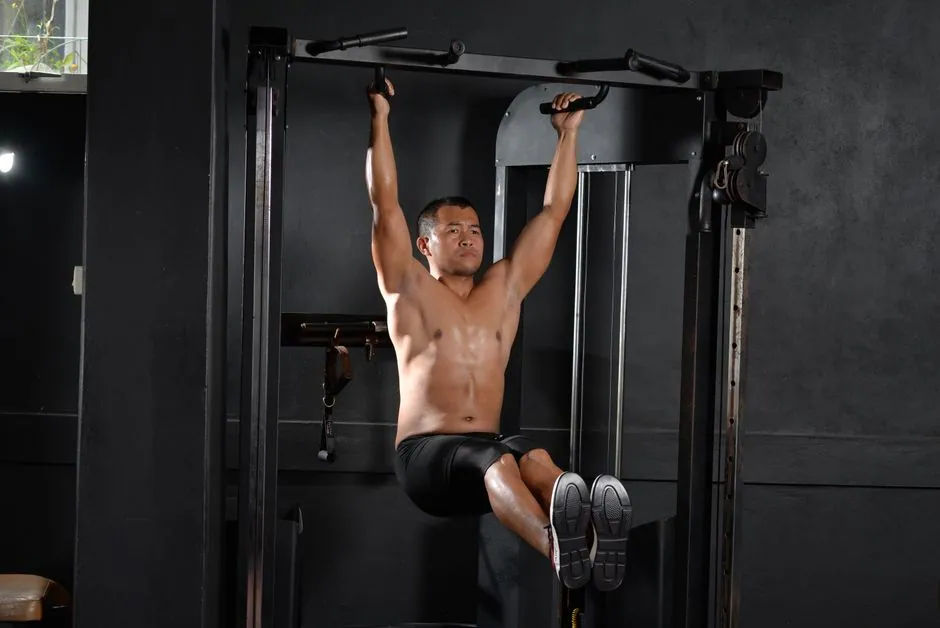
A good gym back workout trains four jobs, not one: pulling down from overhead, rowing towards your torso, shrugging and retracting the shoulder blades, and holding your spine firm while you hinge. Most people in Indian gyms only do the first two, then wonder why their back looks flat from the side. This guide maps every major back muscle to the movement that actually loads it, gives you sets, reps, rest and a form cue for each exercise, and lays out two complete gym sessions plus a home version for days you cannot reach the gym.
If you have never trained your back before, start with our 6-move beginner back workout at the gym and come back here after 6–8 weeks. If you train mostly on cables, our cable back workouts guide covers that equipment in depth.
What should a gym back workout include?
A complete gym back workout includes one vertical pull (pull-up or pulldown), one or two horizontal rows, one hip hinge (deadlift or Romanian deadlift) and one upper-back or rear-delt move. The ACSM’s 2009 position stand recommends ordering multi-joint lifts before single-joint ones and using 8–12 reps for novices, progressing to 1–12 reps for experienced lifters.
That structure comes straight from the American College of Sports Medicine position stand on resistance training progression (2009), which also advises training large muscle groups before small ones and adding 2–10% load once you can beat your target reps by one or two. On back day: heaviest pull or hinge first, face pulls and shrugs last. Skip a pattern and you skip a muscle.
The back muscles, mapped to the moves that train them
Know what each muscle does before you pick exercises. This is the table to screenshot.
| Muscle | Where it sits | Main job | Movement that trains it best | Sign it is your weak link |
|---|---|---|---|---|
| Latissimus dorsi (lats) | Armpit down to the lower back and pelvis; the widest back muscle | Pulls the upper arm down and back towards the hip | Pull-ups, pulldowns, straight-arm pulldowns, rows with elbows tucked | Back looks narrow from the front; pull-ups stall at 1–3 reps |
| Upper trapezius | Neck to the top of the shoulders | Lifts (elevates) the shoulder blades | Shrugs, deadlift and farmer’s carry lockouts | Shoulders slump forward and down when carrying heavy bags |
| Middle and lower trapezius | Between and below the shoulder blades | Pulls the shoulder blades back and down | Chest-supported rows, face pulls, prone Y-raises | Rounded upper back at the desk; shoulder blades “wing” in push-ups |
| Rhomboids | Under the traps, spine to the inner edge of each shoulder blade | Squeezes the shoulder blades together | Rows paused with elbows behind the torso, band pull-aparts | Rows turn into arm curls; no squeeze at the finish |
| Rear deltoids | Back of the shoulder | Pulls the arm back horizontally | Reverse flyes, face pulls, wide-elbow rows | Front of the shoulder looks bigger than the back; shoulders roll in |
| Erector spinae | Two columns running up either side of the spine | Keeps the spine extended and stable under load | Deadlifts, Romanian deadlifts, 45° back extensions | Lower back rounds when you lift a bucket or a suitcase off the floor |
Best back exercises by region, with sets, reps and cues
You do not need all ten in one session; the sample workouts below use five or six. Treat the form cue as the one thing to think about on every rep.
| Region | Exercise | Sets × reps | Rest | Form cue |
|---|---|---|---|---|
| Lats (width) | Pull-up or chin-up (assisted if needed) | 3–4 × 5–10 | 2–3 min | Start from a dead hang; pull elbows down into your back pockets |
| Lats (width) | Wide-grip lat pulldown | 3 × 8–12 | 90 s | Chest up, bar to upper chest, no swinging backwards |
| Lats (width) | Single-arm dumbbell row, elbow tucked | 3 × 10–12 per side | 60–90 s | Row the dumbbell towards your hip, not your armpit |
| Mid back (thickness) | Barbell bent-over row | 3–4 × 6–10 | 2–3 min | Torso around 45°, brace hard, bar touches lower ribs |
| Mid back (thickness) | Chest-supported T-bar or dumbbell row | 3 × 8–12 | 90 s | Chest stays glued to the pad; pause 1 s at the top |
| Mid back (thickness) | Seated cable row, neutral grip | 3 × 10–12 | 90 s | Sit tall, pull shoulder blades back first, then elbows |
| Upper back and rear delts | Face pull (cable or band) | 3 × 12–15 | 60 s | Pull to the forehead, thumbs finish pointing behind you |
| Upper traps | Dumbbell shrug | 2–3 × 10–15 | 60 s | Straight up towards the ears, hold 1 s, no rolling |
| Lower back (erectors) | Romanian deadlift | 3 × 6–10 | 2–3 min | Push hips back, bar slides down the thighs, neutral spine |
| Lower back (erectors) | 45° back extension | 2–3 × 10–15 | 60–90 s | Hinge at the hips, stop at a straight line, do not arch hard |
Wide back workout: building the lats
Width comes almost entirely from the lats. A wide back workout is built around vertical pulls because that is where the lats have the longest range and the most leverage. Pull-ups are the gold standard; a pulldown lets you set the load precisely if you cannot yet lift your bodyweight. Add a single-arm row with the elbow close to the body, an arm path that lines up with the lat fibres.
Back workout for thickness: rows done properly
Thickness is the depth of your back when seen from the side, and it comes from the rhomboids, middle traps and the erectors. A back workout for thickness leans on heavy horizontal rows. The barbell row also makes you hold a hinge, so it doubles as erector work; the chest-supported row removes that demand when your lower back is already tired from deadlifts.

Middle back workout: rhomboids and mid traps
A middle back workout is rarely a separate session; it is the last 10–15 minutes of back day. The fix most lifters need is the finish of the rep: pause every row for one second with the shoulder blades pinched, and add a set of face pulls or band pull-aparts.
Low back workout gym: erectors without the ego
A sensible low back workout at the gym uses hinges, not endless hyperextensions with a plate on the chest. The Romanian deadlift loads the erectors and hamstrings through a controlled range and is easier to learn than a floor deadlift. Keep the spine neutral, stop at a strong hamstring stretch, and add weight only when every rep looks like the first. Train the lower back; do not test it.
How many sets and reps does a back workout need?
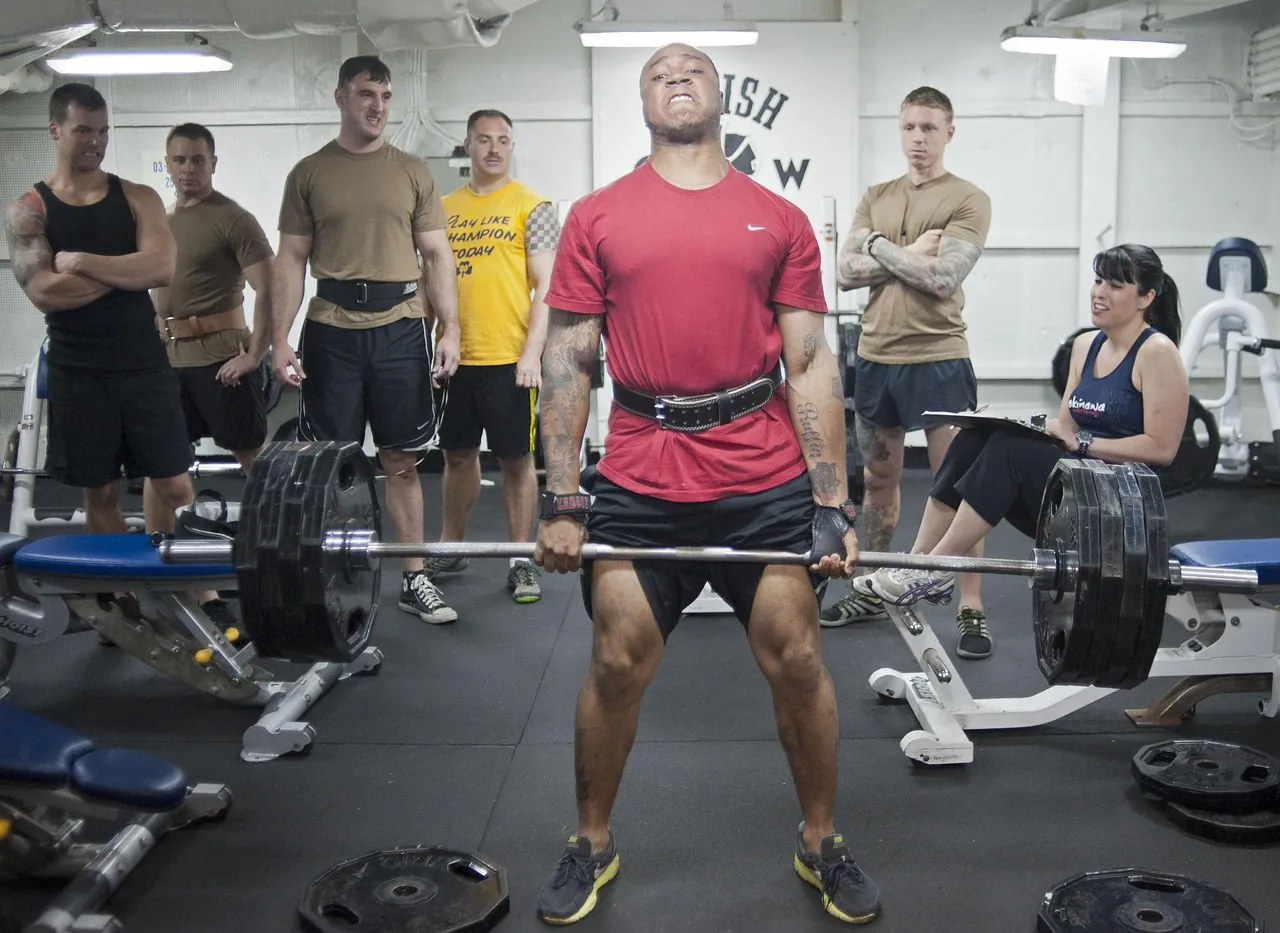
Most lifters grow well on roughly 10–20 hard sets for the back per week, split over one or two sessions, in the 6–12 rep range with 1–3 minutes of rest. A 2017 meta-analysis of 15 studies found each extra weekly set added about 0.37% more muscle growth, with 10+ sets per muscle at the top.
That meta-analysis, by Schoenfeld, Ogborn and Krieger (Journal of Sports Sciences, 2017), found the 10+ set advantage was only a statistical trend, so treat 10 as a sensible target rather than a magic number.
Rep ranges matter less than most people think. A 2017 systematic review of 21 studies found that muscle growth was similar whether people lifted light loads (60% of their one-rep max or less) or heavy loads, provided sets were taken close to failure. Heavy loads still won for maximal strength, so heavy rows early and lighter 12–15 rep pulls late is a well-supported mix.
Rest is where many people cut corners. In an 8-week trial of 21 trained men, 3-minute rest periods produced more strength and muscle thickness than 1-minute rests (Schoenfeld et al., 2016). Rest 2–3 minutes after big pulls and 60–90 seconds after isolation work.

Two complete gym back sessions you can run this week
Session A leans towards strength and thickness; Session B towards width and volume. Run both each week at least 48 hours apart (say Monday and Thursday), or alternate them weekly. Each takes 55–65 minutes. For a thorough ramp-up routine, use our back workout warm-up before either session.
| Session | # | Exercise | Sets × reps | Rest | Form cue |
|---|---|---|---|---|---|
| A | 1 | Romanian deadlift | 3 × 6–8 | 3 min | Hips back, bar close, spine neutral |
| A | 2 | Barbell bent-over row | 4 × 6–8 | 2–3 min | Brace, then row to the lower ribs |
| A | 3 | Weighted or bodyweight pull-up | 3 × 5–8 | 2–3 min | Dead hang to chin over bar, no kipping |
| A | 4 | Chest-supported dumbbell row | 3 × 10–12 | 90 s | Pause 1 s at the top |
| A | 5 | Dumbbell shrug | 2 × 12–15 | 60 s | Straight up, hold, lower slowly |
| B | 1 | Wide-grip lat pulldown | 4 × 8–12 | 2 min | Bar to upper chest, chest up |
| B | 2 | Single-arm dumbbell row | 3 × 10–12 per side | 90 s | Elbow travels to the hip |
| B | 3 | Seated cable row, neutral grip | 3 × 10–12 | 90 s | Blades back first, then elbows |
| B | 4 | Straight-arm pulldown | 3 × 12–15 | 60 s | Arms stay long; hinge slightly forward |
| B | 5 | Face pull | 3 × 12–15 | 60 s | Thumbs back at the finish |
| B | 6 | 45° back extension | 2 × 12–15 | 60 s | Stop at a straight line |
The lats get about 13 direct sets a week and the mid back about 13, inside the range the research supports. Add one rep per set each week; once every set hits the top of the range, add 2.5 kg to the bar or move up one dumbbell pair.
Should you do a bis and back workout on the same day?
Yes, a bis and back workout is an efficient pairing because every row and pull-up already works the biceps. Train back first while you are fresh, then add 2–4 sets of curls. The trade-off: tired biceps can limit your last back sets, so keep the heaviest pulls at the start of the session.
Finish Session A with two sets of hammer curls and Session B with two sets of incline dumbbell curls. Never start with curls: pre-fatigued biceps give out before your lats, turning rows into arm exercises.
Pairing matters less than weekly frequency. The NHS physical activity guidelines for adults ask everyone aged 19–64 to do strengthening work covering all major muscle groups, the back included, on at least 2 days a week.
Four back-training myths worth dropping
Myth 1: “A wide grip is what builds a wide back”
Hard sets through a full range matter more than grip width. Pick the grip that lets you feel your back, not your forearms.
Myth 2: “Deadlifts are bad for your back”
Ego-loaded, rushed deadlifts are risky; well-coached ones strengthen the muscles that protect your spine. Start with a Romanian deadlift you can move for 8 perfect reps.
Myth 3: “More pulldown variations mean more growth”
Four pulldown variations train the same path four times. One pulldown, one row, one hinge and one upper-back move beats that.
Myth 4: “If your lower back is sore, stop moving”
Ordinary soreness after a new hinge fades within 2–3 days, and gentle movement helps. Sharp or spreading pain is different, as the next section explains.
Is a back workout with lower back pain safe?
For most non-specific lower back pain, staying active helps: a 2021 Cochrane review of 249 trials found exercise reduced chronic low back pain by about 15 points on a 100-point scale versus no treatment. But numbness in both legs, bladder or bowel changes, or pain that is worse at night need a doctor first, not a workout.
Low back pain is extremely common. The World Health Organization reports that low back pain affected 619 million people in 2020 and is the single leading cause of disability worldwide, with cases projected to reach 843 million by 2050. The Cochrane review by Hayden and colleagues (2021) rated the evidence for exercise as moderate certainty, with mostly minor side effects such as muscle soreness.
See a doctor before training if your back pain has not improved after a few weeks, stops you doing daily activities, is worse at night or when coughing or sneezing, comes with unexplained weight loss, or sits between the shoulder blades rather than in the lower back. These are the warning signs the NHS lists for back pain. Seek emergency care straight away for weakness or numbness in both legs, loss of feeling around the genitals or bottom, or new bladder or bowel problems.

If a doctor or physiotherapist has cleared you, these adjustments usually let you keep training:
- Swap barbell rows for chest-supported rows. The pad takes the load off your lower back while your mid back still works hard.
- Replace deadlifts with 45° back extensions at bodyweight for 2–3 weeks, then reintroduce a light Romanian deadlift.
- Use a pain rule. Mild discomfort (up to about 3 out of 10) that settles by the next morning is generally acceptable; anything sharper means reduce load or range.
- Add gentle mobility. Cat-cow, child’s pose and bird-dogs between sets keep the area moving without loading it. Our online yoga classes include therapeutic sequences for exactly this.
Can a back workout in home match the gym?
A back workout in home can build real strength and muscle if you use dumbbells, resistance bands or a doorway pull-up bar and take sets close to failure. Research shows lighter loads grow muscle similarly to heavy ones when effort is high. The main limit is progression: once 15–20 reps feel easy, you need heavier equipment.
The biggest gap at home is a vertical pull, so a doorway pull-up bar is the most useful purchase; loop resistance bands, typically a few hundred rupees online, cover the rest.
| # | Exercise | No-equipment swap | Sets × reps | Rest | Form cue |
|---|---|---|---|---|---|
| 1 | Doorway pull-up or band-assisted pull-up | Towel door row (towel looped round a door handle, door firmly shut) | 3 × max clean reps (aim 5–10) | 2 min | Full hang to full pull; stop before form breaks |
| 2 | Single-arm dumbbell row on a chair or bed | Backpack row with 8–10 kg of books | 3 × 10–15 per side | 90 s | Elbow to hip, flat back |
| 3 | Dumbbell Romanian deadlift | Single-leg hip hinge, holding a filled water can | 3 × 10–12 | 90 s | Hips back, dumbbells slide down the thighs |
| 4 | Resistance band row | Inverted row under a sturdy table | 3 × 12–15 | 60 s | Squeeze shoulder blades for 1 s |
| 5 | Band pull-apart | Prone Y-raise on the floor | 3 × 15–20 | 45 s | Arms straight, pull to chest height |
| 6 | Superman hold | Same | 3 × 20–30 s hold | 45 s | Lift chest and legs a few centimetres only |
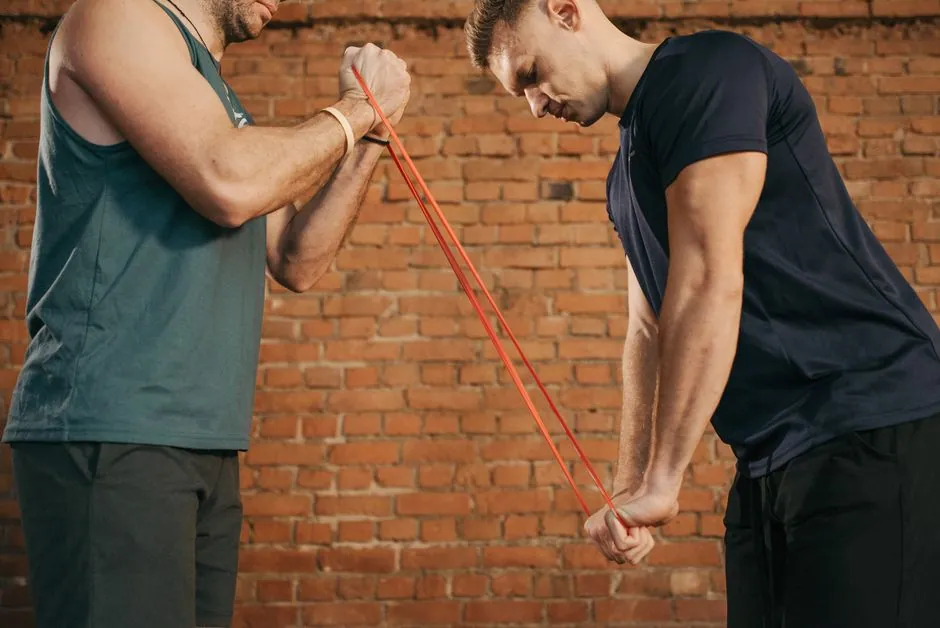
To progress at home: add reps, then slow the lowering to 3–4 seconds, then add a pause, and only then move to a heavier dumbbell or thicker band.
Adjusting your back day for women, desk workers and 40+ lifters
Women. Nothing above changes. Many women have less pulling experience, so assisted pull-ups stay useful for longer.
Desk workers. If you sit 8+ hours, add an extra set of face pulls each session and 2 × 15 band pull-aparts on rest days.
Lifters over 40. Keep heavy hinges to once a week, warm up for 10 minutes and favour chest-supported rows; 8–15 reps still build muscle well.
Not feeling your back? A quick troubleshooting guide
- Your biceps burn but your back does not. Use a thumbless grip or lifting straps, and think “pull with the elbows”. The hands are just hooks.
- Your lower back gives out before your lats. Your torso is too upright or rounding in rows. Switch to chest-supported rows until your hinge is stronger.
- Your neck and upper traps take over. You are shrugging during rows. Set the shoulders down before every rep and lighten the load by 10–20%.
- Your back is not growing after 3 months. Count your weekly hard sets. Under 10 for the back is the most common reason, followed by sets finished with 5+ reps left in the tank.
Back workout questions, answered
How many times a week should I train my back?
Two sessions a week suits most people. It matches the NHS advice of strength work on at least 2 days, and splits 10–20 weekly sets into manageable workouts. Beginners can start with one session and add a second after 6–8 weeks.
What is the single best back exercise?
There is no single best one, because the back does several jobs. If you could do only two, choose a pull-up (or pulldown) for the lats and a barbell or chest-supported row for the mid back.
Can I train back two days in a row?
It is better to leave at least 48 hours between hard back sessions so the muscles and your lower back can recover. Light mobility work or band pull-aparts on the next day are fine.
Should I deadlift on back day or leg day?
Either works. Romanian deadlifts fit back day well because they train the erectors, while squat-heavy leg days are often too tiring to add them. Just avoid heavy deadlifts and heavy squats on consecutive days.
How long does it take to see results from a back workout?
Strength usually improves within 3–4 weeks as your technique and coordination get better. Visible changes in muscle size typically take 8–12 weeks of consistent training, with enough protein and sleep.
Is it normal to feel sore after a back workout?
Yes. Muscle soreness that peaks 24–48 hours after training and fades within about 3 days is normal, especially after new exercises. Sharp pain, pain down a leg or pain that keeps getting worse is not normal and needs a medical opinion.
Get your back day checked by a coach
Most back-day problems are form problems a trainer can spot on video in one session. Book a 1-on-1 personal training session with Fitstrot and get your pulling technique reviewed live, then leave with a back plan built around your gym, your home equipment and your schedule.


