
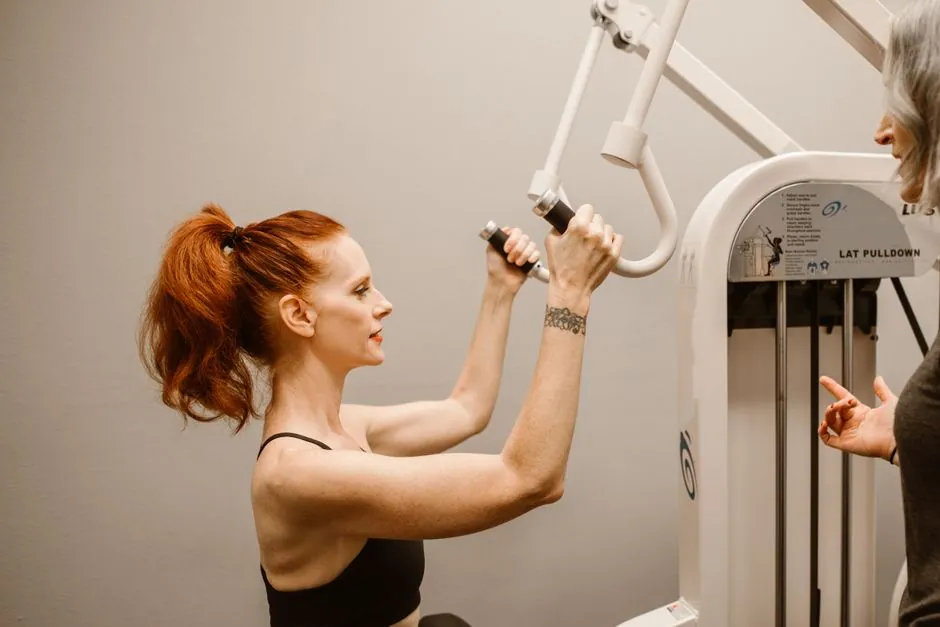
A good back workout for beginners is shorter and simpler than most people expect: six exercises, two or three sets each, done twice a week with a weight you can control for 10 to 15 clean reps. That’s the whole plan. It builds the lats, mid-back and spinal erectors without putting your lower back at risk. The hard part isn’t choosing exercises. It’s learning to pull with your back instead of your arms, and adding weight slowly enough that your form holds up.
Below: the full session with sets, reps, rest and a form cue for each move, an 8-week progression, a lat pulldown walkthrough, lower-back safety and fixes for common mistakes. Every number is linked to its published source.
What is the best back workout for beginners at gym?
The best back workout for beginners at the gym has 5–6 exercises: one vertical pull (lat pulldown or assisted pull-up), two rows, one rear-shoulder move and one lower-back move. Do 2–3 sets of 10–15 reps and rest 60–90 seconds between sets. Train it 2 times a week. Stop every set 2–3 reps before failure for the first 8 weeks.
This structure follows the American College of Sports Medicine’s 2009 position stand on resistance training. For untrained people it recommends loads in the 8–12 repetition-maximum range, training 2–3 days per week, and increasing the load by 2–10% once you can do one or two reps more than your target. Mayo Clinic’s guidance is even simpler: a single set of 12 to 15 repetitions with a weight that tires the muscle can build strength in most people. So if you only have 25 minutes, one or two good sets per exercise still count.
What beginners actually need is balance. Vertical pulls work the lats, which give the back its width. Rows work the mid-back, which supports your posture. Rear-shoulder and lower-back work protects the joints that desk jobs and phone use tend to weaken.
Four muscle groups, one “back day”
- Latissimus dorsi (lats): the large fan-shaped muscles along your ribs that pull your arms down and back. Trained by pulldowns, pull-ups and rows.
- Rhomboids and middle trapezius: between your shoulder blades. Trained by rows where you drive the elbows back and pause.
- Rear deltoids and rotator cuff: the back of your shoulders, small but important for shoulder health. Trained by face pulls and reverse flyes.
- Erector spinae: the two thick columns along your spine that keep your torso upright under load. Trained by back extensions, and later by deadlifts.
The biceps help in almost every pull, which is why beginners often feel their arms working and not their back. The lat pulldown section below shows how to fix that.
The 6-exercise beginner routine (with sets, reps and rest)
Do this session twice a week, with at least 48 hours between sessions (for example, Monday and Thursday). Warm up first with 5 minutes on a rower or cross-trainer, then one light set of the first exercise. Our back workout warm-up routine has a full sequence.
| # | Exercise | Equipment | Sets × reps | Rest | Main target | Form cue |
|---|---|---|---|---|---|---|
| 1 | Lat pulldown (overhand, slightly wider than shoulders) | Cable machine | 3 × 10–12 | 90 s | Lats | Pull the bar to your upper chest by driving elbows down to your back pockets |
| 2 | Seated cable row (V-handle) | Cable machine | 3 × 10–12 | 90 s | Mid-back, lats | Sit tall, pull to the navel, pause 1 s with shoulder blades squeezed |
| 3 | One-arm dumbbell row | Flat bench + dumbbell | 3 × 10–12 each side | 60 s | Lats, rhomboids | Back flat like a table; pull the dumbbell toward your hip, not your armpit |
| 4 | Assisted pull-up | Assisted pull-up machine | 2 × 6–8 | 90 s | Lats, biceps | Start each rep by pulling shoulders down away from your ears |
| 5 | Face pull (rope) | Cable at head height | 2 × 12–15 | 60 s | Rear delts, rotator cuff | Pull the rope apart toward your ears; finish with thumbs pointing back |
| 6 | 45° back extension | Hyperextension bench | 2 × 10–12 | 60 s | Spinal erectors, glutes | Hinge at the hips and stop when your body forms a straight line, with no over-arching |
The session takes about 35–40 minutes including rest. Choose a weight that leaves 2–3 good reps in reserve at the end of each set. If your last rep looks like a different exercise from your first, the weight is too heavy. The order is deliberate: the ACSM stand advises doing multi-joint and big-muscle exercises before single-joint and small-muscle ones, so the pulldown and rows come first while you’re fresh.

Back exercises gym machine vs dumbbells: which should a beginner pick?
Start with machines and cables for your first 4 weeks, and add one dumbbell row from day one. Machines guide the movement path, so you can focus on feeling your back. Dumbbells make each side work on its own and show strength gaps between left and right. Most beginners do best with about two-thirds machine work and one-third free weights.
| Factor | Machines & cables | Dumbbells & barbells |
|---|---|---|
| Learning curve | Low: the path is fixed, so you only focus on the squeeze | Moderate: you must also stabilise your torso and wrist |
| Load jumps | Pin stack, usually 2.5–5 kg per plate | Dumbbells usually go up 2–2.5 kg per pair |
| Left–right imbalance | Stronger side can take over on bilateral machines | One-arm rows expose and fix imbalances |
| Lower-back demand | Low (seated, chest or thigh pads) | Higher on bent-over rows; low on bench-supported rows |
| Peak-hour crowding (6–9 pm) | Pulldown and cable stations are often busy | Dumbbells and a bench are usually free |
| Best beginner picks | Lat pulldown, seated cable row, assisted pull-up, face pull | One-arm dumbbell row, chest-supported incline dumbbell row |
If your gym is packed in the evening, try a dumbbell-only version: chest-supported incline row, one-arm row, light dumbbell pullover, prone reverse flye and back extension. You’ll miss the vertical pull, so add the lat pulldown back whenever a station opens up. After this 8-week block, our back workouts guide covers intermediate rows and deadlift variations.
Lat pulldown machine walkthrough: form, grip and the “arms-only” fix
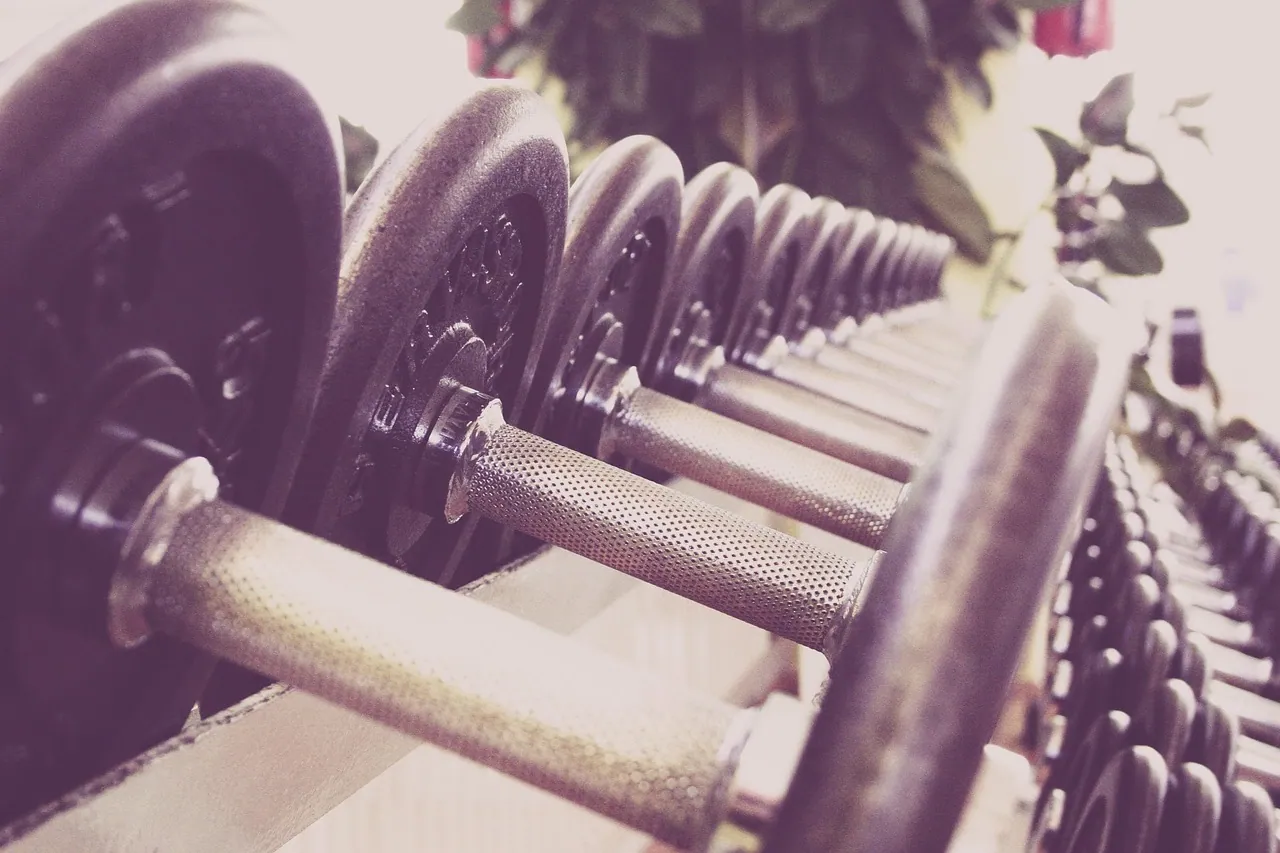
The lat pulldown machine is the first station most beginners use, and the one they get wrong most often. Here’s the setup:
- Set the thigh pad so your thighs are locked under it and your feet are flat.
- Grip the bar overhand, a little wider than shoulder width, so your forearms are roughly vertical when the bar reaches your chest.
- Lean back 10–20° with your chest up. Leaning back 45° turns the pulldown into a row and hides how much you’re really moving.
- Depress first. Before bending your elbows, pull your shoulders down away from your ears. This one cue gets your lats working from the start.
- Drive the elbows down and back until the bar touches your upper chest. Think “elbows to back pockets,” not “hands to chest.”
- Return over 2–3 seconds until your arms are nearly straight and you feel a stretch under your armpits.
Which lat pulldown grip is best?
Grip width matters less than people think. In a 2014 study of 15 men, Andersen and colleagues found similar lat activation across narrow, medium and wide grips (1 to 2 times shoulder width). The men lifted slightly more with narrow and medium grips: about 80 kg for a 6-rep max, compared with 77.3 kg wide. Forearm orientation matters more. A 2010 study by Lusk, Hale and Russell found an overhand (pronated) grip produced more lat activity than an underhand grip. Use a medium overhand grip as your default and treat the other grips as variations.
Lat pulldown form problem: “I only feel it in my arms”
This is normal, and it can be fixed. In a 2009 experiment, Snyder and Leech worked with eight women who had little or no strength-training experience. After one short round of verbal technique coaching, their lat activity during the pulldown rose significantly. The right cue made the difference, not extra weight. Drop the load by about 30% for a week and use the “shoulders down, then elbows to pockets” sequence.
Pull ups or lat pulldown: which should come first?
Start with the lat pulldown and assisted pull-ups. Most beginners can’t yet do 5 strict pull-ups, and very low-rep sets make good technique hard to learn. A useful coaching target: once you can pulldown roughly 70–80% of your body weight for 8 clean reps, start practising unassisted pull-ups and keep the pulldown for volume.
The two moves aren’t identical. A 2013 electromyography comparison by Doma, Deakin and Ness found chin-ups produced more biceps and spinal-erector activity than lat pulldowns during the lifting phase, because you have to stabilise your whole body in the air. Pull-ups are harder and more “functional”. The pulldown lets you set an exact load and add reps, which is what a beginner needs.
The 70–80% figure is a practical rule of thumb, not a research-proven cut-off. A 60 kg beginner would aim for about 42–48 kg on the stack for 8 reps. Meanwhile, use the assisted pull-up machine and reduce the counterweight by one plate every 2 weeks.
Your 8-week progression plan
For beginners, the fastest progress comes from adding volume gradually, not from maxing out. A 2017 meta-analysis of 15 studies by Schoenfeld, Ogborn and Krieger found a graded dose-response relationship. Each extra weekly set was linked to about a 0.37% larger gain in muscle size, and the best results came at 10 or more weekly sets per muscle. The plan below takes you from about 16 to about 30 weekly back sets, then lightens off in week 8.
| Week | Exercises per session | Sets per exercise | Reps | Reps left in tank | Weekly back sets | Focus |
|---|---|---|---|---|---|---|
| 1–2 | 4 (skip #4, #5) | 2 | 12–15 | 3–4 | ~16 | Learn setups; film one set per exercise on your phone |
| 3–4 | 5 (add face pull) | 2–3 | 10–12 | 2–3 | ~22 | Add the next pin once you hit 12 reps on all sets |
| 5–6 | 6 (full routine) | 2–3 | 10–12 | 2 | ~28 | Add a 1-second squeeze at the end of every row |
| 7 | 6 | 3 on #1–#3, 2 on rest | 8–12 | 1–2 | ~30 | Push the pulldown and rows; keep extensions easy |
| 8 (deload) | 6 | 1–2 | 10–12 | 4 | ~16 | Same weights, fewer sets, so joints and tendons recover |
The load rule comes from the ACSM guidance. When you can do all sets at the top of your rep range with one or two reps to spare, add 2–10% next session. On most machines that’s one plate; with dumbbells it’s the next pair up. If the new weight drops you below your rep range, go back and add one rep per session until you get there.
Rest can stay at 60–90 seconds. A 2016 trial by Schoenfeld and colleagues found 3-minute rests gave more strength and muscle growth than 1-minute rests over 8 weeks. But that study involved trained men doing 3 total-body sessions a week. For a 40-minute beginner session, 90 seconds on the big pulls is a sensible middle ground.
Lower back exercises gym equipment: how to train it safely
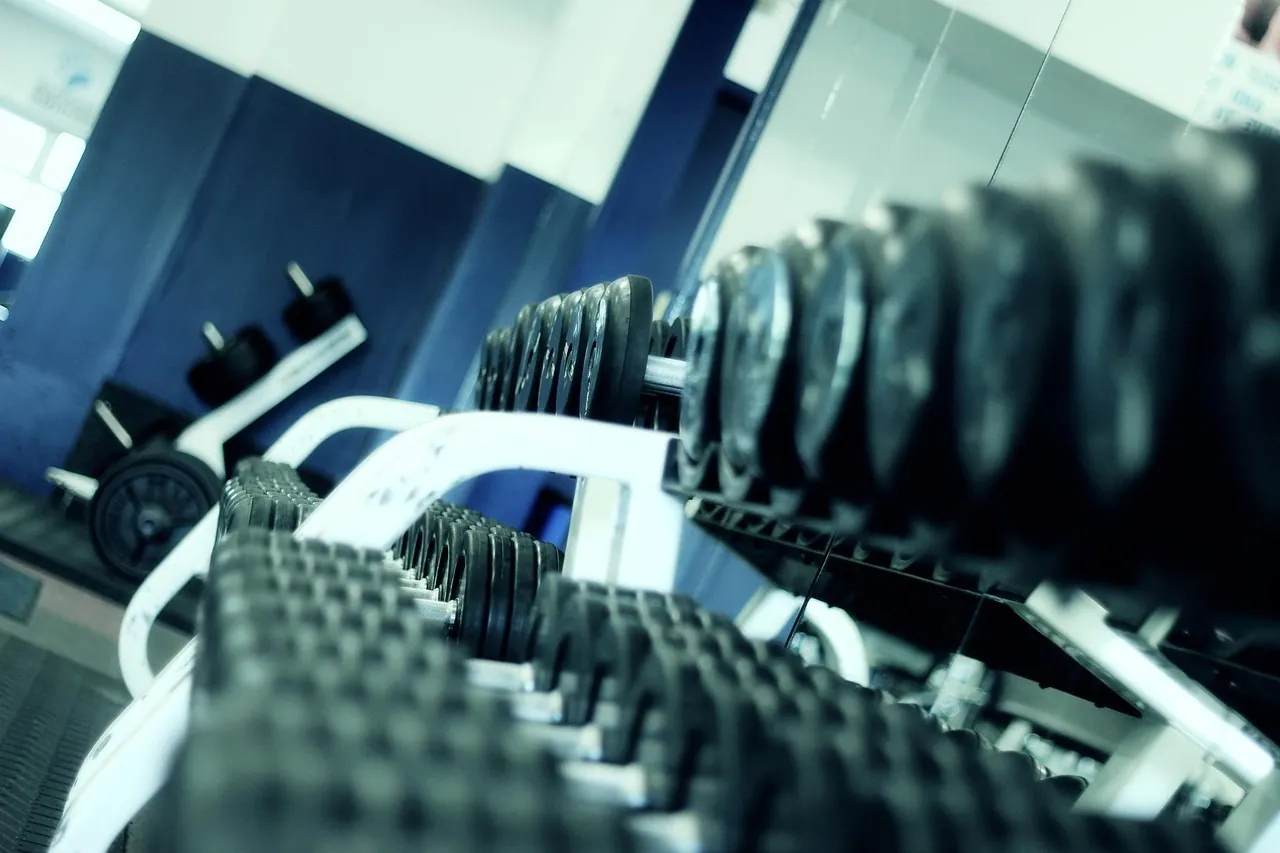
A healthy beginner can train the lower back safely on a 45° back extension bench, bodyweight only, 2 sets of 10–12 in the first month. Save heavy barbell deadlifts until you’ve trained for 6–8 weeks and can hold a flat back on rows. See a doctor or physiotherapist first if you have back pain that spreads down a leg, numbness, or a past disc injury.
Gym training isn’t the back-breaker people assume. A 2017 systematic review by Keogh and Winwood found bodybuilding-style training had the lowest injury rates of the weight-training sports studied: about 0.24–1 injury per 1,000 hours. Strongman was far higher, at 4.5–6.1 per 1,000 hours. Controlled, moderate-load training is low risk. The risk rises with heavy, fast or poorly practised lifts.
Lower-back equipment found in most Indian commercial gyms, in the order to learn it:
- 45° hyperextension bench: the beginner default. Hold a 2.5–5 kg plate across your chest only after 15 controlled bodyweight reps.
- Seated back extension machine: fine if there’s no bench. Keep the range small and don’t jerk at the top.
- Cable pull-through: teaches the hip hinge with almost no spinal load, a good bridge to deadlifts.
- Dumbbell Romanian deadlift: weeks 5–8, light dumbbells, 2 × 10, lowering to mid-shin.
Once you’ve built that base, our deadlift workout guide takes you from the trap-bar deadlift to the conventional lift.

Stop signals: when to end the set
Stop and get checked if you feel sharp or shooting pain, pain travelling into the buttock or leg, tingling, or pain that’s worse the next morning than during the session. Normal soreness is a dull, even ache that peaks 24–72 hours after training.
Myths that stall beginners
- Myth: “Wide grip = wider back.” The 2014 grip study above found similar lat activation from 1× to 2× shoulder width. Width comes from consistent volume, not grip tricks.
- Myth: “Behind-the-neck pulldowns hit the lats better.” They put the shoulder in an extreme rotated position, and the grip research above was done with front pulldowns. A beginner gains nothing by taking the extra risk. Pull to the front.
- Myth: “Beginners must deadlift in week one.” The deadlift is a skill. Rows and back extensions build the same muscles while you learn the hinge.
- Myth: “You have to train to failure to grow.” Leaving 1–3 reps in reserve still drives good gains for new lifters and keeps your form clean.
Troubleshooting the 7 most common back-day mistakes
| What you notice | Likely cause | Fix |
|---|---|---|
| Biceps burn, back feels nothing | Pulling with hands; shoulders shrugged | Depress shoulders first; use a thumbless grip; drop 30% of the load |
| Swinging on the pulldown or row | Weight too heavy | Cut one plate; 2 s up, 3 s down tempo |
| Lower back aches after rows | Rounding the spine or leaning too far back | Switch to chest-supported rows for 2 weeks |
| Neck and upper traps tight | Shrugging the handle toward the ears | Cue “long neck”; finish rows at the navel, not the chest |
| Front of shoulder pinches | Elbows flaring high, bar pulled behind neck | Pull to upper chest; keep elbows about 30° from the body |
| No strength gain for 3 weeks | Same reps, same weight, no log | Log every set in a phone note; follow the 2–10% rule |
| Grip gives out before back | Weak forearms, sweaty hands | Chalk or straps on the last set only; add farmer’s carries |
Back exercises gym women: does anything change?
No. The exercises, sets and reps above work the same way for women. Enough sets, gradual load increases and good form drive progress for everyone. Starting loads are often lighter, and pulling strength tends to lag behind leg strength, so expect to spend longer on assisted pull-ups. Use enough counterweight to get 6 clean reps, then remove one plate every 2 weeks. Coaching cues work quickly: the Snyder and Leech study that found greater lat activation after verbal instruction was done with untrained women. If you’re pregnant or postpartum, get clearance from your obstetrician or physiotherapist before loaded pulls or back extensions, especially after a C-section. These volumes build shape and posture, not “bulk”.
Where back day fits in your week
The NHS guidance for adults aged 19–64 lists the back among the major muscle groups to strengthen on at least 2 days a week, along with 150 minutes of moderate aerobic activity. The two sessions in this plan cover that minimum for your back. A simple 4-day beginner week looks like this:
- Monday: back + biceps (this routine)
- Tuesday: legs
- Wednesday: rest or a 30–40 minute brisk walk
- Thursday: back + rear shoulders (this routine)
- Friday: chest, shoulders and triceps
- Weekend: active rest, such as yoga, a sport or a long walk
Include a protein source in each of your three main meals: dal, rajma or chana, paneer, curd, eggs, chicken or fish. Aim for 7 or more hours of sleep, which does more for recovery than any supplement. After your 8 weeks, our cable back workouts guide adds new angles.
Frequently asked questions
How many back exercises should a beginner do?
Four to six per session: one vertical pull, two rows, one rear-shoulder move and one lower-back move. Start with four exercises for 2 sets each in weeks 1–2, and build to the full six by week 5.
How often should beginners train back?
Twice a week, with at least 48 hours between sessions. The ACSM 2009 position stand recommends 2–3 training days per week for novices. The NHS advises strengthening all major muscle groups, including the back, on at least 2 days a week.
How much weight should I start with on the lat pulldown?
Choose a weight you can pull for 12–15 controlled reps with 3–4 reps left in reserve. For many beginners that’s roughly 30–50% of body weight. Once you can finish all sets at the top of your rep range, increase the load by 2–10%, usually one pin.
Is it safe for beginners to deadlift?
Yes, once you can hinge well. Spend 6–8 weeks on back extensions, cable pull-throughs and light dumbbell Romanian deadlifts first, then learn the trap-bar or barbell deadlift with light loads. Anyone with a disc injury or radiating back pain should get medical clearance first.
Why do I feel back workouts in my arms instead of my back?
You’re probably starting each rep by bending your elbows, so your biceps take over. Pull your shoulders down first, then drive your elbows toward your back pockets. A 2009 study found verbal coaching alone significantly increased lat activation in novices during the pulldown.
Should beginners do pull-ups or lat pulldowns?
Both, in that order: lat pulldowns for volume, assisted pull-ups to build toward a bodyweight rep. A good rule of thumb is to try strict pull-ups once you can pulldown roughly 70–80% of your body weight for 8 reps.
How long until I see results from a beginner back workout?
Most people feel stronger within 2–4 weeks, mainly from improved coordination. Visible changes in back shape usually take 8–12 weeks of consistent training and enough protein. Results vary with sleep, diet and consistency.
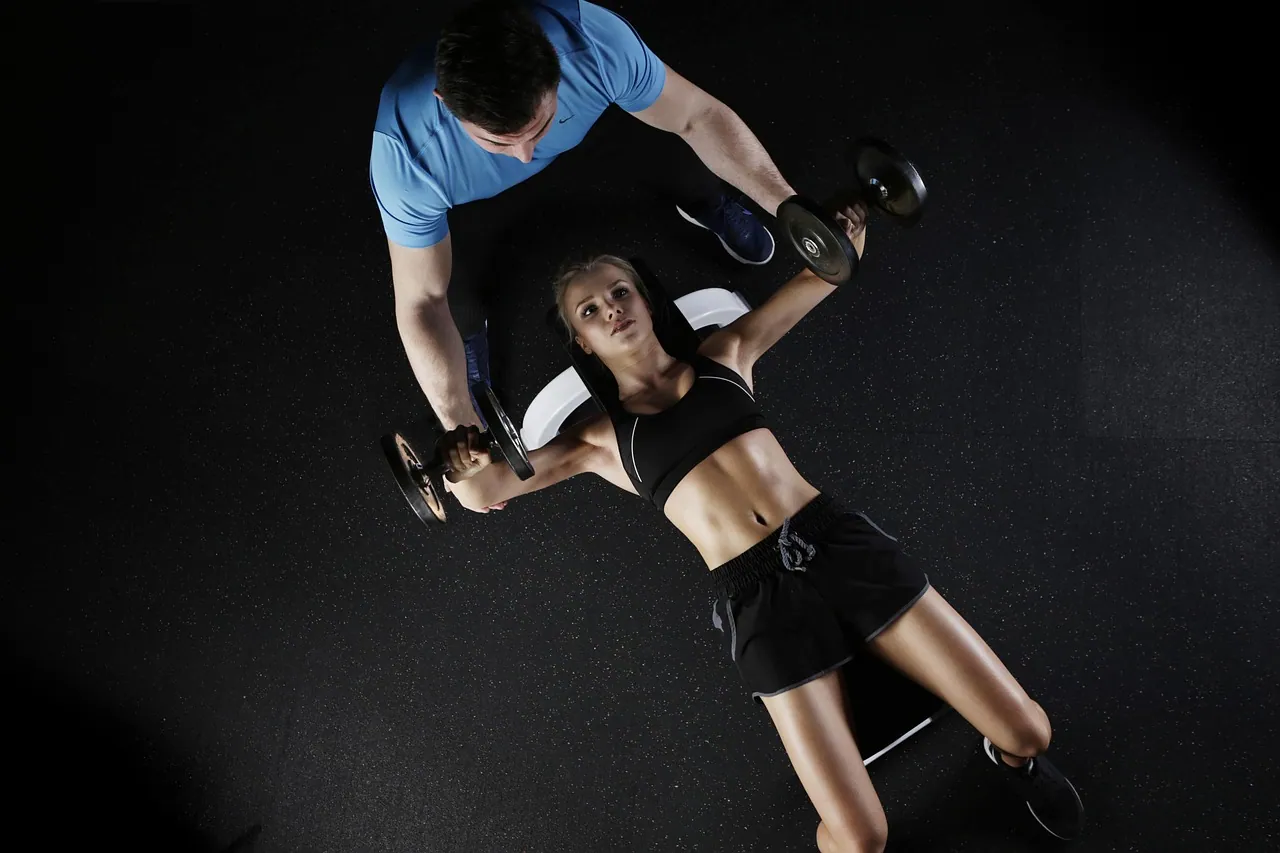
Get your first back day coached
Most beginners find it hardest to actually feel their back working, and a trainer can often fix that in one session by correcting your cues in real time. With Fitstrot’s 1-on-1 online personal training, a certified coach watches your sets live over video, adapts this 8-week plan to your gym’s equipment and tells you when to add weight. Book a session and bring this plan along.


