

A bulking workout plan is a training programme run alongside a small calorie surplus, built to add muscle with as little fat as possible. The version below is a 12-week, 4-day upper/lower plan: heavy compound lifts, 10 to 18 hard sets per muscle each week, a written progression rule, and two deload weeks. It also covers the eating side for Indian kitchens: how big the surplus should be, how much protein you need, and one full training day of veg and non-veg meals.
Most people get the “eat more” half right and the training half wrong. A surplus gives you more recovery to spend. The plan spends it on more sets and heavier loads.
What is lean bulking, and why not just eat everything?
Lean bulking means eating about 10–20% above maintenance calories and aiming to gain roughly 0.25–0.5% of body weight per week while lifting hard. That’s the range a 2019 review of off-season bodybuilding nutrition recommends for natural lifters. For a 70 kg person, that works out to around 0.2–0.35 kg a week, or about 1 kg a month.
That review, Iraki and colleagues’ 2019 narrative review in Sports, also says advanced lifters should use a smaller surplus and gain more slowly, because they build new muscle more slowly. A beginner can sit near 0.5% a week. Someone five years into training should stay close to 0.25%.
Lean bulk vs dirty bulking: what the data actually shows
Dirty bulking means eating whatever gets you over your calorie number: pizza, sweets, mass gainers. It puts weight on the scale fast, but muscle can only grow so quickly, so the extra calories get stored as fat.
A controlled trial in elite athletes shows this clearly. In Garthe et al. (2013, European Journal of Sport Science), a group coached to eat a larger surplus (about 3,585 kcal a day) gained 3.9% body weight over 8–12 weeks. Their fat mass rose by 15%, and they gained no significant lean mass compared with a group eating freely, whose fat mass rose by only 3%. Both groups got similarly stronger.
A dirty bulk isn’t dangerous for one season, but it’s inefficient: every extra kilo of fat is a kilo you’ll later have to diet off.
Calories for bulking: a calculator you can run on paper
Online calculators are only guesses, so start with a rough estimate and correct it using your own scale. For someone lifting four days a week with a desk job, maintenance often falls around 30–35 kcal per kg of body weight. Use the middle of that range, add 10–20% on top, then weigh yourself every morning for two weeks and adjust based on the weekly average.
| Body weight | Est. maintenance (~33 kcal/kg) | Lean bulk target (+10–20%) | Protein per day | Target gain per week (0.25–0.5%) | Approx. gain over 12 weeks |
|---|---|---|---|---|---|
| 55 kg | ~1,800 kcal | 1,980–2,160 kcal | 88–121 g | 0.14–0.28 kg | 1.7–3.3 kg |
| 65 kg | ~2,150 kcal | 2,370–2,580 kcal | 104–143 g | 0.16–0.33 kg | 2.0–3.9 kg |
| 75 kg | ~2,475 kcal | 2,720–2,970 kcal | 120–165 g | 0.19–0.38 kg | 2.3–4.5 kg |
| 85 kg | ~2,800 kcal | 3,080–3,360 kcal | 136–187 g | 0.21–0.43 kg | 2.6–5.1 kg |
Note the right-hand column: even at the top of the range, a lean bulk adds only 3–5 kg in 12 weeks, and not all of it is muscle. If you gain more than 0.5% a week after the first fortnight (early gain is partly water and glycogen), cut 150–200 kcal. If the weekly average stalls for two weeks, add 150–200 kcal.
For bulking, how much protein per day do you actually need?
Aim for about 1.6 g of protein per kg of body weight per day, and go up to 2.2 g/kg if you want some margin. A 2018 meta-analysis of 49 trials and 1,863 people found that muscle gains from resistance training levelled off at around 1.62 g/kg/day. For a 70 kg lifter, that’s roughly 112–154 g, spread over 3–5 meals.
The analysis is Morton et al. (2018) in the British Journal of Sports Medicine. The International Society of Sports Nutrition’s 2017 position stand lands in a similar place: 1.4–2.0 g/kg/day, in doses of about 20–40 g every 3–4 hours.
Carbs and fat fill the rest. The 2019 off-season review suggests fat at 0.5–1.5 g/kg and carbohydrate at 3–5 g/kg or more. In Indian terms, that means keeping the rice and roti on your plate on training days instead of cutting them to “stay lean”.
The 12-week bulking workout plan at a glance
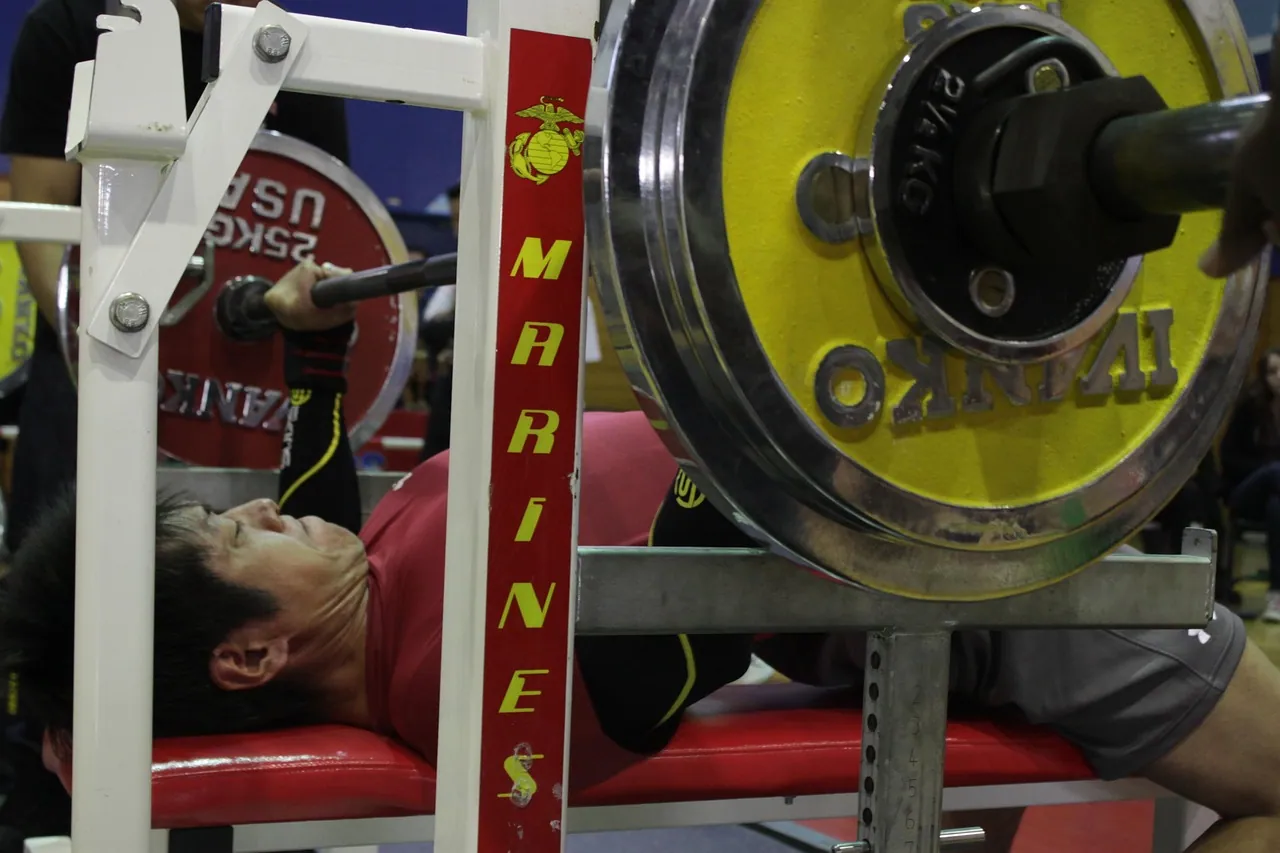
This is the core of the plan. Volume starts moderate, climbs in steps, and resets during planned deload weeks. That’s because the link between sets and muscle growth is real but gradual. In Schoenfeld, Ogborn and Krieger’s 2017 dose-response meta-analysis (15 studies, 34 treatment groups), each extra weekly set per muscle was linked to about 0.37% more growth. Higher-volume groups gained 3.9 percentage points more than lower-volume groups. More sets help, but only if you can recover from them.
| Weeks | Phase | Hard sets per muscle / week | Reps (compound / isolation) | Effort (reps in reserve) | What changes |
|---|---|---|---|---|---|
| 1–2 | Base | 10–12 | 5–8 / 10–12 | 3 RIR | Run the template below as written. Find working weights and log every set. |
| 3–4 | Build | 12–14 | 5–8 / 10–12 | 2 RIR | Add one set to the first two exercises of each day. Start the load progression rule. |
| 5–7 | Accumulate | 14–16 | 5–8 / 10–15 | 1–2 RIR | Add one isolation set for lagging muscles (usually side delts, upper back, calves). |
| 8 | Deload | ~50% of week 7 | Same | 3–4 RIR | Same exercises, half the sets, loads about 10% lighter. Keep eating at your bulk target. |
| 9–11 | Peak | 16–18 (only if recovering) | 4–6 / 8–15 | 1 RIR | One heavy top set on main lifts, then back-off sets. Stay at 14–16 if joints complain. |
| 12 | Deload + reassess | ~50% | Same | 3–4 RIR | Re-test a 5-rep max, measure your waist, and decide whether to keep bulking or switch phase. |
Bulking gym routine: the 4-day upper/lower week (weeks 1–4)
Train Monday, Tuesday, Thursday and Friday, or any four days with at least one rest day after each pair. This split trains every muscle twice a week without six gym visits. Rest times follow the American College of Sports Medicine’s 2009 position stand on progression: 3–5 minutes for heavy work in the 1–6 rep range, and 1–2 minutes for moderate 6–12 rep work.
| Day | Exercise | Sets × reps | Rest | Form cue |
|---|---|---|---|---|
| 1 – Upper (heavy) | Barbell bench press | 4 × 5 | 3 min | Shoulder blades squeezed, feet planted, bar touches lower chest |
| Barbell row | 4 × 6 | 2–3 min | Torso about 45°, pull the bar to your belly button, no hip swing | |
| Standing overhead press | 3 × 6–8 | 2 min | Squeeze glutes, head moves “through the window” at the top | |
| Pull-up or lat pulldown | 3 × 6–10 | 2 min | Start each rep from a full hang, lead with your elbows | |
| Dumbbell lateral raise | 3 × 12–15 | 60 s | Slight forward lean, lift out to the sides, stop at shoulder height | |
| 2 – Lower (heavy) | Back squat | 4 × 5 | 3 min | Brace before you descend, knees track over your toes |
| Romanian deadlift | 3 × 6–8 | 2–3 min | Push your hips back, bar stays against your thighs, flat back | |
| Leg press | 3 × 8–10 | 2 min | Lower back stays on the pad at the bottom | |
| Standing calf raise | 3 × 10–12 | 60 s | 2-second pause at the bottom stretch | |
| 3 – Upper (volume) | Incline dumbbell press | 4 × 8–10 | 2 min | Bench at 30°, elbows about 45° from your torso |
| Chest-supported row | 4 × 10 | 90 s | Chest stays on the pad, pause with elbows behind your body | |
| Seated dumbbell shoulder press | 3 × 10 | 90 s | Stop just short of lockout to keep tension on the delts | |
| Cable fly | 2 × 12–15 | 60 s | Soft elbows, hug a barrel, controlled stretch | |
| EZ-bar curl + overhead triceps extension | 2 × 10–12 each | 60 s | Upper arms stay still, no body swing | |
| 4 – Lower (volume) | Goblet or front squat | 3 × 8 | 2 min | Elbows up, torso upright, sit between your hips |
| Hip thrust | 3 × 10 | 90 s | Chin tucked, shins vertical at the top, squeeze for 1 second | |
| Walking lunge | 3 × 10 per leg | 90 s | Long stride, back knee lightly touches the floor | |
| Lying leg curl | 3 × 12 | 60 s | Hips pressed into the pad, slow 3-second lowering |
Count the sets. Chest gets 4 + 4 + 2 = 10 per week, back gets 4 + 3 + 4 = 11, and quads get about 10. For weeks 3 onward, add sets per the phase table rather than new exercises. If you’re unsure whether upper/lower suits your schedule better than push/pull/legs, our breakdown of the best workout split compares them by days available. For how volume adds up across a single session, see how many sets per workout.

Walkthrough: how to progress each lift, week by week
A bulk without a progression rule is just eating more. Use double progression, which is the simplest method that works:
- Pick a rep range, for example 6–8 on the overhead press.
- Keep the same weight until you hit the top of the range (8) on every set with clean form.
- Then add load. The ACSM 2009 guidance is to increase the load by 2–10% once you can do one or two reps beyond your target. In practice that’s 2.5 kg on squats, deadlifts and bench, and 1–2 kg on presses and rows. Your reps will drop back to around 6, and you build them back up.
- Log everything: date, weight, sets and reps. If a lift stalls for three weeks, check sleep and your weekly weigh-in average before changing the programme.
Bulking exercise plan by training age: beginners vs intermediates
The ACSM stand recommends 2–3 training days a week for novices, 3–4 for intermediates (roughly 6 months or more of consistent training), and 4–5 for advanced lifters. Adjust the plan to match where you are:
- Complete beginners (under 6 months): Do three full-body sessions a week, using the Day 1 and Day 2 heavy lifts in each session at 3 × 8–10. Start around 8–10 sets per muscle. You’ll grow quickly on less volume while technique catches up.
- Intermediates (6 months to 3 years): Run the 4-day plan exactly as written.
- Advanced lifters: Keep the surplus small (closer to 10%), expect slow scale movement, and move towards the upper end of the volume range only if recovery markers such as sleep, joint comfort and bar speed stay good.
- Women: The same plan and set counts work. The weekly gain in kg is smaller only because it’s a percentage of a lighter body weight.
Training at home with dumbbells? Swap in goblet squats, dumbbell RDLs and floor presses, and add reps before weight. A coach on 1-on-1 personal training can adapt the swaps to your equipment and check your form over video.
Bulking diet plan Indian-style: one training day, veg and non-veg
This day comes to about 2,900 kcal, sized for a 75 kg lifter in the lean-bulk range from the calorie table. Scale the portions up or down about 10% for every 7–8 kg of body weight difference. Protein figures are approximate, use raw or dry weights, and will vary by brand and recipe.
| Time | Vegetarian option | Protein (veg) | Non-veg option | Protein (non-veg) | ~kcal |
|---|---|---|---|---|---|
| 8:00 am – Breakfast | 2 besan chillas (60 g besan) stuffed with 50 g paneer + 250 ml milk | ~30 g | 3-egg omelette + 2 multigrain toasts + 250 ml milk | ~33 g | 550–580 |
| 11:00 am – Mid-morning | 200 g curd + 30 g roasted chana + 1 banana | ~14 g | Same | ~14 g | 335 |
| 1:30 pm – Lunch | 1 cup rice + 1 cup rajma (40 g dry) + 1 roti + curd raita + sabzi | ~21 g | 1 cup rice + 150 g chicken curry + 1 roti + salad | ~43 g | 640–750 |
| 5:00 pm – Pre-workout | 2 bread slices + 2 tbsp peanut butter + 1 banana | ~15 g | Same | ~15 g | 455 |
| 8:30 pm – Post-workout dinner | Soya chunk curry (50 g dry) + 2 rotis + 1 cup rice | ~36 g | 150 g chicken tikka or fish + 2 rotis + salad | ~39 g | 530–680 |
| 10:30 pm – Bedtime | 250 ml milk + 15 g almonds | ~11 g | Same | ~11 g | 240 |
| Total | ~127 g | ~155 g | ~2,900 |
Bulking vegetarian diet: closing the protein gap
The veg day reaches about 127 g, or 1.7 g/kg for a 75 kg lifter. That’s above the 1.6 g/kg level from the Morton meta-analysis, but it doesn’t leave much margin. Three swaps reliably add 10–15 g each without much extra cooking: replace the rajma with 100 g tofu or paneer, add a second glass of milk or 150 g of Greek-style hung curd, or add a 30 g soya chunk portion to the lunch sabzi. For more portable options between classes or meetings, our high-protein snacks list gives protein grams per portion. To have portions built around your own thali and budget, book an online nutritionist consultation can set exact portions.

Myths that stall a bulk (and what’s actually true)
Myth: “You need a mass gainer or whey to bulk.” You don’t. The ICMR-NIN Dietary Guidelines for Indians (2024) advise getting protein from food combinations and avoiding protein supplements for building muscle. They cite the same ~1.6 g/kg plateau and warn that high-dose protein powders used for long periods can affect health. A scoop of whey is a convenience, not a requirement. Most mass gainers are mainly sugar and maltodextrin you could get more cheaply from rice, bananas and milk.
Myth: “Eat big, lift big, and the fat will turn into muscle later.” Fat doesn’t turn into muscle. The Garthe 2013 trial showed that a larger surplus raised fat mass by 15% with no added lean-mass benefit. Once you’re past the surplus your muscles can use, extra calories go to fat.
Myth: “No cardio while bulking.” Two or three easy 20–30 minute sessions a week, or daily walking, helps heart health and appetite. Only daily high-intensity cardio on top of a high-volume split gets in the way.
Myth: “Soreness means it worked.” Soreness mostly tells you something was new. Progress shows up in your logbook: a heavier squat, more reps at the same weight.
Bulking vs cutting: when to stop and switch
Bulk while you’re gaining at 0.25–0.5% of body weight a week and your lifts are still going up. Switch to a cut or a maintenance phase when your waist has grown more than about 5 cm, when you no longer like how your clothes fit, or after 16–20 weeks of surplus. A cut normally runs 6–12 weeks at a moderate deficit.
The two phases differ mostly in calories, not exercises. On a cut, keep the same heavy compound lifts, trim total sets by about a third, and keep protein at the top of the range. Many lifters spend 2–4 weeks at maintenance in between.
Troubleshooting your bulk: four common problems
- The scale hasn’t moved in two weeks. You aren’t in a surplus, whatever the app says. Add 150–200 kcal: a tablespoon of ghee on rice (about 110 kcal), a glass of milk, or 20 g of peanuts.
- You’re gaining over 0.5 kg a week and your waist is growing fast. Cut 200 kcal from fried snacks and sweets, not from training-day carbs.
- Lifts have stalled for three weeks. Check your sleep first. The CDC recommends 7 or more hours a night for adults aged 18–60, and a short sleeper will struggle to recover from week 9 volume. If sleep is fine, bring the deload forward by a week.
- You can’t eat enough. Move to five smaller meals and drink more of your calories: lassi, or milk with banana and oats.
Frequently asked questions
How long should a bulking phase last?
Most lean bulks run 12–16 weeks. Anything shorter doesn’t give volume progression time to add up. Past about 20 weeks without a break, fat gain usually starts to outpace muscle gain for most natural lifters, so plan a maintenance or cutting phase after that.
How many calories should I add to bulk?
Add about 10–20% above maintenance, which is 250–500 kcal a day for most Indian adults. Aim to gain 0.25–0.5% of body weight per week, as recommended in a 2019 review of off-season bodybuilding nutrition. Advanced lifters should stay at the low end.
Can beginners follow a bulking workout plan?
Yes. Beginners often gain muscle the fastest. Start with three full-body sessions a week at 8–10 sets per muscle, learn the main lifts properly, and move to the 4-day upper/lower plan after about six months of consistent training.
Do I need cardio while bulking?
Some, yes. Two or three easy 20–30 minute sessions a week, or daily walking, supports heart health and appetite. Avoid daily high-intensity cardio on top of a high-volume lifting plan, because it competes with recovery.
Do I need protein powder or a mass gainer to bulk?
No. The ICMR-NIN 2024 guidelines advise meeting protein needs through food combinations. Around 1.6 g/kg a day from dal, paneer, curd, milk, eggs, soya and meat is enough for most people. Whey is optional and convenient. Mass gainers are mostly sugar.
Can vegetarians bulk on an Indian diet?
Yes. A vegetarian day built on milk, curd, paneer, besan, rajma and soya chunks can reach 1.6–1.8 g/kg of protein. The sample day above reaches about 127 g for a 75 kg lifter. Adding tofu or hung curd raises it further.
How much weight should I gain per month on a lean bulk?
About 1–2% of body weight per month, or roughly 0.7–1.4 kg for a 70 kg person. Beginners can sit near the top of that range. If you’re gaining much faster than this after the first two weeks, most of the extra is fat.
Want the plan adjusted to you? Book a session with a Fitstrot coach. They’ll check your current lifts, set your calorie number from your own weigh-ins, and adjust your 12 weeks as you go.


