
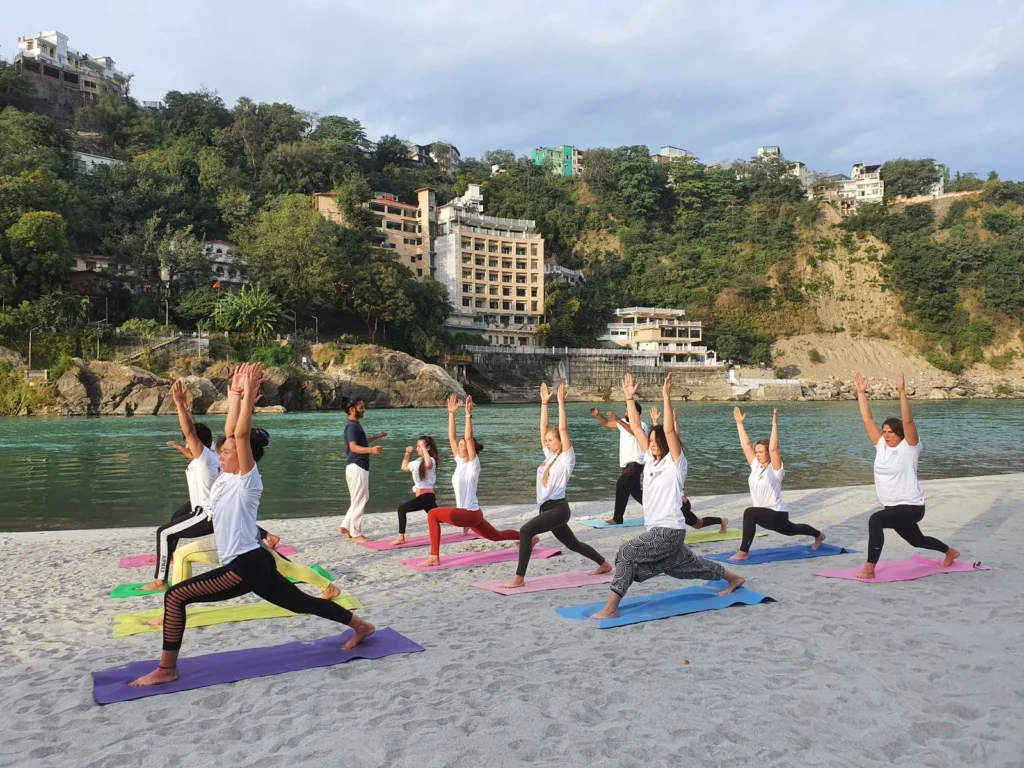
Yoga teacher training in Rishikesh is a residential course, usually 100, 200, 300 or 500 hours, held in the town where the Ganga leaves the Himalayan foothills. Hundreds of schools offer it, and from the outside they look alike: the same river photographs, the same registry badge, the same promise of transformation. This guide does not rank schools or quote prices. It shows what to check, and in what order, before you pay a deposit.
If you want the general picture of what any teacher certification involves, start with our guide to yoga teacher training. This page deals with the decisions that are specific to Rishikesh: choosing among many schools, picking a season, reading a timetable, and knowing what to do when something does not match the brochure.
What should you check before choosing yoga teacher training in Rishikesh?
Check six things before paying: the school’s registration on the official registry; who actually teaches each module; how many classroom hours are really delivered; the class size; what the fee covers, itemised in writing; and the refund terms. A school that answers all six clearly and in writing is usually the safer bet.
| What to check | A good answer looks like | Warning sign |
|---|---|---|
| Registration | The school’s exact name appears on the official Yoga Alliance directory, for the level you are buying (200, 300 or 500) | Only a logo on the website, or a registry search that returns nothing |
| Lead teachers | Named teachers, with their own training, years of teaching and the modules they lead | “Our masters” with no names, or teachers who may change without notice |
| Contact hours | A written day-by-day timetable that adds up to the advertised hours | No timetable offered, or hours that could not fit in a day |
| Class size | A stated maximum, small enough for the teacher to see every student | “Limited seats” with no number |
| Fee inclusions | Itemised: tuition, room type, meals, books, excursions, pick-up | One bundled figure followed by “and more” |
| Refunds | Written terms for cancellation, postponement and missed days | Verbal promises only |
| Syllabus | Modules for anatomy, teaching methodology, philosophy and supervised practice teaching | Mostly asana, with a token lecture block |
How do you verify a Rishikesh school, step by step?
Search the school’s exact name on the Yoga Alliance directory, note the level it is registered for, then ask for a full timetable, teacher names and a written fee breakdown. Finish with a video call of about 15 minutes. These steps take roughly an hour in total and filter out most weak options before any money moves.
- Search the registry yourself. Do not rely on a badge on the school’s site. Many schools have near-identical names, so confirm the spelling and the level (200, 300 or 500). Registration is a private standard, not a government licence.
- Ask for the timetable. A transparent school sends a day-by-day schedule without fuss. Vagueness here is itself useful information.
- Look up the teachers. Ask who leads asana, anatomy, philosophy and teaching practice, and how long each has been teaching.
- Read reviews away from the school’s own website. Look for repeated specifics: food hygiene, room condition, whether the full syllabus was delivered, and how the school behaved after payment.
- Hold a video call. Ask what happens if you are injured, fall ill or need to leave early. The quality of the answer tells you how the school treats students once the fee is paid.
- Get everything in writing before you send a deposit: dates, inclusions, refund terms and the exact certificate you will receive.
Five myths about Rishikesh teacher training
“A Rishikesh certificate guarantees a teaching job.” It does not. Studios hire on how you teach, and a certificate gets you to the audition, not past it. Our guide to yoga instructor jobs explains what employers actually look at.
“An ashram setting means authentic teaching.” The word is used loosely. Surroundings say nothing about whether the teacher can explain alignment, handle injuries or structure a class. Judge the teachers and timetable instead.
“The cheapest course is the best bargain.” Very low fees can mean larger groups, thinner food or fewer hours delivered. The reverse is also true: a high fee is not proof of quality. Compare what is included, not the headline number.
“Registration means the teachers are good.” Registration checks that a curriculum meets a structure. It cannot tell you whether a teacher is patient, clear or safe. Ask to attend a trial class or watch a recorded one.
“Longer is always better.” A continuous 500-hour stay is intense and expensive in time. Many people learn more by completing a 200-hour course, teaching for a year, and then returning for advanced study.
Which course length fits you: 100, 200, 300 or 500 hours?
A 200 hour yoga teacher training in Rishikesh is the standard first teaching certification and usually runs about three to four weeks residential. A 100-hour course is a shorter foundation that does not give a full teaching credential alone. A 300-hour course suits people who already hold a 200-hour certificate, and 500 hours combines both levels.
| Course | Typical residential length | Who it suits | Ask the school |
|---|---|---|---|
| 100-hour | Roughly 10-14 days | Beginners testing ashram-style life; practitioners with limited leave | Does it count towards a later 200-hour, or is it standalone? |
| 200-hour | Roughly 3-4 weeks | First-time trainees who want a recognised entry credential | Is it registered at the 200-hour level under this exact name? |
| 300-hour | Roughly 4-6 weeks | Teachers who already hold a 200-hour certificate | Do you accept my earlier certificate, and what proof do you need? |
| 500-hour | Roughly 2-3 months | Students who want both levels in one long stay | Can I stop after 200 hours and still receive that certificate? |
A 300 hour yoga teacher training in Rishikesh builds on a 200-hour base, so schools normally ask for your earlier certificate before enrolment. A 100 hour yoga teacher training course in Rishikesh works well as a trial: if the food, the teaching style and the daily rhythm suit you, you will know before committing to a longer stay. Be cautious of any course claiming 200 hours in far fewer days, and ask exactly how hours are counted.
What does a day on a residential course look like?
A typical day on a residential yoga teacher training course in Rishikesh starts before sunrise and runs about 8 to 10 hours of structured activity, with long breaks for meals and rest. Most schools teach six days a week and leave one day free. The table shows a representative pattern; timings differ from school to school.
| Approximate time | Block | What to look for |
|---|---|---|
| 5:30-6:30 am | Wake-up, cleansing practice or silent sitting | Is it optional or compulsory, and is it explained safely? |
| 6:30-8:30 am | Pranayama and asana | Named style, class size, hands-on adjustments with consent |
| 8:30-10:00 am | Breakfast and rest | Vegetarian food, hygiene, enough time to eat unhurried |
| 10:00 am-12:30 pm | Philosophy and anatomy lectures | Teacher names, written notes, questions allowed |
| 12:30-3:00 pm | Lunch and free time | Genuine rest, not extra unscheduled sessions |
| 3:00-5:00 pm | Teaching methodology and practice teaching | Peer teaching with structured feedback |
| 5:00-6:30 pm | Second asana or meditation session | Balance between dynamic and slower practice |
| 7:00-9:00 pm | Dinner, chanting or satsang, early sleep | Lights-out time that allows real sleep |
Variety matters. Good schools expose you to more than one approach, for example Hatha yoga fundamentals in the morning and a faster, flowing class in the evening that draws on vinyasa or Ashtanga yoga. If you are drawn to precise alignment, check whether the school teaches anything in the spirit of Iyengar yoga, and whether meditation is taught as a method you can pass on rather than only practised.
When is the best time for yoga teacher training in Rishikesh?
October to April is the most comfortable window for yoga teacher training in Rishikesh, with cool, dry weather that suits two or three practice sessions a day. July to September is monsoon, with heavy rain and occasional road disruption. May and June are hot. December and January mornings can be properly cold, so pack warm layers.
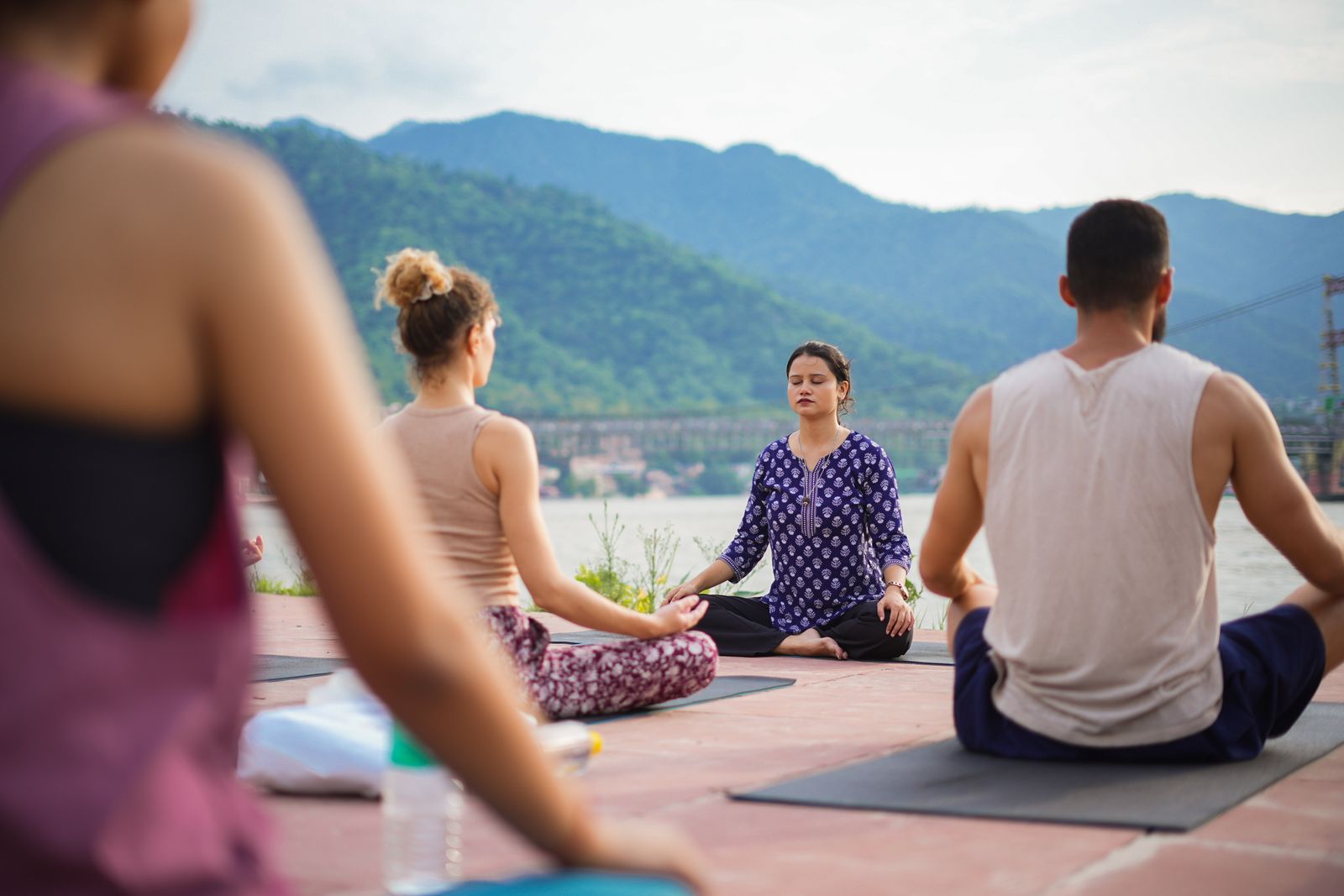
Popular schools tend to fill months ahead in the cooler season, so decide on your dates early. Ask whether outdoor sessions move indoors in the rains and whether the timetable changes. For travel, Haridwar and Dehradun’s Jolly Grant airport are the usual gateways, each roughly 20-25 km from Rishikesh by road, so ask whether pick-up is included.
What if something goes wrong during the course?
Raise it the same day, in writing, with the school’s coordinator, and refer to the terms you were given before paying. Problems with food, rooms, injuries or missing classes are far easier to fix in the first three days than in the last week, when students often stay quiet to protect their certificate.
- Pain or injury: stop, tell the teacher, and see a local doctor if it persists. Never push through pain for the sake of a certificate.
- Syllabus not delivered: compare each day with the timetable you were sent, note the gaps in writing and ask how they will be made up.
- Food or hygiene concerns: report it early and specifically, with dates. Carry basic oral rehydration salts and a personal water bottle.
- Exhaustion: two practices plus lectures for weeks is demanding. Ask for modifications, protect your sleep, and skip optional extras.
- Fee or refund dispute: go back to your written terms. This is why you collect them before paying.
Is it right for you? Choosing by your situation
First-timers and beginners
You do not need advanced flexibility, but you do need a steady practice. Spend three to six months practising a few times a week before you travel, and read up on the types of yoga and the benefits of yoga so the vocabulary is familiar from day one.
Working professionals
A 200-hour course needs a block of leave of roughly a month. If that is not possible, a shorter 100-hour course or a split plan, with the second level on a later trip, is more realistic than rushing a longer one.
People with injuries or health conditions
Talk to your doctor before enrolling if you have a back, knee or heart condition, high blood pressure or are pregnant. Tell the school in advance, because intensive breathing practices and long sitting are not suitable for everyone. Our guide to yoga for back pain is a useful starting point for building safe habits first.
Anyone who cannot travel for a month
Residential immersion is valuable, but it is not the only route to skill. You can build consistency, strength and breath control at home with online yoga classes and decide on a residential course once your daily practice is stable.
What can you do after you return?
A recognised certificate lets you apply for studio, gym and wellness-centre roles, teach private or corporate sessions, or build an online practice. Outcomes vary widely, and none of this is guaranteed. The strongest graduates keep practising and teach regularly in the first year, usually starting with friends, community classes or a studio trial slot.
Many then specialise, for instance in the slower, longer holds of yin yoga or in back-care teaching.
Frequently asked questions about yoga teacher training in Rishikesh
Is yoga teacher training in Rishikesh worth it?
It can be, if you choose a verified school and your goal fits a residential format. The value comes from daily immersion, structured teaching practice and time away from distractions. It is less worth it if you pick on price or photographs alone, or expect the certificate to guarantee income.
How do I know if a Rishikesh yoga school is genuine?
Search its exact name on the official Yoga Alliance directory yourself, then ask for a day-by-day timetable, named teachers and an itemised fee in writing. Read independent reviews, and hold a video call. A genuine school answers plainly and does not pressure you to pay quickly.
Can I join a yoga teacher training course in Rishikesh with no experience?
Many 200-hour courses accept students with only a basic, regular practice, since commitment matters more than flexibility. Complete beginners usually do better after three to six months of steady practice, or after starting with a shorter 100-hour course. Always check the school’s own entry requirements.
Is a certificate from Rishikesh valid worldwide?
Registration with Yoga Alliance is widely recognised by studios abroad, but it is a private standard, not a government licence, and some employers ask for more. Confirm that the school is registered at the level you are buying, and ask what your certificate will state.
How early should I book yoga teacher training in Rishikesh?
For the busy October to April season, start researching three to four months ahead, since popular schools often fill weeks or months in advance. Booking early leaves time to verify registration and collect written terms.
Not sure you can commit to a month away yet? Build your daily practice first with Fitstrot’s live online yoga classes, then choose your school with a stronger foundation.


