

The best online yoga classes are not the ones with the most followers or the slickest app. They are the ones where a qualified teacher can see you, correct you and move you forward safely, at a time you will actually show up. India now has thousands of options, from free YouTube channels to private sessions on Zoom, and prices range from ₹0 to several thousand rupees a month. This guide compares the four formats side by side, shows what fees buy you, explains how to check a teacher’s certificate, and gives beginners a four-week starting plan.
A disclosure: Fitstrot runs its own live yoga classes. We have tried to be fair to every format and clear about where ours fits and where it does not.
What Makes the Best Online Yoga Classes Worth Paying For?
The best online yoga classes combine a certified teacher (for example, Yoga Certification Board or Yoga Alliance registered), a small enough batch for the teacher to watch your form on camera, a fixed schedule you can keep, and safe modifications for your body. Price matters less than feedback: an unwatched class is a video, however live it is.
A recorded video can teach you the shape of a pose. It cannot tell you that your front knee is drifting past your ankle in Warrior II. Feedback is the product you are paying for; music, streaming quality and app design are packaging.
Evidence on online delivery is encouraging, though still young. A 2021 systematic review in Complementary Therapies in Medicine pooled eight studies of online hatha yoga and found it feasible and acceptable, with participants reporting overall satisfaction, though engagement varied between groups.
Live, Recorded, App or 1-on-1: The Four Formats Compared
Decide on the format before comparing providers. Most disappointment comes from buying the wrong format, not the wrong brand.
| Factor | Recorded videos (YouTube, courses) | Yoga app | Live group class (Zoom/Meet) | Private 1-on-1 online |
|---|---|---|---|---|
| Real-time form correction | None | None, or limited AI pose detection | Yes, if the batch is small and cameras are on | Yes, constant |
| Schedule flexibility | Any time | Any time | Fixed slots (usually morning and evening) | Booked around you |
| Accountability | Low | Low to medium (streaks, reminders) | High (a teacher notices when you miss class) | Highest |
| Personalisation | None | Some (level-based plans) | Modifications per person | Fully tailored sequences |
| Typical cost | Free | Free to low monthly | Moderate monthly | Highest, often per session |
| Best for | Trying yoga, refreshing known poses | Self-motivated people with some experience | Beginners and regulars who need structure | Injuries, specific goals, irregular hours |
| Main risk | Practising poor alignment for months | Dropping off after the first few weeks | Overcrowded batches where no one is watched | Cost; teacher quality varies widely |

Live online yoga classes: why the batch size decides everything
Live online yoga classes sit in the middle of the table for good reason. They give you a fixed time and a teacher’s eye, at a fraction of the cost of private sessions. But “live” only helps if the teacher can actually see you. On a standard laptop screen, a teacher can realistically watch 10 to 15 video tiles at once. In a batch of 60 or 100, you are effectively watching a live video. Always ask how many people are in each batch and whether cameras are expected on.
When recorded videos and apps are the right call
Recorded content is not second-rate. If you already know the basic poses, cannot commit to fixed times, or simply want to test whether yoga suits you before paying, it is a sensible start. Our guide to the best free yoga apps compares the main options.
Online Yoga Classes Fees in India: What ₹ Actually Buys You
In India, online yoga fees typically run from free (recorded videos) to roughly ₹300–₹3,000 a month for live group classes, and around ₹500–₹2,000 per session for private 1-on-1 teaching. These are broad market estimates; the number of live sessions per month and batch size matter more than the headline price.
Headline prices mislead because providers package classes differently. The fairest comparison is cost per live session and how many people share the teacher’s attention.
| Format | Estimated monthly cost | Estimated cost per session | Typical batch size | What to confirm before paying |
|---|---|---|---|---|
| Recorded videos / YouTube | ₹0 | ₹0 | Unlimited | Teacher’s credentials; beginner-level playlists |
| Yoga app (premium tier) | ₹0–₹500 | Not applicable | Not applicable | Auto-renewal terms; free trial length |
| Large live group (30+ people) | ₹300–₹1,500 | ₹15–₹75 | 30–200 | Whether anyone checks your form |
| Small-batch live group (up to 15) | ₹1,000–₹3,000 | ₹80–₹250 | 5–15 | Sessions per week; rescheduling policy |
| Private 1-on-1 online | ₹6,000–₹24,000 (at 3 sessions a week) | ₹500–₹2,000 | 1 | Teacher’s level of certification and specialism |
| Fitstrot live yoga (verified 22 Sept 2026) | ₹1,299 monthly; ₹3,499 quarterly | About ₹108 (12 sessions a month) | Up to 15 | Current pricing on the service page |
Three money rules that hold across every provider:
- Divide by sessions, not months. ₹2,000 for 20 live classes (₹100 each) beats ₹1,000 for 4 (₹250 each).
- Start monthly, then commit. Take one month before paying for a quarter or a year. Longer plans are only cheaper if you keep attending.
- Read the refund and rescheduling policy. Missed-class rules matter more than discounts if you travel or work shifts.

Is Your Online Yoga Teacher Actually Certified?
Ask for a verifiable credential. In India, the Yoga Certification Board under the Ministry of Ayush certifies instructors at levels from Yoga Protocol Instructor (Level 1) to Yoga Master (Level 4). Internationally, Yoga Alliance registers teachers as RYT 200 or RYT 500 after training at a registered school.
The Yoga Certification Board (YCB) describes itself as the only board set up by any government for yoga certification. Its ladder runs from Yoga Volunteer and Yoga Protocol Instructor, through Yoga Wellness Instructor and Yoga Teacher and Evaluator, to Yoga Master, with separate therapy tracks (Assistant Yoga Therapist, Yoga Therapist). A teacher’s level tells you roughly what they are trained to do: an entry-level instructor certificate is a different qualification from the therapy track you would want for, say, a slipped disc.
Yoga Alliance works differently. It is a registry: teachers train at a Registered Yoga School, then register as RYT 200 (the foundational 200-hour training) or RYT 500. The “E” in E-RYT marks extra teaching experience, and there are specialist credentials for prenatal (RPYT) and children’s yoga (RCYT). Cleveland Clinic’s guidance on choosing a yoga class advises that instructors be certified through Yoga Alliance or another prominent organisation, and recommends hatha as the best starting style for beginners.
Neither credential guarantees a great teacher, and skilled teachers from traditional lineages may hold neither. But a credential gives you something to verify, so if a provider cannot name the certificate, ask directly.

Scorecard: Shortlisting the Best Online Yoga Classes in India
Use this checklist during a trial class. A class that fails two or more checks is probably not the right fit for you, whatever its reputation.
| Check | What good looks like | What to question | How to test it |
|---|---|---|---|
| 1. Teacher credential | Named YCB level, RYT 200/500 or recognised institute | “Certified experts” with no detail | Ask which certificate and from where |
| 2. Batch size | Around 15 or fewer in a live class | No stated limit; 50+ tiles on screen | Count the tiles in your trial |
| 3. Individual feedback | Teacher calls you by name and corrects you at least once | Class runs like a broadcast | Deliberately misalign a pose slightly and see if it is noticed |
| 4. Health screening | Asks about injuries, blood pressure, pregnancy before class 1 | No questions asked | Note whether a form or call happens |
| 5. Level structure | Beginner batches or clear modifications | One class for all levels with advanced poses | Ask what week 1 looks like |
| 6. Schedule and make-ups | Morning and evening slots; missed-class policy | One slot; no rescheduling | Read the policy page |
| 7. Pricing clarity | Sessions per month and refund terms in writing | Pressure to buy a long plan on day one | Calculate cost per session |
Check 4 deserves extra weight. The US National Center for Complementary and Integrative Health notes that people with high blood pressure, glaucoma, balance problems, spine disease or earlier injuries may need to modify or avoid some poses, and advises beginners to avoid extreme poses such as headstands, shoulder stands and full lotus. A teacher who never asks about your health cannot make those adjustments.
Myth Check: “Online Yoga Is Less Safe Than a Studio”
There is no good evidence that supervised online yoga is riskier than in-person yoga. A 2026 randomised feasibility trial of 34 veterans with chronic pain reported no serious adverse events with tele-yoga, and 83% retention versus 68% in person. Risk depends mainly on supervision, pose choice and pace, not the screen.
That trial, published in BMC Complementary Medicine and Therapies, ran 12 weekly 75-minute classes. Class attendance was similar (71.8% online vs 77.1% in person), and only the tele-yoga group showed a statistically significant drop in pain. It is a small feasibility study, so treat it as encouraging rather than proof that online is better. What it does show is that well-run online yoga is not inherently second-class.
Yoga in general is not risk-free, wherever you do it. A 2018 systematic review of nine observational studies covering 9,129 yoga practitioners found a 12-month prevalence of adverse events of 4.6%, with serious events in 1.9%. Most were mild sprains and strains, and overall risk was comparable to non-practitioners, though meniscus (knee) injuries were more common. The authors concluded there is no need to discourage yoga for healthy people, but that anyone with a serious illness should get medical advice first.
The honest summary: online yoga shifts some responsibility to you. You need a clear space, a teacher who can see your whole body, and the discipline to skip a pose that hurts.
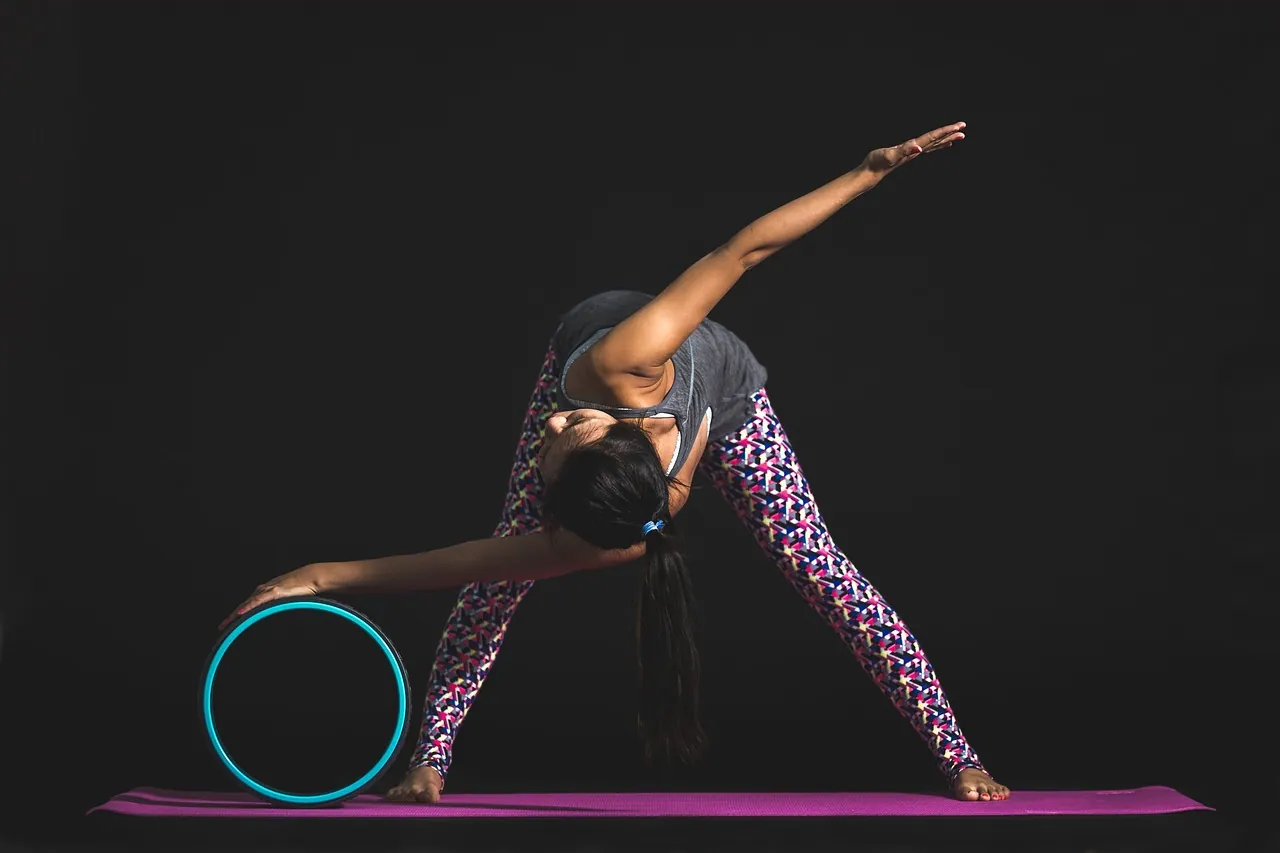
Online Yoga Classes for Beginners: Your First Four Weeks
In your first month the goal is habit, breath control and safe basics, not flexibility. This plan assumes three live classes a week; use it to judge whether a beginner programme is building sensibly.
| Week | Classes per week | Key practice | Rounds / hold | Rest | Form cue to listen for |
|---|---|---|---|---|---|
| 1 | 3 × 45 min | Tadasana, cat-cow, Balasana, diaphragmatic breathing | 3 rounds; holds of 3–5 breaths | Child’s pose, 30 s between rounds | “Ribs down, weight even on both feet” |
| 2 | 3 × 45–50 min | Half Surya Namaskar, Virabhadrasana I and II, Setu Bandhasana | 4 half-rounds; holds of 5 breaths | 30–45 s | “Front knee over ankle, not past the toes” |
| 3 | 3 × 50–60 min | Full Surya Namaskar (knees-down option), Trikonasana, Bhujangasana | 4–6 rounds; holds of 5–8 breaths | 30 s | “Lengthen the spine before you bend sideways” |
| 4 | 3 × 60 min | Full Surya Namaskar, Vrikshasana, Paschimottanasana (bent knees), Anulom Vilom | 6–8 rounds; holds of 8 breaths; 5 min pranayama | 30 s; 5 min Shavasana | “Hinge from the hips; keep the back long, not rounded” |
Three signs a beginner programme is too fast: you are shown headstands or deep backbends in the first month, you regularly cannot speak while holding a pose, or you finish with joint pain rather than muscle tiredness. For a visual reference of the poses above, see our guide to yoga poses. If you later want a more vigorous, structured practice, Ashtanga yoga is a common next step once the basics feel steady.
How much should you do? The WHO fact sheet on physical activity notes that 31% of adults worldwide (about 1.8 billion people) do not reach the recommended 150 minutes of moderate activity a week. Three 50-minute yoga classes add up to 150 minutes, though gentle yoga is lighter than brisk walking, so pairing it with walking or another activity is a sensible way to cover the whole target.
Which Class Suits You? Picks by Life Stage and Goal
Yoga classes online for women juggling work and home
For many women in India, the real constraint is time windows: before the household wakes, after children sleep, or during a lunch break. Look for providers with early-morning (6–7 am) and late-evening (8–9 pm) slots, a make-up policy, and the option of women-only batches if that makes you more comfortable on camera. When comparing the best online yoga classes for women, ask whether the teacher adapts practice around menstrual discomfort, post-partum recovery or conditions such as PCOS rather than offering one fixed routine.
Prenatal yoga classes online
Pregnancy is the one situation where teacher choice is non-negotiable. Get your doctor’s approval first. The NHS advises that your yoga teacher should be properly qualified and know you are pregnant and how many weeks, that you avoid lying flat on your back for long periods after 16 weeks, and that you should be able to hold a conversation while exercising. NCCIH also advises against hot yoga during pregnancy. A Yoga Alliance RPYT or a teacher with specific prenatal training is a sensible filter. Do not join a general class and simply “skip the hard bits”.

Personalized yoga classes online and choosing a personal yoga trainer online
Private sessions make sense if you have a specific problem (recurring back pain, a recent injury, a stiff post-surgery shoulder), an irregular schedule, or a goal a group class cannot address. When hiring a personal yoga trainer online, ask for a first assessment call, a written plan for the first month, and how progress will be measured. A therapeutic goal is better matched to a teacher with a therapy-track credential than to a general instructor. If your goal is broader fitness, combining yoga with 1-on-1 personal training can cover strength work that yoga alone does less of.
Older adults and people with health conditions
NCCIH notes higher emergency department visit rates for yoga injuries among people aged 65 and over. Choose a slower style (hatha, chair or restorative), a small batch, and a teacher who asks about balance and blood pressure.
Troubleshooting Your Home Setup
Most online classes that “don’t work” fail for practical reasons that are easy to fix:
- The teacher cannot see you properly. Place the phone or laptop at floor level about 2–2.5 metres away, side-on to the mat, so your full body fits in the frame lying down and standing up.
- The video lags. Turn off your camera’s HD mode, close other apps, and sit nearer the router. Audio matters more than video: if bandwidth is tight, keep the sound and drop video quality.
- The floor is slippery or hard. A 4–6 mm mat on a tiled Indian floor is usually enough; add a folded blanket under the knees for kneeling poses.
- You keep missing classes. Pick the slot you can make 80% of weeks, not the slot you wish you could make. Put it in your calendar as a meeting.
Where Fitstrot’s Online Yoga Classes Fit
Since this is our core service, here is exactly what it includes, as listed on our service page on 22 September 2026, so you can run it through the same scorecard as everyone else:
- 3 live sessions a week (12 a month), each 45 minutes to 1 hour, with morning and evening slots.
- Batches of up to 15 people, so the teacher can correct form in real time. Camera on is recommended but optional.
- Beginner-friendly formats, weekly progress tracking, WhatsApp support and flexible rescheduling for missed sessions.
- A personalised nutrition plan included, based on lifestyle, medical conditions and goals.
- ₹1,299 a month or ₹3,499 a quarter, with no long-term lock-in.
Where it may not fit: if you want daily classes or fully self-paced video, a recorded library or app will suit you better. For therapy for a medical condition, see your doctor first.
Frequently Asked Questions
Which are the best online yoga classes in India?
There is no single best provider for everyone. The best online yoga classes for you have a certified teacher, a batch small enough (around 15 or fewer) for real-time correction, time slots you can keep, and clear pricing. Take a trial class and score it against the seven checks in this guide.
How much do online yoga classes cost in India?
By our September 2026 estimates, recorded videos are free, apps cost ₹0–₹500 a month, live group classes roughly ₹300–₹3,000 a month, and private 1-on-1 sessions about ₹500–₹2,000 each. Compare cost per live session and batch size, not just the monthly fee.
Are live online yoga classes better than recorded videos?
For beginners, usually yes, because a teacher can correct alignment and you have a fixed schedule. Recorded videos suit people who already know the basics or need total flexibility. Many people combine two or three live classes a week with short recorded sessions.
Is online yoga safe for beginners?
Yes, when supervised and paced properly. A 2018 review found a 12-month adverse event prevalence of 4.6% among yoga practitioners, mostly mild sprains and strains. Start with a beginner batch, tell the teacher about any health conditions, and avoid headstands and deep backbends in the first month.
What certification should an online yoga teacher have?
In India, look for a Yoga Certification Board (Ministry of Ayush) level such as Yoga Protocol Instructor or Yoga Wellness Instructor. Internationally, Yoga Alliance RYT 200 or RYT 500 is common. For pregnancy or therapy, look for specialist prenatal or yoga therapist credentials.
Can I do prenatal yoga classes online?
Yes, with your doctor’s approval and a teacher trained in prenatal yoga who knows how many weeks pregnant you are. Avoid hot yoga, and avoid lying flat on your back for long periods after 16 weeks, as the NHS advises.
How many online yoga classes a week should I take?
Three classes of 45–60 minutes a week is a practical starting point. That gives enough repetition to learn poses and build a habit while leaving recovery days. Add walking or other activity to reach the WHO’s 150 minutes of moderate activity a week.
What do I need for my first online yoga class?
A non-slip mat (4–6 mm), about 2 metres of clear floor, a phone or laptop placed at floor level showing your full body, a stable internet connection, and comfortable clothing. A cushion or folded blanket and a sturdy chair help with modifications.
Try it before you commit: book a slot in a Fitstrot live yoga class, bring your checklist, and judge us on the same seven points you would use for anyone else.


