
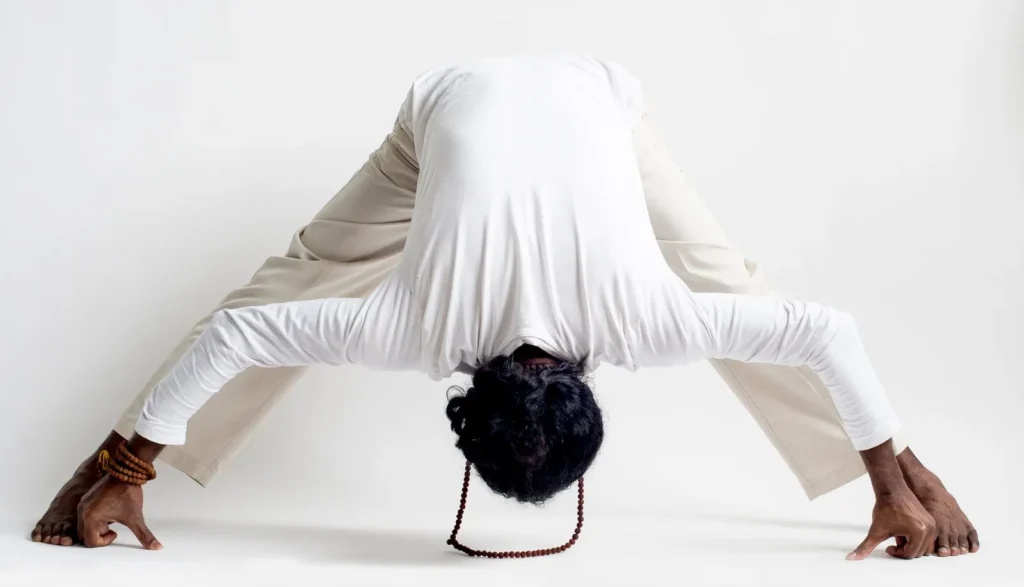
In yoga, saucha means purity or cleanliness, and it is the first of the five niyamas, the personal observances in Patanjali’s Yoga Sutras. It works on three levels: a clean body and space, a clear mind, and honest motives. This guide explains the saucha meaning without the jargon, separates it from plain hygiene, and gives you a daily routine, a troubleshooting table and safety notes for the traditional cleansing techniques.
What does saucha mean in yoga?
Saucha (Sanskrit shaucha) means purity or cleanliness and is the first niyama, or inner observance, of Patanjali’s eight-limbed yoga. It works on three levels: the body and its surroundings, the habits of the mind, and the honesty of your motives. In Hindi the nearest everyday word is shuchita, cleanliness with a sense of purity.
The root idea is clearing, not decorating. Think of wiping a fogged window: the view was always there, and saucha is the habit of removing whatever blocks it. Patanjali lists it beside santosha (contentment), tapas (disciplined effort), svadhyaya (self-study) and Ishvara pranidhana (surrender to something larger than the ego). Together they prepare the mind for concentration and meditation. Classical teachers link steady saucha with a lighter, more cheerful and focused mind, but treat that as a traditional description of practice, not a medical promise.
Saucha at a glance: what it covers
Teachers usually split saucha into bahya saucha (outer purity) and antar saucha (inner purity). The table below turns each layer into something you can actually do in an Indian home or flat.
| Layer | Traditional name | What it covers | Everyday example |
|---|---|---|---|
| Body and space | Bahya saucha | Bathing, oral care, clean clothes, a wiped mat, fresh air | Wash before practice, mop the floor patch, wash mat covers and cloths weekly |
| Food and intake | Bahya saucha | What you eat, drink, watch and read | Fresh dal, sabzi and roti instead of stale or heavily fried food; a screen cut-off before bed |
| Mind | Antar saucha | Looping thoughts, envy, resentment, comparison | Write down what is looping for five minutes; mute one draining group chat |
| Motives | Antar saucha | Honesty with yourself, no hidden agendas | Ask “why am I buying, posting or saying this?” before you do it |
Why is saucha the first niyama?
Saucha comes first among the niyamas because clearing physical and mental clutter makes the other four observances easier to keep. It is hard to feel contentment, sustain daily effort or study yourself honestly while distracted and weighed down. It also follows the yamas, which settle how you treat others, so attention can turn inward.
The yamas and niyamas form the ethical base of classical yoga, taught before any posture. The yamas are restraints in how we act toward others: ahimsa (non-harming), satya (truthfulness), asteya (non-stealing), brahmacharya (wise use of energy) and aparigraha (non-grasping). Many teachers point out that you cannot cultivate inner clarity while still causing harm, lying or grasping outward. Saucha is the natural next question: now that my conduct is cleaner, how do I clear myself?
Myth check: saucha is not just hygiene
Washing your hands is hygiene. Washing them with attention, without resentment or rush, as part of a wider commitment to a clear mind and orderly surroundings, is closer to saucha. The difference is attitude: saucha is a lived sensitivity to what feels clean versus cluttered, not a fixed standard of spotlessness.
Two honest cautions. First, saucha is not compulsive cleaning. If washing, checking or arranging has become anxious or hard to stop, that is a reason to speak to a doctor or mental health professional, not to practise harder. Second, saucha is never a reason to look down on other people or foods as “impure”. That runs against ahimsa and misses the point: the work is on your own clutter, not anyone else’s. Honest speech matters here too, which is where satya and saucha meet.
How do you practise saucha every day?
A workable daily saucha routine takes about 13 minutes of active effort: three minutes of morning washing and fresh air, two minutes preparing your practice space, three minutes of quiet breathing after practice, five minutes writing down looping thoughts in the evening, plus a screen-free half hour before sleep. Repeat it for two weeks before adding anything.
| When | Action | Time | What it clears |
|---|---|---|---|
| Morning | Wash face, clean teeth and tongue, open a window | About 3 min | Body, stale air |
| Before practice | Wipe the mat, clear the floor, silence the phone | About 2 min | Space, distraction |
| After practice | Sit still, slow natural breathing, no breath-holding | About 3 min | Mental static |
| Meals | Eat sitting down, phone away, stop when comfortably satisfied | Your normal meal time | Scattered attention |
| Evening | Write five unedited lines about whatever is looping in your head | About 5 min | Mind |
| Night | Screens off, lights low | 30 min before sleep | Sensory overload |
How does saucha show up on the mat?
On the mat, saucha means a clean mat and floor, clothes washed after use, a gap of roughly two to three hours after a full meal, a quiet phone and one clear intention for the session. Inside the pose it means doing only what the body needs, with clean lines of breath and attention rather than strain.
Wipe the mat with a damp cloth and a drop of mild soap, let it dry fully before rolling it, and keep your practice corner free of things that pull your eye. Sequencing is part of saucha too. A rushed, shapeless session adds mental clutter, while a clear structure, whether a flowing vinyasa yoga class or a slower hatha yoga session, frees you from asking “what next?” so attention can stay on movement and breath. If you are working with a sore back, a gentle sequence like yoga for back pain is saucha toward the body: it removes strain instead of adding it. Anything that causes sharp or radiating pain is a reason to stop and check with a doctor.
What does sattvic eating have to do with saucha?
Traditional texts link saucha to sattvic food: fresh, simple and easy to digest, as opposed to food that is heavy, stale or over-stimulating. In practice, notice which meals leave you clear and light and which leave you foggy and sluggish, then adjust gently. It is a guide to awareness, not a rulebook.
For most Indian households that means things like moong dal khichdi, seasonal sabzi, rotis, curd or buttermilk, fruit and a handful of nuts, eaten fresh. Foods that tend to leave people dull are heavily fried snacks, meals reheated several times, packaged ultra-processed food and sugary drinks. Late-evening chai or coffee can cloud sleep, and sleep is part of mental clarity.
A few honest limits. No food or “detox” plan cleanses the body; your liver and kidneys already do that. Saucha does not ask you to cut food groups, fast hard or feel guilty after a wedding thali. If you have diabetes, kidney problems or any other medical condition, follow your doctor or dietitian rather than a general yogic rule. The three qualities of sattva (clear), rajas (agitated) and tamas (dull) are also explored in the Bhagavad Gita and yoga tradition, where they describe not only food but action, thought and speech.
Troubleshooting: when saucha feels hard
Most people stall for the same few reasons. Here is what is usually happening and a small fix for each.
| What you notice | What is usually going on | Saucha-friendly fix |
|---|---|---|
| My space is messy again in two days | One big clear-out, no daily habit | Keep one corner or one surface clear and do a two-minute reset each evening |
| Cleaning feels stressful or compulsive | Perfectionism, which is the opposite of clarity | Cap tidying at 10 minutes; speak to a professional if it feels distressing or hard to stop |
| I cannot stop scrolling | Attention clutter | Keep the phone in another room during practice; set an app limit for the evening |
| Journaling feels pointless | Trying to write well | Write five messy lines and do not reread them |
| My family does not share the habit | Shared home, different standards | Claim one small corner and lead by example; do not lecture |
| I feel guilty about “impure” food | Rules have replaced awareness | Drop moral labels; notice how you feel one to two hours after eating |
Are the shatkarma cleansing techniques safe for beginners?
Shatkarmas such as jala neti (nasal rinse) and kunjal (induced vomiting) are advanced hatha yoga cleansing methods, and you do not need them to practise saucha. Learn them in person from a qualified teacher. Avoid forceful ones in pregnancy, or with high blood pressure, ulcers, a hernia or recent surgery, and check with your doctor first.
If you do use a nasal rinse under guidance, the water must be boiled and cooled or distilled, never straight from the tap. Forceful breathing practices and breath-holds carry their own contraindications, so beginners should stay with slow, natural breathing until a teacher has assessed them. Everyday saucha, meaning a clean space, light food, a quiet phone and honest thinking, needs none of these techniques.
Saucha for different routines
- Students and exam season: clear the study desk to one subject, close extra tabs, and take a five-minute quiet break each hour. A calm routine like online yoga for stress relief pairs well with this.
- Desk workers: spend the last five minutes of the day clearing your desk and inbox. Your next morning starts lighter, which is saucha in a very practical form.
- Busy parents: pick one corner, not the whole house. Ten minutes of mindful sitting counts, and meditation for beginners shows how to build it up slowly.
- Seniors, injury or chronic illness: saucha is a niyama, not a posture, so it needs no flexibility. Decluttering, light fresh food, journaling and a guided rest practice such as yoga nidra all count in full.
How is saucha different from tapas?
Saucha clears away what clouds you, while tapas is the sustained, disciplined effort that builds a practice over time. Saucha is subtraction, such as a tidy space and a quieter mind. Tapas is steady heat: showing up daily and working through resistance. Saucha without tapas can turn passive; tapas without saucha can turn rigid and joyless.
A clear, uncluttered space makes it easier to do the disciplined work of turning up on the mat every day, so use them as a pair. Clear first, then commit. Contentment (santosha) is the third partner: a mind that is not always grasping for more finds both clearing and effort easier.
Saucha FAQs
Is saucha just about being physically clean?
No. Physical cleanliness is one layer. Saucha also covers mental clarity, meaning a mind free of needless clutter and negative loops, and emotional honesty. A cluttered environment often feeds a cluttered mind and the reverse, so the practice works on all levels together rather than through hygiene alone.
What is the opposite of saucha?
The opposite is often called ashaucha, or impurity. It can show up as physical uncleanliness, but also as mental confusion, dishonesty with yourself, or being weighed down by unresolved envy and resentment. In this context impurity means anything that clouds clear perception or honest self-understanding.
Is saucha a yama or a niyama?
Saucha is the first of the five niyamas, not a yama. The yamas, including ahimsa, satya and brahmacharya, govern conduct toward others, while the niyamas govern personal observances directed inward. Together they make up the first two limbs of Patanjali’s eight-limbed path.
What does saucha mean in Hindi?
The closest everyday Hindi words are shuchita (cleanliness) and pavitrata (purity). Note that “shauch” in daily Hindi can also mean going to the toilet, so teachers often use shuchita to avoid confusion. In yoga the word carries the wider sense of clearing body, mind and motives.
Can I practise saucha without doing yoga poses?
Yes. Saucha is an observance, not a posture, so it needs no flexibility or fitness. You can practise it fully by decluttering your space, eating fresh food, writing out looping thoughts and being honest with yourself. Many people notice a lighter, less scattered feel within a week or two of small daily habits, though results vary.
To practise saucha with guidance, join a live session in Fitstrot’s online yoga classes and ask your instructor to show you a short clean-space, clear-mind routine you can repeat every day for the first two weeks.


