

If you have tried mindfulness meditation and walked away thinking “my mind just will not stop”, you were probably aiming at the wrong target. Mindfulness is not about silencing thoughts. It is the skill of noticing where your attention is and bringing it back to the present, on purpose and without scolding yourself. This guide stays on that one skill: the practices (breath, body scan, walking, eating), how to fit them into an ordinary Indian day, what to do when a session goes badly, and when to ask for professional help.
If you want a first-week primer on sitting practice, start with our guide to meditation for beginners. For a catalogue of styles, see meditation techniques, and for the wider picture, our meditation overview. Here we go narrower and more practical.
What is mindfulness meditation, and how is it different from other meditation?
Mindfulness meditation is the deliberate practice of paying attention to the present moment, such as your breath, body sensations or sounds, while noticing thoughts without judging them. Sessions usually run 5 to 20 minutes. Unlike mantra or single-point concentration, the aim is not to block thoughts but to notice when attention drifts and bring it back.
The whole practice is a three-part loop: notice that your mind has wandered, name it silently (“thinking”, “planning”), and return to your anchor. You will repeat it dozens of times in ten minutes. That is not failure. Each return is one repetition of the skill, like one rep of an exercise.
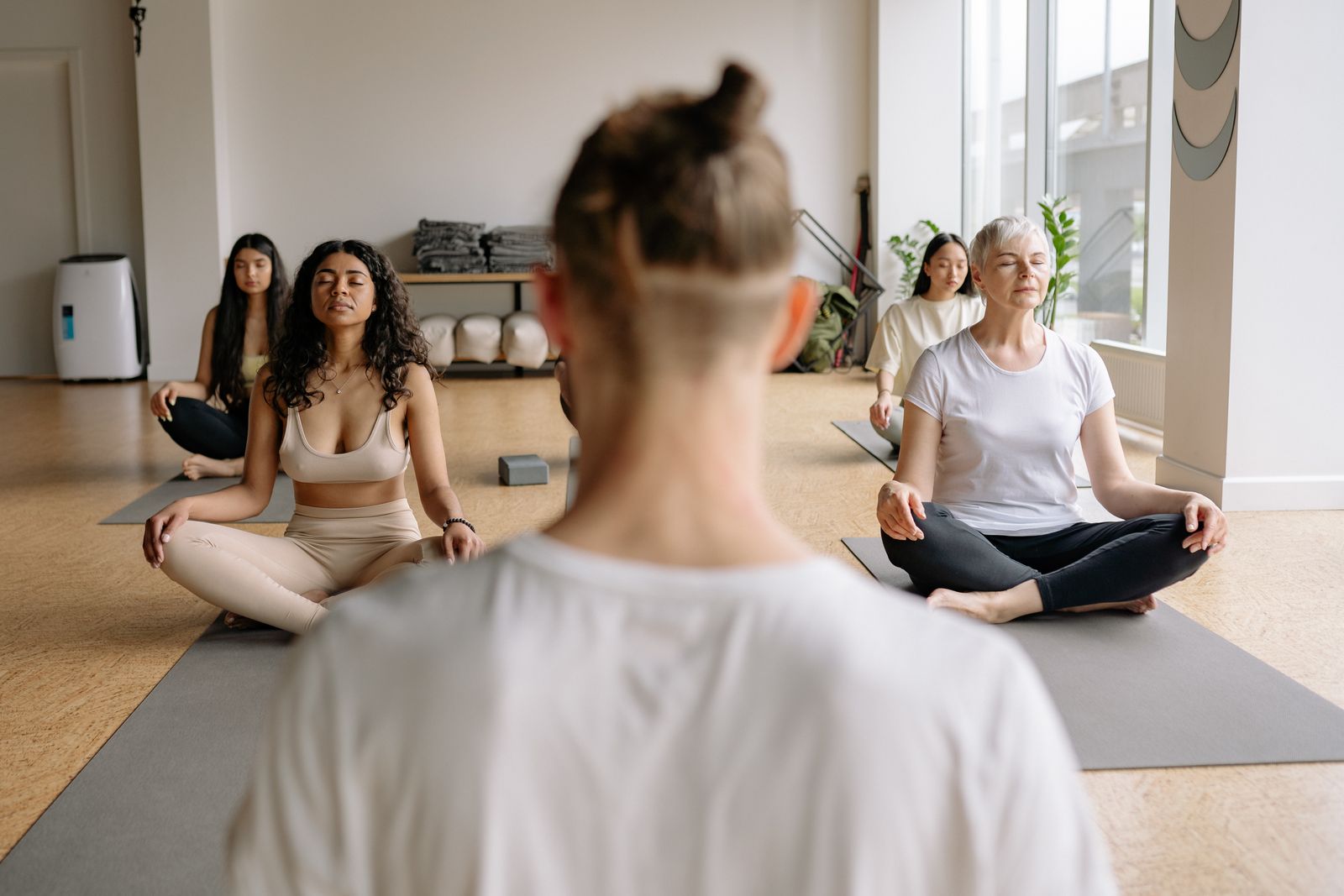
A 10-minute mindfulness session, step by step
You need no app, cushion or special room. A chair works as well as the floor. Set a gentle timer so you are not checking the clock.
- Minute 0 to 1: settle. Sit with your back upright but not rigid, hands resting on your thighs. Close your eyes or lower your gaze. Take three slow breaths.
- Minute 1 to 3: find the breath. Let breathing return to its natural rhythm. Notice where you feel it most clearly: the nostrils, chest or belly. Rest your attention there.
- Minute 3 to 8: do the loop. When a thought pulls you away, silently label it and come back to the breath. Do not try to deepen or fix the breath. Just watch it.
- Minute 8 to 9: widen. Let attention open to sounds in the room and the contact of your body with the seat, still without chasing anything.
- Minute 9 to 10: close. Take one deeper breath, open your eyes slowly, and notice how your body feels before you reach for your phone.
Which mindfulness practice should you try first? A comparison
Mindfulness is a family of practices, not one technique. This table shows what each one anchors to and who it tends to suit.
| Practice | What you anchor to | Typical length | Suits you if |
|---|---|---|---|
| Breath awareness | Sensation of breathing | 5 to 20 min | You want one simple default |
| Body scan | Sensation moving from toes to head | 10 to 30 min | You carry tension or struggle to sit upright |
| Mindful walking | Feet touching the ground | 5 to 15 min | Sitting still makes you restless |
| Mindful eating | Taste, texture, smell, fullness | First 3 to 5 min of a meal | You eat fast or in front of screens |
| Loving-kindness | Phrases of goodwill, first for yourself | 5 to 15 min | You are very self-critical |
A sensible order for most people is breath awareness for two weeks, then a body scan, then bring in walking and eating practice during the day.
How do you do a body scan meditation?
A body scan means moving your attention slowly from your toes to the top of your head, spending about 20 to 60 seconds on each region and simply noticing sensations such as warmth, pressure, tingling or nothing at all. A full scan takes about 10 to 20 minutes and works lying down or seated.
The instruction is to notice, not to relax. If a region feels tight, observe the tightness. Here is a 10-minute pacing guide:
| Region | Approx. time | What to notice |
|---|---|---|
| Feet and toes | 1 min | Contact with the floor or sheet, warmth, tingling |
| Calves, knees, thighs | 2 min | Weight, pressure points, tightness after a long day |
| Hips and lower back | 1.5 min | Where you sit or lie; any ache, without trying to fix it |
| Belly and chest | 1.5 min | Rise and fall with each breath, heartbeat if you can feel it |
| Hands, arms, shoulders | 2 min | Fingertips, the pull of shoulders toward the ears |
| Neck, face, scalp | 1.5 min | Jaw clenching, forehead, eyes, the crown of the head |
| Whole body | 0.5 min | One field of sensation, then open your eyes |
If you tend to fall asleep, do it seated.
What is mindful eating, and how do you practise it at a meal?
Mindful eating means giving full attention to the taste, texture, smell and fullness cues of food, without screens, for at least the first few minutes of a meal. Chewing each mouthful slowly and pausing halfway through a plate helps you notice satisfaction, since fullness signals take roughly 20 minutes to register.
Try this with an ordinary lunch of dal, rice, sabzi and roti:
- Before the first bite, look at the plate and notice the smells for a few seconds.
- Eat the first 5 mouthfuls slowly. Put the spoon or roti down between bites if that helps.
- Halfway through the plate, pause for a breath and ask how hungry you are on a scale of 1 to 10.
- Stop when you are comfortably satisfied, not stuffed. Leftovers can wait.
Be honest about what this is. Slowing down can make meals more satisfying, but it is not a guaranteed weight-loss method, and it does not replace a proper food plan. If food is tied up with guilt, bingeing or restriction, work with a registered dietitian rather than treating mindfulness as the fix.
How can you bring mindfulness into an ordinary day?
Everyday mindfulness means choosing a routine activity, such as brushing your teeth, a commute or a first sip of chai, and giving it your full attention for one to two minutes. These short anchors build the same skill as formal sitting and fit into a busy schedule without needing any extra time.
This 7-day starter plan adds one small cue per day. Keep each one to two minutes.
| Day | Cue | What to do |
|---|---|---|
| 1 | First sip of morning chai or water | Feel warmth, taste, smell. No phone for one minute. |
| 2 | Brushing your teeth | Notice the bristles, taste, and the movement of your hand. |
| 3 | Walking to the bus, station or car | Feel each footfall. Name five sounds. |
| 4 | Before opening a work email or class notes | Take three slow breaths and feel your feet. |
| 5 | First five bites of lunch | Eat slowly with no screen. |
| 6 | Waiting (lift, queue, red light) | Notice your breathing instead of reaching for your phone. |
| 7 | Lying in bed at night | Do a short body scan from toes to head. |
Myth check: five things people get wrong about mindfulness
- “I must empty my mind.” No. Thoughts will keep coming. The practice is noticing them and returning, not stopping them.
- “If I feel restless, I am doing it wrong.” Restlessness is something to notice, not proof of failure.
- “It is a relaxation technique.” Relaxation often follows, but it is a side effect. Some sessions feel uncomfortable, and that is normal.
- “It will fix my anxiety or low mood.” It can be a useful support alongside other care, but it is not a cure or a replacement for treatment.
Troubleshooting: when your practice feels stuck
- You keep falling asleep. Sit upright on a chair, open your eyes slightly, or practise earlier in the day instead of straight after lunch.
- Your mind races constantly. That is the material of the practice. Label thoughts (“planning”) and return. Shorten the session to five minutes if it feels overwhelming.
- You forget to practise. Attach it to an existing habit, such as right after brushing your teeth or before your morning yoga session.
- Strong emotions or memories surface. Open your eyes, feel your feet on the floor, and stop if you need to. See the section on professional help below.
How does mindfulness fit with yoga, breathwork and movement?
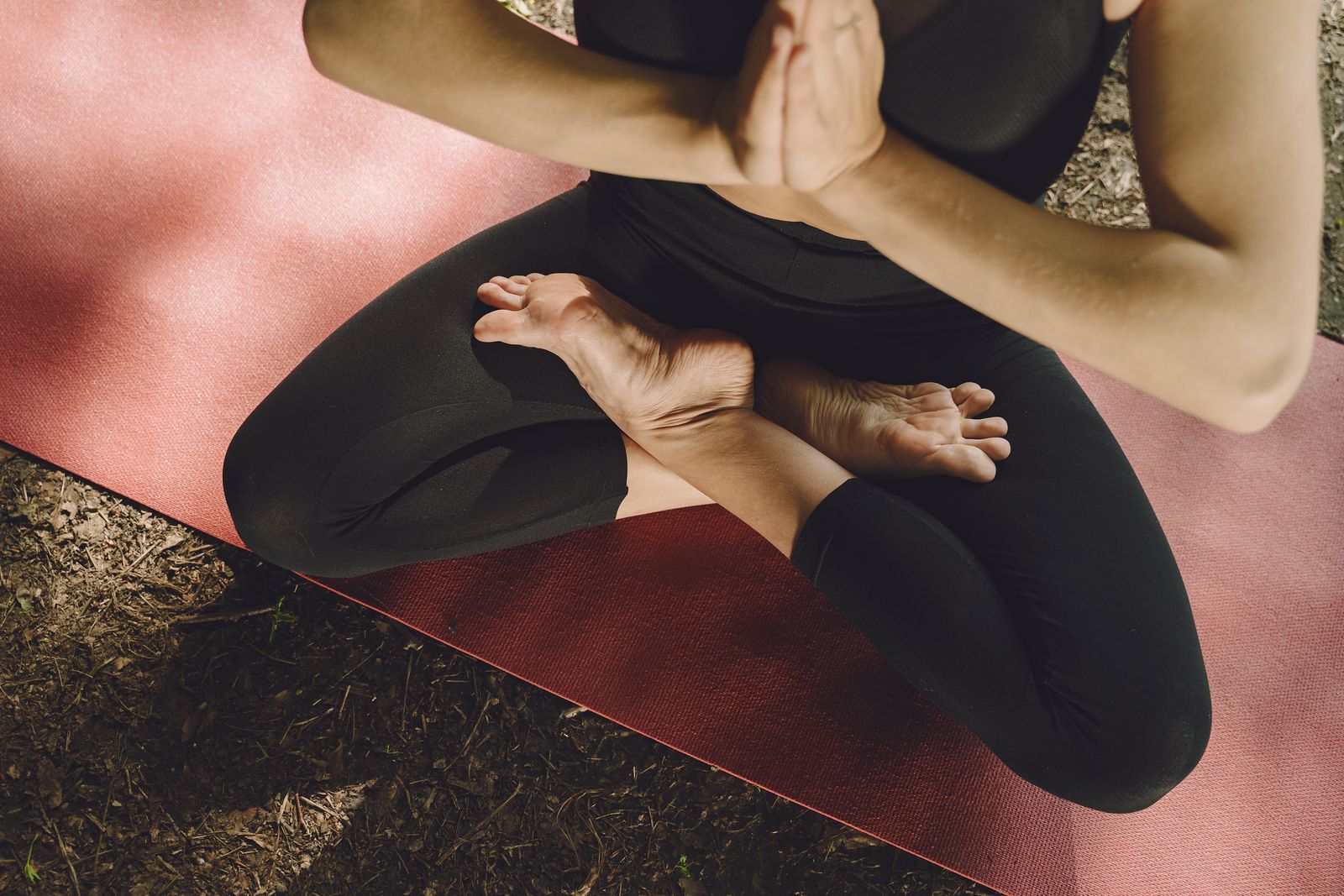
Yoga and mindfulness train the same skill, present-moment attention, through different doors: yoga starts from the body and breath, while mindfulness meditation starts with attention itself. Many people find moving first, then sitting, an easier route, because a posture gives restless attention something concrete to hold.
In practice, you can layer them. In a hatha yoga class, hold a pose and feel the sensation rather than thinking about how it looks. In a vinyasa flow, link each movement to a breath and notice when you drift. In Ashtanga yoga, the fixed gaze point works much like a breath anchor. A slow restorative yoga evening is a natural place for a body scan. If you are unsure which style suits you, the overview of types of yoga helps.
Two small additions are worth trying. Slow breathing practice, covered in our pranayama guide, gives you an easy breath anchor before you sit. And a hand position from yoga mudras, such as gently touching thumb and index finger, can act as a physical cue that it is practice time. Any special energetic effect is a matter of tradition, not proven science, but as a habit cue it works.
Which mindfulness routine suits your lifestyle?
- Desk workers: Two one-minute breath breaks between meetings, plus one body scan at the end of the day to release shoulder and jaw tension.
- Students: Five minutes of breath awareness before a study block, and mindful walking between sessions. Keep the phone in another room while you practise.
- Parents and caregivers: Aim for micro-moments, such as three slow breaths before replying to a child. Formal 20-minute sessions may not be realistic, and that is okay.
- Older adults: Seated or lying body scans and gentle mindful walking are comfortable choices. Use a chair with back support and keep sessions at 5 to 10 minutes.
When should you see a professional?
Mindfulness meditation is generally low-risk, but it is not a treatment. Please speak to a doctor, psychologist or psychiatrist if you have persistent anxiety, low mood that lasts more than two weeks, trouble sleeping or functioning, or any thoughts of harming yourself. If you have a history of trauma, silent practice can bring up distressing memories, so start with a trained teacher or mental health professional rather than going it alone. If a session ever feels overwhelming, stop, open your eyes and ground yourself by feeling your feet and naming things you can see.
Frequently asked questions about mindfulness meditation
How long should I practise mindfulness meditation each day?
Start with 5 minutes a day for two weeks, then move to 10 minutes, and build toward 15 to 20 minutes if you enjoy it. Consistency matters more than length. Five minutes every day builds the habit better than one 30-minute session a week, and short bursts during the day count too.
Is mindfulness meditation the same as relaxing?
No. Relaxation is a possible side effect, not the goal. Mindfulness meditation is about noticing what is happening, pleasant or not, with curiosity. Some sessions feel calm and others feel restless or sad. Both count as practice, because the skill is staying aware without trying to force a particular feeling.
Can I do mindfulness meditation lying down or at night?
Yes. Lying down works well for body scans and is useful if sitting is uncomfortable. Be aware you may fall asleep, which is fine as a bedtime wind-down but means less attention training. For that, sit upright on a chair and practise earlier in the day.
What is the difference between mindfulness and mindfulness meditation?
Mindfulness is the quality of present-moment, non-judging awareness that you can bring to washing dishes, walking or eating. Mindfulness meditation is a set-aside practice session, usually 5 to 20 minutes, designed to train that quality. Think of mindfulness as the skill and meditation as the exercise for it.
Is mindfulness meditation safe for everyone?
It is low-risk for most people, but not for everyone in every situation. People with a trauma history, severe anxiety or depression, or other mental health conditions can find silent practice distressing. Speak to a doctor or mental health professional first, and consider guidance from a trained teacher rather than practising alone.
Next step: pick one cue from the 7-day plan above and try it tomorrow. When you want guided breath and mindful movement in a live setting, join Fitstrot’s online yoga classes and try a class this week.


