
Most people who search for meditation techniques already know meditation is “good for you”. What they actually want to know is which technique to pick, how long to sit, and what to do when the mind refuses to settle after 40 seconds. This guide compares eight techniques with a real following in India and a research trail behind them, then gives you a side-by-side matrix, a four-week starter plan, a troubleshooting table and an honest read of the evidence.
One ground rule before we start: meditation is a skill, not a treatment. It can sit alongside medical care for anxiety, insomnia or high blood pressure, but it does not replace it. If you are under a doctor’s care, keep that care and add meditation on top.
What are meditation techniques, and do they actually work?
Meditation techniques are structured ways of training attention, usually by resting it on an anchor (breath, a word, a flame, body sensations) and returning to it whenever the mind wanders. A 2014 JAMA Internal Medicine meta-analysis of 47 trials and 3,515 adults found mindfulness programmes produced small-to-moderate improvements in anxiety, depression and pain.
That review only counted trials with an active control group. The effect sizes were 0.38 for anxiety and 0.30 for depression at eight weeks, and 0.33 for pain (Goyal et al., JAMA Internal Medicine, 2014). The same review found low or insufficient evidence for effects on attention, sleep, eating habits and weight, and no evidence that meditation beat other active treatments such as exercise or medication. That is the realistic baseline: useful, measurable, but not magic.
Interest has grown sharply. In the United States, adult meditation practice more than doubled from 7.5% in 2002 to 17.3% in 2022, making it more common than yoga, according to the NIH National Center for Complementary and Integrative Health (NCCIH).
Types of meditation compared: eight techniques side by side
Different types of meditation train slightly different skills. Focused-attention methods (breath counting, mantra, trataka) build concentration. Open-monitoring methods (mindfulness, body scan) build the ability to notice thoughts and sensations without reacting. Loving-kindness trains emotional warmth, and yoga nidra is essentially guided deep relaxation. The table rates evidence strength honestly, based on the sources cited in this article.
| Technique | Style | Best for | Beginner session | Posture | Evidence strength |
|---|---|---|---|---|---|
| Mindfulness of breath | Open monitoring | Everyday stress, rumination | 5–10 min | Seated | Moderate for anxiety, depression, pain (2014 meta-analysis) |
| Breath counting | Focused attention | Scattered attention, first-timers | 5 min | Seated | Limited as a standalone; used inside mindfulness programmes |
| Body scan | Open monitoring | Physical tension, winding down | 10–20 min | Lying or seated | Limited as a standalone; core part of MBSR courses |
| Loving-kindness (metta) | Emotion-focused | Irritability, self-criticism | 10 min | Seated | Moderate for positive emotions (24 studies, 2015) |
| Mantra / japa | Focused attention | Busy minds that need something to “hold” | 108 repetitions (about 8–12 min) | Seated | Mixed; few high-quality trials |
| Trataka (candle gazing) | Focused attention | Concentration, study focus | 3–5 min | Seated | Early; small Indian trials (n=60, 2014) |
| Yoga nidra | Guided relaxation | Sleep onset, deep rest | 20–30 min | Lying (shavasana) | Early; mostly small trials |
| Walking meditation | Mindful movement | Restless bodies, people who sit all day | 10 min | Walking | Limited |
No single technique is “best”: mindfulness has the strongest evidence largely because it has been studied the most. And beginner sessions are short across the board. Mayo Clinic’s guidance is that “a few minutes a day” is enough to start (Mayo Clinic, Meditation: a simple, fast way to reduce stress).
Mindfulness and meditation techniques: is there a difference?
Mindfulness is one quality of attention; meditation is the set of exercises used to train it. The NHS defines mindfulness as paying attention to what is happening inside and outside you, moment by moment. You can be mindful while eating dal-chawal or waiting at a signal. Meditation is the dedicated practice time that makes that everyday mindfulness easier.
The distinction matters because many people quit formal sitting and assume they have “failed at mindfulness”. In reality, the NHS mindfulness guide lists informal routes too: noticing sensations during routine tasks, picking a regular moment such as your commute, and naming thoughts as passing mental events rather than facts. The NHS also notes that the UK’s NICE recommends mindfulness-based therapy for less severe depression, and, importantly, that mindfulness is not right for everyone.
How to practise each technique: step-by-step walkthroughs
Each walkthrough below is written so you can try it today. Sit on a chair, a folded blanket or the floor, with your spine upright but not rigid. Set a gentle timer so you are not checking the clock.
1. Mindfulness of breath
- Close your eyes or lower your gaze to the floor about a metre ahead.
- Notice where the breath is easiest to feel: nostrils, chest or belly. Pick one spot.
- Rest attention there. Do not control the breath; just feel it.
- When you notice you are thinking (you will, often), silently note “thinking” and return to the breath. The return is the exercise, not a sign of failure.
2. Breathing meditation techniques: breath counting
Breath counting is the easiest entry point if plain mindfulness feels too vague. Count each out-breath from 1 to 10, then start again at 1. If you lose count or find yourself at 17, simply restart at 1. The number gives the mind a small job, which cuts down on wandering. Once 10 comes easily, switch to counting only every second breath, or drop the counting altogether and move to mindfulness of breath.
This is not pranayama: you observe natural breathing rather than holding or forcing it.
3. Body scan
Lie down or sit. Move attention slowly from the toes of the left foot up through the leg, then the right leg, pelvis, belly, back, chest, hands, arms, shoulders, neck and face. At each area, notice sensation (warmth, pressure, tingling, nothing at all) without trying to change it. A full scan takes 10–20 minutes. It is the backbone of the eight-week Mindfulness-Based Stress Reduction (MBSR) course and works well for people who carry stress as physical tightness in the jaw or shoulders.
4. Loving-kindness (metta)
Silently repeat simple phrases, first for yourself, then for someone you love, a neutral person (the neighbourhood sabziwala), a difficult person, and finally all beings. Typical phrases: “May I be safe. May I be healthy. May I live with ease.” A 2015 meta-analysis of 24 studies and 1,759 participants found medium effect sizes for loving-kindness interventions on daily positive emotions (Zeng et al., Frontiers in Psychology, 2015). Interestingly, the length of the programme and the minutes spent meditating did not change the effect size, which is encouraging for busy beginners.
5. Mantra and japa meditation
Choose a short word or phrase with a steady rhythm, such as “Om”, “So Hum”, a name of the divine if you are devotional, or a neutral word like “calm”. Repeat it silently or in a whisper, letting it ride on the breath. Japa uses a mala of 108 beads: move one bead per repetition with your thumb and middle finger, so one round gives the session a natural end point. Mantra practice suits people who find silence uncomfortable and need something to hold on to.
6. Trataka: one of the classic concentration meditation techniques
Place a candle at arm’s length, with the flame at eye level, in a room without drafts. Gaze at the tip of the wick without straining or staring hard, blinking when you need to. After one to three minutes, close your eyes and watch the after-image until it fades. Start with three to five minutes in total.
The evidence is early but encouraging for a traditional practice. In a 2014 randomised study from Bengaluru, 60 older adults were split into trataka and wait-list groups; after 26 days of practice the trataka group performed significantly better on attention and task-switching tests (Six Letter Cancellation and Trail Making B) than at baseline and compared with controls (Talwadkar et al., International Journal of Yoga, 2014). That is one small trial, so treat it as promising, not proven. Skip candle gazing if you have an eye condition, a history of seizures or migraines triggered by light, and check with your doctor first.

7. Yoga nidra
Yoga nidra is a guided practice done lying in shavasana. A teacher or recording leads you through a resolution (sankalpa), a rotation of awareness around the body, breath awareness, and visualisation, typically over 20–30 minutes. Because it is guided and done lying down, it is the gentlest entry for people who find seated meditation painful or impossible. Many people simply fall asleep, which is fine at bedtime.
8. Walking meditation
Choose a short path of 10–15 steps: your terrace, a corridor or a quiet part of the park. Walk slower than normal. Feel the heel lift, the foot swing, the sole land. At the end of the path, pause, turn, and walk back. Mayo Clinic lists walking meditation among its core types and suggests focusing on the sensations of the legs and feet. It suits people who cannot sit still or who get sleepy with eyes closed.

Meditation techniques for beginners: a four-week starter plan
The fastest way to quit meditation is to start with 30 minutes a day. The plan below builds from 5 to 15 minutes over four weeks and introduces one new technique per week, so you finish with a personal sense of which method suits you. Missing a day is not a reason to restart the plan; just continue.
| Week | Main technique | Daily time | Days/week | Add-on | Success marker |
|---|---|---|---|---|---|
| Week 1 | Breath counting (1–10) | 5 min | 5–7 | 1 mindful cup of chai a day, no phone | You notice wandering faster, even if it still happens constantly |
| Week 2 | Mindfulness of breath | 8 min | 5–7 | One 10-min body scan at bedtime, twice this week | You can name “thinking” and return without annoyance |
| Week 3 | Choose: mantra japa (1 mala) or trataka (5 min) + breath | 10 min | 5–7 | One 10-min walking meditation | You know whether a word, a flame or the breath holds you best |
| Week 4 | Your preferred anchor + 3 min loving-kindness to close | 12–15 min | 5–7 | One 20-min yoga nidra on a stressful day | You sit without checking the timer and have a fixed time slot |
Practical tips for Indian homes: early morning before the household wakes, or right after your bath, tends to be the quietest slot. If there is a pressure cooker whistling or traffic outside, do not fight it; let the sound become part of what you notice, then return to your anchor. A free timer is enough; you do not need to spend a rupee to start.

“You have to empty your mind” and four other myths
Myth 1: The goal is a blank mind. No technique on this page asks you to stop thinking. Every one of them works by noticing that you have wandered and returning. A session with 50 returns is a productive session.
Myth 2: You need to sit in padmasana. Lotus pose is optional. A chair with feet flat on the floor is perfectly valid, and yoga nidra is done lying down. Pain is a distraction, not a sign of devotion.
Myth 3: Longer is always better. The loving-kindness meta-analysis cited above found that time spent meditating did not change the size of the benefit. A daily 10 minutes you actually do beats a weekly hour you dread.
Myth 4: Meditation is completely risk-free. Mostly safe, yes, but not zero-risk. A 2020 systematic review of 83 studies with 6,703 participants found that 8.3% of people reported at least one adverse effect, most commonly anxiety and low mood; the rate was 3.7% in experimental studies (Farias et al., Acta Psychiatrica Scandinavica, 2020). NCCIH notes this is similar to rates seen with psychological therapies.
Myth 5: Meditation can replace medicine. It cannot. NCCIH and Mayo Clinic both state that meditation should not replace conventional care or delay seeing a doctor. Never stop or change prescribed medication because you have started meditating.
Troubleshooting: restless mind, sleepiness and other problems
Almost every beginner hits the same five walls. The fix is usually to change the technique or the conditions, not to try harder.
| Problem | Likely cause | What to try | Technique to switch to |
|---|---|---|---|
| Restless mind, constant planning | Anchor too subtle; high baseline stress | Count breaths or use a mantra; shorten to 5 min | Breath counting, japa |
| Falling asleep | Sitting after meals, late at night, or lying down | Sit upright, eyes half-open, meditate before meals or in daylight | Walking meditation, trataka |
| Fidgety body, back or knee pain | Floor posture your hips and knees can’t yet hold | Use a chair or cushion; allow slow, deliberate adjustments | Walking meditation, yoga nidra |
| Feeling more anxious or emotional | Close attention to breath or body can amplify distress in some people | Open your eyes, feel your feet on the floor, shorten sessions | Walking meditation, loving-kindness; speak to a professional if it persists |
| Boredom, “nothing is happening” | Expecting a special experience | Track one small outcome weekly, e.g. how quickly you notice wandering | Rotate techniques each week using the four-week plan |
| Can’t stay consistent | No fixed slot or cue | Attach it to an existing habit: after brushing teeth, before morning tea | Any 5-min practice |
If meditation reliably brings up panic, flashbacks or very low mood, stop the practice and speak to a doctor or mental-health professional. People with a history of trauma, psychosis or severe depression should learn with a trained teacher who knows their history, rather than alone with an app.
Which technique fits your situation?
Meditation techniques for anxiety
For diagnosed anxiety disorders, structured mindfulness has the best data. In a 2023 randomised trial of 276 adults, an eight-week Mindfulness-Based Stress Reduction course reduced clinician-rated anxiety by 1.35 points on the CGI-S scale, versus 1.43 for the antidepressant escitalopram, meeting the pre-set margin for being “noninferior” (Hoge et al., JAMA Psychiatry, 2023). That does not mean you should swap your medicine for meditation; it means mindfulness is a credible option to discuss with your psychiatrist. Start with breath counting and walking meditation, which are less likely to feel claustrophobic than long body scans.
Meditation techniques for stress at work
For office stress, short and frequent beats long and rare. Try three minutes of breath counting before opening your inbox and a one-minute “three breaths” pause between video calls. The NHS notes that NICE recommends employers make mindfulness available to all employees for wellbeing at work, which is why many Indian corporates now include it in wellness programmes.
Meditation techniques to sleep better
For sleep, the evidence favours structured mindfulness practice over simple sleep-hygiene advice. In a 2015 trial of 49 older adults with moderate sleep problems, a six-week mindfulness programme improved Pittsburgh Sleep Quality Index scores from 10.2 to 7.4, compared with 10.2 to 9.1 in the sleep-education group (Black et al., JAMA Internal Medicine, 2015). At bedtime, a body scan or yoga nidra recording in bed is a sensible choice. If insomnia lasts more than a few weeks, see a doctor to rule out causes such as sleep apnoea or thyroid problems.
Meditation techniques in yoga practice
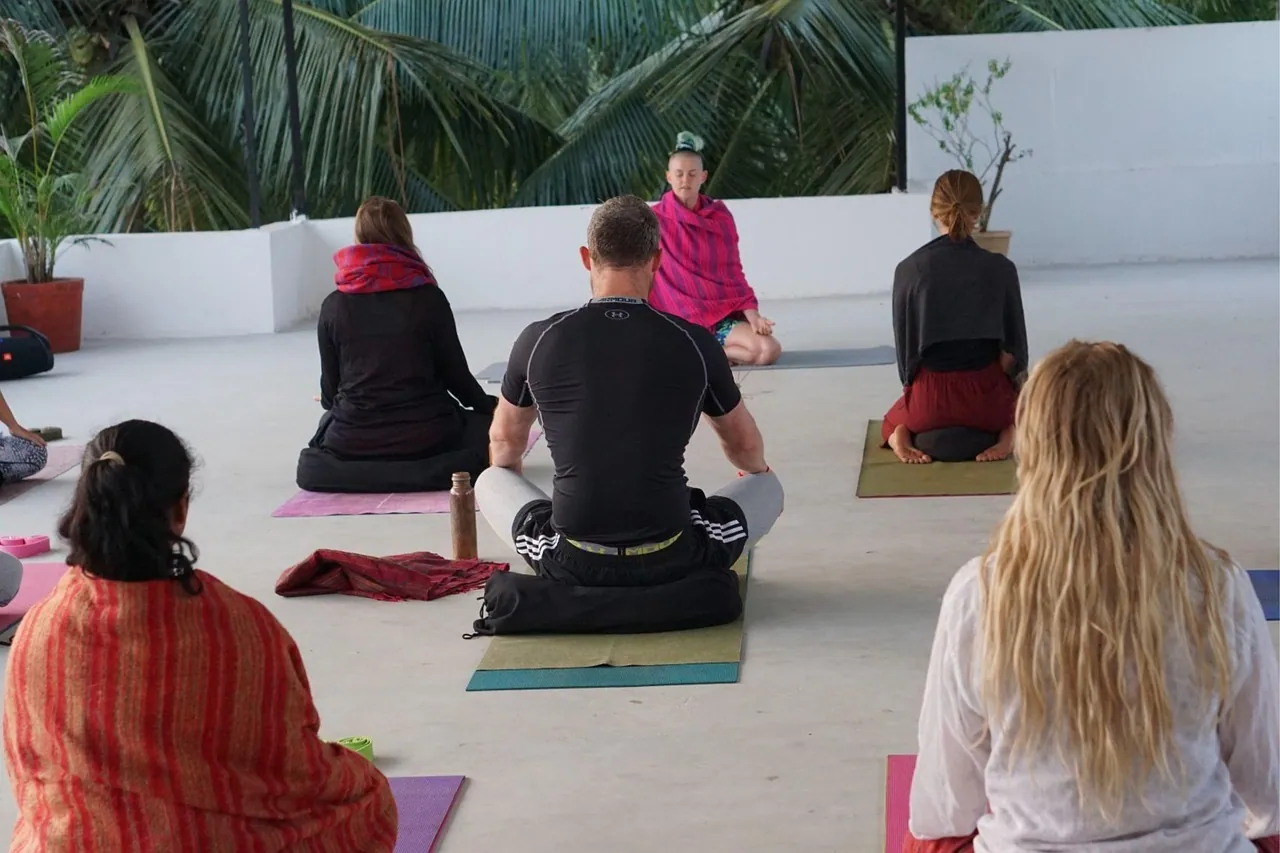
In the yoga tradition, asana was designed partly to prepare the body to sit comfortably for meditation. If you already practise yoga, finish every session with five minutes of breath awareness in a simple seated pose, hands resting in gyan mudra. The goal Patanjali describes, the settling of the mind’s fluctuations, is explained in our guide to chitta vritti. If sitting still is hard because of tight hips or back, a few of the foundational yoga poses before meditation make a noticeable difference. Live online yoga classes with a teacher are also a good way to learn yoga nidra, pranayama and trataka safely, because someone can correct posture and pace in real time.
Frequently asked questions
Which meditation technique is easiest for beginners?
Breath counting is usually easiest. Count each out-breath from 1 to 10 and restart at 1 whenever you lose count. It gives the mind a small task, needs no equipment, and takes just five minutes a day. Once it feels comfortable, move on to plain mindfulness of breath.
How many types of meditation are there?
There is no fixed number; traditions describe dozens of methods. Most fall into four broad families: focused attention (breath counting, mantra, trataka), open monitoring (mindfulness, body scan), emotion-focused practice (loving-kindness) and guided relaxation (yoga nidra). Walking meditation applies any of these to movement.
How long does it take to see benefits from meditation?
Most clinical trials run for six to eight weeks. The 2014 JAMA Internal Medicine meta-analysis measured anxiety and depression improvements at eight weeks, and a 2015 sleep trial found better sleep quality after six weeks. Many people notice calmer reactions sooner, but results vary and are not guaranteed.
What are vipassana meditation techniques and can I learn them at home?
Vipassana, as taught in the S.N. Goenka tradition, combines breath observation (anapana) with systematic observation of body sensations with equanimity. It is traditionally learned in a free, donation-funded 10-day residential course held in noble silence, with the main centre at Igatpuri, Maharashtra. Home practice usually follows that course.
Is it better to meditate in the morning or at night?
Morning suits focused-attention practices because you are more alert and the house is often quieter. Night suits body scan and yoga nidra, which encourage relaxation and sleep. The best time is the one you can repeat daily; attach it to an existing habit such as morning tea.
Can meditation have side effects?
Yes, occasionally. A 2020 review of 83 studies found 8.3% of participants reported at least one adverse effect, most often anxiety or low mood. If meditation repeatedly makes you feel worse, shorten sessions, switch to walking meditation, and speak to a doctor or mental-health professional.
Do I need a teacher to learn meditation techniques?
Not for simple methods like breath counting, mindfulness of breath or walking meditation. A trained teacher is worth it for trataka, pranayama-based practices and yoga nidra, and strongly advised if you have a history of trauma, psychosis or severe depression.
Try it this week: do five minutes of breath counting every morning for seven days and note how quickly you catch your mind wandering. If you would like a teacher to guide you through breathwork, trataka and yoga nidra live, book a trial of Fitstrot’s online yoga classes.


