

If you search for yoga to reduce neck fat, you will find plenty of promises about melting the area under your chin in two weeks. Here is the honest version: yoga cannot remove fat from the neck on its own, and no exercise can. What it can do is strengthen the muscles at the front of the neck, correct the forward-head posture that makes the neck look heavier, and add to the daily movement that helps you lose fat across the whole body. This guide covers which poses are worth doing, which to modify, a weekly plan, and when a fuller neck needs a doctor rather than a yoga mat.
Can yoga reduce neck fat, or is spot reduction a myth?
Yoga cannot burn fat from the neck alone, because the body draws energy from fat stores everywhere, not from the muscle you work. It helps in three realistic ways: toning neck and jaw muscles, improving head posture so the neck looks longer, and adding movement that supports gradual overall fat loss over 8 to 12 weeks or more.
The soft fullness under the chin is called submental fat. Beneath it sit thin muscles such as the platysma and the deep neck flexors. Strengthening them firms the area but does not use up the fat lying on top. That fat shrinks only when whole-body fat shrinks, and where it leaves first is largely decided by genetics.
Three myths about neck fat that waste your time
- Myth: Lion Pose or jaw exercises melt a double chin. Fact: they work muscle, not the fat layer. Expect a firmer feel at best.
- Myth: dropping the head far back tightens the skin. Fact: it gives a feeling of tightness during the pose, not lasting change, and it loads the cervical spine. Keep the neck long instead.
- Myth: a full neck always means fat. Fact: it can also come from posture, water retention after salty meals or poor sleep, family build, or a thyroid swelling. Each needs a different response.
Why does the neck look fuller? Causes and what yoga can change
| Cause of a fuller neck | Can yoga help? | What else to do |
|---|---|---|
| Higher overall body fat | Indirectly, through regular movement | Steady calorie deficit, daily walking, 7 to 8 hours of sleep |
| Genetics (fat stored under the chin) | No, but posture work improves the outline | Track waist, energy and strength, not one body part |
| Forward-head posture, often called tech neck | Yes, often within a few weeks | Screen at eye level, stand up every 30 to 45 minutes |
| Age and looser skin | Limited | Enough protein, sleep, strength work |
| Water retention from salty food or short sleep | Mildly | Fewer packaged snacks, water through the day |
| Thyroid or another medical cause | No | Get it examined by a doctor first |
What does a neck-friendly yoga routine look like?
A good neck routine takes about 15 minutes a day and uses small, controlled movements. Start with chin tucks and side stretches, move into gentle backbends with a long neck, add Lion Pose and a few core holds, and finish with slow breathing. Done daily, it can improve posture and neck muscle tone within about 4 weeks.
| Pose | Reps or hold | How to do it | Form cue and modification |
|---|---|---|---|
| Chin tuck | 10 reps, 5 seconds each | Sit tall, slide the chin straight back, then release | Eyes level, no nodding. Stop if arms tingle |
| Side neck stretch | 20 to 30 seconds each side | Ear toward the shoulder, opposite shoulder down | Let the head’s weight do the work, no hard pulling |
| Cat-Cow | 8 slow rounds | Move the spine with the breath on hands and knees | Neck in line with the spine, gaze forward in Cow |
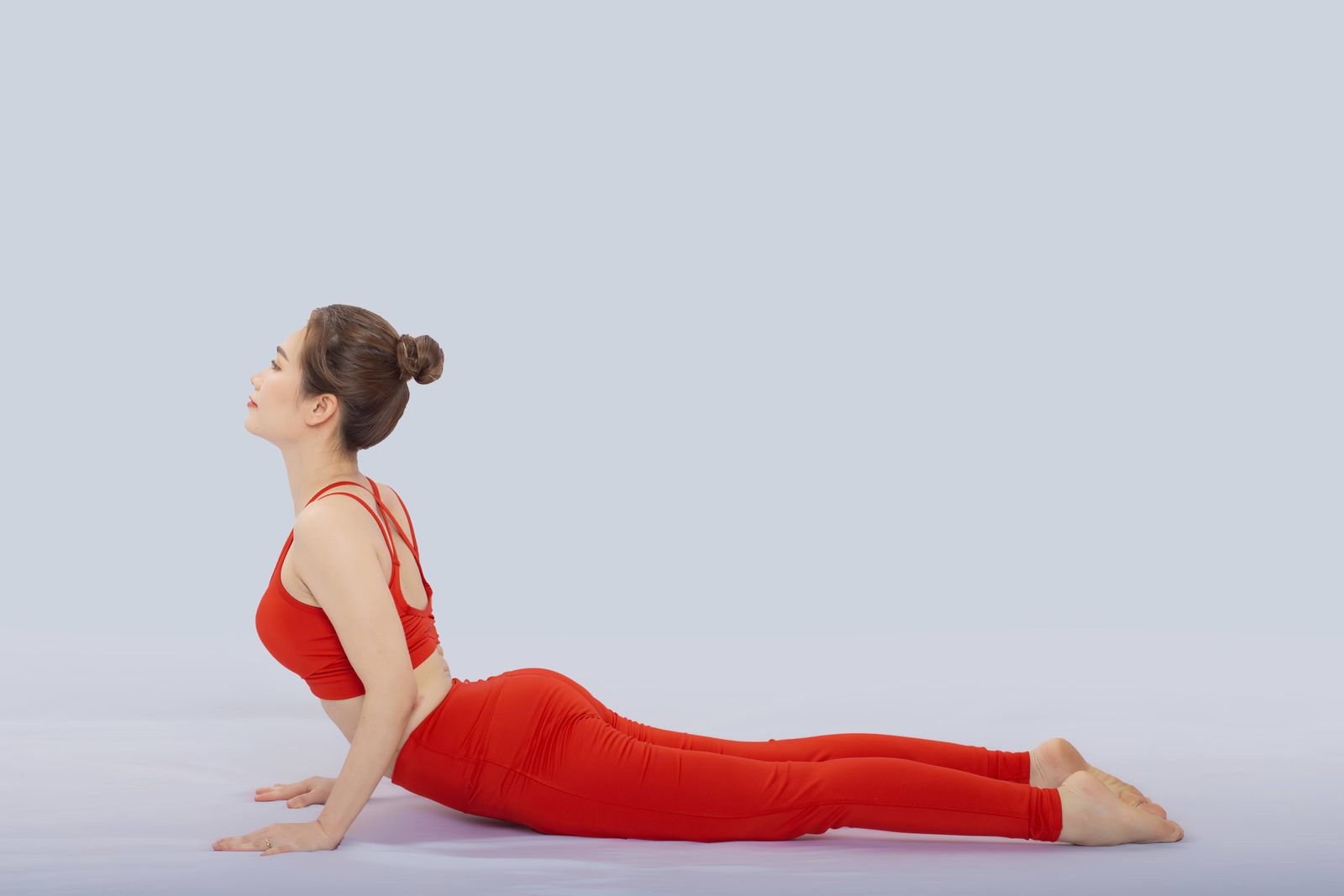
| Cobra (Bhujangasana) | 3 holds of 15 to 20 seconds | Lie face down, palms under shoulders, lift the chest, elbows slightly bent | Gaze at the floor ahead. Swap to Sphinx if the back or neck pinches |
| Lion Pose (Simhasana) | 4 to 5 rounds | Kneel, inhale through the nose, exhale mouth wide, tongue out, “ha” | Open only as wide as is comfortable. Reduce if the jaw aches |
| Bridge (Setu Bandhasana) | 3 holds of 20 to 30 seconds | Lie on the back, feet hip-width, lift the hips | Do not turn the head while lifted |
| Plank | 3 holds of 20 to 30 seconds | Hands under shoulders, body in one line | Gaze just ahead of the hands. Drop the knees if needed |
| Camel, modified (Ustrasana) | 2 holds of 10 to 15 seconds | Kneel, hands on the lower back, lift the chest | Chin slightly tucked. Never let the head drop back |
Use the first three items as a warm-up, breathe through every hold, and come out of each pose slowly.

Classical Cobra instructions tilt the head back for a throat stretch. If your neck is stiff, skip that and keep the back of the neck long, which gives most of the posture benefit with less strain. If you are new to backbends, our guide to yoga for neck pain covers gentler options, and yoga to reduce face fat goes deeper on jaw and cheek work.
Does posture change how big your neck looks?
Yes, posture can change how full the neck looks within days, even with no fat loss. When the head sits 3 to 5 cm in front of the shoulders, the skin under the chin folds and the front neck muscles weaken. Pulling the head back over the spine often makes the jawline look cleaner straight away.
A cue used across most styles of yoga works well: stand tall, let the crown of the head reach upward, and keep the ribs stacked over the hips. Three desk changes help more than any single pose. Raise the screen so its top edge is at eye level, hold the phone near eye level, and reset your posture every 30 to 45 minutes. Stress makes people hunch and clench, so a calming practice such as online yoga for stress relief supports posture indirectly.
What actually reduces body fat, including around the neck?
Fat loss comes from a steady calorie deficit, usually about 300 to 500 kcal a day below what you burn, which tends to mean 0.25 to 0.5 kg a week for most adults. Yoga contributes to the burn, but food, daily steps and sleep do most of the work. Neck fat usually changes when whole-body fat does.
In an Indian kitchen the levers are simple. A medium phulka is roughly 70 to 100 kcal and a katori of cooked dal roughly 100 to 130 kcal. Two teaspoons of sugar in chai are about 30 kcal, so three cups a day add roughly 100 kcal. Swap fried namkeen for roasted chana, fruit or curd, and build meals around dal, paneer, eggs, curd or sprouts with plenty of sabzi. An online nutritionist can build this into a plan.
On the yoga side, fuller styles burn more than gentle ones. A 30 to 40 minute vinyasa yoga or power yoga session two or three times a week is a sensible choice, and our guide to yoga for weight loss explains how to progress. The same routine also serves goals like a flatter tummy or smaller love handles.
A simple weekly plan you can follow
The neck block is the routine above, or just the first three poses on short days.
| Day | Yoga session | Neck and posture block | Movement and food habit |
|---|---|---|---|
| Monday | Vinyasa flow, 30 minutes | Chin tucks, side stretches (5 minutes) | 30-minute walk, less sugar in chai |
| Tuesday | Neck routine only | Full 15 minutes | Protein at every meal |
| Wednesday | Power yoga, 30 to 40 minutes | Chin tucks (3 minutes) | 15 to 20 minute walk after dinner |
| Thursday | Neck routine only | Full 15 minutes | Roasted chana instead of fried snacks |
| Friday | Vinyasa flow, 30 minutes | Cobra and Bridge holds (5 minutes) | 30-minute walk |
| Saturday | Longer practice, 45 minutes | Full 15 minutes | Any activity you enjoy, plan next week’s meals |
| Sunday | Rest or 10 minutes of easy stretching | Chin tucks only | Aim for 7 to 8 hours of sleep |
How long before you notice a change?
Most people feel a looser, less tense neck within 2 to 4 weeks of daily practice, and posture changes can show in photos by week 4 to 6. Visible fat reduction around the neck usually takes 8 to 12 weeks or longer, because it depends on overall body fat falling. Results vary and are not guaranteed.
Take a front and side photo every two weeks in the same light and note your waist measurement. If the neck looks unchanged at 12 weeks but your waist and strength have improved, the plan is still working.
Which poses should you modify or skip if your neck is sensitive?
If you have had a neck injury, disc problems, dizziness or numbness in the arms, speak to a doctor or physiotherapist before starting and practise with a qualified teacher. These poses load the neck and are best skipped or modified, so check the list below:
- Full Camel with the head dropped back: keep hands on the hips and the chin slightly tucked, or choose Bridge instead.
- Plough (Halasana) and Shoulder Stand (Sarvangasana): these put body weight through the cervical spine, so skip them unless a teacher has coached you in person.
- Headstand (Sirsasana): only with experienced supervision.
- Cobra with a strong head tilt: keep the gaze forward and the lift low. If you are pregnant or recovering from a back injury, check with your doctor and choose Sphinx.
Stop if you feel sharp pain, tingling down an arm, dizziness, headache or nausea. A mild stretch is normal; pain and pins and needles are not.
When should you see a doctor about a thick or swollen neck?
See a doctor if the neck swells quickly, if you can feel a lump or one-sided swelling, or if fullness comes with hoarseness, trouble swallowing or breathing, pain, unexplained tiredness or weight change, or a racing heartbeat. These can point to a thyroid or other medical issue that exercise will not fix.
A swollen thyroid (goitre) is not fat, so yoga cannot shrink it. A simple examination and, if advised, a thyroid blood test removes the doubt. If you take medicines for any condition, do not change or stop them because of a yoga plan; discuss that with your doctor.
Desk workers, beginners and people over 40: how to adapt the plan
Desk workers. Posture is your biggest gain. Set a 40-minute reminder for ten chin tucks and a side stretch.
Beginners. Use the first four poses only and skip Camel for the first month. A live teacher can check your alignment, and 1-1 personal training can tailor the sequence if you have stiffness or an injury history.
People over 40. Skin loses some elasticity with age, so aim for a stronger, better-supported neck rather than a youthful jawline. Add light strength work twice a week and warm up longer before backbends.
Frequently asked questions about yoga to reduce neck fat
Can yoga alone get rid of a double chin?
No. Yoga can tone the muscles under the chin and improve head posture, which makes the area look firmer, but it cannot remove fat from that spot. A lasting change usually needs a full-body routine, a modest calorie deficit and patience of 8 to 12 weeks or more.
How often should I do yoga for neck fat?
Aim for the neck routine on most days, 10 to 15 minutes, plus two or three longer sessions of 30 to 45 minutes each week. Short daily practice builds posture habits better than one long weekly session. Take at least one easy day every week.
Is it safe to tilt my head back in Cobra and Camel?
It is safe for many healthy people when done gently, but it is not necessary. Keeping the back of the neck long and the gaze forward gives most of the benefit with less strain. If you have neck pain, dizziness, numbness or a past injury, avoid the head-back version and ask a doctor or qualified teacher first.
Can a thyroid problem cause a fuller neck that yoga will not fix?
Yes. A thyroid swelling or another medical condition can enlarge the front of the neck without any link to body fat or muscle tone. If the swelling is sudden, one-sided, or comes with hoarseness, trouble swallowing, or unexplained fatigue or weight change, see a doctor before relying on exercise.
Does drinking more water reduce neck fat?
Water does not burn fat, but steady hydration, roughly 2 to 3 litres a day for most adults depending on climate and activity, may reduce puffiness linked to salty food and helps you avoid mistaking thirst for hunger. Treat it as a helpful habit alongside yoga, food and sleep, not a fix on its own.
Next step: book a live online yoga class with Fitstrot and ask your instructor to check your chin tuck and Cobra alignment in the first session.


