
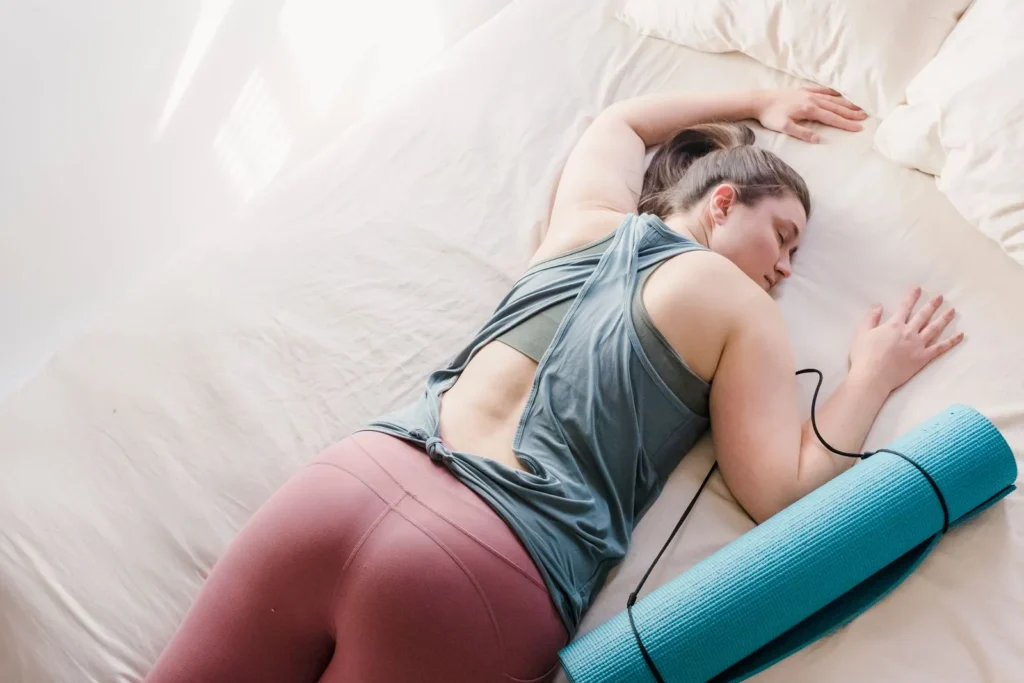
Yoga for sleep is a short, slow evening practice that turns down your body’s alertness so sleep can arrive on its own. Think 15 to 20 minutes of long-held, supported poses, an extended exhale and a few minutes of stillness, not a workout. This guide gives you a minute-by-minute bedtime yoga sequence, the poses worth keeping, the breathing that matters most, and the points where a doctor, not a mat, is the right answer.
Does yoga help you sleep better?
Yes, for many people. Gentle yoga before bed slows your breathing, releases tight muscles and gives a busy mind one simple thing to follow, which makes falling asleep easier. Expect small gains within one to two weeks of nightly practice and steadier ones by four to six weeks. It helps most with stress-linked sleeplessness, not diagnosed sleep disorders.
Poor sleep is often a “switched-on” problem before it is a bedroom problem. If your body is still in alert mode at 11 pm, because of deadlines, a late dinner, a bright phone screen or a busy day, it is hard to drop off no matter how comfortable the mattress is. Slow breathing with long exhales and still, supported poses tell your nervous system that the day is over. This is the calming effect described in our guide to yoga for stress, except a bedtime session removes everything stimulating: no sun salutations, no core work, no sweat. If you are new to the wider payoff of the practice, start with the benefits of yoga.
A 20-minute yoga before bed sequence, minute by minute
Do this on a mat or your bed with the lights dimmed and your phone out of reach, using pillows or a folded blanket for support. Every pose should feel like relief, never a fight.
| Minutes | Pose | Hold | Breath and form cue |
|---|---|---|---|
| 0 to 2 | Easy seat (Sukhasana) or lying on your back | 2 min | Breathe through the nose. Inhale for 4 counts, exhale for 6. Let the jaw and shoulders soften. |
| 2 to 4 | Cat-Cow (Marjaryasana-Bitilasana) | 8 slow rounds | Arch on the inhale, round on the exhale. Move at the speed of your breath, not faster. |
| 4 to 6 | Child’s Pose (Balasana) | 90 sec | Knees wide, pillow under the forehead. Send each exhale into the lower back. |
| 6 to 8 | Seated forward fold (Paschimottanasana), knees bent | 90 sec | Fold from the hips, not by pulling the neck. A pillow on the thighs lets the chest rest. |
| 8 to 10 | Supine twist, both sides | 60 sec per side | Knees fall to one side, both shoulders stay heavy on the mat, gaze goes the other way. |
| 10 to 13 | Reclining Bound Angle (Supta Baddha Konasana) | 3 min | Soles together, a pillow under each knee, hands resting on the belly. |
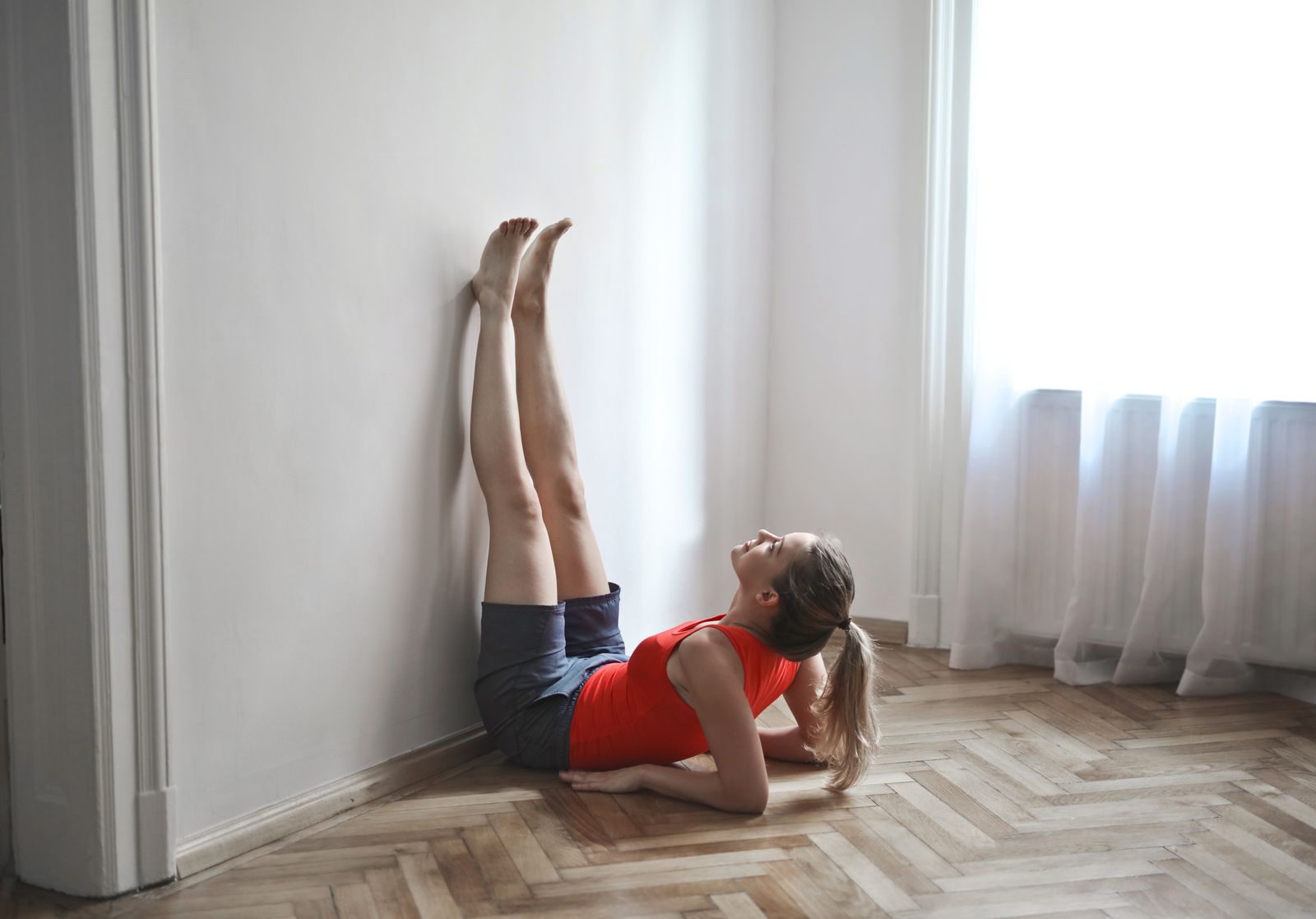
| 13 to 18 | Legs up the wall (Viparita Karani) | 5 min | Sit side-on to the wall, swing the legs up. Keep the knees soft and let the feet relax. |
| 18 to 20 | Savasana with long exhales | 2 min or more | Hands open, eyes closed, exhale slightly longer than you inhale until you drift. |
If you can only manage ten minutes on a tiring day, keep Child’s Pose, legs up the wall and Savasana. Those three do most of the work.
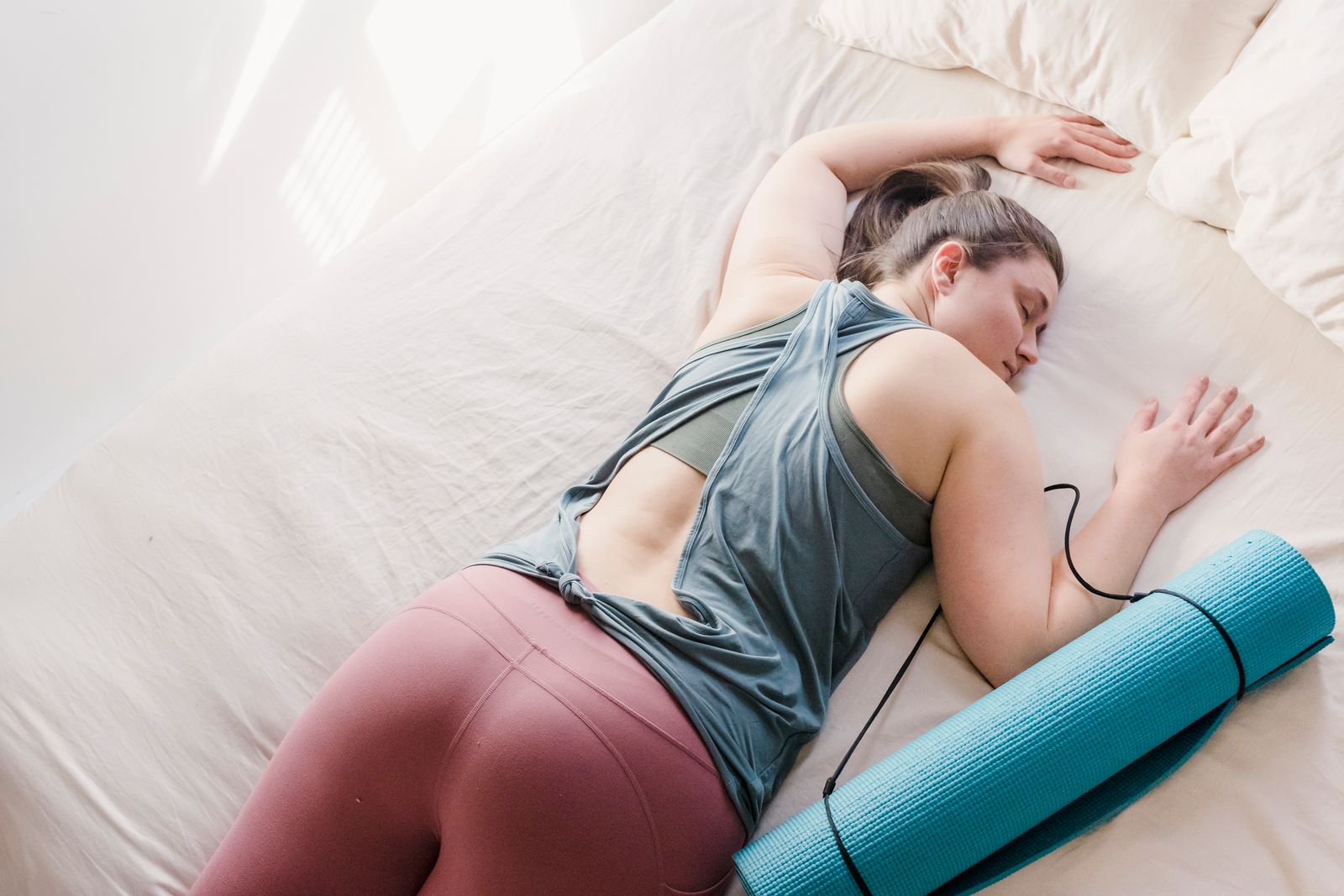
Which yoga poses for sleep are worth your time?
The best yoga poses for sleep are passive ones: legs up the wall, Child’s Pose, Reclining Bound Angle, a supported forward fold and a gentle supine twist. Each is held for one to five minutes while your heart rate stays low. Leave out backbends, headstand and standing flows at night, because they raise alertness.
Legs up the wall is the one most people feel first: it needs no strength and takes pressure off a tired lower back. The table below shows what to swap in if your body objects to a pose.
| If you have | Swap to | Hold | Form cue |
|---|---|---|---|
| Tight hamstrings | Forward fold with bent knees and a pillow on the thighs | 90 sec | Keep the spine long and let the knees stay soft. |
| Stiff lower back from sitting all day | Knees-to-chest hug (Apanasana) | 60 sec | Rock gently side to side, exhale as you draw the knees in. |
| Knee discomfort in Child’s Pose | Side-lying curl with a pillow between the knees | 2 min | Tuck the chin slightly and breathe into the back ribs. |
| No free wall space | Calves resting on a chair seat or the edge of the bed | 3 to 5 min | Hips close to the support, knees bent at about 90 degrees. |
| Dizziness lying with legs raised | Reclining Bound Angle only | 3 min | Keep the head level with the heart, rise slowly afterwards. |
| A mind that will not stop | Lying body scan, no poses | 10 min | Move attention from toes to scalp, one body part per breath. |
What breathing helps you fall asleep?
Slow nasal breathing with a longer exhale than inhale works best at bedtime. Try inhaling for 4 counts and exhaling for 6 to 8 counts for about five minutes, which is roughly 5 to 6 breaths a minute. Keep it gentle, never strained, and stop if you feel light-headed.
Breath is often more useful than any single pose, because you can use it in bed, on a train or at 3 am when you wake up. Two other options are popular. Alternate nostril breathing (Nadi Shodhana) is done by closing one nostril at a time and breathing slowly through the other, without holding the breath. Bhramari, the humming bee breath, uses a soft hum on each exhale, and many people find the vibration quietens racing thoughts. If anxious thinking is what keeps you awake, our guide to yoga for anxiety goes deeper on calming breathwork.
Which type of yoga is best for sleep: restorative, yin or yoga nidra?
Restorative yoga is the safest bet for most people because props hold your body while you stay for three to ten minutes. Yin yoga also suits the evening. Yoga nidra, a guided lying-down relaxation, is best when your mind rather than your muscles keeps you awake. Fast, heat-building styles belong in the morning.
| Style | Pace and holds | Best time of day | Suits sleep when |
|---|---|---|---|
| Restorative yoga | Fully supported poses, 3 to 10 min | Evening, right before bed | You feel tired but tense |
| Yin yoga | Floor poses, about 2 to 5 min | Early evening, 1 to 2 hours before bed | You carry stiffness in hips and back |
| Yoga nidra | No movement, 15 to 30 min guided | Last thing before lights out | Your mind will not switch off |
| Vinyasa or power yoga | Flowing, heart rate up | Morning or late afternoon | Rarely, unless done well before evening |
To understand how restorative, yin and flowing styles differ, read our overview of the types of yoga. For the slow, floor-based option, see yin yoga. For the dynamic style to keep earlier in the day, see vinyasa yoga.
Myths about bedtime yoga, corrected
“A deeper stretch means deeper sleep.” No. Pushing into discomfort keeps your body on guard. At night, stop well before your limit and let gravity do the work.
“You need an hour.” You do not. Ten to twenty minutes done on most nights beats one long session each week.
“Following a video in bed is the same thing.” A bright screen works against the dim, calm setting you are building. Use audio only, or learn the sequence once and then do it from memory.
“Yoga cures insomnia.” It does not. Yoga is a helpful habit, not a guaranteed cure, and it should not replace medical care for a sleep disorder.
Bedtime yoga for different kinds of sleepers
- Desk workers and shift workers: Hours of sitting tighten the hips and lower back, so lean on Child’s Pose, a supine twist and legs up the wall. After a night shift, darken the room and use the same routine.
- Late dinner eaters: Many Indian households eat at 9 or 10 pm. Leave about 60 to 90 minutes after a heavy meal before folds and twists, and stick to Savasana and legs up the wall if you are short on time.
- Anxious sleepers: Spend more time on breath and a body scan than on poses. Our guide to yoga for mental health covers the wider daily practice that supports this.
- People trying to lose weight: Keep calorie-burning sessions earlier in the day and save the restorative work for night. Our guide to yoga for weight loss shows what suits the daytime.
- Pregnancy and older adults: Check with your doctor first. Side-lying poses with pillows are usually kinder than lying flat on the back for long, and deep twists should be avoided in pregnancy.
Why bedtime yoga is not working, and how to fix it
- You feel more awake afterwards: The session is probably too active or too bright. Cut movement, hold poses longer and dim the lights.
- Your mind races during poses: Count exhales from 1 to 10, then restart. Do not fight thoughts, just come back to the count.
- You do it for two nights, then stop: Attach it to something you never skip, such as brushing your teeth. Then start with five minutes.
- You still wake at 3 am: Late tea or coffee, alcohol, a hot room and a full bladder are common culprits. Many people sleep better when their last chai or coffee is in the early afternoon.
- Something hurts: Ease out of the pose. Pain means modify or stop.
Your first week: a simple 7-night plan
- Nights 1 and 2: 5 minutes of 4-in, 6-out breathing, then legs up the wall for 5 minutes.
- Nights 3 and 4: Add Child’s Pose and a supine twist, about 10 minutes in total.
- Nights 5 to 7: Do the full 20-minute sequence above, ending in Savasana.
- Week 2 onward: Repeat on most nights. Judge the result after three to four weeks, not one night.
When yoga is not enough: see a doctor if…
Yoga can sit beside medical care, but it cannot diagnose or treat a sleep disorder. See a doctor or sleep specialist if you have any of these:
- Loud snoring with gasping or choking at night, and heavy daytime sleepiness. These can point to sleep apnea. Yoga for sleep apnea, such as breathing and throat-toning exercises, may be an extra support, but it is never a replacement for testing or treatment, such as a CPAP machine if your doctor prescribes one.
- Trouble sleeping on three or more nights a week for about three months. That pattern deserves an evaluation, not another month of guessing.
- Repeated episodes of being awake but unable to move. Yoga for sleep paralysis only means calmer evenings and a steadier sleep schedule. Frequent episodes need a medical opinion.
- An urge to move your legs that is worst at night. This can be restless legs syndrome, so ask about it.
- Dozing off while driving, or low mood that is lasting. Do not wait on these.
Never stop or change a medicine you take for sleep because you started yoga. Talk to your doctor first.
Frequently asked questions about yoga for sleep
How long before bed should I do yoga for sleep?
Aim to finish 15 to 30 minutes before you want to be asleep, so the calm carries straight into bed. A short routine done right before lights out has the most direct effect on how fast you fall asleep. A heavier session is better done 2 to 3 hours before bed.
Can yoga help with insomnia?
It can help many people with stress-related insomnia by easing tension and quieting the mind, and it carries little risk when done gently. It is not a cure, and long-standing insomnia deserves a doctor’s review. Use yoga as one part of good sleep habits, such as fixed bed and wake times and less late-evening screen use.
What is the single best yoga pose for sleep?
Legs up the wall is the most widely recommended single pose, since it needs no strength or flexibility and most people can hold it for 5 to 10 minutes. Child’s Pose is a close second if you have no wall nearby, or if raising your legs leaves you dizzy.
Can I do yoga in bed?
Yes. Many bedtime poses, including the supine twist, Reclining Bound Angle, knees-to-chest and Savasana, work well on a mattress. A very soft bed can make Child’s Pose and folds less stable, so use the floor for those and finish lying down in bed.
How soon will bedtime yoga improve my sleep?
Some people feel calmer and fall asleep faster after the first session. More reliable changes usually need nightly or near-nightly practice for about four to six weeks. Results vary from person to person, and no routine can promise a fixed outcome.
Get a guided wind-down
If you would rather follow a teacher than piece a routine together each night, try Fitstrot’s online yoga classes, which include relaxation and wind-down sessions you can do from your own bedroom.


