
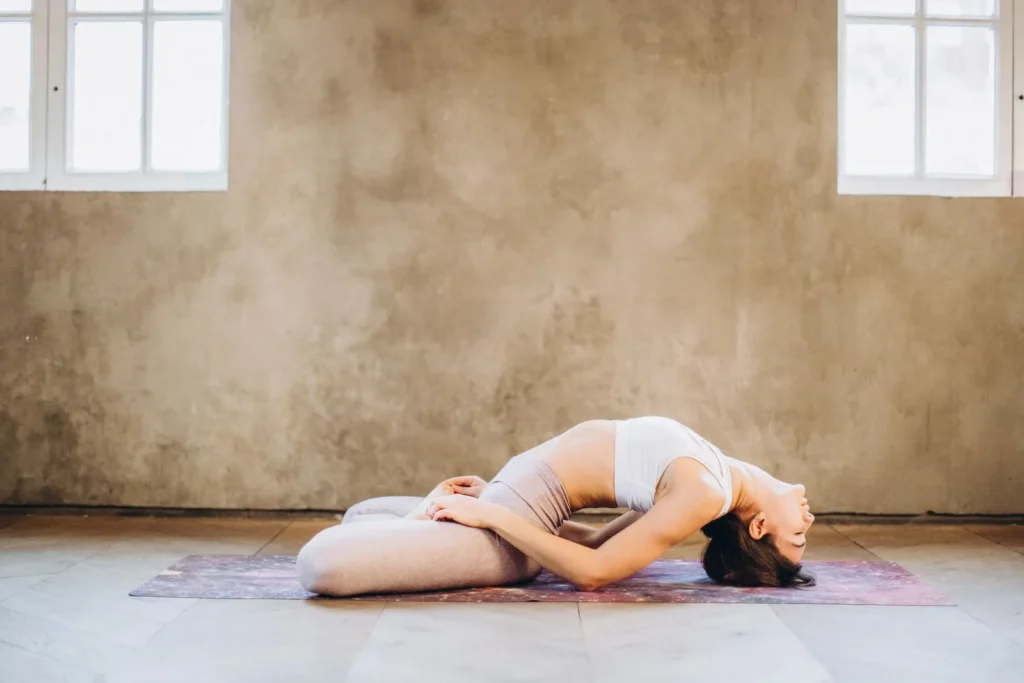
A steady routine of yoga for thyroid support will not cure a thyroid disorder or replace your medicines, but 20 to 30 minutes on most days can ease stress, improve sleep and keep you moving while your doctor manages the gland. This guide gives you poses with hold times and form cues, a 25-minute sequence, breathing practices for underactive and overactive thyroids, a weekly plan and the safety checks to do first.
Can Yoga Help with Thyroid Problems?
Yoga can help you live better with a thyroid condition, but it cannot repair the gland. Practised four to six days a week for 20 to 30 minutes, it mainly lowers stress, improves sleep and builds steady energy. Thyroid hormone levels are confirmed only by blood tests such as TSH, so keep your doctor’s follow-ups exactly as scheduled.
The realistic benefits are indirect. Long-running stress makes fatigue, poor sleep, low mood and palpitations feel worse, and a calm daily practice takes the edge off them. Yoga is also a low-impact way to stay active when tiredness makes you skip exercise. Treat it as a companion to treatment, never a substitute.
Myth Check: Do Shoulder Stands “Massage” the Thyroid?
You will often read that inversions and neck folds squeeze fresh blood into the thyroid and restart it. There is no solid evidence that any pose stimulates the gland directly. The pituitary controls the thyroid through hormone signals, not through throat compression.
That is why this guide leans on what yoga reliably does: it calms the nervous system, loosens a stiff neck and upper back, and builds a habit. Poses such as Sarvangasana are still worth learning for balance and relaxation, but not as a thyroid switch. Be wary of anyone promising a “thyroid cure in 30 days”.
Who Should Check with a Doctor Before Starting?
Mention any new routine at your next visit, and check first if any of these apply.
- Your thyroid levels are unstable or your medicine dose was changed recently.
- You have a visibly enlarged thyroid (goitre), a nodule, or pain or swelling in the front of the neck.
- You have high blood pressure, glaucoma, a heart rhythm problem, or neck or cervical spine trouble.
- You are pregnant or recovering from neck, spine or thyroid surgery.
- You have hyperthyroidism or Graves’ disease and feel a racing heart, tremor or severe anxiety.
See your doctor promptly, and do not wait for the next routine visit, if you notice a fast or irregular heartbeat, chest pain, fainting, a new lump in the neck, trouble swallowing or breathing, or sudden, unexplained weight change. Never change or skip thyroid medicine on the strength of a yoga routine.
Yoga Poses for Thyroid: Holds, Reps and Form Cues
These are the poses most often taught in thyroid-friendly classes. Use the lower end of each range when you are new, and stop at any sharp pain, dizziness or throat pressure.
| Pose | Hold | Rounds | Main form cue | Skip or modify if |
|---|---|---|---|---|
| Setu Bandhasana (bridge) | 20-30 sec | 3 | Press the feet down, lift the hips, keep knees in line with the ankles | Recent back injury |
| Bhujangasana (cobra) | 15-20 sec | 3 | Elbows slightly bent, shoulders away from ears, look forward | Pregnancy, recent abdominal surgery |
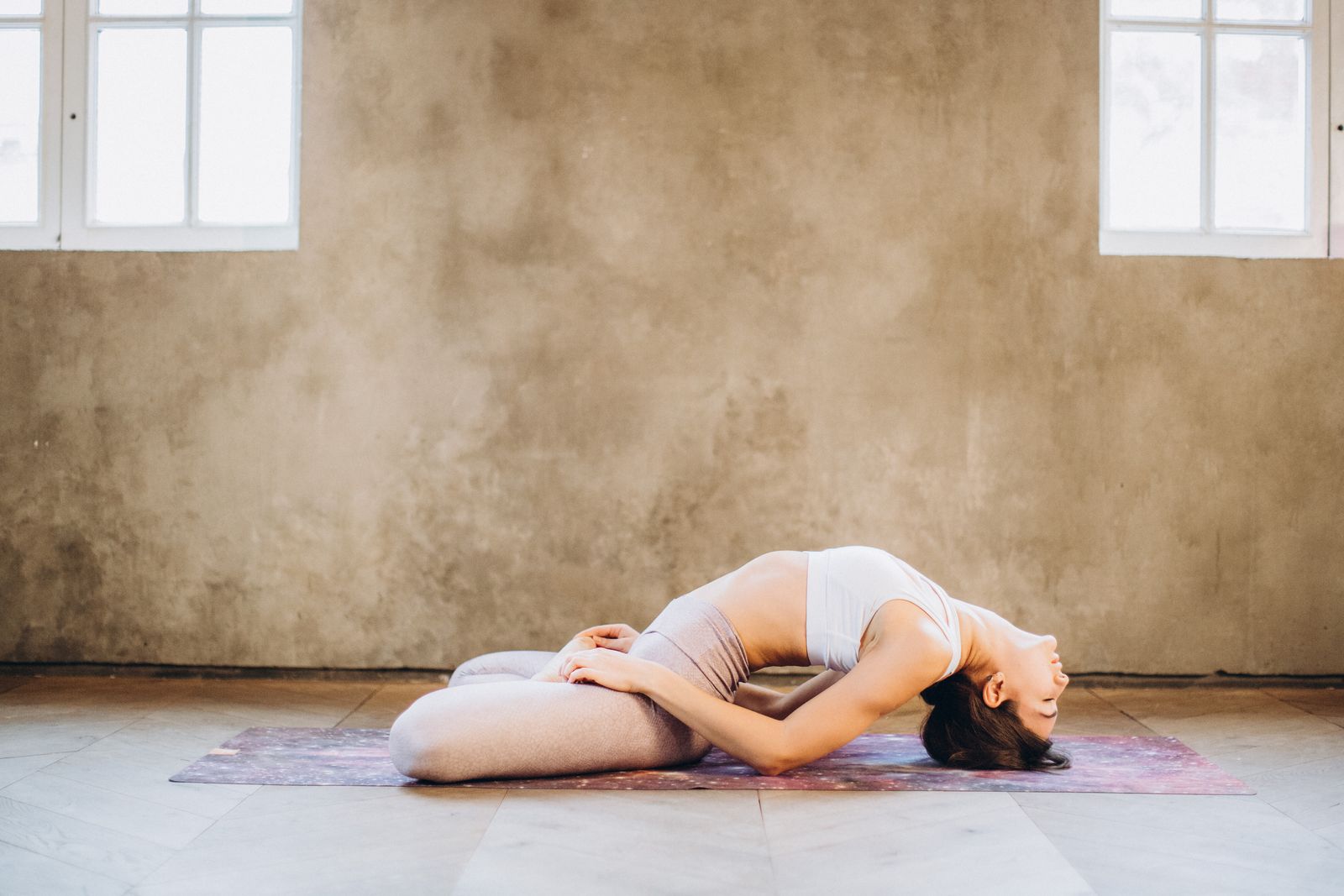
| Matsyasana (fish) | 15-30 sec | 2 | Lift the chest first and rest only light weight on the head, supported by the forearms | Neck pain, cervical spondylosis |
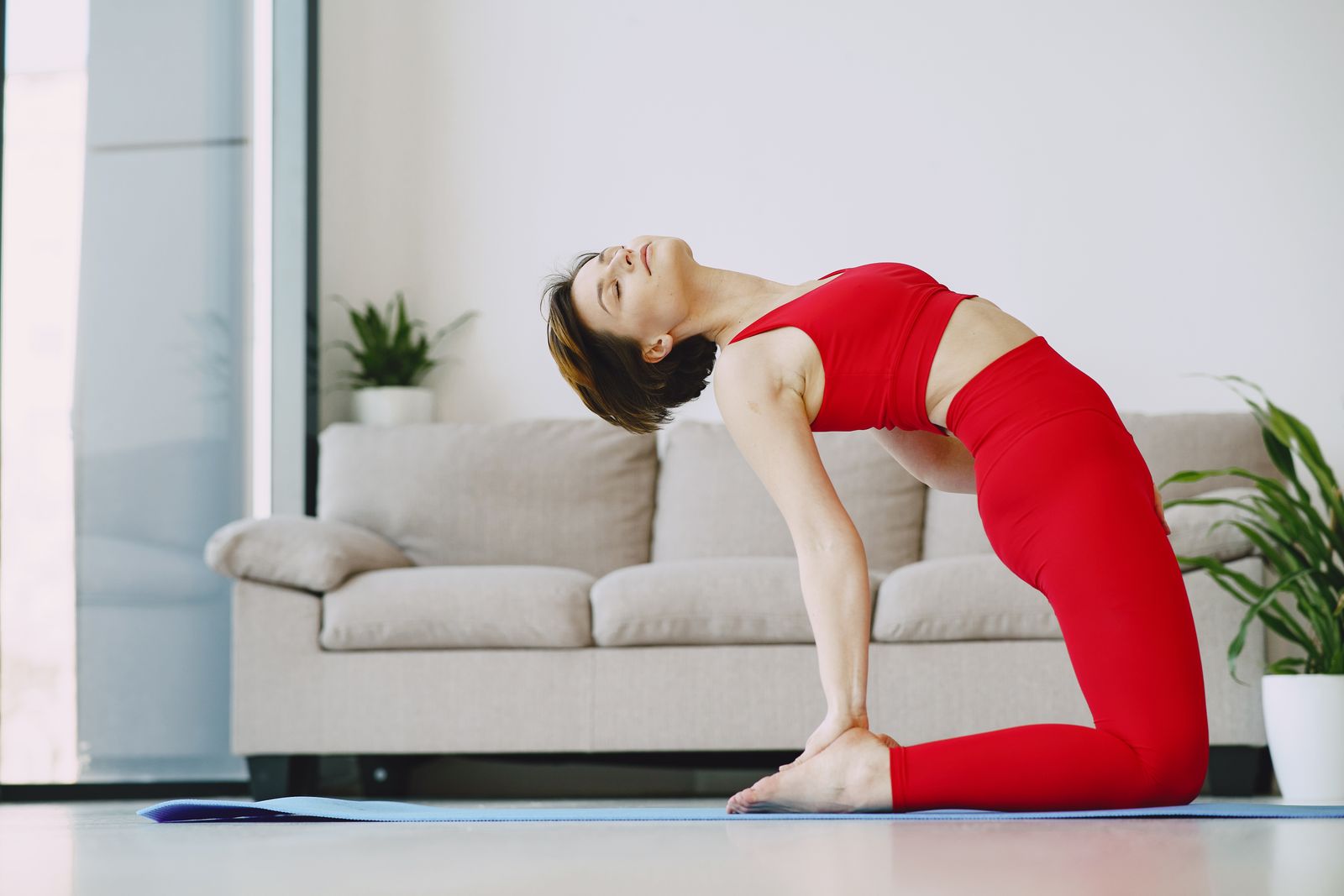
| Ustrasana (camel) | 15-30 sec | 2 | Hands on the lower back, hips over knees, chin neutral, never drop the head back fully at first | High or low blood pressure, dizziness |
| Sarvangasana (shoulder stand) | 20-60 sec | 1-2 | Folded blanket under shoulders, elbows shoulder-width, gaze at the chest, never turn the head | Neck problems, high blood pressure, glaucoma, enlarged thyroid |
| Halasana (plough) | 20-30 sec | 1 | Keep the chin lifted a little off the chest, bend the knees if the back rounds | Same as shoulder stand, plus herniated disc |
| Marjaryasana-Bitilasana (cat-cow) | 8-10 breaths | 1 | Move with the breath, not faster than it | Wrist pain (use fists or forearms) |
Beginners can leave shoulder stand and plough out for the first few weeks. Bridge, cobra, cat-cow and a supported fish pose already make a good routine, and you can work up to camel pose once your back feels strong. If back stiffness holds you back, see yoga for back pain, and yoga for flexibility helps with tight hamstrings that make plough hard.
A 25-Minute Thyroid-Friendly Sequence, Step by Step
Do this on an empty stomach or two to three hours after a meal, ideally in the morning. Breathe slowly through the nose throughout.
- Arrive (3 minutes). Sit comfortably and take 10 slow breaths, then tilt your ear towards each shoulder five times. Never roll the head fully back.
- Warm the spine (3 minutes). Cat-cow for 10 breaths, then a few shoulder rolls.
- Cobra (2 minutes). Three rounds of 15 to 20 seconds, resting on your stomach between rounds.
- Bridge (3 minutes). Three rounds of 20 to 30 seconds with a short rest after each.
- Fish (2 minutes). Two rounds of 15 to 30 seconds, then hug your knees to your chest.
- Camel or a half-camel (3 minutes). Two rounds. If it feels like too much, sit on your heels and do a gentle chest-opening stretch instead.
- Shoulder stand or legs on a wall (3 minutes). Use shoulder stand with a folded blanket only if your doctor and teacher agree. Otherwise rest your legs up a wall for 2 to 3 minutes, which is far gentler on the neck.
- Breathing (3 minutes). Pick the technique that suits your condition from the next section.
- Savasana (3-5 minutes). Lie flat, let the breath settle and release the jaw and throat.
If you practise at home without a teacher, our guide to yoga at home covers set-up, props and common alignment slips.
Pranayama for Thyroid: Which Breath Suits Which Condition?
Breathing practice is where yoga works most directly on the stress response. The right technique differs for an underactive and an overactive thyroid, so match the breath to your condition rather than copying a generic video.
| Technique | How it is done | Time | Hypothyroidism | Hyperthyroidism |
|---|---|---|---|---|
| Ujjayi (victorious breath) | Slow breath through the nose with a soft sound from the back of the throat | 2-3 min | Suitable | Suitable, keep it soft and slow |
| Anulom vilom (alternate nostril) | Inhale left, exhale right, then reverse, at an easy pace with no breath holding | 3-5 min | Suitable | Suitable, a good first choice |
| Bhramari (humming bee) | Hum on the exhale with the mouth closed | 5-7 rounds | Suitable | Suitable, calming |
| Kapalabhati (skull-shining) | Short, forceful exhales with passive inhales | 1-2 short rounds | Only if your doctor agrees and blood pressure is normal | Best avoided |
Skip kapalabhati if you have high blood pressure, heart problems, a hernia or are pregnant. Breath holding is unnecessary here; smooth, unforced breathing is the goal.
Yoga for Hypothyroidism vs Hyperthyroidism: What Changes?
For an underactive thyroid, choose gentle but energising practice: backbends, cobra, bridge and active but unhurried flows. For an overactive thyroid, choose calming practice: longer holds, forward folds, restorative poses and slow breathing. In both cases, avoid forcing inversions, and keep sessions at 20 to 30 minutes.
Hypothyroidism. Low thyroid hormone often brings tiredness, feeling cold, constipation and a heavy, slow feeling. A morning sequence with bridge, cobra and a few gentle flows can help you feel awake without exhausting you. Alternate days between a flowing class such as vinyasa yoga at a gentle pace and a steadier hatha yoga session so you recover. Weight can creep up with hypothyroidism; the principles in yoga for weight loss apply, with patience.
Hyperthyroidism and Graves’ disease. Favour slow, grounding work: supported bridge, child’s pose, seated forward folds, legs up the wall and a long Savasana. The calming approach in yoga for anxiety and the slow, prop-supported style of restorative yoga both fit well. Avoid vigorous flows, kapalabhati and long inversions unless your doctor has cleared them.
Hashimoto’s thyroiditis. Energy can swing from week to week. On low days do only breathing and Savasana, and on good days do the full sequence.
A Day-by-Day Weekly Plan
Use this as a template and adjust it to your energy, with one real rest day.
| Day | Focus | What to do | Time |
|---|---|---|---|
| Monday | Full sequence | 25-minute routine above | 25 min |
| Tuesday | Spine and breath | Cat-cow, cobra, bridge, anulom vilom | 20 min |
| Wednesday | Full sequence | 25-minute routine above | 25 min |
| Thursday | Calming | Forward folds, legs up the wall, bhramari, Savasana | 20 min |
| Friday | Full sequence | 25-minute routine above | 25 min |
| Saturday | Gentle flow or walk | Easy hatha class or a 30-minute walk | 30 min |
| Sunday | Rest | Stretching and 5 minutes of breathing only | 5-10 min |
For a wider view of the styles you can rotate through, types of yoga explains how each one feels, so you can pick days that suit your energy.
Troubleshooting: When Thyroid Yoga Does Not Feel Right
Neck pain or a pinching feeling in shoulder stand. This is the most common problem. Add a folded blanket, reduce the hold to 15 seconds, keep your gaze on your chest and never turn your head. If it persists, use legs-up-the-wall instead.
Dizziness when you rise. Come up slowly and pause on all fours. If it happens often, check your blood pressure and tell your doctor.
Heart racing or jittery after practice. Switch to the calming plan, remove forceful breathing and shorten the session. If palpitations continue, speak to your doctor, especially if you have hyperthyroidism.
Too tired to start. Commit to five minutes of cat-cow, a few breaths and Savasana. A tiny daily habit beats an ambitious one you abandon.
Pregnant or planning pregnancy. Follow a trimester-specific approach such as prenatal yoga and your doctor’s advice rather than a general thyroid routine.
How Long Before You Notice a Difference?
Most people notice better sleep, steadier mood and less stiffness within two to four weeks of practising four to six days a week. Changes in hormone levels cannot be judged by how you feel and are confirmed only by blood tests ordered by your doctor, usually after several weeks or months of treatment.
Think in months, not days. If you feel no change in energy or mood after six to eight weeks of regular practice, review the plan with a teacher and tell your doctor about persisting symptoms; do not push harder.
Thyroid Ke Liye Yoga: Learning in a Guided Format
Many people search for thyroid ke liye yoga or thyroid ka yoga because they want a clear, guided routine in their own language rather than a long list of poses. A teacher who explains each pose in Hindi or English and watches your neck alignment live is far more useful than a static chart, with clear modifications for beginners.
What to Pair with Your Yoga for Better Thyroid Support
Sleep 7 to 8 hours, walk most days, and keep meals regular with dal, vegetables, curd, roti or rice and a protein source. Take your medicines exactly as your doctor advised, and ask how to time them around meals and practice.
Avoid self-prescribing iodine, selenium or other supplements, and skip crash diets. A personalised plan from an online nutritionist can fit your condition, budget and food preferences. For wider hormonal concerns, read yoga for hormonal imbalance.
Frequently Asked Questions
Can yoga cure thyroid problems completely?
No. Yoga is a supportive practice that can ease stress, improve sleep and build energy alongside medical treatment, but it does not cure hypothyroidism, hyperthyroidism or autoimmune conditions like Hashimoto’s. Thyroid levels should be tracked with blood tests, and medicines should only be changed by your doctor.
Which yoga pose is best for thyroid?
No single pose is best. Shoulder stand is the one most often named, but beginners are usually better served by bridge, cobra and a supported fish pose, which are easier on the neck. Choose poses your body handles comfortably and that your doctor has cleared.
Is yoga safe for people with hyperthyroidism?
Usually yes, if you choose calming practice such as slow breathing, forward folds, restorative poses and long relaxation. Avoid vigorous flows, kapalabhati and long inversions, and check with your doctor first, especially with Graves’ disease or a fast heartbeat.
How often should I practise yoga for thyroid health?
Aim for four to six sessions a week of 20 to 30 minutes, with at least one lighter day. Short, regular practice gives steadier benefits for stress, sleep and energy than an occasional long session.
Can beginners do shoulder stand for thyroid?
Beginners can work towards it, but there is no need to rush. Spend a few weeks on bridge, fish and cobra, learn the pose with a teacher using a folded blanket, and use legs-up-the-wall as a gentler alternative if your neck feels strained.
Want a teacher to check your neck alignment and adjust the pace to your diagnosis? Book an online yoga class with FitStrot and start with a thyroid-friendly 25-minute routine.


