

Stiff hips, a tight lower back or an old injury make many people avoid yoga, and that is exactly the gap iyengar yoga was built to fill. It is a precise, alignment-focused style of hatha yoga that uses props such as blocks, belts, bolsters and chairs, so you can hold a pose correctly before your body can do it unaided. This guide explains how a class runs, which props you need, who benefits, when to be careful and how to find a good teacher in India.
What is Iyengar yoga?
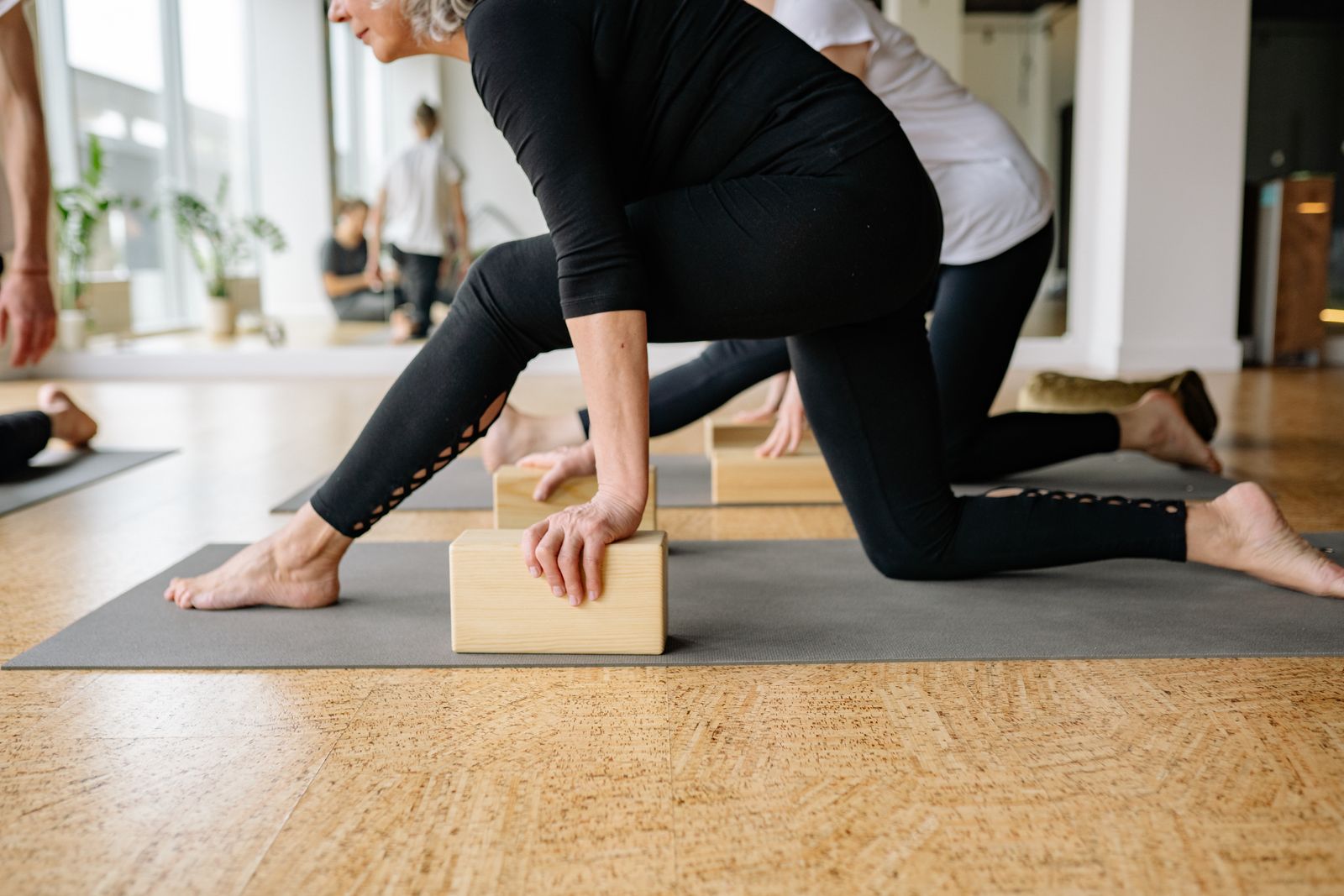
Iyengar yoga is a form of hatha yoga that puts precise alignment ahead of speed. Poses are usually held for about 20 to 60 seconds, longer with experience, while the teacher corrects foot, hip, spine and shoulder position. Props such as blocks, belts, bolsters and chairs make correct form possible before you are flexible or strong enough.
The method is named after B.K.S. Iyengar, the Indian teacher who developed it, and it is now taught worldwide. A typical class covers far fewer poses than a flowing class, often 8 to 12 in an hour, because each one is broken into small steps: where the feet press, which muscles work, which stay soft, how the joints stack.
Sequencing is deliberate. Standing poses such as Tadasana (mountain), Trikonasana (triangle) and Virabhadrasana (warrior) come early and often, because they build leg strength and body awareness. Seated forward bends, twists, supported backbends and, for experienced students, inversions follow, and the class usually ends with a long relaxation. Most iyengar yoga poses are classical hatha poses; what changes is the level of detail and the support around them.
How is Iyengar yoga different from Ashtanga, Vinyasa and Bikram?
Iyengar yoga is slower and more static than Ashtanga, Vinyasa or power yoga, uses props far more, and is practised at normal room temperature, unlike Bikram’s heated room of around 40 degrees Celsius. Those styles build heat and cardio through flow. Iyengar yoga builds alignment awareness and isometric strength through longer holds.
| Style | Pace | Props | Typical hold | Room | Best fit |
|---|---|---|---|---|---|
| Iyengar | Slow, stop-and-adjust | Used heavily | About 20-60 seconds or more | Normal temperature | Alignment, stiffness, rehab-style practice |
| Ashtanga yoga | Fast, fixed sequence | Rarely | About 5 breaths | Normal temperature | Discipline, stamina, strength |
| Vinyasa yoga | Flowing, breath-linked | Sparingly | A few breaths | Normal temperature | Cardio feel, variety |
| Bikram yoga | Steady, fixed 26 poses | None | Short, repeated | Heated, about 40 C | People who tolerate heat well |
| Power yoga | Fast, strength-led | Rarely | Short | Normal temperature | Fitness and calorie burn |
| Restorative yoga | Very slow, passive | Fully supported | Several minutes | Warm, quiet | Rest, recovery, winding down |
In short, iyengar yoga vs ashtanga comes down to this: Ashtanga asks you to keep moving and trust the sequence, while Iyengar asks you to stop, look and refine. Restorative is the closest cousin, but its aim is passive rest, whereas Iyengar props are there to keep you actively engaged in the correct shape.
If you are still mapping the wider landscape, our overview of types of yoga places Iyengar alongside the other major branches. Aerial yoga also uses support to deepen poses, but through a hammock rather than blocks and belts, and it is a separate method.
What happens in an Iyengar yoga class?
A one-hour Iyengar class usually spends 20 to 25 minutes on standing poses, 15 to 20 minutes on seated work, twists and supported backbends, and 5 to 10 minutes on a long relaxation. The teacher demonstrates, then walks the room giving individual corrections, so you will stop and adjust far more than you move.
| Segment | Approx. time | What you do | Props you may use |
|---|---|---|---|
| Arrival and warm-up | 5-10 min | Mountain pose, simple stretches, learning where your weight sits | Wall, blanket |
| Standing poses | 20-25 min | Triangle, warrior, side-angle; hold, adjust, repeat on the other side | Block under the hand, wall behind the heel |
| Seated poses and forward bends | 10-15 min | Staff pose, seated forward bend; lengthen the spine before folding | Belt around the feet, folded blanket under the hips |
| Twists and supported backbends | 5-10 min | Gentle twist on a chair, chest opening over a bolster | Chair, bolster |
| Relaxation | 5-10 min | Lying still, breathing quietly | Blanket, bolster under the knees |
Do not worry if the numbers differ from your class. Timings vary with the teacher, the level and whether it is a beginner or intermediate session. What stays constant is the pattern: build the base, add a little depth, check the details, then release.
Myths about Iyengar yoga, corrected
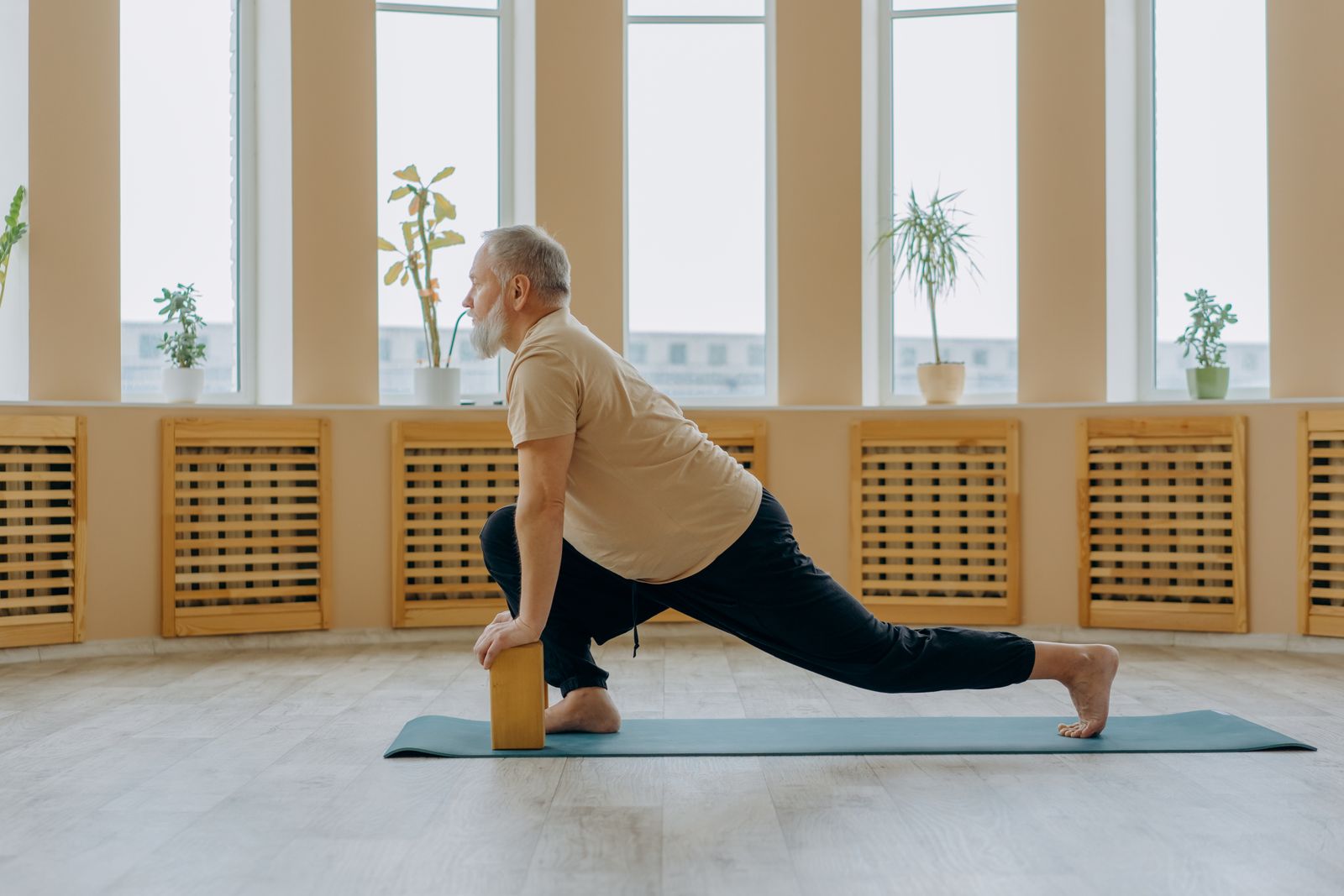
Myth: props are for people who are weak. Props are tools. A block under your hand in triangle pose lets your chest stay open instead of collapsing toward the floor, which is the whole point of the pose. Experienced students use them too, often to refine an advanced pose.
Myth: it is too slow to count as exercise. Holding a standing pose for a minute works the legs, hips and core isometrically, and many first-timers are surprised by how tiring it is. It will not raise your heart rate like a dance workout, but it is not passive.
Myth: you must be flexible first. It works the other way round. The method exists so that stiff people can practise safely, with the props bringing the floor closer instead of you forcing your body down to it.
Myth: slow means risk-free. Any yoga can strain a joint if you push into pain, and long holds make a bad position more costly. Good alignment and a qualified teacher are the safety features, not the pace.
Which Iyengar yoga props do you need, and what works at home?
You do not need to buy everything at once. Two blocks, one belt and a folded blanket cover most beginner poses, and a sturdy chair adds supported backbends and twists. At home, a stack of thick books, a cotton dupatta and a folded dhurrie or blanket can stand in until you decide what to buy.
| Prop | What it does | Home substitute | Watch out for |
|---|---|---|---|
| Yoga blocks (2) | Bring the floor closer in standing and seated poses; support hands, hips or head | Two firm, equal-height books taped or banded together | Slippery covers; use a non-slip surface |
| Belt or strap | Extends your reach; keeps arms or legs aligned | A long cotton dupatta or a sturdy yoga-style strap | Avoid stretchy fabric that gives under load |
| Bolster | Supports spine, knees or hips in gentle backbends and rest poses | Two or three firmly rolled blankets | Soft pillows that sink and lose support |
| Blankets | Pad knees and seat; lift the hips in seated poses | Folded cotton blankets or a dhurrie | Thick folds that tilt the pelvis unevenly |
| Sturdy chair | Supports twists, forward bends and gentle backbends | A stable chair without wheels, placed against a wall | Wheels or wobbly legs; test it first |
Practising iyengar yoga at home is realistic once you have attended a few guided sessions, because the value of a prop depends on choosing the right height and position for your body. A teacher watching you, even on a video call, catches mistakes that are invisible from the inside.
What are the benefits of Iyengar yoga, and who gets the most from it?
Iyengar yoga benefits tend to build gradually: better posture awareness, gentle gains in flexibility, and isometric strength in the legs, core and shoulders. Many people also feel calmer after a session because the careful focus leaves little room for racing thoughts. It is not a fast fat-loss method, and results vary from person to person.
Who tends to get the most from it:
- Complete beginners. Slow, detailed teaching builds good habits from day one. Our guide to yoga for beginners helps you compare entry points across styles.
- Desk workers with a stiff back. Supported poses can ease tension around the spine, and iyengar yoga for back pain is a common reason people sign up. Pose-specific guidance is in our yoga for back pain article. Persistent or severe pain needs a medical check first.
- Older adults. Props and chairs let joints move through a comfortable range with less strain, which is why iyengar yoga for seniors is widely recommended. See yoga for seniors for more.
- People who feel wound up. The steady breathing and concentration are grounding for many students, as covered in our piece on yoga for anxiety. It complements professional care and does not replace it.
Troubleshooting: when a pose feels wrong
Discomfort during iyengar yoga should be a stretch or muscle effort, never sharp, pinching or joint pain. If something feels off, come out gently and try one of these fixes before attempting the pose again.
- Knee pain in warrior or triangle: check that the front knee points the same way as the middle toes and is not collapsing inward. Shorten the stance and ask your teacher to check the angle.
- Hand cannot reach the floor in triangle: place the hand on a block or a chair seat instead of dropping the chest to reach the floor.
- Rounded back in a seated forward bend: sit on a folded blanket and loop a belt around the feet, so you can lengthen the spine first and fold from the hips.
- Tight shoulders or neck: ease off, keep the shoulders away from the ears, and use a wall or chair for support instead of reaching harder.
- Lightheaded after a pose: come out slowly, sit or lie down, breathe normally and skip the next demanding pose. If it recurs, speak to your doctor.
- Lower back pinching in a backbend: use a bolster or chair for support, and do not push for depth.
Who should check with a doctor before starting Iyengar yoga?
See your doctor before starting if you are pregnant, have high or low blood pressure, a recent injury or surgery, a heart condition, glaucoma, osteoporosis, or neck or spine problems. Tell the teacher too. Many poses can be modified, but some, such as inversions, may need to be avoided or taught differently.
Inversions and head-below-heart poses deserve extra caution, since they can affect blood pressure and put load on the neck. Many teachers also advise skipping or modifying them during menstruation. This article is general information and does not replace medical advice; never stop or change medication because of yoga practice, and stop immediately if you feel chest pain, dizziness, numbness or sharp pain.
How do you find a qualified Iyengar yoga teacher in India?
Look for a teacher certified through a recognised Iyengar yoga association, since the name is used loosely and certification involves multi-year training and assessment. Ask where they trained, what level they hold and whether they can adapt poses for your injury or condition. Verify credentials rather than relying on the studio’s name alone.
Pune is regarded as the home of the method, and certified teachers and institutes also teach in Mumbai, Delhi and other large cities. If you search for iyengar yoga near me, treat the results as a starting list, not a guarantee. Visit, watch a class and notice whether the teacher corrects individuals rather than shouting general instructions.
Prefer to learn from home? Online classes can work well if the instructor can see you and gives alignment feedback. Our online yoga classes let you practise with live guidance wherever you are, which is a sensible way to get comfortable before joining an in-person iyengar yoga class.
Iyengar yoga FAQs
Is Iyengar yoga good for weight loss?
It can support a healthy routine, but it is not the fastest option. The slow pace burns fewer calories per session than power yoga, Vinyasa or brisk cardio. It is better for strength, posture and body awareness. Combine it with balanced eating and other activity if weight loss is your main goal.
Do I need to be flexible to start Iyengar yoga?
No. The method was designed so stiff people can practise safely, using blocks, belts and chairs to bring poses within reach. Start where you are, and let range of motion improve gradually rather than forcing it.
How often should a beginner practise Iyengar yoga?
Two or three sessions a week of about 45 to 60 minutes is a sensible starting point for most beginners, with rest days in between. Short 15 to 20 minute practices on other days are fine if nothing hurts. Build up slowly and let your teacher guide the pace.
Can pregnant women practise Iyengar yoga?
Some do, with modified poses and props, but only with a doctor’s approval and a teacher trained in prenatal yoga. Avoid regular mixed-level classes without that guidance, and stop if you feel dizzy, uncomfortable or short of breath.
Is Iyengar yoga the same as therapeutic yoga?
Not exactly. Iyengar yoga is a general method with strong therapeutic uses because of its alignment focus and props. Therapeutic yoga usually means a programme adapted for a particular condition, often taught one-to-one. It supports medical care and does not replace it.
Want a teacher to check your alignment from home? Explore FitStrot’s online yoga classes, and tell your instructor about any injury, pregnancy or blood pressure concern before your first session.


