

Zumba for plus size beginners works best when the class bends to your body instead of asking your body to bend to the class. You do not need to be smaller, fitter or more coordinated to join in. You need a low-impact version of each move, shoes that cushion your joints, a floor that is kind to your knees, and an instructor who treats modifications as normal. This guide covers all four, plus a gentle four-week start, with no promise about the number on a scale.
Is Zumba safe and realistic for a plus-size beginner?
Yes, for most healthy adults. Zumba is rhythm-led cardio, and every move has a lower-impact version: step instead of jump, shorter range instead of a big reach, march instead of bounce. Starting with 20 to 30 minutes, two or three days a week, at a pace where you can still speak in short sentences, is a sensible beginner dose.
Zumba is built on repeating patterns set to music, so you can keep the beat with a smaller version of a move and still be doing the same class as everyone else. Effort comes from continuous movement, not from jump height.
Fitstrot’s Zumba classes are led by Yash Pathak, our lead Zumba trainer, who is ZIN Licensed, ACE Certified and Strong Nation Certified. A trained instructor can name an easier option while the music is still playing, so you never have to stop to adapt.
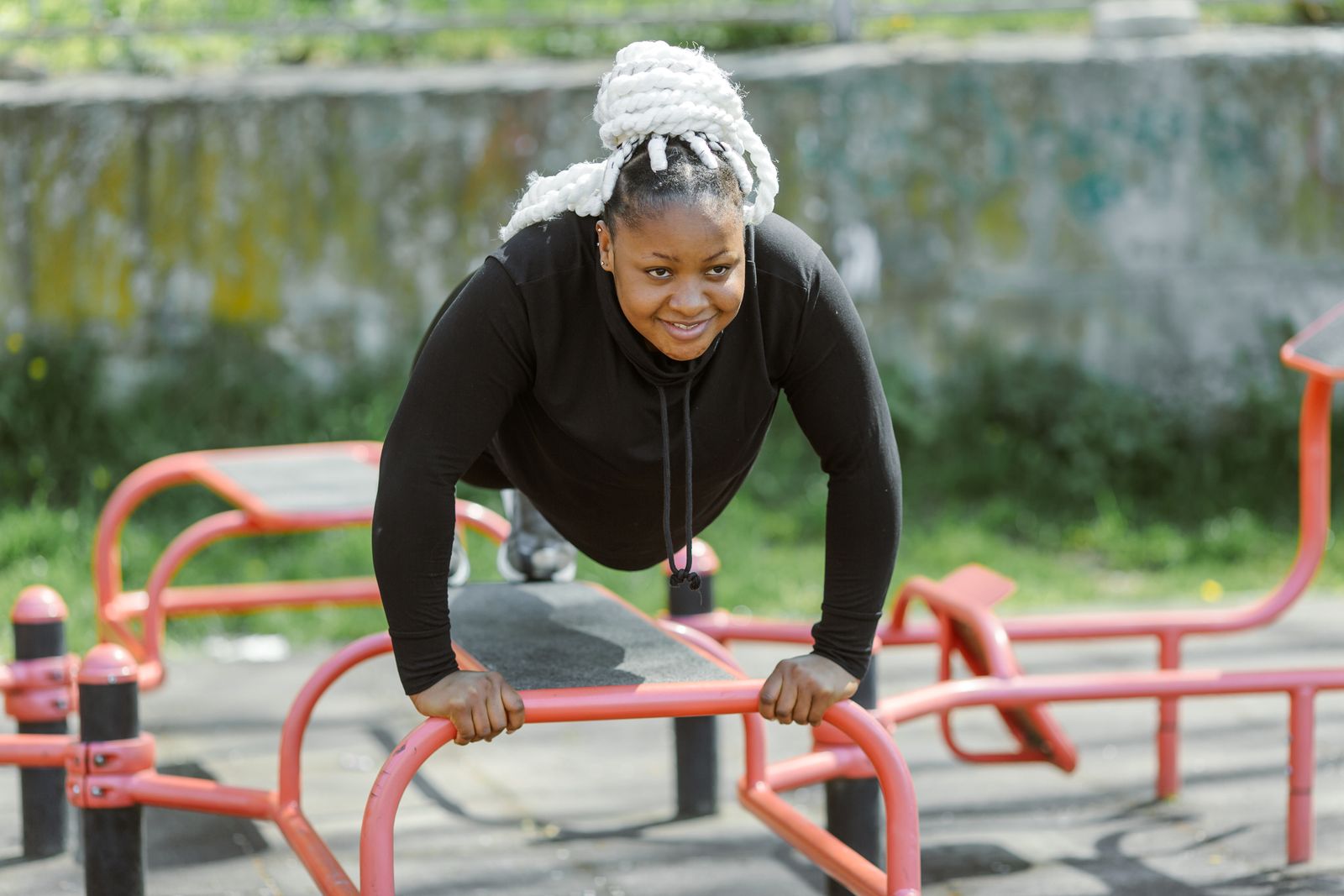
Four myths about plus size Zumba, corrected
- “I should get fitter or smaller before I join.” There is no entry requirement. A first class at half intensity is a perfectly valid first class.
- “Modifying means I am doing it wrong.” Long-time dancers modify to manage joints and energy. A smaller step on the beat beats a bigger step off it.
- “Everyone will be watching me.” In a live class, people are busy tracking their own feet. In an online class you can keep your camera off and dance in your own room.
- “Only high-impact moves count as a real workout.” Your heart does not know whether your feet left the floor. Continuous stepping with active arms still raises your breathing.
How do you modify Zumba moves for low impact?
Replace anything that leaves the floor with a step, shrink every movement to about half its range, and keep one foot in contact with the ground whenever you can. Keep your knees softly bent, stay on the beat, and add arms only once the feet feel steady. That is low-impact Zumba, and it is a complete version of the class.
Use this table as a cheat sheet. Instructors name moves differently, but the patterns are the same.
| Move type | What the class may do | Low-impact version | Form cue |
|---|---|---|---|
| Jumps and hops | Both feet leave the floor | Step out and tap the other foot, or march in place | Land through the whole foot, never on toes |
| Squat patterns | Deep knee bend with a bounce | Shallow bend, about a quarter of the way down | Knees point the same way as your toes |
| Fast side steps | Quick travelling steps | Half-time steps: one step for every two beats | Keep your chest tall, eyes forward |
| Lunges | Big step back or forward | Small step with a toe tap, no lowering | Keep your weight over the front heel |
| Hip circles and isolations | Large, fast circles | Smaller, slower circles with hands on hips | Move from the hips, not the lower back |
| Overhead arm sequences | Reaching high for many counts | Arms at shoulder height or lower | Relax your shoulders away from your ears |
If you are new to the basics themselves, our guide to Zumba for beginners explains how a class is structured.
Joint-friendly habits for knees, ankles, hips and back
Larger bodies place more load through the joints with every step, so small technique choices add up.
- Knees: keep a soft bend and never lock them straight. Let your kneecap follow the direction of your toes. If a move makes the front of the knee sharp or painful, make it smaller or march instead.
- Ankles and feet: roll through the whole foot rather than staying on your toes for long stretches. Repeated toe-bouncing is a common cause of sore arches and calves.
- Hips and lower back: keep your tummy gently drawn in and your ribs over your hips. Do not arch your back to make a hip move bigger.
- Effort level: use the talk test. If you can speak in short sentences, you are in the right zone. Roughly 4 to 6 out of 10 effort is plenty for the first few weeks.
- Breaks: sip water between songs and rest for a minute when needed. Resting is part of the class.
Mild muscle tiredness for a day or two after a session is normal when you are new. Sharp joint pain, pain that gets worse as the session goes on, or swelling is not normal. Stop that move and tell your instructor or doctor.
On rest days, gentle stretching helps many people feel looser. Our post on combining Zumba and yoga shows how the two fit together, and Fitstrot’s online yoga classes suit those days.
Which shoes and floor suit a plus-size Zumba beginner?
Choose cushioned, supportive training shoes with a slightly smooth sole that lets your foot pivot, and dance on wood, sprung flooring or a firm exercise-mat surface. Avoid dancing barefoot or in socks on tiles, on thick carpet that grips your shoes, or on hard marble. Flat canvas shoes give very little shock absorption.
Many Indian homes have vitrified tile or marble floors, which are hard and slippery, so footwear and floor deserve as much attention as the music.
| Setup | Works well for | Watch out for | Verdict |
|---|---|---|---|
| Cushioned cross-training shoes | Side steps, turns and low-impact stepping | Very thick, grippy soles can catch during pivots | Best all-round choice |
| Flat canvas shoes | Short sessions only | Little cushioning and arch support | Not recommended |
| Barefoot or socks on tiles | Nothing in particular | Slips, sore soles and hard impact | Avoid |
| Wooden or laminate floor | Most Zumba movement | Wet or polished spots can be slick | Good |
| Interlocking foam or exercise-mat flooring | Joint comfort and absorbing impact | Very soft foam can feel unstable under larger steps | Good, if firm |
| Thick carpet or dhurrie | Almost never | Shoes grip and twist the knee on turns | Avoid for pivots |
When you buy shoes, try them on in the evening, when feet are slightly larger, and leave about a thumb’s width in front of your longest toe. Ask for a wider fit if the sides press.
What does a gentle first month of Zumba look like?
A sensible first month is two sessions in week one, building to three sessions of 30 to 40 minutes by week four, with a rest day between sessions and effort kept around 3 to 6 out of 10. Add time before you add intensity. If a week feels hard, repeat it instead of moving on.
| Week | Sessions | Length per session | Focus | Effort (out of 10) |
|---|---|---|---|---|
| Week 1 | 2 | About 20 minutes | Find the beat, march and step at half range | 3 to 4 |
| Week 2 | 2 to 3 | About 25 minutes | Learn two or three basic steps with simple arms | 4 |
| Week 3 | 3 | About 30 minutes | Link steps together, take short water breaks | 4 to 5 |
| Week 4 | 3 | 30 to 40 minutes | One full beginner class with your own modifications | 4 to 6 |
This is a starting template, not a prescription, and no schedule can promise a particular change in your body. If you would like to do your first sessions alone before joining a group, Zumba at home for beginners walks through a simple setup, and our 1-on-1 personal training gives you a coach who sets the pace around your joints and schedule.
When should you check with a doctor before starting Zumba?
See your doctor before starting if you have a heart or lung condition, uncontrolled high blood pressure, diabetes treated with medication, a recent injury or joint replacement, or you are pregnant. Also check first if you have not exercised for years and notice chest discomfort, dizziness or breathlessness at rest. Stop and seek help for chest pain or fainting.
A doctor can tell you what is safe for your situation. Do not change or skip medication on your own because you have started exercising. If your doctor suggests lower intensity, the modifications in this guide are built for that.
Troubleshooting: when class feels like too much
- “I cannot keep up with the steps.” Drop the arms and keep the feet going, or march on the beat. Add arms once the footwork feels automatic.
- “I am out of breath after one song.” Slow down, drop your arms to hip height and take a few sips of water. Breathing hard but able to speak a few words is fine. Struggling to speak at all means ease off.
- “My knees ache the next day.” Reduce the squat depth, step instead of bounce, check your floor and shoes, and shorten the next session by five minutes. If the ache stays beyond two or three days, speak to a doctor.
- “My thighs chafe.” Wear fitted, breathable bottoms with a longer leg, such as cycling-style shorts under a skirt or a loose kurta set, and use an anti-chafe balm. Fabric that wicks sweat is more comfortable than thick cotton.
- “I feel self-conscious.” Choose online classes, keep your camera off, and watch the instructor, not yourself.
A light snack one to two hours before class, such as a banana, a small bowl of poha or a handful of roasted chana, helps many people feel steady. If you want food guidance for your energy levels, a conversation with an online nutritionist keeps it personal rather than generic.
How do you choose an instructor and class that suit you?
Pick a class that is clearly labelled beginner or gentle, where the instructor demonstrates an easy option out loud and treats it as normal. A class length of about 30 to 45 minutes and small groups are good signs. If you only see full-intensity versions, look elsewhere.
Ask these questions before you commit:
- Does the instructor show a low-impact version of each move, not only the full one?
- Is there a recording, so I can repeat a class at my own pace?
- Is there a gentler format on offer, such as a lower-intensity class sometimes called Zumba Gold, for the first few weeks?
Our guide to how to choose an online Zumba class goes deeper on instructor style, class level and format. If you are comparing what is available, see how online Zumba classes work, from schedules to what you need at home.
Questions people ask about plus size Zumba
Can a plus-size beginner do Zumba?
Yes, in most cases. Zumba can be scaled up or down, so you can step instead of jump, shorten the range of every move and rest when you need to. If you have a health condition, check with your doctor first, then start with about 20 minutes, two days a week.
Will Zumba hurt my knees if I am plus-size?
It does not have to. Knee discomfort usually comes from deep squats, bouncing, hard floors or flat shoes. Keep a soft bend, step instead of hop, and stop any move that causes sharp pain. Persistent knee pain deserves a doctor’s opinion.
What should I wear for Zumba as a plus-size beginner?
Wear a supportive sports bra, breathable fitted bottoms that will not ride up or chafe, a loose top you can move in, and cushioned training shoes. Avoid long, trailing dupattas or slippery socks, which can catch your feet. Comfort and support matter more than matching a particular look.
Should I start with Zumba Gold or a standard class?
Either can work. Zumba Gold is a lower-intensity format with slower choreography, which suits anyone wanting a gentler start. A standard beginner class works too if you keep your steps small. Try one of each if you can, and stay with the one where you feel safe and welcome.
How do I handle feeling self-conscious in class?
Start with online sessions, keep your camera off and aim your attention at the instructor. Remember that beginners of every shape feel the same nerves in their first few classes. A small, steady first month usually does more for confidence than any pep talk.
Your first step
Pick one beginner-level session in Fitstrot’s online Zumba classes, tell the instructor which move or joint you would like an easier option for, and keep your first session to about 20 minutes. Come back to the table above after week one and adjust from there.


