
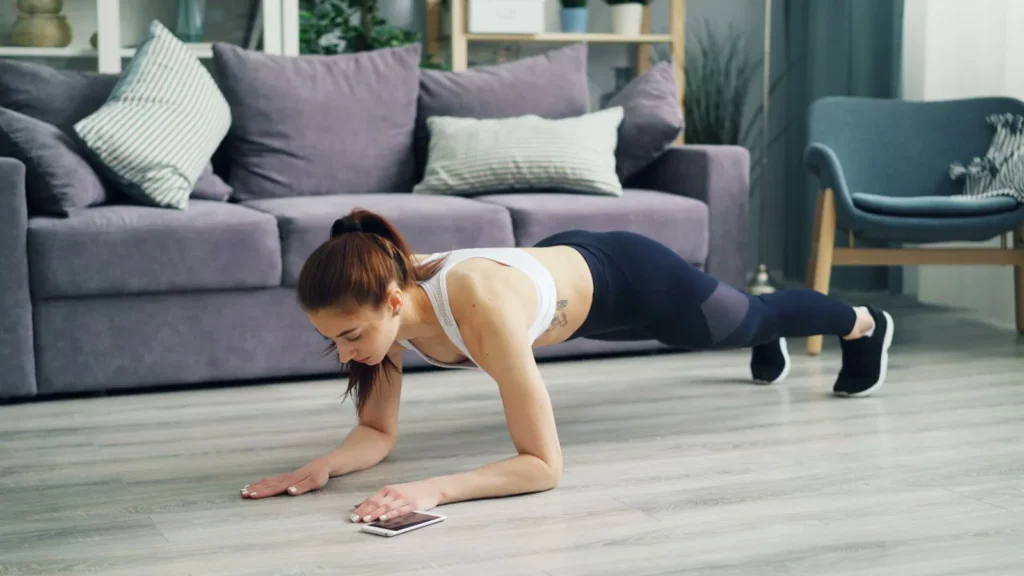
Starting zumba at home for beginners takes about 2 m by 2 m of clear floor, supportive shoes and one song at a time. This plan covers your first 14 days: how to set up the room, how long to dance, which moves to learn first and when to slow down. You do not need rhythm, a dance background or any equipment.
Can you really do zumba at home as a complete beginner?
Yes. A beginner can do zumba at home with no equipment, about 2 m by 2 m of clear floor, supportive shoes and a screen to follow. Start with 15 to 20 minutes, three or four days a week, and build up slowly. Home practice also lets you pause and repeat any step.
Be clear about the goal. By day 14, a realistic result is that you can follow a 20 to 25 minute beginner routine at moderate effort, know about six basic moves and look forward to the next session. Changes in weight or inches depend on food, sleep and consistency over months, so treat them as a possible bonus, not a promise.
Your first two weeks, day by day
Dance on three or four days a week and treat the other days as part of the plan. Your calves, shins and feet need time to adapt to the side-to-side movement. On rest days, take a 20-minute walk or do gentle stretching; our Zumba and yoga guide shows how the two fit together, and online yoga classes are an easy way to add flexibility work.
| Day | What to do | Time | Effort |
|---|---|---|---|
| 1 | Set up the room, warm up, march and step-touch to one slow song | 15 min | Easy |
| 2 | Repeat day 1, add simple arm shapes at chest and shoulder height | 15 min | Easy |
| 3 | Rest or a gentle walk | 20 min | Very easy |
| 4 | Add knee lifts and the merengue march across two songs | 20 min | Easy to moderate |
| 5 | Rest, light stretching | 10 min | Very easy |
| 6 | Add the grapevine, slowly, across three songs | 20 min | Easy to moderate |
| 7 | Rest day | – | – |
| 8 | Follow a beginner video start to finish at half effort | 20 min | Easy |
| 9 | Rest or a gentle walk | 20 min | Very easy |
| 10 | Add the basic salsa step to your move list | 20 min | Easy to moderate |
| 11 | Rest, light stretching | 10 min | Very easy |
| 12 | Full 25-minute session from the walkthrough below | 25 min | Moderate |
| 13 | Rest day | – | – |
| 14 | Repeat day 12 and note what feels easier than day 1 | 25 min | Moderate |
Use the talk test to judge effort. At easy effort you can sing along. At moderate effort you can speak in short sentences but not sing. If you cannot say a few words in a row, drop back to marching until your breathing settles. A beginner session of about 30 minutes burns roughly 150 to 250 kcal, depending on body weight and effort, so do not chase a number on day one.
How much space, which floor and which shoes do you need?
For zumba at home you need a clear floor of about 2 m by 2 m (roughly 6 x 6 ft), a flat non-slip surface and light cushioned shoes that let your foot turn smoothly, such as cross-trainers or dance sneakers. Bare feet or socks on polished tile raise the risk of slipping, and heavy-grip shoes can catch during pivots.
| Item | Aim for | Avoid |
|---|---|---|
| Space | A clear circle wider than your outstretched arms | Dancing between a sofa and a table edge |
| Floor | Flat, dry and non-slip; wood, or a foam or rubber mat on tile | Loose rugs, wet tile, bare feet on polished tile |
| Shoes | Light, cushioned, flat sole; cross-trainers or dance sneakers | Slippers, heavy-grip trail shoes, going barefoot |
| Clothes | Breathable and stretchy, nothing that trails under your feet | Long dupatta ends, loose pyjama hems |
| Water | A bottle within reach; a few sips every 10 minutes | Waiting until you are very thirsty |
| Screen | Phone cast to a TV, or a laptop at eye level 2 to 3 m away | A phone propped on the floor |
| Airflow | A table or pedestal fan placed off your path | Overhead arm moves under a running ceiling fan |
Most Indian living rooms can be ready in two minutes: push the centre table against the wall, fold away the rug, switch the ceiling fan off and put your shoes on. Keep a pair just for dancing so the soles stay clean and grippy.
Walkthrough: your first 25-minute session
This is the session you build towards by day 12. Shorter days on the plan simply use the first two or three blocks.
- Minutes 0 to 5, warm-up. March on the spot, roll your shoulders, swing your arms, do gentle side steps and ankle circles. Raise your pace slowly until you feel warm.
- Minutes 5 to 15, learn. Pick two moves from the table below. Repeat each for one full song, first at half speed, then at the song tempo.
- Minutes 15 to 20, link. Dance one full song, alternating your two moves every 8 counts. Stay at moderate effort.
- Minutes 20 to 25, cool-down. Walk slowly, then stretch calves, thighs, hips and shoulders for about 30 seconds each side.
| Move | How to do it | Form cue | Easier option |
|---|---|---|---|
| March | Walk on the spot, lifting each knee slightly | Tall chest, relaxed shoulders | Smaller steps, no arms |
| Step-touch | Step right, touch left beside it; then reverse | Soft knees, quiet landing | Half speed |
| Merengue march | March with a small hip sway on each step | Let the hip follow the stepping leg | Skip the hips for the first few days |
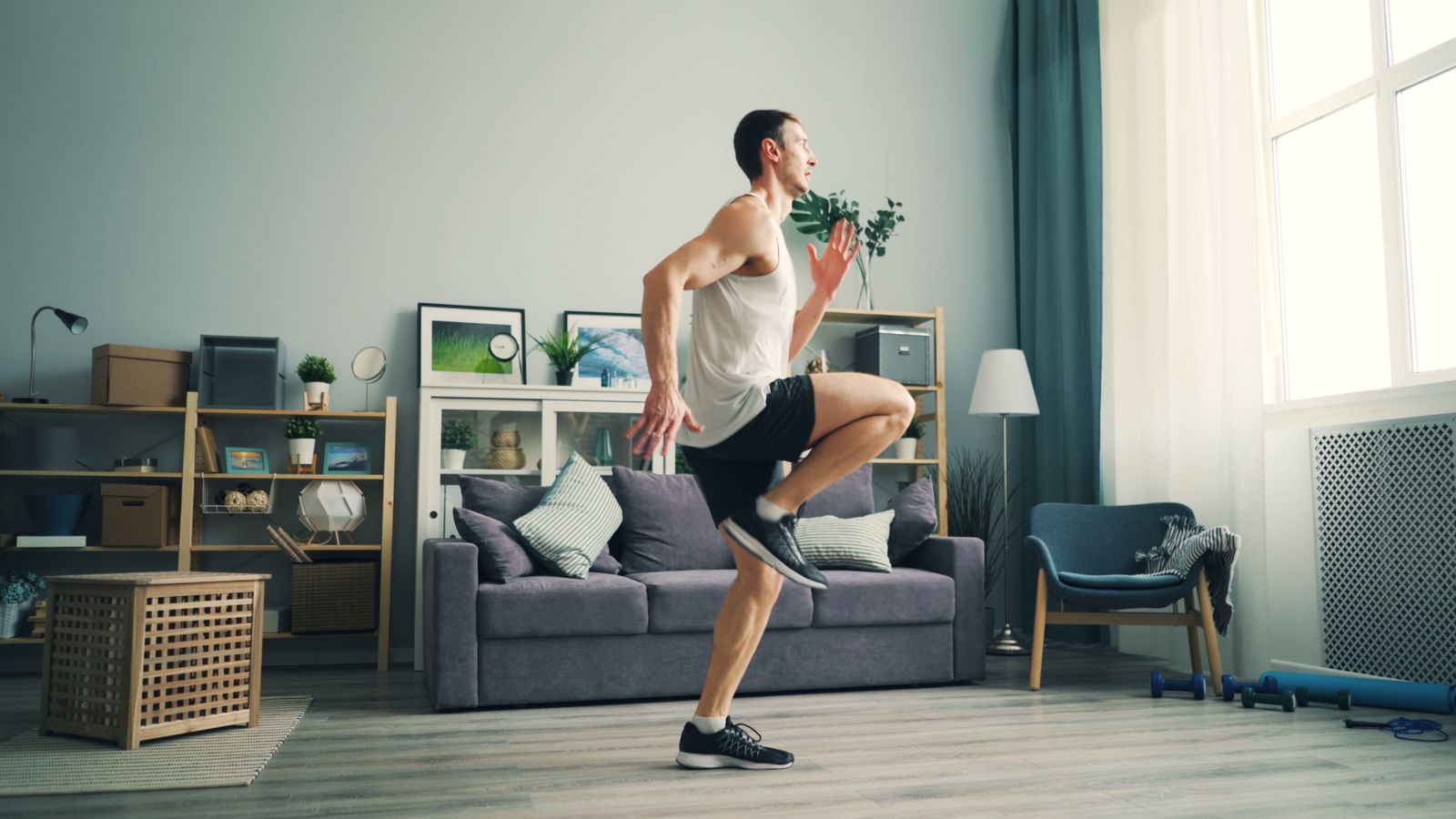
| Knee lift | Lift one knee towards waist height, alternate sides | Stand tall, do not lean back | Lift only to mid-thigh |
| Grapevine | Step side, cross behind, step side, touch | Hips face front, move slowly | Replace with step-touch |
| Basic salsa step | Step forward, shift weight back, bring feet together; repeat backwards | Small steps, weight over the middle of the foot | Keep the steps tiny and skip the hips |
Our guide to basic Zumba steps breaks each of these down further if one of them keeps tripping you up.
Myth check: “I have no rhythm, so zumba is not for me”
Zumba routines are built from short patterns of 4 or 8 counts that repeat through a song, so rhythm is learned by repetition, not talent. Count out loud, start with slower songs and repeat one move for the whole chorus. Being slightly off the beat in your own living room harms nothing. Our Zumba for beginners guide covers what to expect from a first class as well.
A second myth is that you must sweat heavily for it to count. Early on, getting your heart rate up gently and finishing without pain is better than going flat out and skipping the next three sessions.
Troubleshooting your first two weeks
- You keep losing the steps. Slow the video to 0.75x if the player allows it, and practise one move per song. Do not add a new move until the last one feels automatic.
- Calves or shins feel tight. Mild soreness for a day or two is common while your body adapts. Shorten the next session, land more softly and check your shoes. Sharp or one-sided pain means stop.
- You run out of breath. March instead of bouncing, keep your arms lower and sip water. Use the talk test above.
- Your knees complain. Bend them slightly, keep them in line with your toes and avoid twisting on a planted foot. If knee pain lasts beyond a day, rest and see a doctor.
- You skip sessions. Fix a time, keep it to 15 minutes and leave your dance shoes by the door. Missing one day is not a failure; return on the next planned day.
- The small screen is hard to follow. Cast the video to a TV or use a laptop at eye level.
When to slow down, stop or check with a doctor first
Stop and rest if you feel chest pain or pressure, dizziness, faintness, unusual breathlessness or sharp joint pain. Speak to a doctor before starting if you have a heart condition, high blood pressure, joint or back problems, are pregnant, are recovering from an injury or have not exercised in a long time.
If you carry an old injury or a medical condition, a plan built around you is safer than a generic one. Online 1-on-1 personal training can help you build up to dance workouts with the right strength and mobility work, alongside your doctor’s advice.
If you live in a flat, carry extra weight or have only 15 minutes
Flats and neighbours. Pick low-impact versions: keep one foot in contact with the floor, step instead of hop and choose daytime sessions. A thick mat on tile also softens the sound.
Larger bodies. Start with the easier option for every move, keep sessions at 10 to 15 minutes and add time slowly. Our guide to Zumba for plus-size beginners goes deeper on pacing and comfort.
Short on time. Two 10-minute blocks, one in the morning and one in the evening, still count. A warm-up plus two songs is a complete session.
When does a live online class make sense?
A live online class makes sense once the basic steps feel comfortable, usually after one to two weeks of home practice, or sooner if you want feedback on your form. A live instructor can spot mistakes a video cannot, and group energy helps many people stay consistent.
Fitstrot’s online Zumba classes are led by Yash Pathak, our lead Zumba trainer, who is ZIN Licensed, ACE Certified and Strong Nation Certified. Classes run online, so you still dance in your own space. Check the online Zumba classes page for current timings, and read our Online Zumba classes guide to see what a session looks like. Home practice is a valid long-term choice too, and our guide on how to do Zumba at home shows how to structure full sessions after your first two weeks.
Frequently asked questions about zumba at home for beginners
Do I need any equipment to start zumba at home?
No equipment is needed. You need a clear floor of about 2 m by 2 m, supportive athletic shoes with a flat sole and a screen or speaker for the music. Weights, bands and machines are optional extras, not requirements, for your first weeks of beginner zumba.
How many days a week should a beginner do zumba at home?
Three or four days a week is a good start, with sessions of 15 to 25 minutes and at least one full rest day between harder days. Your joints and calves adapt slowly, so build time before intensity. After a month you can add a fifth short session if you feel fine.
Can I do zumba in a small flat without disturbing neighbours?
Yes. Use low-impact moves where one foot stays on the floor, dance on a mat, avoid jumps and pick daytime hours. Cushioned shoes also reduce noise. Heavy stomping is not part of beginner zumba, so you can keep the volume of both the music and your steps low.
Should I warm up before a home zumba session?
Yes, always. Spend about 5 minutes marching, swinging your arms and doing gentle side steps and ankle circles before the main routine. A warm-up raises your heart rate gradually and prepares your joints for quick direction changes, which lowers the chance of strains.
How do I learn zumba steps without a live instructor?
Use beginner-level videos, slow the playback if you can, and practise one or two moves per song until they feel automatic. Repeating a simple pattern across a full song builds muscle memory faster than jumping between moves. A live online class adds feedback when you want it.
Your next step is small: tonight, clear your 2 m by 2 m, put your shoes on and give one song 15 minutes. When you want a live instructor to guide you, join an online Zumba class with Fitstrot.


