
Most Zumba routines are built from a small set of basic zumba steps: the merengue march, the basic salsa step, the side step, the grapevine, the knee lift and the reggaeton bounce. Learn those six and you can follow a large part of a beginner class, because choreographers mostly rearrange them instead of inventing new footwork for every song. This guide gives you the counts, the foot placement and the usual mistakes for each step, plus a two-week plan you can follow in a living-room-sized space, no studio required.
What are the basic Zumba steps?
The basic Zumba steps are the merengue march, basic salsa step, side step, grapevine, knee lift and reggaeton bounce, with the diamond and cumbia steps as easy progressions. Beginner choreography repeats these eight movements in different orders, usually in 8-count phrases, so practising them for 10 to 15 minutes a day is enough to start following a class.
This table is a quick map of easy zumba steps and their names. Screenshot it for practice sessions.
| Step | Music it comes from | Count pattern | Difficulty | What it trains |
|---|---|---|---|---|
| Merengue march | Merengue | 1 step per beat, 8 counts | Easiest | Rhythm, warm-up, calves |
| Side step (step-touch) | Almost every rhythm | Step, touch, step, touch (4 counts) | Easy | Balance, inner and outer thighs |
| Knee lift | Reggaeton, pop, merengue | 1 lift per beat, 8 counts | Easy | Hip flexors, core, heart rate |
| Reggaeton bounce | Reggaeton | 1 bounce per beat, slower tempo | Easy | Knee control, thighs, glutes |
| Grapevine | Salsa, merengue, cumbia | Side, cross, side, touch (4 counts) | Medium | Coordination, hips, hamstrings |
| Basic salsa step | Salsa | 1-2-3-hold, 5-6-7-hold (8 counts) | Medium | Weight shifts, footwork timing |
| Cumbia step | Cumbia | Slow rocking forward and back | Medium | Smooth movement, hip rhythm |
| Merengue diamond | Merengue | 4 steps tracing a diamond | Medium | Direction changes, balance |
Step-by-step: how to do Zumba steps correctly
Here is how to do Zumba steps one by one. Read the cue, try it for 8 counts without music, then add a song. Keep your knees soft, your chest tall and your feet pointing the same way as your knees in every step.
1. Merengue march. Stand with feet close together and knees slightly bent. Lift your right foot, place it down, lift your left foot, place it down, and keep marching in place with the beat. Take small steps and let your hips sway to the side of whichever knee is bending. It is the easiest of the zumba basic moves and doubles as a warm-up.
2. Side step (step-touch). Step your right foot out to the side, bring your left foot to touch beside it, step left, then touch right. That is 4 counts. Keep it compact, around shoulder width, and do not lock your knees. This step appears in nearly every rhythm, so instructors teach it early.
3. Knee lift. Shift weight onto your left foot, lift your right knee towards hip height, lower it, then repeat on the other side. Keep the standing knee slightly bent and the chest lifted. If your joints complain, keep the knee lower. It still works at a gentler intensity.
4. Reggaeton bounce. Stand with feet about shoulder width apart, bend your knees and bounce down and up on each beat. Reggaeton usually sits around 90 to 100 beats per minute, so it feels slower and heavier than merengue. Let the hips and ribs follow the bounce instead of forcing them.
5. Grapevine. Step your right foot to the side, cross your left foot behind it, step the right foot to the side again, then touch your left foot beside the right. Repeat to the left. Say the counts aloud: side, behind, side, touch.
6. Basic salsa step. This is the first step that brings forward and backward movement. Count 1: step forward with your left foot. Count 2: shift weight back onto your right foot in place. Count 3: bring your left foot back beside the right. Count 4: pause. Counts 5 to 8 mirror it: step back with the right foot, replace weight on the left, bring the right foot to centre, pause. The pause is part of the rhythm.
Progression: merengue diamond. Once the march feels automatic, trace the four corners of a diamond on the floor: step diagonally forward, step out to the side, step diagonally back, step in to the centre. Keep the steps small and the upper body relaxed.
Progression: cumbia step. Cumbia has a slower, rolling feel. Take small steps forward and rock back with a gentle sway, often with the back foot lightly dragged. It is easy once you can do the basic salsa step, since both are forward-and-back patterns.
Basic Zumba steps by rhythm: what changes from song to song?
The footwork stays similar across songs, but speed, weight and hip action change with the rhythm. That is why one step can feel easy in reggaeton and awkward in fast merengue.
| Rhythm | Feel and speed | Feet do | Hips and upper body do | Beginner tip |
|---|---|---|---|---|
| Merengue | Fast, steady, marching | Small marching steps, diamonds | Gentle side-to-side sway | Keep steps small and light |
| Salsa | Medium, with pauses | Forward and back basic, side steps | Smooth weight shifts | Count the pause, do not skip it |
| Reggaeton | Slower, heavy beat | Bounces, knee lifts, wide stance | Hips and ribs pulse with the beat | Bend the knees before moving the hips |
| Cumbia | Relaxed, rolling | Small forward and back steps | Soft rocking sway | Stay low-key and smooth |
Myth check: you do not need to be a natural dancer
A common worry is that Zumba is only for people who already dance well. It is not. Beginner classes use repeated steps, clear counts and plenty of marching and side-stepping. What helps is repetition, not talent.
Two more myths. Bigger hip movement does not mean a better workout: the hips follow the knees, so bending and straightening them properly matters more. And perfect footwork is not required. Staying in motion at a comfortable effort beats stopping every time you lose the count. Also, learning steps does not guarantee any fixed weight loss; results depend on regular practice, food and sleep, and vary from person to person.
How do you combine basic Zumba steps into a routine?
Combine steps in 8-count blocks: pick two steps, do each for 8 counts, then alternate and repeat the pair four times before adding a third step. A simple first routine is 8 counts of merengue march, 8 of side step, 8 of knee lifts and 8 of grapevine, repeated over one song of 3 to 4 minutes.
Once a pair feels automatic, change one thing at a time: speed, direction or arms. For a wider catalogue of movements you can add after these, read our guide to Zumba dance moves.
A two-week practice plan for beginners
Short, frequent sessions beat one long weekly session. Wear supportive shoes and clear a space of roughly two metres by two metres.
| Days | Focus | Minutes | Goal for the session |
|---|---|---|---|
| 1 to 2 | Merengue march and side step | 10 to 15 | Stay on the beat for a full song |
| 3 to 4 | Knee lift and reggaeton bounce | 10 to 15 | Keep knees soft, no locking |
| 5 to 6 | Grapevine, slowly with counts | 15 | Do 4 clean grapevines each way |
| 7 | Rest or light walk | 0 to 20 | Let legs recover |
| 8 to 9 | Basic salsa step | 15 | Hit the pause on counts 4 and 8 |
| 10 to 11 | Diamond and cumbia step | 15 | Change direction without stopping |
| 12 to 13 | Combine any 3 steps in 8-count blocks | 15 to 20 | Run one full song without pausing |
| 14 | Join a live beginner class | 30 to 45 | Follow the instructor, adapt what you cannot do |
Troubleshooting: why do my feet and the beat never match?
Almost every beginner knows the steps but cannot make the feet cooperate. These are the usual causes and fixes.
- You are looking at your feet. Look at the mirror or screen instead.
- You are off the beat. March to a song for 3 minutes without drifting, then add a step.
- Your steps are too big. Shorten them until you are on the beat.
- You rush the pause in the salsa step. Say “hold” out loud on counts 4 and 8.
- Your knees or ankles hurt. Lower the knee lifts and bounce and check your shoes. If pain lasts more than a few days, see a doctor or physiotherapist.
- You get lost in a combination. Fall back on the step-touch and rejoin at the next 8-count.
Which basic Zumba steps suit your body and schedule?
The same steps can be made gentler or harder.
Complete beginners and desk workers. Start with the merengue march, side step and knee lift at a lower height. These zumba steps for beginners need little space. Our beginner-friendly Zumba guide covers what to expect in your first class.
Women who want a comfortable pace. Many women prefer to learn at home first. Our post on Zumba for women covers this in more detail.
Older adults and anyone avoiding high impact. Keep one foot on the floor where possible, shorten the knee lifts and lower the bounce. Zumba Gold is a lower-intensity format designed for this, and you can read about it in our Zumba Gold guide.
People who want more challenge. Once the six basics feel automatic, add speed, sharper arms or a raised platform. Our Zumba Step post explains that format.
People with joint problems, heart conditions or pregnancy. Check with your doctor before starting, and tell the instructor before class begins. If your knee or ankle keeps hurting during a particular step, a 1-on-1 personal training session can help a trainer look at your movement and build supporting strength.
Learning basic Zumba steps with a live trainer
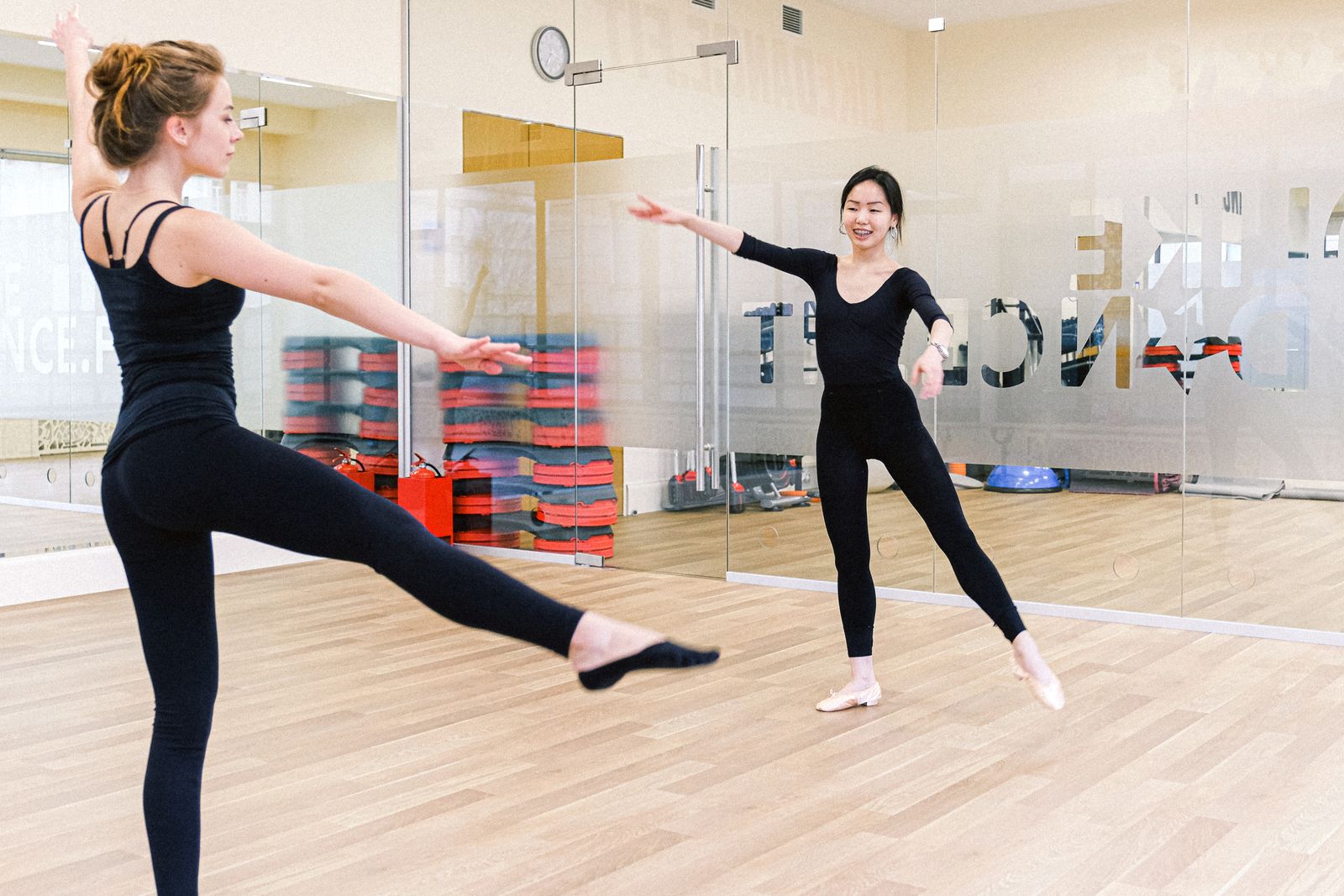
Practising alone gets you the shape of each step. A live trainer spots what you cannot, such as a locked knee or a rushed pause. Fitstrot’s lead Zumba trainer, Yash Pathak, is ZIN Licensed, ACE Certified and Strong Nation Certified, and classes are online, so you can join from anywhere in India with a stable connection.
To see how live sessions work, read our blog on online Zumba classes.
Frequently asked questions about basic Zumba steps
What is the easiest Zumba step to learn first?
The merengue march is the easiest. You march in place on the beat with slightly bent knees and let the hips sway naturally. Most people get it within a single song, and it works as a warm-up and a fallback step whenever you lose the choreography during a class.
How many basic Zumba steps are there?
There is no official number, but about six to eight core steps cover most beginner choreography: the merengue march, side step, knee lift, reggaeton bounce, grapevine and basic salsa step, plus the diamond and cumbia steps. Advanced routines mostly combine and speed up these same movements.
How long does it take to learn basic Zumba steps?
Individual steps usually feel comfortable in two to three short practice sessions. Linking several steps into smooth, natural choreography typically takes a few weeks of regular practice, around 10 to 15 minutes on most days. Speed varies with age, coordination and how often you practise.
Can I practise basic Zumba steps at home before joining a class?
Yes. Practise one step at a time against a single song, in a clear two-metre space, wearing supportive shoes. Keep the counts out loud and use the two-week plan above. Arriving at class with the march, side step and grapevine already familiar makes the first session far less confusing.
Do I need to learn arm movements with the basic steps?
Not at first. Master the footwork before adding arms, because adding both at once is the quickest way to lose the beat. When the steps feel automatic, add simple arm swings or hand gestures one at a time. Keeping the arms relaxed is perfectly acceptable in beginner classes.
Your next step: book a beginner session with Fitstrot’s online Zumba classes and have a trainer check your march, side step and grapevine live.


