

Family zumba workouts are one of the few exercise plans where a six-year-old, a teenager, a parent and a grandparent can share the same playlist and each get something out of it. The trick is not a harder routine but a flexible one: the same songs, danced at different effort levels. This guide gives you an age-by-age breakdown, safe adaptations, and a 25-minute sample session you can run in your living room this weekend.
Can the whole family do Zumba together, whatever their ages?
Yes. Children from about four years old can follow simple beat-based steps, teenagers can match adult intensity, and grandparents can join at a lower-impact pace. Everyone dances the same song at a different effort level, so one 25-minute session works for mixed ages without splitting the family into separate workouts.
That flexibility is why Zumba for the whole family works better than most home workouts. Following a beat and repeating short movement patterns does not need strength, flexibility or technical skill, so nobody is left behind. The music does a lot of the work too: Bollywood, hip-hop, pop and Latin tracks give children and adults a genuine reason to enjoy the same session, instead of one group tolerating the other’s activity. The table below shows how each age group can join in.
| Who | What they can do | Effort cue | Adaptation |
|---|---|---|---|
| Ages 4 to 6 | Follow the beat, copy big arm and leg moves, play freeze games | Bursts of 1 to 2 minutes, then a rest song | Use animal or story moves; skip long sequences, fast turns and jumps |
| Ages 7 to 12 | Learn 4 to 8 count patterns, handle Bollywood and hip-hop tracks | Can last 20 to 25 minutes with water breaks | Give them a “leader song” where they teach everyone one step |
| Ages 13 to 17 | Full choreography, faster tracks, more arm and core work | Match adult effort only if they feel fine; ease off if dizzy | Let them pick the playlist and try harder variations, with no forced competition |
| Parents and adults | Full-intensity version with bigger steps and squats | Talk test: you can say a short sentence between breaths | Drop impact first (no jumps) if knees or back complain |
| Grandparents (60+) | Marching, step-touch, arm patterns, seated or chair-supported moves | Slow tempo, no jumps, rest whenever needed | Keep a sturdy chair nearby; see Zumba Gold for the gentler style |
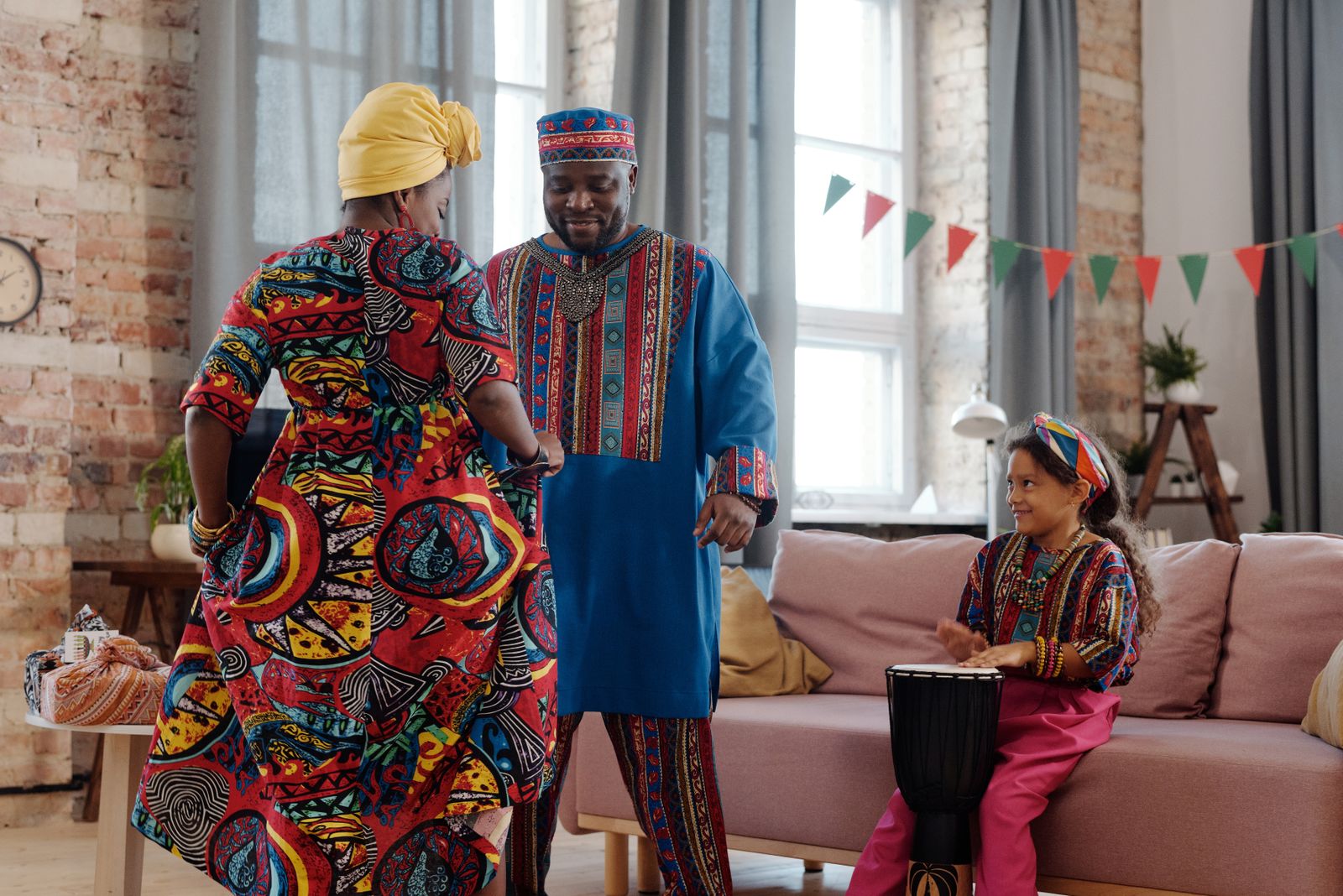
Myth check: “Zumba is too intense for kids and too childish for adults”
Neither half is true, because intensity belongs to the dancer, not the song. A child can bounce lightly while a parent beside them takes wider steps and stronger arm movements. Both are doing Zumba, and both are working at a level that suits them.
A second myth is that children must copy every step correctly. In a family setting, rigid correction kills enthusiasm quickly. Correct only for safety (a wild jump near a table, a twisting move on a slippery floor) and let everything else be playful. Freestyle moments are part of the point.
A third myth is that kids’ classes are the only way for children to join. Zumba does have dedicated kids’ programmes such as Zumbatomic, built around age-appropriate choreography, and our guide to Zumba for kids covers them properly. But a mixed-age home session is a perfectly good starting point. Coordination, rhythm and confidence tend to improve with regular practice, though no single activity can promise specific developmental results.
A 25-minute family Zumba session, minute by minute
This plan suits a zumba workout for the whole family in a normal Indian living room: no equipment, no space beyond moving the centre table aside. Use songs of two to four minutes each so younger children never face a long stretch of one tune.
| Minutes | Segment | What the family does | Music feel | Easier / harder |
|---|---|---|---|---|
| 0 to 4 | Warm-up | March in place, shoulder rolls, side steps, arm circles | Easy, medium tempo pop | Easier: march only. Harder: add bigger arm swings |
| 4 to 9 | Bollywood groove | Step-touch, claps, one simple hook step repeated | Upbeat Bollywood | Easier: stay in step-touch. Harder: add a quarter turn |
| 9 to 14 | Latin block | Merengue march, cumbia sway, basic salsa side step | Latin pop | Easier: walk the pattern. Harder: faster hips and arms |
| 14 to 18 | Kids lead | Each person invents one move; everyone copies it for 8 counts | Kids’ choice | Easier: any move counts. Harder: chain three moves together |
| 18 to 22 | Hip-hop finale | Bounces, grapevine, punches, bigger arm work | Energetic hip-hop or pop | Easier: half-speed. Harder: add squats on the beat |
| 22 to 25 | Cool-down and stretch | Slow walk, calf, thigh and shoulder stretches, three deep breaths | Slow, calm track | Hold each stretch about 20 to 30 seconds |
Two small habits make this plan work. First, keep a glass of water for each person within reach and sip between songs. Second, pick the “kids lead” block as the part everyone looks forward to. When children teach the family a move, they stay invested for the whole session, and adults get a harmless reason to laugh at themselves.
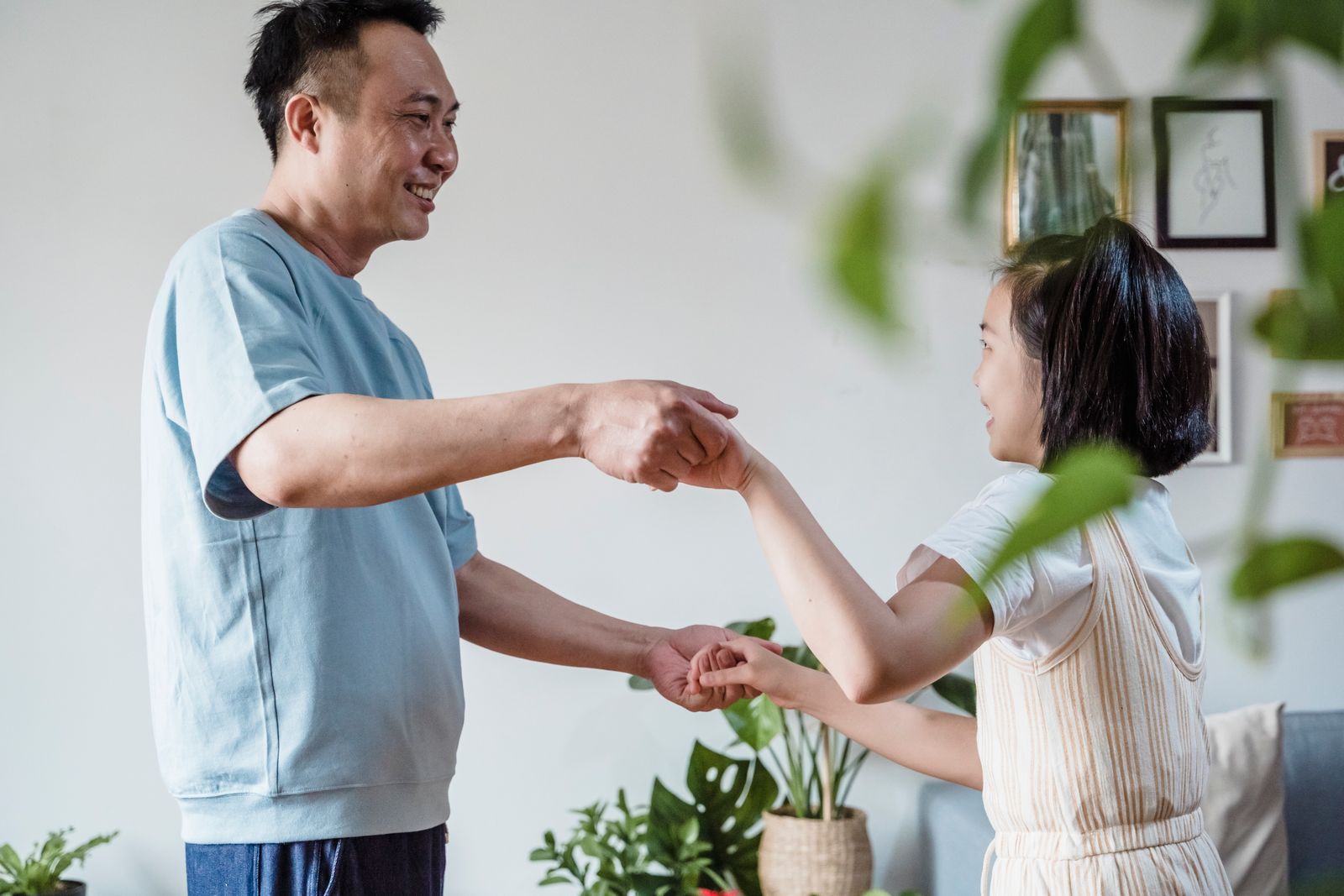
For a calmer finish on days when everyone is tired, swap the last block for slow stretching. Our piece on combining Zumba and yoga has gentler ideas, and a short session from online yoga classes can serve as the cool-down for older children and adults.
Is Zumba safe for kids, and how do you keep family sessions safe?
Zumba is generally a safe activity for healthy children when it is age-appropriate and supervised. Clear about an arm’s length of space around everyone, wear non-slip footwear on tile floors, keep water within reach, skip jumps for under-fives, and stop at once if anyone feels dizzy, in pain or unusually breathless. An adult stays in the room throughout.
Safety in a family session is mostly common sense, but it helps to run through a short checklist before the music starts:
- Floor: Polished tile and marble get slippery. Wear clean, non-slip sports shoes or grip socks, and avoid bare feet. A yoga mat or rug under younger children helps.
- Space: Move tables, chairs with sharp corners and loose cables out of the way. Stand in staggered rows so elbows do not collide.
- Food timing: Wait about an hour after a full meal. A light snack such as a banana 30 to 45 minutes before is usually enough for children after school.
- Heat: In summer, avoid the hottest part of the afternoon, keep a fan running and offer water more often.
- Stop signals: Agree one word or hand signal that means “I need a break.” Nobody has to finish a song.
- Health conditions: If a child or adult has asthma, a heart condition, a recent injury or any diagnosed condition, check with their doctor before starting. This guide is general fitness information, not medical advice.
Also avoid talking about weight, calories or “burning off” food in front of children. The aim is energy, coordination and time together, not body-shaping.
When a family session goes sideways: quick fixes
Even a well-planned session can fall apart in the first week. Most problems have simple fixes, and none of them involve shouting over the music.
| Problem | Likely cause | Quick fix |
|---|---|---|
| A young child wanders off after 5 minutes | Songs or steps are too long for their attention span | Use 2 to 3 minute songs, add freeze-dance rounds, and let them take water breaks without fuss |
| A teenager rolls their eyes or refuses | Feels the session is childish or not theirs | Hand over the playlist for one block, or invite them to lead a step |
| A parent is out of breath while kids look fine | Children recover quickly; adults often over-reach early | Drop the impact, keep the arm work, use the talk test and rest between songs |
| Kids bump into each other | Too little space or everyone facing the same way | Stand in staggered rows and mark each person’s spot with a mat |
| Noise complaints in a flat | Heavy jumping on the floor | Go low-impact, use a rug or mat, and pick an earlier evening slot |
| Arguments over songs | One person always chooses | Rotate: each person picks one song per session |
How many days a week works for a family, and does it count as exercise?
Two to three sessions a week of 20 to 30 minutes suits most families. For adults, that adds roughly 40 to 90 minutes towards the commonly advised 150 minutes of moderate weekly activity. For school-age children it contributes to about 60 minutes of daily active play, which should also include outdoor games and sport.
For energy, an adult dancing at moderate effort for 25 minutes burns about 150 to 250 kcal, depending on body size and how big the movements are. Children vary even more, so treat any number as a rough guide, not a target. What matters more is that the habit lasts.
A simple pattern many families can sustain: a longer weekend session of 25 to 30 minutes, plus one or two shorter midweek sessions of 15 to 20 minutes before dinner. Our guide to building a Zumba routine that sticks covers the consistency principles in more depth. Although it is written for individuals, the same ideas apply to a family: fix a time, keep it short, and protect it like any other commitment. If weekday evenings are the problem, Zumba for busy professionals shows how 15-minute blocks fit around a packed schedule.
Playlist at home or a trained instructor online?
Start with a free playlist and a clear living room; it is enough for the first few weeks. A live online instructor becomes worth it when choreography turns repetitive or nobody is watching form. The instructor cues steps, adds variety and corrects landings while the parents simply dance, instead of leading and moving at once.
Fitstrot’s Zumba classes are online, so the family joins from home without travelling anywhere. They are led by Yash Pathak, Fitstrot’s lead Zumba trainer, who is ZIN Licensed, ACE Certified and Strong Nation Certified. You can read more about how sessions work in our overview of online Zumba classes, or look at the online Zumba classes service page for current options. Check there for what fits your family’s ages and availability, since this article does not cover class timings or fees.
Frequently asked questions about family Zumba
What age can kids start family Zumba?
Most children can join in from about four years old, as soon as they can follow simple movements and enjoy music. Toddlers can dance alongside you as play, with no structure expected. For children under seven, keep sessions to 10 to 15 minutes and skip jumps and fast turns.
How long should a family Zumba session be?
Start with 15 to 20 minutes, especially with younger children, then build towards 25 to 30 minutes as stamina and interest grow. A short session that ends while everyone is still smiling is better than a long one that ends in complaints.
Do we need any equipment for family Zumba?
No equipment is required. You need a clear patch of floor, a speaker or TV, water for each person and non-slip footwear. A yoga mat or rug is a useful extra for younger children and for reducing floor noise in apartments.
Can grandparents join family Zumba workouts?
Yes, with a gentler approach. They can march, step-touch and do arm patterns at a slower tempo, with a sturdy chair nearby and no jumps. If they have joint, heart or balance concerns, they should check with their doctor before starting.
Is family Zumba enough exercise for children?
It is a strong contributor but not a complete answer. Children benefit from about 60 minutes of active play each day, so use family Zumba two or three times a week alongside outdoor games, sport and school activity.
Try your first family session online
Pick one weekend slot, clear the living room and join a live class together. Start with Fitstrot’s online Zumba classes and see how the whole family moves with a trained instructor on screen.


