

The yoga sutra is a Sanskrit text of roughly 195 short verses, credited to the sage Patanjali, that explains what yoga is for and how to train the mind in stages. It is a manual for attention, not a book of poses. This guide shows how the text is built, how to read it without a teacher, and where it quietly shapes the yoga class you may already attend.
What is the Yoga Sutra, in plain words?
The Yoga Sutra is a collection of about 195 compressed Sanskrit verses, called sutras, that define yoga as the settling of a restless mind and set out a practical path towards it. “Sutra” means thread: each line is a thread of a larger argument, meant to be unpacked by a teacher or a commentary.
The famous second verse says yoga is the stilling of the movements of the mind. Everything else, from ethics to breathing to meditation, is presented as a method for reaching that stillness. If you came for a pose list, you will find almost none; if you came for a map of how attention can be trained, you are in the right place.
Who wrote the Yoga Sutra, and when?
The Yoga Sutra is traditionally credited to Patanjali, and scholars usually place its compilation somewhere between roughly 200 BCE and 400 CE, with many leaning towards the early centuries CE. Almost nothing reliable is known about Patanjali as a person, so treat any precise date as an estimate.
Patanjali is better described as an organiser than an inventor: he gathered ideas that already circulated in Indian philosophy, including the dualistic outlook of the Samkhya school, and arranged them into one teachable system. Because the text was memorised for generations, dating it is hard. Our companion article on the Yoga Sutras of Patanjali goes further into the author question; here we stay with structure and use.
How is the Yoga Sutra organised into four padas?
The Yoga Sutra has four chapters, called padas: Samadhi (about 51 verses), Sadhana (about 55), Vibhuti (about 55) and Kaivalya (about 34). Together that gives roughly 195 verses, though some editions count 196 because they split one verse differently. Each pada has a distinct job in the argument.
| Pada | Approx. verses | What it covers | Who gets most from it |
|---|---|---|---|
| 1. Samadhi Pada | 51 | Defines yoga, describes the kinds of mental activity, and names practice and detachment as the two supports of stillness | Anyone who wants the core idea fast |
| 2. Sadhana Pada | 55 | The practical chapter: causes of suffering, action-based yoga, and the eight-limbed path | Everyday practitioners and beginners |
| 3. Vibhuti Pada | 55 | Concentration, meditation and absorption working together, plus the unusual abilities said to follow | Serious students and teachers |
| 4. Kaivalya Pada | 34 | Liberation, the nature of the mind, and the relationship between awareness and what it observes | Readers drawn to philosophy |
Verse counts differ a little between editions and commentators, so do not be alarmed if your copy shows slightly different totals. If you only have time for one chapter, read the second. It is the most usable one and the one modern teachers draw on most.
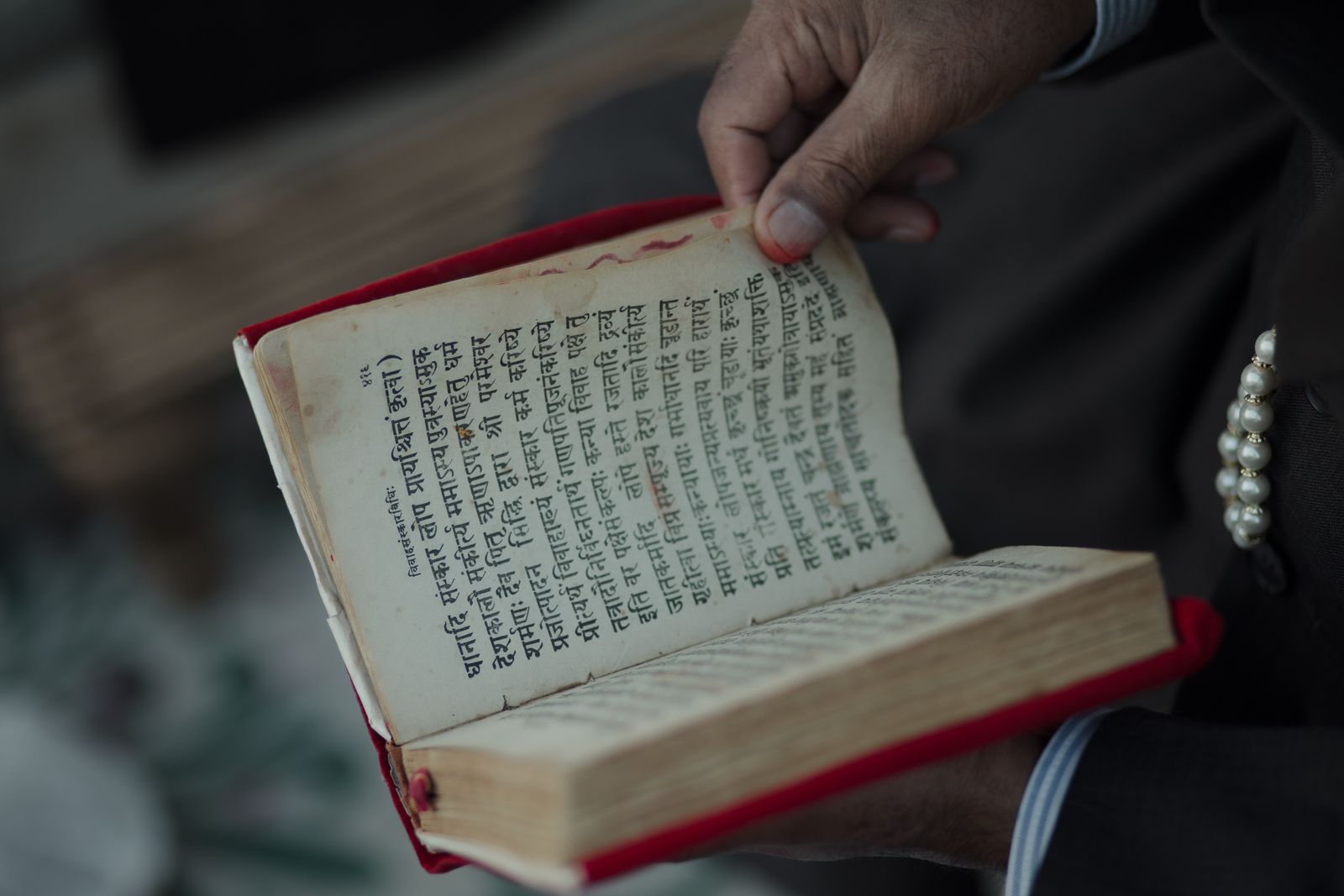
Myth check: is the Yoga Sutra a book about yoga poses?
No. The Yoga Sutra says almost nothing about postures. Where it does mention asana, it means a steady, comfortable seat for meditation, in a couple of short lines. The wide range of stretches, twists and flows in a modern class comes from later traditions.
Three related myths travel with this one:
- “Patanjali invented yoga.” He organised existing practice; the ideas are older than the text.
- “The sutras are a fitness programme.” The aim is mental clarity and freedom from distress, not flexibility or calories.
- “You must master the poses first.” The text puts ethical conduct and self-discipline ahead of posture, not after it.
The physical styles you see today, such as Hatha yoga and Vinyasa yoga, grew out of later texts and teachers many centuries afterwards. They sit comfortably on the Sutra’s philosophy, but they are not described in it. For a wider tour of those styles, see our guide to the types of yoga.
What are the eight limbs inside the Sadhana Pada?
The eight limbs are the best-known teaching in the Yoga Sutra: yama, niyama, asana, pranayama, pratyahara, dharana, dhyana and samadhi. They are listed in the second pada as a sequence that moves from outward conduct, through body and breath, to inward attention. The order is deliberate: each limb supports the next.
| Limb | Meaning in the text | How it shows up in daily life |
|---|---|---|
| Yama | Restraints in how you treat others | Not lashing out in a heated message, telling the truth when it is awkward |
| Niyama | Personal observances | A fixed practice time, contentment with a slow week |
| Asana | A steady, comfortable seat | Sitting for five to ten minutes without fidgeting |
| Pranayama | Regulating the breath | A few slow, even breaths before a stressful call |
| Pratyahara | Drawing attention away from the senses | Putting the phone in another room for one sitting |
| Dharana | Holding attention on one point | Staying with the breath at the nostrils for a minute |
| Dhyana | Unbroken flow of attention | Longer sits where the effort of focusing relaxes |
| Samadhi | Complete absorption | The goal of the path, not a day-one target |
We keep this section short on purpose, because the limbs have their own pages. For the full walk-through, read our article on the 8 limbs of yoga, and for the first two limbs in depth, see yamas and niyamas.
Three ideas worth knowing beyond the eight limbs
Mental movements. The first pada sorts the mind’s activity into five kinds: right knowledge, mistaken knowledge, imagination, sleep and memory. The point is not that these are bad, but that you can learn to notice them instead of being carried off by them.
Causes of distress. The second pada names five afflictions: not seeing clearly, a strong sense of “I”, attraction, aversion and fear of loss.
Practice and letting go. The first pada pairs steady effort with non-attachment as the two supports of a calm mind. One verse also suggests meeting other people with friendliness towards the happy, compassion for the struggling, gladness for the virtuous and even-mindedness towards those you disagree with.
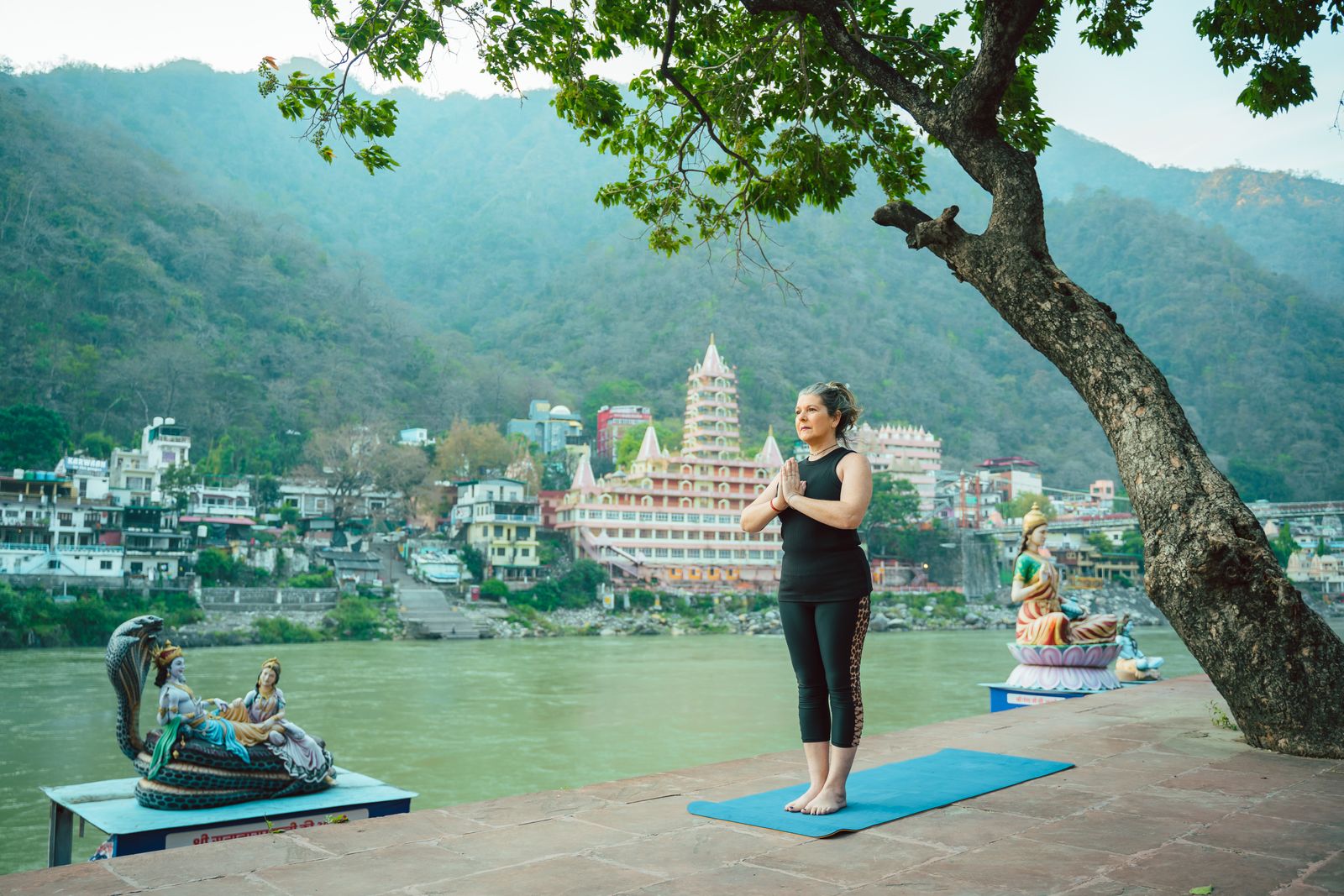
How do you read the Yoga Sutra as a beginner?
Read it slowly, in small pieces, with one annotated translation open beside you. Start with the first pada, then the second, and give yourself 10 to 15 minutes per sitting, a handful of verses at a time. Aim to understand and apply a few lines rather than finish the book quickly.
A workable four-step routine:
- Read the opening verses of Samadhi Pada twice. Write the definition of yoga in your own words on a card. If you cannot, read again.
- Pick one verse a week from Sadhana Pada. Carry it through the week and note, each evening, one moment it applied.
- Read the commentary after, not before. Form your own view for two minutes first, then compare.
- Add a short sit. Five minutes of quiet seated attention, using our meditation for beginners guide, turns the reading into something you can test.
Skim the third pada on a first pass. Its descriptions of unusual abilities can feel remote, and the text itself treats them as distractions on the road to stillness.
Which translation of the Yoga Sutra should you choose?
Choose an edition that prints the Sanskrit in transliteration, gives a word-by-word meaning, and adds a commentary. Avoid pocket summaries as your only source. Three widely read English editions are by Swami Satchidananda, B.K.S. Iyengar and Edwin Bryant, and they suit different readers.
| Edition type | Best for | Trade-off |
|---|---|---|
| Short, plain-language translation (for example, Satchidananda) | First-time readers who want a clear thread | Less scholarly detail, more of one teacher’s view |
| Practice-led commentary (for example, Iyengar) | Students with a regular asana or pranayama habit | Dense, and assumes some background |
| Academic, heavily annotated (for example, Bryant) | Readers who want historical context and multiple commentators | Long, and more demanding for a casual reader |
Try reading one verse in two translations side by side. A word such as “chitta” is rendered as mind, mind-stuff or consciousness depending on the translator, and seeing that gap teaches you more than any summary can.
Troubleshooting: why does the text feel confusing?
Most confusion comes from four predictable causes, and each has a simple fix.
- Unfamiliar Sanskrit terms. Keep a one-page glossary of ten words (chitta, vritti, klesha, samadhi and so on) and add as you go.
- Dualistic philosophy. The book separates awareness from the mind and body. You do not have to accept this to benefit; treat it as a lens and see what it shows you.
- Verses with no context. Each line was designed to be unpacked, so read the commentary rather than treating a line as a slogan.
- Expecting instructions. If you wanted a step-by-step routine, pair your reading with a live class that turns ideas into practice.
If a section leaves you unsettled or low, step away from the book. Philosophy is not a substitute for professional support, and a conversation with a doctor or counsellor is the right move if distress persists.
How does the Yoga Sutra connect to a modern yoga class?
The Yoga Sutra supplies the purpose of a class, not its choreography. A flowing session, a slow restorative yoga class and a breathing-focused session can all be read as ways to prepare the body for steady attention, which is exactly the job the text gives to posture and breath.
You can notice it in small ways. A closing moment of stillness is the text’s idea of attention in action. An opening intention such as non-harming is the yamas. A cue that a pose should feel both steady and easy echoes the text’s own description of a good seat.
This is a useful filter if you are choosing a format. A class that includes breathing, a short seated close and a calm tone leans closer to the text’s aims than one that treats the mat purely as a workout. If you are weighing options, our guide to online yoga classes explains what to look for, and the classes themselves are on our online yoga classes page.
Where to start, by type of reader
- Busy professionals: Start with the second pada, one verse a day, and a five-minute sit. Skip the rest until a habit forms.
- Regular class-goers: Read about the eight limbs first, then notice which ones your teacher already uses.
- Students and teachers: Read the full text with an annotated edition and compare commentaries.
- Curious beginners: Read the first few verses and the definition of yoga, then stop and think. That alone is a good first month.
Frequently asked questions about the Yoga Sutra
How many verses are in the Yoga Sutra?
Most editions count about 195 verses, and some count 196, depending on how one verse is divided. They are split across four padas: Samadhi, Sadhana, Vibhuti and Kaivalya. Small differences in count between editions are normal and do not change the meaning of the text.
Is the Yoga Sutra the same as the Bhagavad Gita?
No. They are separate texts. The Gita is part of the epic Mahabharata and presents yoga through a conversation about duty, devotion and action. The Yoga Sutra is a short, standalone manual focused on training the mind and the eight-limbed path.
Do I need to read the Yoga Sutra to practise yoga?
No. Most people practise for health and calm without ever opening it. Reading a little, especially the eight limbs and the ethical guidelines, adds context for why yoga includes breath, conduct and focus alongside postures, but it is optional.
What language is the Yoga Sutra written in?
It is written in Sanskrit, in very compressed verses. Because each line is so short, traditional study pairs the verses with a commentary. English readers do best with an edition that shows the Sanskrit, a word-by-word meaning and an explanation.
Which pada should a beginner read first?
Begin with the opening verses of Samadhi Pada for the definition of yoga, then move to Sadhana Pada, the practical chapter that contains the eight limbs. Leave Vibhuti and Kaivalya for later, once the basic vocabulary feels familiar.
Take the next step
Pick one verse from the second pada this week, then pair it with a live session where breath and stillness are actually practised. Book a class at Fitstrot online yoga classes and notice how the ideas feel in the body.


