
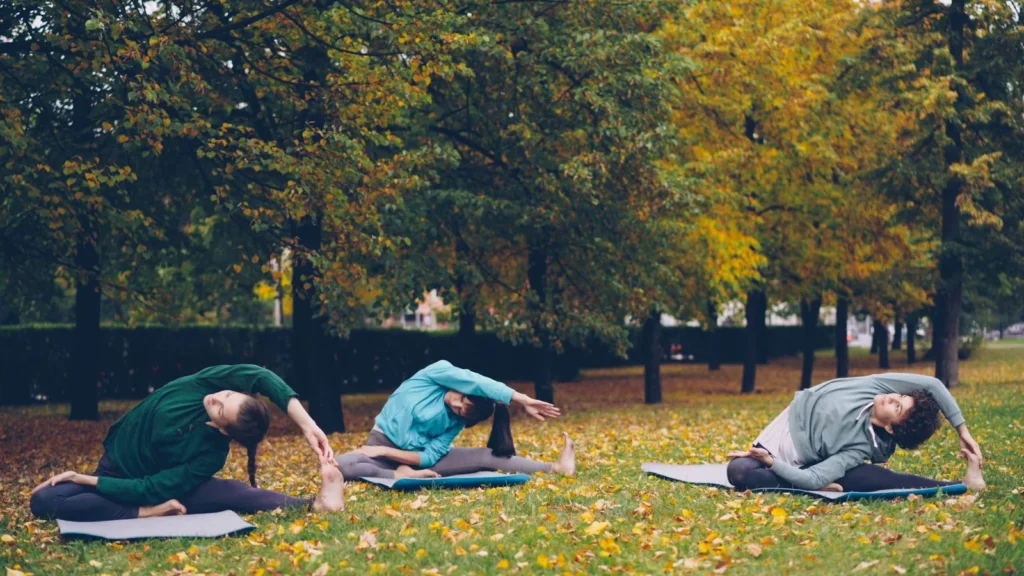
Yoga for cholesterol is a supportive habit, not a treatment. Practised three to five days a week alongside a heart-friendly diet, regular walking and any medicine your doctor has prescribed, it can help with stress, sleep, body weight and daily activity, all of which influence your lipid profile. It will not lower cholesterol on its own, and it never replaces a statin or your doctor’s plan.
Below you will find what yoga can and cannot do, the poses and breathing worth practising, a starter schedule, who should modify or skip postures, and when to talk to your doctor. We leave out target numbers and promised drops on purpose: your own report and risk decide your goals.
Safety first: if you have chest pain, breathlessness on mild effort, dizziness or palpitations, stop and see a doctor before starting any new exercise. Do not stop or reduce cholesterol medicine because you have started yoga.
Does yoga lower cholesterol, or only help around the edges?
Yoga does not clear cholesterol from your blood the way medicine does. What it can do is support the habits that shape your lipid profile: more movement, calmer stress levels, better sleep and steadier body weight. Think of it as a helpful partner to diet, walking and prescribed treatment, never a stand-alone fix.
Cholesterol is a fat-like substance your liver makes and food also supplies. Too much LDL (“bad” cholesterol) over the years can narrow arteries. Triglycerides, a separate blood fat on the same report, tend to rise with excess calories, sugar, refined carbohydrates and alcohol. Genes matter too, so slim, active people can still have high readings.
If you also carry extra weight, our guide to yoga for weight loss explains how to progress safely.
What does what: yoga, diet, medicine and walking compared
Each lever below does a different job. Yoga is a supporting player.
| Lever | Main job for your lipids | Where yoga fits |
|---|---|---|
| Prescribed medicine (for example a statin) | Directly lowers LDL; dose and need are your doctor’s decision | Never a substitute. Continue exactly as prescribed |
| Food choices | Less saturated and trans fat, more fibre, less sugar and alcohol | Yoga can make mindful eating easier, but it cannot undo a poor diet |
| Brisk walking, cycling, swimming or Zumba | Regular cardio activity, roughly 150 minutes a week for most adults | Yoga complements cardio. Gentle yoga alone is usually not enough activity |
| Sleep and stress management | Steadies appetite, cravings and daily routine | This is where yoga and breathing practice contribute most |
Myth check: no pose “burns” cholesterol out of your arteries
Social media routines often claim that a particular twist, shoulder stand or fast breathing technique “melts” cholesterol or “cleans” blocked arteries. None of that is true. Blocked arteries cannot be opened by stretching, and no posture removes plaque.
A second common myth is that you can drop your tablets once your routine feels strong. Cholesterol medicine works silently, so you feel no different whether it is working or not. Any change to medicine must come from your doctor after a repeat report.
Which yoga asanas for cholesterol are worth practising?
Choose slow, joint-friendly poses you can hold for 5-8 breaths: Utkatasana, Trikonasana, Ardha Matsyendrasana, Bhujangasana, Paschimottanasana and Viparita Karani. Together they work large muscles, ease stress and are suitable for most beginners. None treats cholesterol directly, so pair them with walking and a heart-friendly diet.
| Pose | How long | Form cue | Modify or skip if |
|---|---|---|---|
| Utkatasana (Chair) | 3 rounds of 5 breaths | Knees over ankles, chest lifted, bend only as far as is comfortable | Knee pain: sit a little higher. Breathless: shorten to 3 breaths |
| Trikonasana (Triangle) | 5 breaths per side | Long spine, hand on shin or a block, never on the knee | Low blood pressure or vertigo: keep the gaze forward |
| Ardha Matsyendrasana (Seated Twist) | 5-8 breaths per side | Sit tall first, then twist from the ribs, not the neck | Spinal disc problems, pregnancy: use a gentle chair twist |
| Bhujangasana (Cobra) | 3 rounds of 4-5 breaths | Elbows close, low lift, shoulders away from ears | Back injury or pregnancy: keep the lift very small |
| Paschimottanasana (Seated Forward Bend) | 5-8 breaths | Bend knees if needed, fold from the hips | Lower back pain: sit on a folded blanket |
| Viparita Karani (Legs up the wall) | 2-5 minutes | Hips a little away from the wall, arms relaxed | Glaucoma, uncontrolled blood pressure or heart disease: ask your doctor first |
Shoulder stand, plough and headstand are often listed in “cholesterol yoga” routines. We suggest leaving them out unless your doctor agrees and a trained teacher guides you, because they strain the neck and raise pressure in the head. If you like the heart-focused side of practice, see yoga for heart health, and for backbends and twists that need extra care, our yoga for back pain page explains safe ranges.

A 25-minute session, minute by minute
Practise this on three or four days a week at easy-to-moderate effort. You should be able to speak a full sentence throughout.
- Minutes 0-8: Sit and breathe slowly through the nose, then warm up with shoulder rolls, cat-cow and gentle side bends.
- Minutes 8-15: Standing pose block: Utkatasana and Trikonasana on both sides, 5 breaths each.
- Minutes 15-20: Floor block: Bhujangasana, seated twist on each side, Paschimottanasana.
- Minutes 20-25: Viparita Karani for 2-3 minutes, then lie flat in Shavasana and let the breath settle.
Beginners who are unsure which style to choose can read our overview of types of yoga, while those who prefer a flowing, warmer session can explore Vinyasa yoga at an easy pace.
How often should you practise yoga for high cholesterol?
Aim for 20-30 minutes of yoga, three to five days a week, plus about 30 minutes of brisk walking on most days. Keep this routine for at least three months before judging results, because blood tests usually reflect changes only after several weeks of consistent habits. Always follow the repeat-test schedule your doctor gives you.
The schedule below is a gentle starting point; repeat it for four weeks and add minutes slowly.
| Day | Yoga | Other activity |
|---|---|---|
| Monday | 25-minute session above | 20-minute walk after dinner |
| Tuesday | 10 minutes of slow breathing and stretching | 30-minute brisk walk |
| Wednesday | 25-minute session above | None, or a short walk |
| Thursday | Rest or Viparita Karani only | 30-minute brisk walk |
| Friday | 25-minute session above | 20-minute walk |
| Saturday | 30-minute slower session | Dance, cycling or swimming for 30-40 minutes |
| Sunday | Shavasana and breathing, 10 minutes | Easy family walk |
A beginner live online yoga class on two of these days gives you the correction and pacing a video cannot.
Pranayama for cholesterol: what is gentle and what needs caution
Breathing practice helps mainly with stress and sleep, not blood fats directly. Start gentle, and try anything vigorous only with a qualified teacher and your doctor’s approval.
- Diaphragmatic breathing: inhale through the nose so the belly rises, exhale slowly. Five minutes suits almost everyone.
- Anulom Vilom (alternate nostril breathing): slow and calm, with no breath holding at first. Keep the ratio even and stop if you feel light-headed.
- Kapalabhati and Bhastrika: rapid, forceful breathing. These can raise blood pressure and cause dizziness, so skip them if you have high blood pressure, heart disease, glaucoma, a hernia or are pregnant, and learn them only from a teacher.
Never force the breath, and sit down if you feel dizzy. If anxiety is part of your picture, see yoga for anxiety for calming sequences.
The daily habits that do the heavy lifting beside yoga
Yoga works best when the rest of the day supports it. These are general, widely accepted habits, not a personal diet prescription:
- Cut back on saturated and trans fat: go easy on deep-fried snacks, bakery items, packaged biscuits and excess ghee, butter or cream.
- Add soluble fibre: oats, dalia, dals, rajma, chana, fruit with its skin where suitable, and vegetables at lunch and dinner.
- Choose better fats: a small handful (about 20-30 g) of nuts, and cooking oil in measured amounts.
- Limit sugar and alcohol: sweets, sugary chai and alcohol push triglycerides up.
- Sleep 7-8 hours: keep a fixed bedtime and put screens away 30 minutes earlier.
Cholesterol problems often come with related conditions. If you also manage blood sugar, our guides to yoga for diabetes and yoga for thyroid cover what to adjust, and women with hormonal conditions can read yoga for PCOS. A registered dietitian can build a meal plan around your report.
Troubleshooting: why your cholesterol report has not budged
If you have practised for a few months and your numbers look the same, do not blame yoga or yourself. Work through these common causes with your doctor:
- Activity level is too low: gentle yoga on its own is light exercise. Add brisk walking or another cardio activity.
- Diet has not changed: evening snacks and festival sweets quietly cancel good habits.
- Genetics or family history: some people have high cholesterol that diet and exercise alone cannot fully correct. This is a medical issue, not a failure.
- Test timing: repeating tests too soon, or fasting one time and not the next, makes results hard to compare. Ask your lab how to test.
Who should skip or modify yoga for high cholesterol?
People with uncontrolled high blood pressure, known heart disease, a recent cardiac event, glaucoma, severe spine or neck problems, vertigo or pregnancy should get a doctor’s clearance first. Even with clearance, avoid inversions and vigorous breathing, move slowly, and use props. Everyone else should start gently and build up.
- High blood pressure: avoid inversions, breath holds and fast breathing. Keep poses short and avoid strain.
- Heart disease or recent cardiac event: practise only what your cardiologist approves.
- Glaucoma: skip head-down positions, including deep forward bends.
- Pregnancy: avoid deep twists and lying flat on the back for long, and choose a class built for it, such as prenatal yoga.
- Back, neck or knee pain: shorten holds, bend knees, use blocks and cushions.
When you want a softer option, restorative yoga uses supported poses and long, easy holds.
When should you see a doctor before or during yoga?
See a doctor before starting if you have chest pain, breathlessness on light effort, fainting, palpitations, a family history of early heart disease, or you have never had your lipids tested. Get a lipid profile and ask how often to repeat it. Seek urgent help for chest pain during any exercise.
See your doctor, or a registered dietitian, if:
- You feel chest pain, pressure or tightness, with exertion or at rest. Stop and seek medical help at once.
- You become unusually breathless, dizzy or faint during or after practice.
- A parent, brother or sister had a heart attack or stroke at a young age, or high cholesterol runs in your family.
- You have never had a lipid profile, or your last one was more than a year ago, and you are over 30 or have diabetes, high blood pressure or a thyroid condition.
- You feel tempted to skip, halve or stop any prescribed tablet. Speak to your doctor first. Do not change medicine on your own.
Yoga for cholesterol: frequently asked questions
Can yoga alone bring down high cholesterol without medication?
Not reliably. Yoga supports activity, stress and sleep, which helps, but it is not a replacement for diet changes, regular cardio or medicine your doctor has prescribed. Never stop a statin or other tablet because you have started yoga. Your doctor decides after a repeat lipid test.
Which yoga asanas are best for cholesterol?
No single pose is best. Gentle options such as Trikonasana, a seated twist, Bhujangasana, Paschimottanasana and Viparita Karani are popular and beginner-friendly. Choose poses that suit your joints and blood pressure, hold them for 5-8 breaths, and combine them with walking.
How long does yoga take to help cholesterol?
There is no fixed timeline, and effects vary by person. A sensible approach is to practise regularly for about three months alongside diet and activity changes, then repeat your blood test as your doctor advises. Feeling calmer and sleeping better may show up well before any report changes.
Is Kapalabhati safe if I have high cholesterol and high blood pressure?
Not without medical advice. Kapalabhati is forceful and can push blood pressure up or cause dizziness, so people with hypertension, heart disease or glaucoma should avoid it unless a doctor and an experienced teacher approve. Slow breathing such as Anulom Vilom or Bhramari is a gentler choice.
Does yoga help triglycerides as well as LDL?
Yoga can support the habits that affect both, such as activity, sleep and weight. Triglycerides respond strongly to sugar, refined carbohydrates and alcohol, so diet changes matter a lot here. Treat yoga as one helpful part of the plan, and let your doctor judge progress from your reports.
Next step: book a beginner-friendly live online yoga class with FitStrot, tell the instructor about your blood pressure or any heart history first, and ask for a gentle, cholesterol-friendly sequence.


