
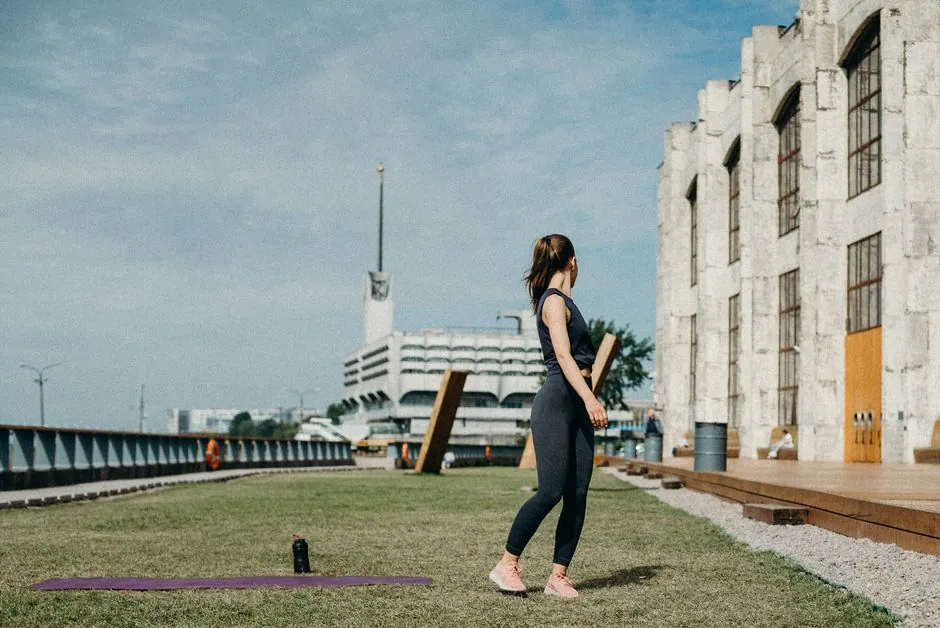
People often ask what is a boot camp workout, and whether it means a shouting instructor and endless burpees. It does not. A boot camp workout is a timed circuit of bodyweight and light-equipment exercises, such as squats, push-ups, planks and fast cardio bursts, done with short rests. Sessions usually run 30 to 45 minutes and train strength, stamina and coordination together.
Where does the boot camp style of training come from?
Boot camp training borrows its structure from military basic training: short, varied drills done back to back. In fitness, that became a circuit of 5 to 8 stations, each worked for 30 to 60 seconds, repeated for 2 to 4 rounds. The military look is mostly branding; the useful part is the timer and simple moves.
Because the moves are basic, a beginner marches where an advanced trainee jumps, and both finish the same circuit. That is why the format works in a park, a studio or a living room on a video call. If you want to see where it sits among other formats, our guide to the types of workouts compares the main styles side by side.
How is a boot camp session structured from start to finish?
A typical boot camp session lasts about 40 minutes and has four blocks: a 5 to 6 minute warm-up, three rounds of a six-exercise circuit, an optional short finisher, and a 5 to 6 minute cool-down. Work periods run 30 to 40 seconds with 15 to 20 seconds of rest.
| Block | Time | What you do | Effort (out of 10) |
|---|---|---|---|
| Briefing | About 2 min | Instructor shows each move and the easier options | 1 |
| Warm-up | 5 to 6 min | Marching, arm circles, hip circles, bodyweight squats, light jogging in place | 3 to 4 |
| Main circuit | About 21 min | Six stations, 3 rounds, 90 seconds of rest between rounds | 7 to 8 |
| Finisher (optional) | About 4 min | One move, 20 seconds hard and 10 seconds easy, 8 times | 8 to 9 |
| Cool-down | 5 to 6 min | Slow walking, hamstring, quad, chest and calf stretches, deep breathing | 1 to 2 |
Skip the finisher in your first month. It adds intensity, not value, until your basic form is steady. The warm-up and cool-down keep a hard session from leaving your knees and lower back sore for days.
Which exercises should a boot camp circuit include?
A balanced circuit covers one cardio move, one squat or lunge pattern, one push, one hip hinge, one core move and one full-body move. Six stations of 40 seconds each, repeated for 3 rounds, is a solid base. Aim for about 10 to 15 clean reps per station rather than racing through poor ones.
| Station | Work interval | Form cue | Easier option |
|---|---|---|---|
| High knees | 40 sec work, 20 sec rest | Stay tall, drive knees to hip height, land softly on the balls of your feet | Brisk march with arm swings |
| Bodyweight squat | 40 sec work, 20 sec rest | Feet shoulder-width, chest up, push hips back, knees track over toes | Squat to a chair, tap and stand |
| Push-up | 40 sec work, 20 sec rest | Body in one straight line, elbows about 45 degrees from the ribs, chest toward the floor | Hands on a wall, table or sturdy counter |
| Hip hinge swing (kettlebell or a backpack) | 40 sec work, 20 sec rest | Push hips back, flat back, snap hips forward, arms only guide the weight | Hinge with no weight, hands sliding down the thighs |
| Mountain climber | 40 sec work, 20 sec rest | Shoulders over wrists, hips level, drive one knee at a time | Slow, with hands on a raised surface |
| Forearm plank | 40 sec work, 20 sec rest | Elbows under shoulders, squeeze glutes and belly, do not sag or pike | Plank from the knees |

No kettlebell at home? A backpack with a few books, or a sealed 5 litre water can, which weighs about 5 kg, works for the hinge swing. Start light: the swing comes from your hips, not your arms.
What are the common myths about boot camp workouts?
Three myths cause most of the trouble. First, that boot camp is punishment, so you should feel wrecked afterwards. Second, that more sweat means more fat loss. Third, that you must be fit before you start. None of these holds up, and believing them leads beginners to push too hard, get hurt and quit.
- Myth: you should be exhausted. A good session leaves you tired but able to walk, climb stairs and eat normally. If you cannot move the next day, the dose was too high.
- Myth: sweat measures fat burn. Sweat reflects heat and humidity, not fat loss. Judge the session by effort and form.
- Myth: you must be fit first. The format scales down. Wall push-ups, chair squats and 20-second work intervals are real boot camp moves. If you are brand new to exercise, spend a week or two on a beginner workout plan to learn the basic patterns first.
How do you start a boot camp workout for beginners?
Begin with two sessions a week, 20 seconds of work and 40 seconds of rest, four exercises and two rounds, for a main block of about 8 minutes. Add time slowly over four weeks. Raise only one thing at a time: either the work interval, the number of exercises or the rounds, never all three together.
| Week | Sessions | Work : rest | Exercises x rounds | Main block |
|---|---|---|---|---|
| 1 | 2, with a rest day between | 20 sec : 40 sec | 4 x 2 | About 8 min |
| 2 | 2 | 30 sec : 30 sec | 5 x 2 | About 10 min |
| 3 | 3, never on consecutive days | 30 sec : 30 sec | 6 x 3 | About 18 min |
| 4 | 3 | 40 sec : 20 sec | 6 x 3 | About 18 min |
Add 60 to 90 seconds of rest between rounds, plus the warm-up and cool-down, so your total session time will be about 20 to 30 minutes. In week 1, pick the easier option for every move. Progress only when you finish a week feeling you could have done one more round with good form. If a week felt too hard, repeat it. Repeating is progress, not failure.
Pace yourself by breathing: you should manage a short sentence between stations. A steady 7 out of 10 effort beats a wild first round and a collapse in round three.
How does boot camp compare with gym training, HIIT and 1-on-1 coaching?
Boot camp sits between a relaxed gym session and a strict high-intensity interval session. It uses longer work periods and more strength moves than most interval classes, and it is more structured than a solo gym visit, where you choose your own exercises and rest as long as you like. Each has a place.
- Solo gym session: you control the weights, rest and exercise choice. That is ideal for building maximum strength, but it needs planning and self-discipline. Our general workout guide covers how to plan one.
- Boot camp: a mix of cardio and strength endurance, simple moves, steady pace, and a clear finish line. It is easiest to stick with if you like structure.
- 1-on-1 training: the plan is built around your body, injuries and goals, and a coach adjusts it each week. If you have an old knee, shoulder or back problem, 1-on-1 personal training lets you get similar intensity with moves chosen for you.
Can you do a boot camp workout at home or online?
Yes. A boot camp workout at home needs roughly a 2 metre by 2 metre clear patch of floor, supportive shoes, a mat for floor moves and a timer. Live online classes add an instructor who demonstrates moves, watches your form on camera and calls the intervals, which recreates most of the group energy without a commute.
A few India-specific tips make home sessions safer and easier to repeat:
- Floor and shoes: avoid smooth tiles in socks. Wear proper sports shoes, since jumping on marble or vitrified tile in bare feet is hard on heels and shins.
- Heat: in summer, train early morning or after sunset, run the fan, and keep 500 ml to 1 litre of water nearby. Take sips between stations.
- Neighbours: in an apartment, swap jumping moves for fast marches and step-back lunges.
- Timing: leave about 2 hours after a full meal, or have a light snack such as a banana 45 to 60 minutes before.
What should you eat after a boot camp session?
Eat within about an hour of finishing: a mix of protein and carbohydrate, such as curd with a banana, a paneer or egg sandwich, or dal with rice and a vegetable. Aim for roughly 15 to 25 g of protein, then keep sipping water through the day.
A 40-minute session typically uses about 250 to 450 kcal depending on body weight and effort, so treat training as one part of the plan, with food and sleep doing the rest. Our guide on what to eat after a workout has Indian meal ideas by goal. If fat loss is your goal, a structured plan from our online weight loss trainer brings training and eating together, and no format guarantees a specific result.
What if something goes wrong during a boot camp workout?
Most problems are fixable by lowering the intensity, not by quitting. Use the guide below to troubleshoot, and stop any move that causes sharp pain, as opposed to the normal burning of tired muscles. Pain that lingers more than 2 to 3 days is a signal to rest and seek advice.
- Knee pain on squats or lunges: reduce depth, widen the stance slightly, and make sure the knees follow the toes. Switch to chair squats for a week.
- Wrist pain in push-ups or planks: use fists or dumbbell handles for a neutral wrist, or move to forearm planks and incline push-ups.
- Lower back ache after swings: lighten the load, keep the back flat and think of pushing your hips back, not bending forward.
- Dizziness or nausea: stop, sit, sip water and breathe. Eat something small beforehand next time.
- Cannot finish the circuit: shorten work to 20 seconds, lengthen rest, or drop one round. Finishing a smaller version builds more than quitting a bigger one.
See your doctor first if you have a heart condition, high blood pressure, diabetes, asthma, joint or back problems, or a recent injury or surgery, or if you are pregnant or have not exercised in a long time. Stop immediately and seek medical care if you feel chest pain, pressure, unusual breathlessness, palpitations or fainting. This article is general information, not medical advice.
Frequently asked questions
What is a boot camp workout?
A boot camp workout is a timed circuit of bodyweight and light-equipment exercises, such as squats, push-ups, planks and cardio bursts, performed with short rests. Sessions usually run 30 to 45 minutes. The mix trains strength endurance, stamina and coordination in one session, and each move can be made easier or harder.
How long should a boot camp workout be?
Most sessions run 30 to 45 minutes, including a 5 to 6 minute warm-up and cool-down. Beginners can start with about 20 minutes in total. Longer is not better: a well-run 30 minutes with good form beats a rushed hour that leaves you sore and unwilling to return.
How many times a week should you do boot camp?
Beginners do well with 2 sessions a week, moving to 3 after about two weeks, with at least one rest day between sessions. Four or more hard sessions a week suit only people with a solid training base. On off days, light walking or yoga helps recovery.
Is a boot camp workout good for weight loss?
It can support weight loss, because it raises your energy use and builds muscle endurance, but results depend on food, sleep and consistency. A 40-minute session burns about 250 to 450 kcal depending on body size and effort. Expect gradual change, and be wary of anyone promising fast numbers.
Can beginners do a boot camp workout at home without equipment?
Yes. Bodyweight squats, wall or incline push-ups, marching, glute bridges and planks need no equipment and suit beginners. Start with 20 seconds of work and 40 seconds of rest for 2 rounds, twice a week, and follow the four-week table above before adding intensity or weight.
Want your first four weeks built around your fitness level and any old injuries? Start with a Fitstrot coach, and add online yoga classes on your rest days for stretching and recovery.


