

A good beginner workout plan for gym is not a watered-down version of what regulars do. It is a separate plan with a separate job: teach your body six or seven basic movement patterns, build the habit of showing up three times a week, and do it without the kind of soreness that makes you quit by day ten. This page gives you exactly that, as a 4-week roadmap you can follow at a gym or at home, with sets, reps, rest times and a form cue for every exercise.
The need is real. The ICMR-INDIAB study of 14,227 Indian adults found that 54.4% were physically inactive, and 88–95% reported no recreational activity at all (Anjana et al., 2014). If you are starting from zero, you are in the majority. The plan below assumes nothing except that you can walk for 20 minutes and get up off the floor.
What should a beginner workout plan for gym include in the first month?
A first-month beginner workout plan should include 2–3 full-body strength sessions a week, 1–2 sets of 8–12 reps per exercise, a 5–10 minute warm-up, and at least 150 minutes of moderate cardio spread across the week. The American College of Sports Medicine recommends 2–3 training days a week and an 8–12 rep range for novices (2009).
That ACSM guidance comes from its position stand on progression models in resistance training (ACSM, 2009), which also advises adding 2–10% load once you can beat your target reps by one or two. The cardio figure is the public-health floor: the NHS guidelines for adults aged 19 to 64 ask for at least 150 minutes of moderate activity a week plus strengthening work for all major muscle groups on at least 2 days.
In practice that means your first month has five ingredients:
- Full-body sessions, not body-part splits. A “chest day” hits each muscle once a week. Three full-body days hit everything three times, which suits beginners who learn by repetition.
- Compound movements first. A squat pattern, a hinge (hip-bending) pattern, a push, a pull and a carry or plank.
- Low starting volume. One or two sets per exercise in week 1. More is not better when your tendons and joints are new to load.
- Walking on off days. Brisk walking covers most of the 150-minute target without eating into recovery.
- A log. Weight × reps in a notebook or phone note.
The 4-week roadmap at a glance
Here is the whole month on one screen. Save or screenshot it — this is the printable chart most people are after when they search for a gym beginner workout plan PDF.
| Week | Strength days | Sets × reps per exercise | Target effort (RPE) | Rest between sets | Cardio / walking | Focus |
|---|---|---|---|---|---|---|
| 1 | 2 (e.g. Mon, Thu) | 1–2 × 10–12 | 5–6 (4–6 reps left) | 60–90 s | 20-min brisk walk × 3 days | Learn the 6 movements; find starting weights |
| 2 | 3 (Mon, Wed, Fri) | 2 × 10–12 | 6–7 (3–4 reps left) | 60–90 s | 25-min walk × 3 days | Add the third day; keep form identical every rep |
| 3 | 3 | 2–3 × 8–12 | 7 (about 3 reps left) | 90 s | 30-min walk × 3 days | Add a set on the big lifts; nudge weight up 2–5% |
| 4 | 3 | 3 × 8–12 | 7–8 (2–3 reps left) | 90–120 s | 30-min walk × 3–4 days | Beat week-3 numbers by 1–2 reps or a small weight jump |
By week 4 you are lifting about 90 minutes and walking 90–120 minutes a week. Notice what is missing: no training to failure, no daily sessions, no two-hour workouts.
Beginner workout plan at the gym: Day A and Day B
You alternate two sessions. In a three-day week that looks like A–B–A, then B–A–B the following week. Each session takes 40–50 minutes including the warm-up. The “Home swap” column gives you an equivalent move if you train at home on a given day.

| Day | Exercise | Sets × reps | Rest | Form cue | Home swap |
|---|---|---|---|---|---|
| A | Goblet squat (dumbbell at chest) | 3 × 10–12 | 90 s | Elbows inside knees at the bottom; chest stays tall | Bodyweight squat to a chair |
| A | Machine chest press | 3 × 10–12 | 90 s | Shoulder blades pinned back; handles at mid-chest | Incline push-up (hands on bed or table) |
| A | Lat pulldown | 3 × 10–12 | 90 s | Pull elbows to back pockets; no leaning back | Resistance-band pulldown from a door anchor |
| A | Dumbbell Romanian deadlift | 2 × 10–12 | 90 s | Push hips back, soft knees, flat back; stop at mid-shin | Glute bridge |
| A | Plank | 2 × 20–30 s | 60 s | Squeeze glutes; straight line from head to heels | Same |
| B | Leg press | 3 × 10–12 | 90 s | Feet shoulder-width; lower-back stays on the pad | Reverse lunge (hold a chair) |
| B | Seated dumbbell shoulder press | 2 × 10–12 | 90 s | Ribs down; press straight up, not forward | Pike push-up on knees |
| B | Seated cable row | 3 × 10–12 | 90 s | Chest up; pause 1 s with shoulder blades squeezed | Band row, or towel row on a door |
| B | Hip thrust or glute bridge | 2 × 12 | 60–90 s | Chin tucked; drive through heels; lock out with glutes, not back | Glute bridge, single-leg if easy |
| B | Farmer’s carry | 3 × 30 m | 60 s | Tall posture, tight grip, slow even steps | Carry two full water buckets or shopping bags |
Choosing starting weights: in week 1, pick a load you could lift 15–16 times but stop at 10–12. It will feel too easy. That is correct. The Mayo Clinic notes that a single set of 12 to 15 repetitions with the proper weight can build muscle efficiently in most people, and recommends a full rest day between sessions that work the same muscle group — which is exactly why this plan never trains on back-to-back days.

No gym? The beginner workout plan at home
You can follow the same 4-week structure in your living room. A yoga mat, one resistance band (₹300–₹800 at most sports stores) and a sturdy chair are enough for the first month. Once 20 clean reps feel easy, make the movement harder instead of adding weight.
Calisthenics beginner workout plan at home
Calisthenics simply means bodyweight training. Each row in the table below is a ladder — start at the first level you can do for the target reps with clean form, and climb one rung when you hit the top of the range on every set for two sessions in a row.
| Pattern | Level 1 | Level 2 | Level 3 | Sets × reps | Rest | Form cue |
|---|---|---|---|---|---|---|
| Squat | Sit-to-stand from a chair | Bodyweight squat | Split squat | 2–3 × 10–15 | 60–90 s | Knees track over toes; whole foot on the floor |
| Push | Wall push-up | Incline push-up on a table | Knee push-up, then full push-up | 2–3 × 8–12 | 60–90 s | Elbows about 45° from the body, not flared wide |
| Pull | Band row | Towel row on a closed door | Table row (under a strong dining table) | 2–3 × 10–12 | 60–90 s | Lead with the elbows; squeeze shoulder blades |
| Hinge | Glute bridge | Single-leg glute bridge | Band good-morning | 2–3 × 12–15 | 60 s | Movement comes from the hips, not the lower back |
| Core | Dead bug | Knee plank, 20 s | Full plank, 30–45 s | 2–3 sets | 60 s | Lower back stays flat; breathe normally |
If you prefer a class to a solo routine, a live format like online yoga classes can cover your mobility and core work on off days, while a band-based home session covers strength.
How hard should each set feel? RPE explained
RPE (rating of perceived exertion) scores a set from 1 to 10 by how many more reps you could have done. RPE 8 means about 2 reps left in the tank; RPE 5–6 means 4–6 left. Beginners should work at RPE 5–7 in weeks 1–3 and reach RPE 8 only in week 4.
The version used in strength training is the repetitions-in-reserve scale. As Helms and colleagues described in 2016, scores of 5–10 are anchored to reps in reserve and scores of 5–6 are grouped as “4–6 reps left”, because people estimate a range more easily when they are far from failure. The same paper notes that estimates get more accurate the closer a set is to failure, and that novice and experienced lifters rated effort quite differently.
In month one your guesses will be off, usually on the cautious side. One way to calibrate is to take the last set of one exercise in week 4 to RPE 9 (you are fairly sure one more rep would fail).
The 8-minute warm-up walkthrough
Do this before every session. It raises body temperature and rehearses the day’s movements.
- Minutes 0–3 — pulse raiser. Brisk walk on the treadmill, cycle, or march on the spot. You should be slightly warm and breathing a little faster, but able to talk.
- Minutes 3–5 — mobility. 10 arm circles each way, 10 hip circles each way, 8 cat–cow stretches, 8 bodyweight good-mornings.
- Minutes 5–7 — activation. 10 glute bridges, 10 band pull-aparts (or wall slides), 20-second plank.
- Minutes 7–8 — ramp-up set. Do your first exercise with about half your working weight for 8 reps.
Finish every session with 3–5 minutes of easy stretching for the muscles you trained; our guide to cool-down stretches after a workout has a short routine you can reuse.
Myth: “If you’re not sore, it didn’t work”
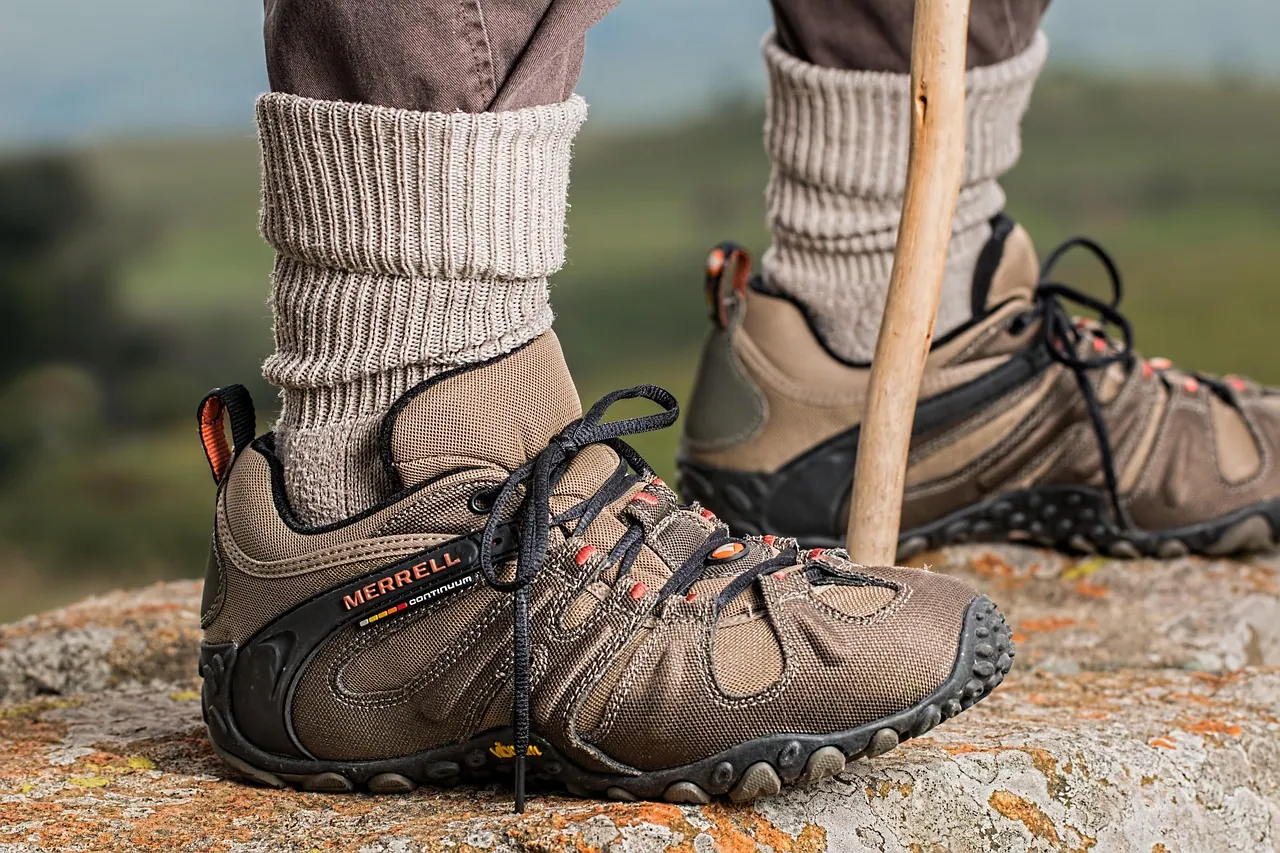
Soreness is not a measure of a good workout. Delayed-onset muscle soreness (DOMS) is simply the stiffness and tenderness that shows up after unfamiliar exercise, especially the lowering phase of a lift. A review in Sports Medicine found DOMS is most common when people are first introduced to a type of activity, and that eccentric (lowering) work causes micro-injury more often than other muscle actions (Cheung et al., 2003). The same review found light exercise was the most effective way to ease the discomfort, although only temporarily, while stretching showed no effect.
Expect some soreness after week 1 and again when you add the third day in week 2. After that it should fade even as the weights go up. If you are still wrecked after every session in week 4, your volume is too high — drop one set per exercise.
| Sign | Normal DOMS | Stop and get checked |
|---|---|---|
| Timing | Starts within a day of training, peaks around 24–72 h, gone within about a week | Sharp pain during the rep itself, or pain that is still getting worse after day 3 |
| Feel | Dull, achy, both sides equally, worse when you first move | Sharp, stabbing, one-sided, or around a joint rather than the muscle belly |
| Movement | Stiff at first, loosens after 5–10 minutes of walking | Swelling, bruising, or you cannot fully bend or straighten the limb |
| Other symptoms | None | Dark or cola-coloured urine, severe weakness, chest pain, dizziness or breathlessness — seek medical care the same day |
| What to do | Walk, keep training at lower effort, sleep 7–9 h | Rest the area and see a doctor or physiotherapist |
If you have a heart condition, high blood pressure, diabetes, are pregnant, or have a joint that has been operated on, check with your doctor before starting. This plan is designed for generally healthy adults.
Beginner workout plan for women and for men: does anything change?
No, the core program is the same for women and men: 2–3 full-body sessions a week, 8–12 reps per set and small weekly increases in load, as the ACSM recommends for all novices. What usually differs is the starting point — which lifts feel easy, which feel hard — not the plan itself.
Beginner workout plan for women
Lifting weights will not make you “bulky” in a month, or even in a year, without a deliberate high-calorie, high-volume approach. Many women start with more lower-body strength relative to upper-body strength, so expect the push-up and row ladders to take longer than the squat and hinge. If you are pregnant or postpartum, get medical clearance first; a qualified trainer can adapt every row of the tables above.
Beginner workout plan for men
The most common mistake men make at the start is loading the bench press and curls and skipping legs and pulling. Follow the table as written. Add no more than 2–5% a week on upper-body lifts; tendons adapt more slowly than muscles.
Weight loss or muscle gain: which way should you aim your first month?
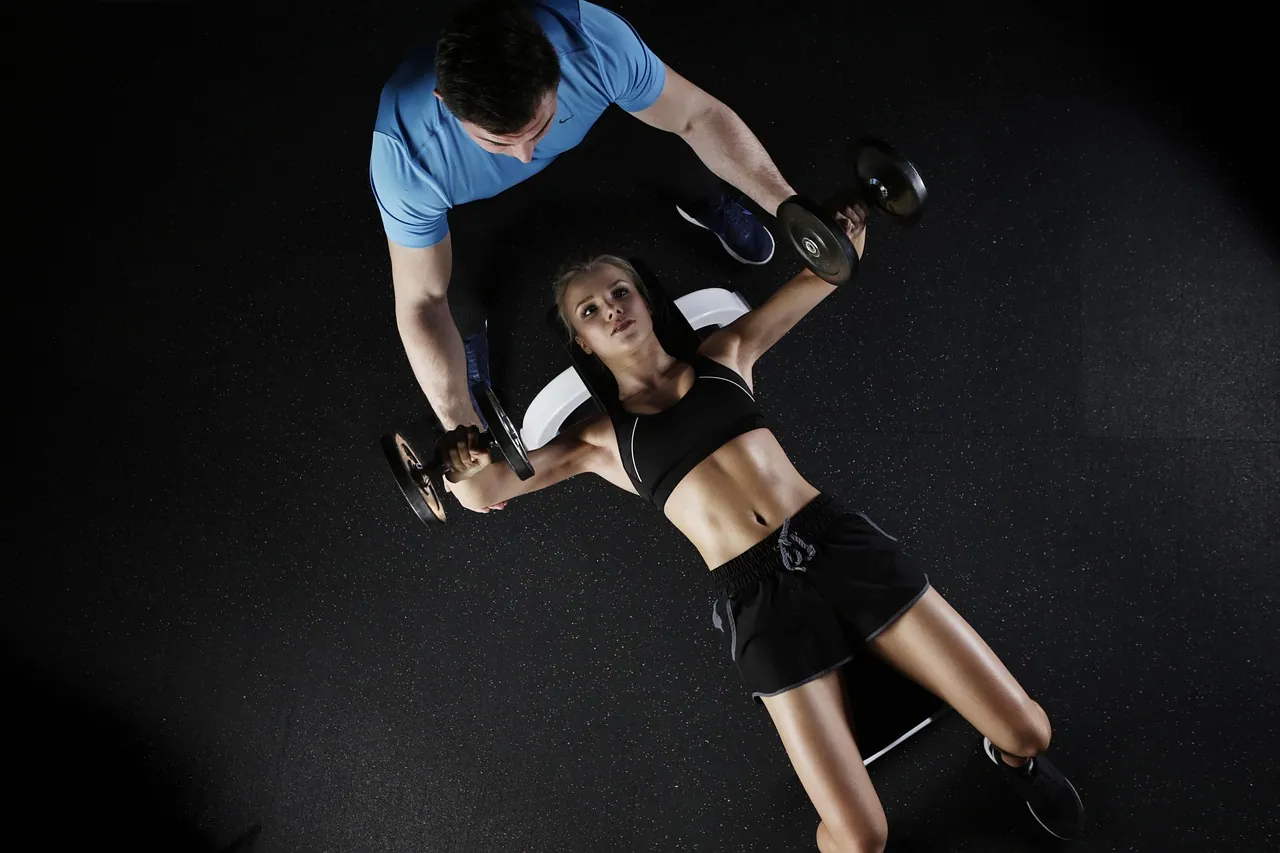
You do not need to choose yet. In the first 4–8 weeks most beginners improve strength and body composition at the same time, because the training stimulus is new. The plan above works for both goals; only the food around it changes.
Beginner workout plan for weight loss
Keep the strength days exactly as written — muscle is what you want to keep while fat comes off — and push daily walking higher, towards 7,000–10,000 steps. A realistic, sustainable rate of loss for most people is about 0.5 kg a week. Faster than about 1 kg a week usually costs muscle as well as fat.
Beginner workout plan for muscle gain
Eat at maintenance or a small surplus, prioritise sleep, and let the progressive overload in the table do its work. Adding sets beyond week 4’s three per exercise will not speed things up in month one.
Nutrition basics for your first month
Protein is the nutrient most Indian diets fall short on when training starts. A meta-analysis of 49 trials with 1,863 participants found that gains in muscle from resistance training plateaued at a total protein intake of about 1.6 g per kg of body weight per day (Morton et al., 2018). For a 65 kg person that is roughly 105 g a day — a ceiling, not a starting requirement. A practical first-month goal is simply to put a protein source in every meal.
- Breakfast: eggs or besan chilla instead of plain poha or upma alone; add a bowl of curd.
- Lunch: a full katori of dal, rajma or chole, plus paneer, chicken or fish if you eat them.
- Evening: roasted chana, sprouts chaat or a glass of milk rather than biscuits with chai.
- Dinner: repeat the lunch structure — protein first, then roti or rice.
For gram-by-gram numbers on Indian foods, see our high-protein vegetarian foods list. Skip supplements in month one; food covers what a beginner needs.
Troubleshooting: when the plan isn’t going to plan
“I missed a whole week.” Repeat the last week you completed. Do not try to double up to catch up.
“My knees hurt on squats.” Reduce depth to a box or bench, slow the lowering to 3 seconds, and make sure the knees follow the line of the toes. If pain is sharp or persists beyond a few days, see a physiotherapist.
“My lower back feels the Romanian deadlift.” Cut the range: stop at the knees, not mid-shin, and keep the dumbbells brushing your thighs. Swap to glute bridges for two weeks if needed.

Is this the best beginner workout plan? How to know it’s working
The “best” beginner workout plan is the one you are still doing in week 12. The WHO estimates that 31% of adults worldwide — 1.8 billion people — do not meet the 150-minute weekly activity recommendation (WHO, 2022 data), and the reason is rarely the program. It is consistency. Judge this month on four signals:
- You completed at least 10 of the 11 planned strength sessions.
- Your working weight or reps went up on at least four of the ten exercises.
- Soreness after sessions in week 4 is mild or gone.
- Stairs, carrying groceries or getting off the floor feel easier.
Hit three of four and you can move to the next phase. From week 5, you can move into a standard three-day full-body workout with more exercise variety, keep adding small amounts of load, and only consider a split routine after about six months of consistent training — the point at which ACSM classifies lifters as intermediate.
If you would like someone to set your starting weights, check your form over video and adjust the plan week by week, that is exactly what a coach is for at this stage.
Frequently asked questions
How many days a week should a beginner work out?
Two to three strength days a week is the right range for a beginner, with a rest day between sessions. Add brisk walking on some off days to reach about 150 minutes of moderate cardio a week. Training daily in month one adds soreness without adding results.
How long should a beginner workout be?
Forty to fifty minutes including an 8-minute warm-up is enough. In week 1 a session can be as short as 25–30 minutes. Longer sessions usually mean too many exercises or too much rest, not better training.
Should a beginner use machines or free weights?
Both are fine. Machines are easier to learn and safer when you train alone, so this plan uses several. Add dumbbell movements like the goblet squat and Romanian deadlift early so you build balance and control as well.
How much weight should I start with?
Pick a weight you could lift about 15 times, and stop at 10–12. It should feel easy in week 1. Increase by 2–5% once you can do 2 more reps than the target on every set.
Is it normal to be sore after my first workout?
Yes. Muscle soreness that builds over 1–3 days and fades within about a week is normal after new exercise. Sharp pain, swelling, joint pain or dark urine are not normal — stop and see a doctor.
Can I follow a beginner workout plan at home without equipment?
Yes. Bodyweight squats, push-up progressions, glute bridges, towel or table rows and planks cover every movement pattern. A resistance band makes pulling exercises much easier to progress, and a chair is enough for support.
When should I move on from a beginner plan?
Move on once you complete the 4 weeks, your weights have gone up steadily, and soreness has settled. Most people then run a full-body program for several more months and consider a split only after around six months of consistent training.
Your next step: put Day A in your calendar for tomorrow, write your starting weights in a notebook, and if you would like a coach to watch your first squat live, start with Fitstrot’s 1-on-1 personal training.


