

The best drinks for thyroid patients are the boring ones: plain water with your tablet, then tea, coffee, milk or juice at the right time and in the right amount. No drink repairs an underactive thyroid or melts thyroid weight. What a drink can do is quietly block your levothyroxine, or add 300 kcal a day you never counted.
That second part matters more than most “thyroid detox” posts admit. A multi-city Indian study of 5,360 adults found hypothyroidism in 10.95% of people (15.86% of women vs 5.02% of men), and 3.47% did not know they had it (Unnikrishnan et al., 2013). Millions of Indians start the day with a thyroid tablet and a cup of chai, and the gap between the two is where most drink mistakes happen.
Before you change anything: this guide is about food and drink timing, not medicine. Do not change your dose, brand or tablet timing without your doctor. If you feel more tired, puffy or cold than usual, or you are pregnant or planning pregnancy, get your TSH checked instead of trying a new drink.
Can any drink cure or “boost” an underactive thyroid?
No. No tea, juice or powder has been shown to restore thyroid hormone production. Mayo Clinic states there is no evidence that eating or avoiding certain foods helps the thyroid work better, and generally no diet for underactive thyroid. Treatment is thyroid hormone replacement, usually levothyroxine, taken exactly as prescribed. Drinks only help or hurt around that tablet.
This matters because most “thyroid drink” marketing works backwards. It sells a coriander-water or ashwagandha blend as a fix, when the real, measurable effects of drinks run the other way: some reduce how much of your tablet you absorb. The goal of this page is simple. Protect the medicine first, then pick drinks that help your calorie budget.
Three myths worth dropping today:
- “Dhaniya water or lemon-honey water reverses hypothyroidism.” There are no human trials showing this. They are fine low-calorie drinks, nothing more.
- “Soy milk is poison for thyroid.” A 2019 meta-analysis found soy did not change thyroid hormone levels (details below). Timing is the real issue.
- “Iodine drops or kelp drinks help every thyroid.” Where salt is iodised, the most common cause of hypothyroidism is autoimmune (Hashimoto’s) thyroiditis, not iodine shortage, and too much iodine can harm the thyroid.
The tablet-first morning: a timing table you can screenshot
Levothyroxine is absorbed best on an empty stomach. The NHS advises taking it 30 to 60 minutes before your first meal, any caffeinated drink such as tea or coffee, or any other medicine, at the same time every day. Build your morning drinks around that window, not the other way round.
| Time | What to drink | Why |
|---|---|---|
| 6:30 am | Tablet with 1 full glass (200–250 ml) of plain water | Water does not bind the hormone; the NHS empty-stomach rule starts here |
| 6:30–7:00 am | More plain water only, if thirsty | Shortest safe gap before caffeine is 30 minutes |
| 7:00–7:30 am | Chai, filter coffee, green tea | 30–60 minutes after the tablet; 60 minutes is the safer end for coffee |
| 7:30 am | Breakfast (poha, idli, upma, eggs) | Food after the window protects absorption |
| Mid-morning | Buttermilk, coconut water, nimbu pani | Low-calorie hydration with no timing issue |
| 10:30 am onwards | Soy milk, calcium-fortified drinks, milk-based protein shakes | Roughly 4 hours after the tablet, clear of calcium and soy interference |
| Evening | Iron or calcium supplements with water, if prescribed | Keeps them far from the next morning’s dose |
If your doctor has asked you to take your tablet at bedtime instead, the same logic applies in reverse: roughly 3 to 4 hours after dinner, with water, and no milk or late-night coffee close to it. Never switch timing on your own, because your TSH is adjusted to your current routine.
Can thyroid patients drink coffee?
Yes, just not with the tablet. In a 2008 study, swallowing levothyroxine with coffee cut absorption (area under the curve) by 36% in patients and 27% in volunteers, and delayed the peak by about 40 minutes (Benvenga et al., Thyroid, 2008). When coffee came 60 minutes after the tablet, absorption matched water. So wait, then enjoy it.
The patients in that study were eight women whose TSH stayed stubbornly high despite a proper dose. The common thread was an espresso taken with or right after the tablet. Once the coffee moved later, the problem went away. It is a small study, but it shows why timing is the first thing to check.

Is coffee good for thyroid, or just neutral?
Neutral is the honest answer. Coffee does not treat or worsen hypothyroidism itself, and black coffee is almost calorie-free. The problems are the tablet gap and what Indians add to it. A 150 ml South Indian filter coffee with 100 ml toned milk and 2 teaspoons of sugar comes to roughly 90–100 kcal. A café cold coffee with ice cream can cross 300 kcal. Two cups a day of the first adds up to about 1,300 kcal a week, which is close to 0.2 kg of body fat if nothing else changes.
Practical rules: keep coffee to 1–2 cups a day, drink it after the 60-minute mark, and cut sugar step by step (2 teaspoons to 1 to half). If coffee makes your heart race, remember that palpitations can also mean your thyroid dose is too high, so mention it at your next test.
Tea for thyroid: chai, green tea and herbal blends
Tea has the same timing rule as coffee because it contains caffeine and, in chai, milk. The difference lies in what you are really drinking. Here is how each type fits a thyroid routine.
Masala chai with milk
The classic 150 ml cup made with half milk and 1.5 teaspoons of sugar is about 70–80 kcal. The milk brings calcium (about 90 mg in the 75 ml of milk in a typical cup), which is modest compared with a supplement, but chai at 6:35 am right after the tablet is still a common mistake. Push your first chai to the 30–60 minute mark and try reducing sugar by half a teaspoon each week.
Green tea for thyroid

Brewed green tea without sugar has about 2 kcal a cup, which makes it a useful replacement for sweet chai. Keep expectations modest. The US National Center for Complementary and Integrative Health says green tea catechins and caffeine may have only a modest effect on body weight, and that liver injury has been reported mainly with green tea extract tablets or capsules. Drink the tea; skip “fat burner” extract pills, especially if you take other medicines.
Herbal tea for thyroid: ginger, tulsi, jeera, dhaniya
Caffeine-free herbal infusions are a good evening drink and a better habit than a late cup of sugary chai. Ginger, tulsi, jeera and dhaniya water add under 5 kcal a cup. What they do not do is lower TSH. Treat them as warm, low-calorie hydration, not treatment. Avoid herbal blends that list kelp, bladderwrack, “thyroid glandular” or unnamed “proprietary” herbs, because you cannot know how much iodine or hormone they contain.
Packaged “thyroid tea” and thyroid tea for weight loss claims
Online “thyroid tea” packs often combine tulsi, ashwagandha, guggul, kanchnar or seaweed with weight-loss promises. None of these packs has published trials showing better TSH or faster fat loss in hypothyroid patients. Seaweed-based blends add a real risk: the NIH Office of Dietary Supplements sets the adult iodine requirement at 150 mcg a day with an upper limit of 1,100 mcg, and warns that high intakes can cause thyroid inflammation and goitre. If you already use iodised salt, you rarely need more. Show any “thyroid tea” label to your doctor before you buy it.
Soy milk, dairy and calcium-fortified drinks: the 4-hour habit
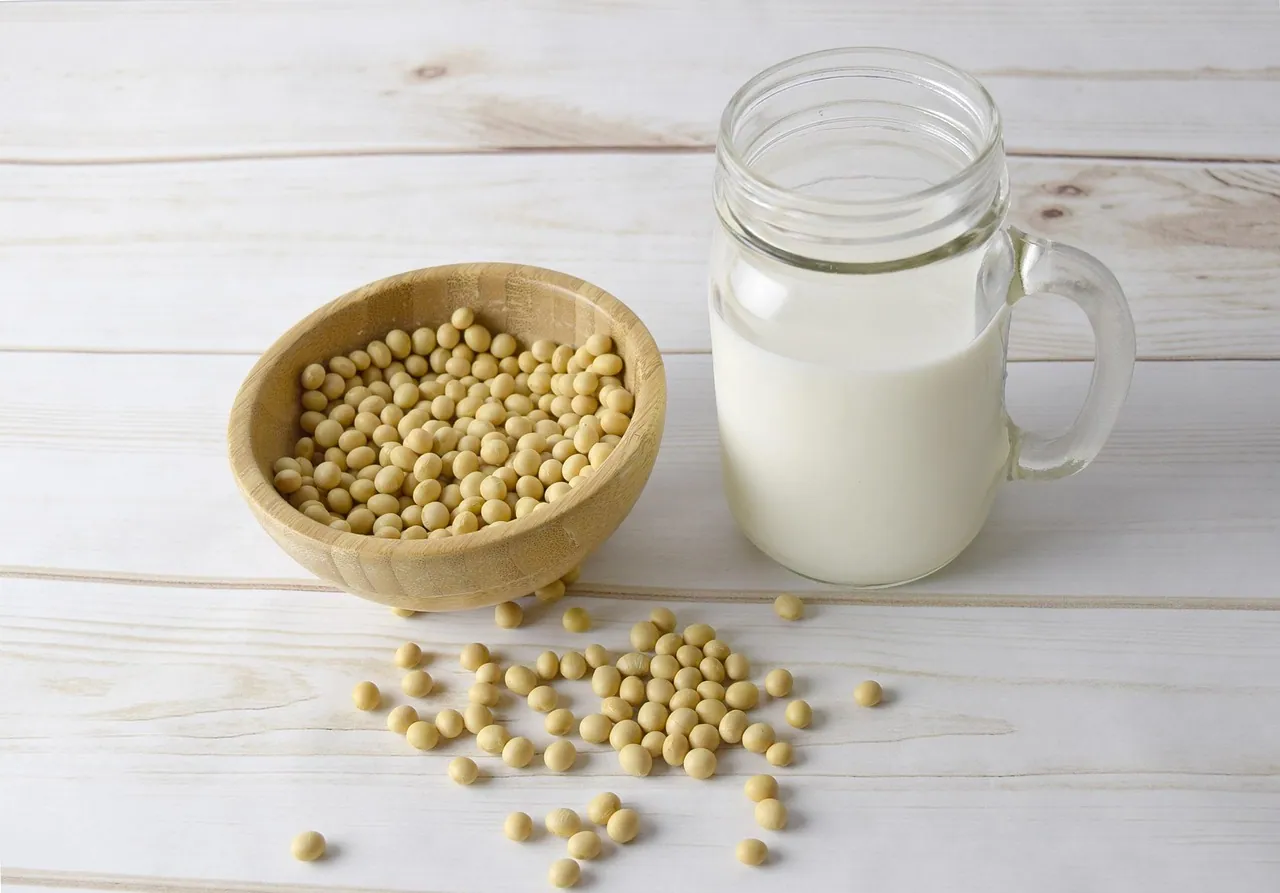
Soy milk and calcium-rich drinks are safe for most thyroid patients if they are kept away from the tablet. Mayo Clinic advises taking calcium, iron and similar products several hours before or after thyroid medicine; many doctors use 4 hours as a practical rule.
The strongest evidence is for calcium supplements. In a JAMA study, 20 patients took 1,200 mg/day of calcium carbonate together with levothyroxine for 3 months. Their average TSH rose from 1.6 to 2.7 mIU/L and 20% went above the normal range, then levels recovered after the calcium was stopped (Singh et al., JAMA, 2000). Calcium-fortified soy milk, some protein shakes and fortified juices carry the same concern.
On soy itself, the fear is bigger than the data. A 2019 meta-analysis of 18 studies found no significant change in free T3 or free T4 with soy, and only a very small rise in TSH of 0.248 mIU/L whose clinical meaning is unclear (Otun et al., Scientific Reports, 2019). Translation: a glass of soy milk at 11 am is fine for most people. A glass taken with the tablet is not.
For vegetarians relying on milk and soy for protein, this gives an easy structure: tablet with water, chai after the window, and milk, soy milk or a whey or soy shake mid-morning or after a workout. A dietitian can help fit this around your meals if you also take iron or calcium tablets.
Juice for thyroid: what the label won’t tell you
No juice treats thyroid disease, and most juices work against weight loss. Grapefruit juice, the most studied, lowered the peak rise of T4 by only 11% in 10 healthy volunteers, an effect the authors called minor (Lilja et al., 2005). The bigger problem is sugar, since a 200 ml glass of packaged juice carries around 20 g of it.
The World Health Organization advises keeping free sugars below 10% of daily energy, about 50 g or 12 level teaspoons on a 2,000 kcal diet, with extra benefit below 5%. Juice sugars count as free sugars even when the pack says “no added sugar”. One glass of packaged mango or mixed-fruit juice can use up most of the stricter 25 g limit.
Better options when you want something fruity:
- Eat the whole fruit (an orange, a guava, a bowl of papaya) and drink water. You keep the fibre and lose far less of your sugar budget. Keep high-fibre breakfasts out of the tablet window, since Mayo Clinic notes too much fibre can reduce absorption.
- If you love juice, limit it to 100–150 ml, fresh, with a meal, well after your tablet.
- Skip calcium-fortified orange juices in the morning window; they behave like a calcium drink.
- Vegetable juices such as lauki or amla are low in calories, but raw lauki juice that tastes bitter should be thrown away, not finished.
Weight loss drinks for thyroid patients, ranked by calories and timing

Once your thyroid levels are in range with treatment, weight loss works the same way it does for everyone else: a steady calorie deficit, enough protein, strength training and sleep. Drinks are one of the easiest places to find that deficit. The table below uses typical Indian servings; calories are approximate and vary with brand and recipe.
| Drink (serving) | Approx. kcal | Effect on levothyroxine | Suggested gap after tablet | Verdict for weight loss |
|---|---|---|---|---|
| Plain water (250 ml) | 0 | None; the drink to take it with | With the tablet | Best |
| Black coffee (150 ml) | 2–5 | Reduces absorption if taken together | 30–60 min | Good |
| Filter coffee, milk + 2 tsp sugar (150 ml) | 90–100 | Caffeine + milk calcium | 30–60 min | Cut sugar |
| Masala chai, half milk + 1.5 tsp sugar (150 ml) | 70–80 | Caffeine + milk calcium | 30–60 min | Cut sugar |
| Green tea, unsweetened (200 ml) | 2 | Caffeine | 30–60 min | Good |
| Herbal tea: ginger, tulsi, jeera (200 ml) | 0–5 | None known for plain herbs | Any time after the window | Good |
| Chaas / buttermilk (200 ml) | 35–45 | Small calcium load | About 4 hours | Good |
| Unsweetened soy milk (200 ml) | 70–90 | Soy and added calcium | About 4 hours | Good protein |
| Coconut water (200 ml) | 40–45 | None known | After breakfast | Fine in moderation |
| Nimbu pani, 2 tsp sugar (250 ml) | 40–45 | None known | After breakfast | Go unsweetened |
| Packaged fruit juice (200 ml) | 90–110 | Small; calcium-fortified versions matter more | About 4 hours if fortified | Limit |
| Cola (300 ml) | 120–130 | Caffeine | 30–60 min | Avoid |
| Café cold coffee (300 ml) | 250–350 | Caffeine + milk | 30–60 min | Occasional treat |
For a full meal structure, including protein targets and an Indian thyroid-friendly plate, see our diet plan for weight loss for hypothyroidism. If you just want quick low-calorie recipes, our list of quick weight loss drinks works for thyroid patients too, as long as you follow the timing above.
Four swaps that save over 2,000 kcal a week
| Current habit | Swap | Approx. kcal saved per day | Per week |
|---|---|---|---|
| 2 cups chai with 1.5 tsp sugar each | Same chai, no sugar | 60 | 420 |
| 1 packaged juice (200 ml) | 1 whole orange + water | 40–50 | 280–350 |
| 1 cola (300 ml) | Unsweetened nimbu soda | 120 | 840 |
| 3 café cold coffees a week | Black or unsweetened iced coffee | about 110–140 averaged | 750–1,000 |
Those four changes add up to roughly 2,000–2,600 kcal a week on paper. Real-world weight loss is slower than calorie maths suggests, and it is slower still if your thyroid levels are not yet stable, so judge progress over 8–12 weeks, not 7 days.
TSH creeping up? Check these drink habits before blaming your dose
If your TSH has drifted upward even though you never miss a tablet, drinks are worth checking before your next appointment. Bring this list to your doctor rather than adjusting anything yourself.
| What you notice | Possible drink culprit | What to try | Tell your doctor if |
|---|---|---|---|
| TSH higher than last test, same dose | Coffee or chai within 30 min of the tablet | Wait a full 60 minutes before caffeine | TSH is still high on retest |
| TSH rose after starting a supplement | Calcium, iron or protein shake taken in the morning | Move it at least 4 hours away | You recently started calcium or iron |
| Numbers swing between tests | Tablet taken at different times with different drinks | Same time, plain water, every day | Swings continue for 2 tests |
| New soy milk or “thyroid tea” habit | Soy or seaweed blend near the tablet | Keep soy 4 hours away; stop unlabelled blends | Any seaweed or kelp product was involved |
| Palpitations, sweating, poor sleep | Too much caffeine, or a dose that is now too high | Cut to 1 cup and note symptoms | Always; this needs a check |
Most doctors recheck TSH about 6–8 weeks after any change, because it takes that long to settle. That is also why any drink experiment should be simple and consistent, and why you should tell the lab and your doctor about new supplements such as biotin, which the NHS notes can affect thyroid test results.
For women, new mothers and shift workers: adjusting the routine

Because hypothyroidism is about three times as common in Indian women as in men, most readers here are women juggling a family morning. A few situations need special care:
- Women who make chai for the family first thing. Take your tablet before you start cooking, and have your own cup last. A small change of order protects your dose without skipping chai.
- Pregnancy and breastfeeding. Thyroid needs change quickly in pregnancy. Ask your obstetrician or endocrinologist about caffeine limits and supplements (prenatal vitamins often contain iron and calcium) and how to time them. For weight after delivery, our guide to hypothyroidism and weight loss explains what is realistic.
- Night-shift workers. “Morning” means after your longest sleep. Pick one fixed time, keep the same empty-stomach window, and avoid stacking energy drinks on top of coffee.
- People with diabetes or high blood pressure as well. Juice and sweet chai hit blood sugar hard, and some herbal products interact with other medicines. A single review of every tablet and drink with your doctor is time well spent.
If you would like help turning this into a daily routine that fits your meals, medicines and cooking habits, a one-on-one online nutritionist consultation can build it around your latest reports.
Frequently asked questions
What is the best drink to take thyroid tablets with?
Plain water, about one full glass. Take the tablet on an empty stomach and wait 30 to 60 minutes before tea, coffee, breakfast or other medicines, as the NHS advises. Avoid milk, juice or coffee with the tablet itself.
How long after levothyroxine can I drink coffee or tea?
At least 30 minutes, and 60 minutes is safer for coffee. In a 2008 study, coffee taken with the tablet reduced absorption by 27–36%, while coffee taken 60 minutes later had no measurable effect.
Is green tea good for thyroid patients?
Brewed, unsweetened green tea is a fine low-calorie drink once you are past the tablet window. It does not treat hypothyroidism and its effect on weight is modest. Avoid green tea extract capsules, which have been linked to rare liver injury.
Can I drink soy milk if I have hypothyroidism?
Yes, for most people. A 2019 meta-analysis found soy did not change thyroid hormone levels. Keep soy milk and calcium-fortified drinks about 4 hours away from your tablet, and check with your doctor if your TSH rises.
Which juice is good for thyroid?
No juice treats thyroid disease. If you enjoy juice, have a small 100–150 ml glass of fresh juice with a meal, well after your tablet. Whole fruit with water is a better choice for weight loss because it keeps the fibre.
Do thyroid teas help with weight loss?
There is no published evidence that packaged thyroid teas lower TSH or speed up fat loss. Blends with seaweed or kelp can add too much iodine. Plain herbal teas are fine as a low-calorie drink, but not as treatment.
Can drinks cause my TSH to go up?
They can, indirectly. Coffee, milk, calcium-fortified drinks and soy taken with or close to levothyroxine can reduce absorption, which may raise TSH. Fix the timing first, then retest after 6–8 weeks as your doctor advises.
Your next step: tomorrow morning, take your tablet with water, set a 60-minute phone timer before your first chai, and note your drinks for one week. Then share that log with a Fitstrot nutritionist and get a thyroid-aware routine built around it.


