
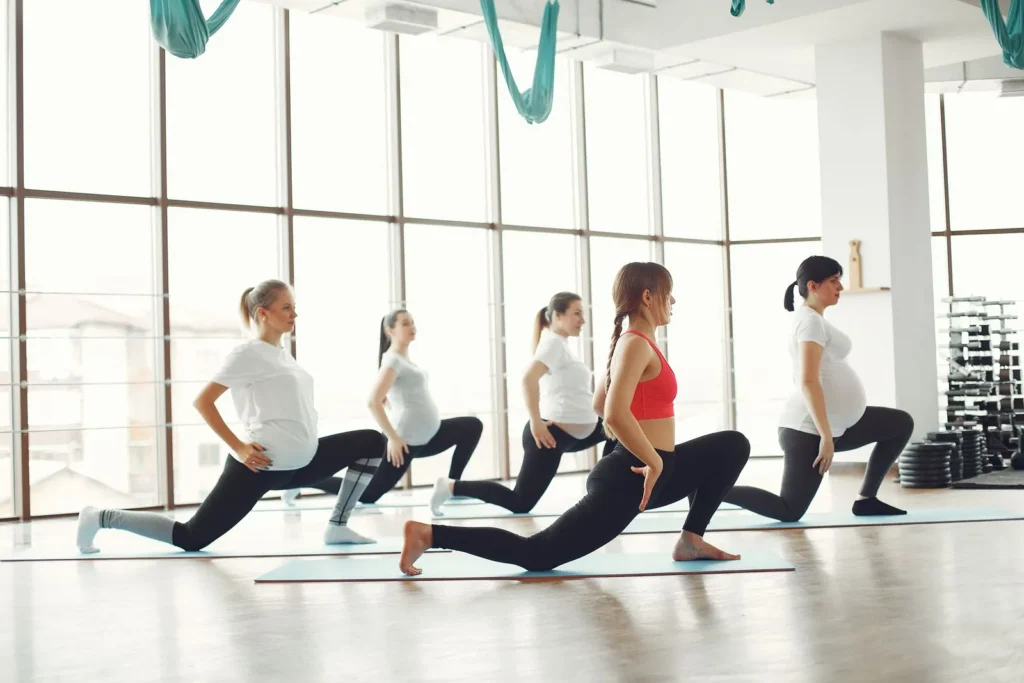
With your doctor’s go-ahead, prenatal yoga classes online can be a safe, convenient way to stay active during an uncomplicated pregnancy, as long as the class is built for pregnancy. This guide is about choosing and using one well: what to ask your doctor, which class suits each trimester, how to vet an instructor, how to set up at home and when to stop. It is general information, not medical advice.
Learning online suits many Indian families. You skip the commute in monsoon traffic or summer heat, and you can join from a living room in a city or a town with no prenatal teacher nearby. The trade-off is that nobody can physically adjust you, so the choices you make before the first class matter more.
Is it safe to do prenatal yoga classes online?
For most low-risk pregnancies, gentle prenatal yoga is considered safe once your doctor or midwife agrees. Guidelines for uncomplicated pregnancies usually suggest about 150 minutes of moderate activity a week, and yoga can count towards it. Safety depends on the class being designed for pregnancy, not on it being online.
A class labelled “prenatal” should already avoid deep closed twists, lying flat on the back for long, strong belly-down poses, inversions, hot rooms and intense core work. A general vinyasa yoga flow rarely makes those changes for you, which is why a generic video is not a safe substitute.
When do you need your doctor’s clearance first?
Ask your gynaecologist or midwife before your first class, even if your pregnancy seems straightforward. Clearance matters most if you have bleeding, high blood pressure, a low-lying placenta, a history of preterm labour or miscarriage, twins, severe anaemia or any condition your doctor is monitoring. Some of these mean no exercise or a modified plan.
Take these questions to your appointment:
- Is gentle yoga fine for me at this stage, and for how many minutes a session?
- Are there poses or movements I should avoid because of my history?
- Which symptoms should make me stop and call you the same day?
- Do you want me to stop at a particular week or change the plan later?
Do not change or skip any medicine, supplement or monitoring because of yoga. If you have any doubt, your doctor decides, not the instructor and not a video.
Which class fits each trimester?
Match the class to your stage. The first trimester runs to about week 13, the second from week 14 to 27 and the third from week 28 until birth. Early on, shorter and cooler sessions work best. Later, support from the wall, a chair or bolsters matters more than flexibility or strength.
| Stage | What many women notice | Class focus | Adjustments to expect | Typical pace |
|---|---|---|---|---|
| First trimester (to week 13) | Nausea, tiredness, sensitivity to heat | Gentle breathing, joint mobility, supported standing balance | Cool room, short sessions, rest whenever needed, skip days freely | 15 to 30 minutes, 2 to 3 times a week |
| Second trimester (weeks 14 to 27) | More energy, growing bump, looser joints | Standing strength, hip and back mobility, pelvic floor awareness | Wider stance, do not stretch to the limit, avoid long spells flat on the back | 30 to 45 minutes, 2 to 3 times a week |
| Third trimester (week 28 to birth) | Heavier belly, breathlessness, pelvic pressure, poor sleep | Supported seated and side-lying poses, breathing, relaxation | Chair or wall support, rise slowly, shorter sessions, more rest | 20 to 40 minutes, 2 to 3 times a week, flexible |
Most prenatal classes borrow the pace of hatha yoga and restorative yoga: slow, supported and unhurried. If you want a wider view of the styles available before choosing, our guide to the types of yoga explains which are gentle enough to adapt.
Live, on-demand or one-to-one: which format should you choose?
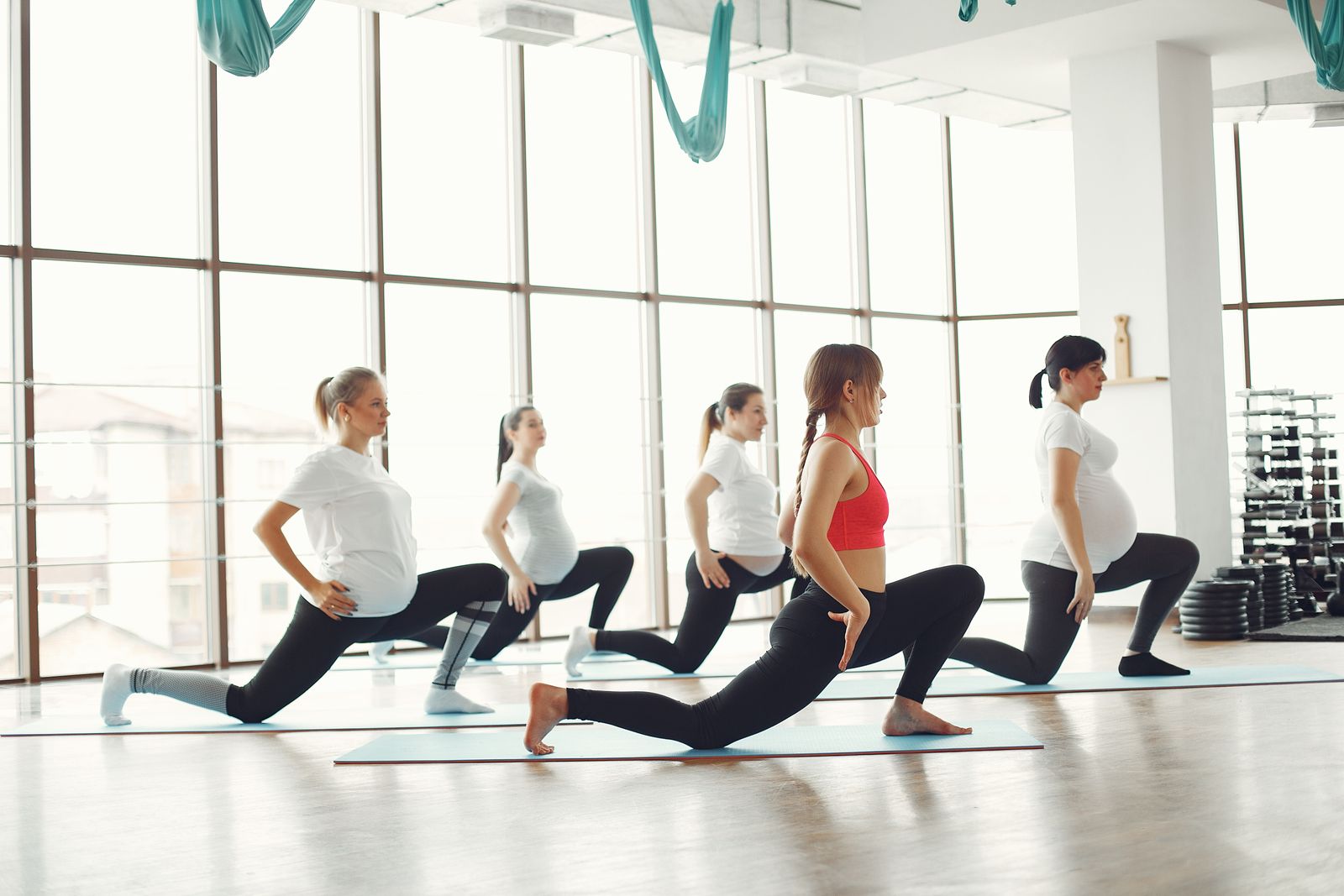
Pick live group classes for accountability and real-time cues, on-demand videos for flexibility on low-energy days, and one-to-one sessions if you have a history your doctor wants respected. Many women combine one live class a week with short recorded sessions. Whatever you pick, the instructor must be trained in pregnancy.
| Format | Best for | Feedback on your form | Flexibility | Watch for |
|---|---|---|---|---|
| Live group class | Routine, motivation, asking questions | Good if the instructor can see you and the group is small | Fixed time, which can clash with nausea or fatigue | Large groups where no one watches your posture |
| On-demand video | Flexible schedules, repeating favourite sequences | None in real time | High, any hour, any length | Videos not labelled by trimester, and no screening of your health |
| One-to-one online session | Complications your doctor has cleared you with, anxiety about moving, personal pace | Highest, fully tailored | You and the teacher agree on a time | Make sure the teacher has your doctor’s guidance in writing |
Our broader guides to online yoga classes and yoga apps compare platforms in general. For pregnancy, a trimester filter and a trained teacher matter more than polished videos. If you started by searching for online yoga classes near me, ask local teachers whether they offer a live video option.
How do you vet an online prenatal yoga class before you pay?
Check eight things before enrolling: the teacher’s prenatal training, health screening, trimester labelling, pose choices, intensity guidance, breathing practices, group size and the claims made. Use the checklist below. Two or more warning signs mean you should look elsewhere, however attractive the price or the production quality.
| What to check | Good sign | Warning sign |
|---|---|---|
| Teacher training | Can tell you what prenatal-specific training they completed and how long they have taught pregnant students | Only a general yoga teacher course, no pregnancy experience |
| Health screening | Asks your due date, complications and doctor’s advice before class | No questions at all |
| Trimester labelling | Separate classes or clear options per trimester | One class for “all stages” with no modifications |
| Pose choices | Props, chair and wall support, open twists only | Deep twists, inversions, belly-down poses, hot room |
| Intensity | Talk test, rest encouraged, “stop if it feels wrong” | “Push through”, calorie-burn promises |
| Breathing | Slow, easy breathing and relaxation | Forceful breathing or long breath holds |
| Group and format | Small group, camera on, teacher checks in | Hundreds of people, no interaction |
| Claims | Talks about comfort, strength and preparation | Promises easy delivery, cures or quick post-baby weight loss |
Hot yoga styles such as bikram yoga are a clear no during pregnancy because overheating is a risk. Breathing deserves the same care. Gentle diaphragmatic breathing is standard, but forceful techniques and long breath retention are usually left out of pranayama for pregnancy, so ask your instructor and doctor before trying any breathing practice you have seen elsewhere.
Which myths about online prenatal yoga should you ignore?
Four myths cause the most trouble: that anyone can follow any yoga video while pregnant, that you must push to feel results, that yoga guarantees an easy delivery, and that older relatives’ advice outranks your doctor’s. Pregnancy yoga is about comfort, steadiness and preparation, not performance.
- “Any yoga video is fine if I skip the hard poses.” Not always. You may not know which moves are risky, and general instructors do not adjust for your trimester.
- “I should feel it working.” You should feel calm and a gentle stretch, never strain, breathlessness or heat. If you can no longer speak in short sentences, ease off.
- “Yoga will guarantee a short or easy labour.” It cannot. It may help you feel stronger, breathe calmly and relax, but every labour is different.
- “My family says to stop all exercise, or to do more.” Well-meant advice varies widely. Follow your own doctor’s plan.
How do you set up your space and run your first class?
Set up a clear, non-slip area about two metres by one metre, close to a wall, with a chair, water and a fan. Join five minutes early, tell the teacher your week of pregnancy and any advice from your doctor, place your camera so your whole body is visible, and keep the first session short.
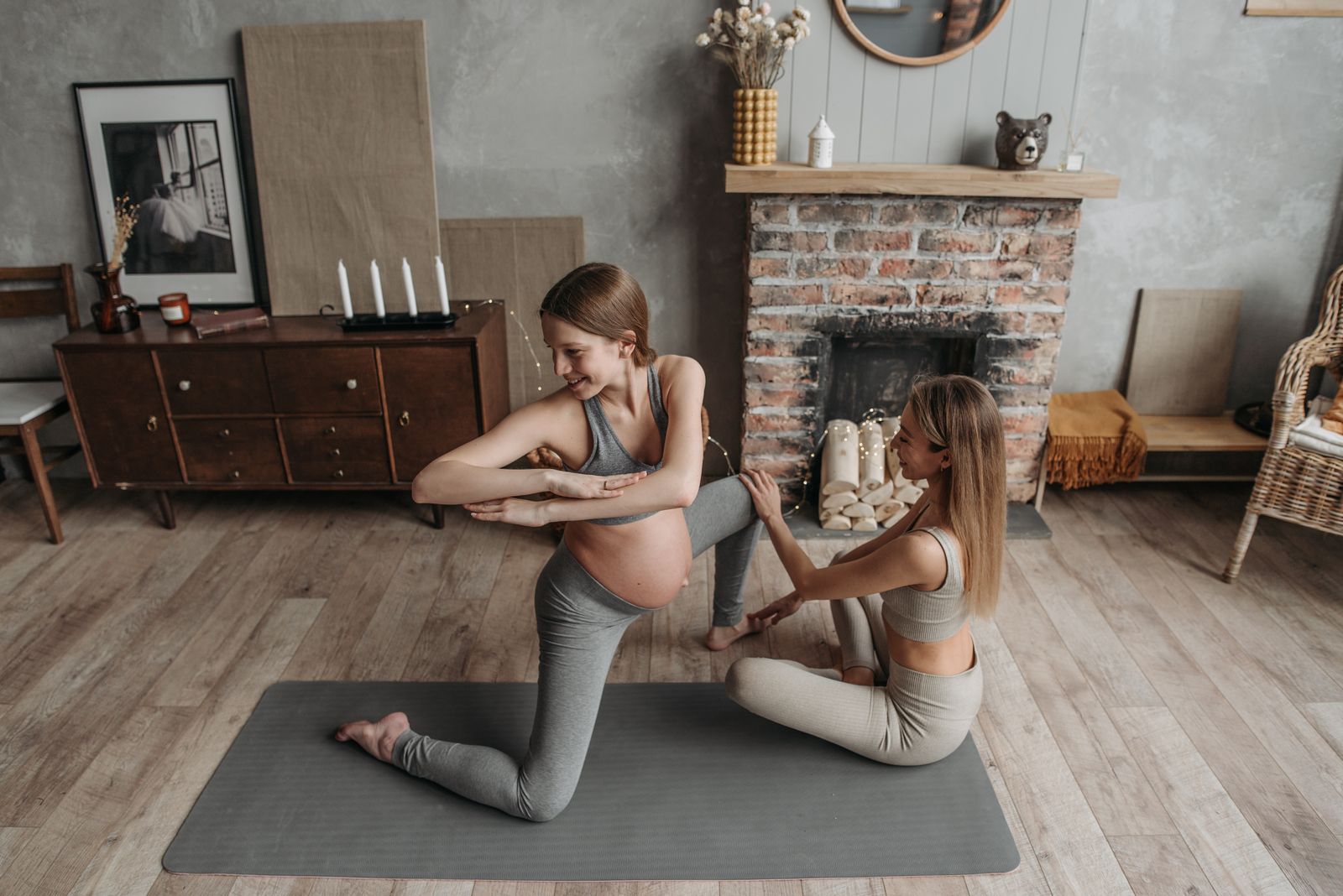
You do not need special equipment. Use what you have:
- Mat or firm floor: a non-slip yoga mat, or a dhurrie on a flat floor. Avoid thick, wobbly mattresses.
- Bolster: two firm pillows or a tightly rolled blanket.
- Blocks: sturdy books wrapped in cloth, or cushions.
- Strap: a long dupatta or a scarf.
- Support: a wall and a stable chair without wheels.
Practise in a cool, ventilated room. Wear breathable clothes, avoid a full stomach, and keep water close. In the relaxation at the end, many classes use side-lying rest or a short yoga nidra practice, which is a pleasant way to wind down after a day at work.
What should you do if something feels wrong during class?
Stop immediately and contact your doctor the same day for vaginal bleeding, fluid leaking, regular painful contractions, chest pain, fainting, severe headache, calf pain or swelling, unusual breathlessness, or reduced baby movements. For milder discomfort, rest, sip water, ease the pose or leave the class. Never push through warning signs.
- Dizzy when standing up: move slowly between poses, sit, drink water and take a longer rest. Tell your doctor if it keeps happening.
- Pulling in the groin or the side of the belly: this is often ligament stretch. Narrow your stance and reduce the range.
- Back ache: use a chair, change the pose to a supported one and shorten the session. Our general guide on yoga for back pain gives background, but ask your instructor to modify any pose for pregnancy.
- Heartburn or breathlessness lying down: raise your upper body on a bolster and skip long reclined poses.
- Too tired to join: a 10-minute breathing and stretching break is enough on those days.
When you feel like you are struggling to keep up, the class is not the right fit. Choose a gentler one rather than forcing yourself.
Frequently asked questions about prenatal yoga classes online
Are prenatal yoga classes online as good as studio classes?
For most healthy pregnancies, they can be, because the core parts of prenatal yoga, gentle movement, breathing and relaxation, translate well to video. The main gap is hands-on adjustment, which a live class with the camera on and a small group partly makes up for.
When can I start prenatal yoga?
You can start at any stage once your doctor says it is safe. Many people begin in the second trimester when nausea eases, but you can start in the first with short, cool sessions or in the third with supported poses. You do not need prior yoga experience.
How often should I do prenatal yoga?
Two to three sessions a week of 20 to 45 minutes is a common pace for a low-risk pregnancy. On tired days, 10 minutes of gentle breathing and stretching is enough. Ask your doctor whether your plan should differ.
Is prenatal yoga safe if I am new to yoga?
Yes, once cleared. Many prenatal classes are made for beginners and offer easier options for each pose. Look for classes labelled beginner-friendly, keep your camera on in live sessions and tell the teacher you are new.
What should I wear and avoid in an online prenatal class?
Wear light, stretchy clothes and bring water. Avoid heated rooms, a full stomach, deep twists, long spells lying flat on your back and any pose that pulls at your belly. If something feels wrong, stop and call your doctor.
Next step
Take your doctor’s go-ahead, the trimester table and the eight-point checklist, and try one class before committing to a month. Explore FitStrot’s online yoga classes, tell the instructor your week of pregnancy and bring along your doctor’s advice so the session can be adjusted to you.


