
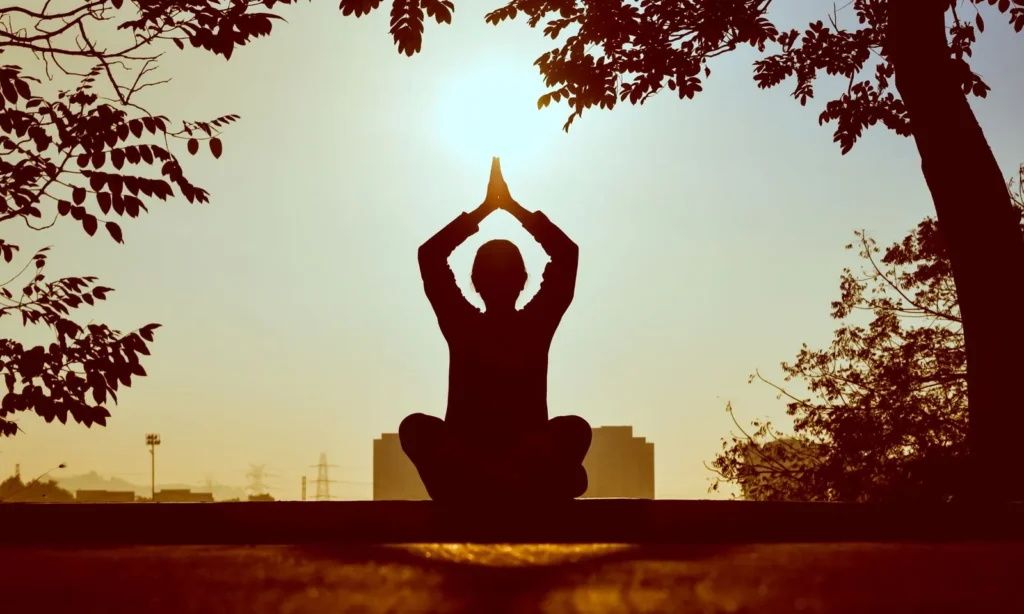
The objectives of yoga are to build a healthy, steady body, a calm and focused mind, a more considerate way of living with other people, and, for those who choose to go further, a clearer sense of who you are. Students usually meet this topic as a four-part answer: physical, mental, social and spiritual. This guide gives you that answer in plain language, in tables you can revise from, and in a format you can write in an exam.
What are the objectives of yoga?
The objectives of yoga are the outcomes the practice is designed to serve: physical health and stability, mental calm and concentration, social harmony through ethical conduct, and spiritual self-awareness. Postures, breathing and meditation are the tools. The objective is what those tools are meant to achieve, and it grows from one layer to the next.
Most syllabi, teacher-training courses and school textbooks group the aims and objectives of yoga this way because it is easy to remember and easy to teach. If you want the foundation first, start with what is yoga and the yoga meaning, then come back here to see how the purpose of the practice is organised.
The four objectives of yoga at a glance
This table is the one to screenshot before an exam. It lists each objective, what it means in simple words, a practical example and the keywords a teacher usually looks for in an answer.
| Objective | What it means | Practical example | Exam keywords |
|---|---|---|---|
| Physical | A strong, flexible, well-balanced body with efficient breathing | Holding a standing pose for 5 slow breaths without strain | Strength, flexibility, posture, stamina, balance |
| Mental | A calm mind that can focus and recover from stress | Ten minutes of slow breathing before study | Concentration, relaxation, emotional balance, self-control |
| Social | Respectful, disciplined behaviour towards others and the environment | Practising in a group, being honest, not comparing yourself with others | Discipline, non-violence, truthfulness, cooperation |
| Spiritual | Self-awareness and inner steadiness, rather than a fixed belief | Sitting quietly and observing thoughts without reacting | Self-realisation, awareness, inner peace, union |
Physical objectives of yoga: what the body practice is for
The physical objectives of yoga are to improve strength, flexibility, balance, posture and breathing capacity, and to leave the body comfortable enough to sit still. In the classical text, the posture is described as steady and comfortable (sthira sukham asanam). Strength and flexibility serve that comfort. They are not trophies.
In practice, this means working on joints that stiffen from sitting, the muscles that hold your spine upright, and the breath that tends to become shallow when you are stressed. Gentle, foundational styles such as hatha yoga are built around this base, while flowing styles such as vinyasa yoga add a steady, moderate cardio element. If your own priority is physical, targeted routines like yoga for flexibility or yoga for back pain turn the general objective into a specific plan.
Mental and emotional objectives of yoga
The mental objectives of yoga are to steady attention, reduce restlessness and build a calmer response to pressure. The Yoga Sutras define yoga as the settling of the fluctuations of the mind (chitta vritti nirodha). In everyday terms, that means noticing a distracting or anxious thought without being carried away by it.
Slow breathing, guided relaxation and short meditations are the usual tools. For students, this objective is often the most relevant: a calmer mind before a test, easier focus during revision and a way to settle down at night. If anxious thoughts are your main concern, yoga for anxiety shows how slower, breath-led sessions are used for exactly this purpose. Yoga supports wellbeing, but it does not replace professional help if low mood or anxiety is affecting daily life.
Social objectives of yoga: more than a solo activity
The social objectives of yoga are to encourage discipline, honesty, non-violence, cooperation and respect for others and the environment. These come from the ethical limbs of the classical path (yama and niyama), and they are why yoga is taught in schools and community programmes and not just in studios.
A practical way to see this objective is to look at how a good class runs: you arrive on time, respect the space, avoid comparing yourself with the person on the next mat and accept that your body is different from everyone else’s. Those habits carry into classrooms, offices and families. Group sessions, whether in a hall or on a live video call, make the social aim visible in a way that solo practice does not.
Spiritual objectives of yoga, without the jargon
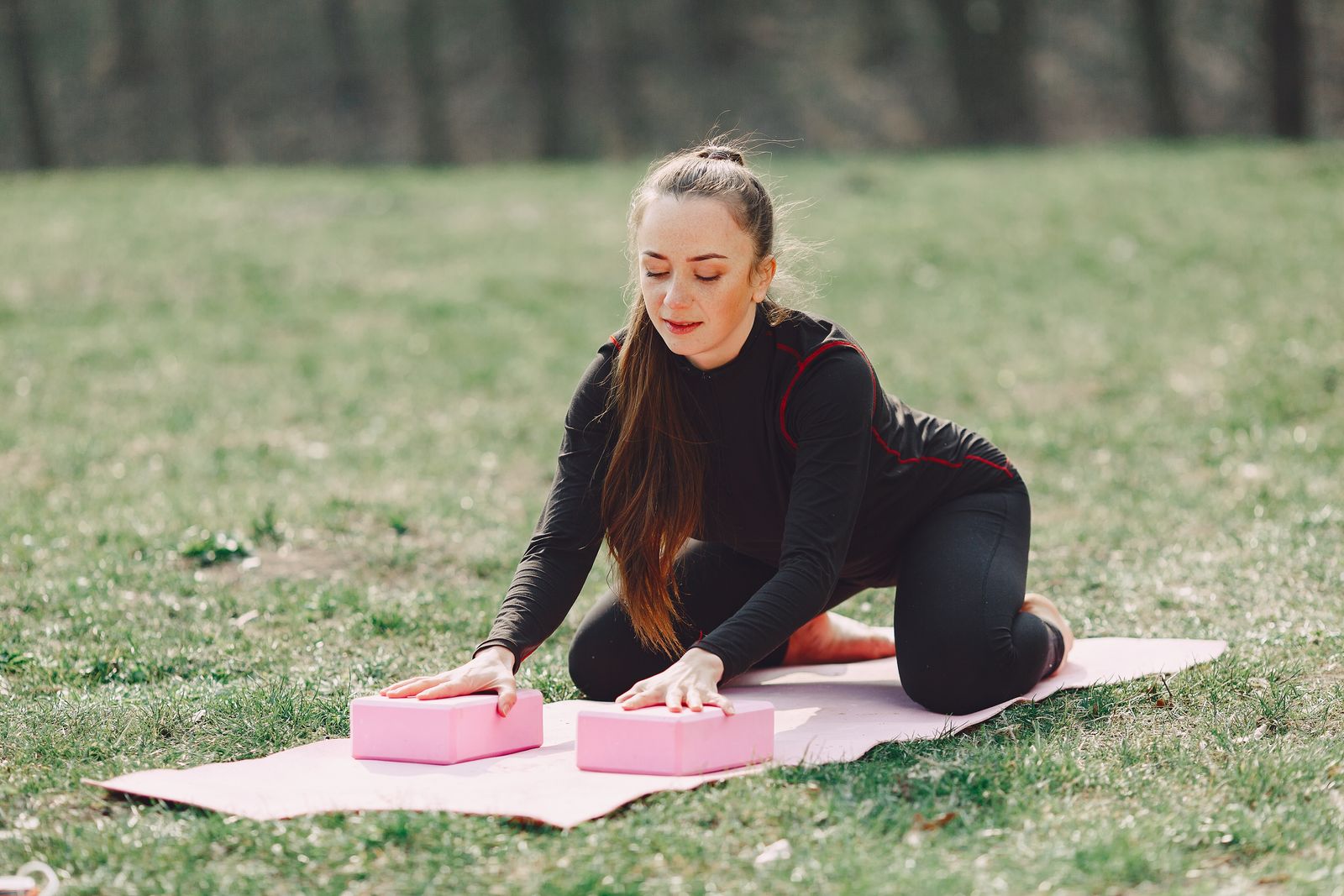
The spiritual objectives of yoga are self-awareness and inner steadiness, which classical texts describe as recognising the observer within you that stays constant while thoughts and moods change. The traditional word is self-realisation, and the end point is called samadhi or kaivalya. You can treat it as a philosophy of self-inquiry rather than a belief system.
The philosophical background sits mainly in the Yoga Sutras of Patanjali, and the Bhagavad Gita describes yoga as evenness of mind in success and failure. Styles such as kundalini yoga lean more towards chanting and meditation, which is why they suit people drawn to this objective. If you only want the physical and mental benefits, that is a perfectly valid way to practise.
Myth check: two things the objectives of yoga are not
Myth 1: the objective of yoga is flexibility. Flexibility is a by-product. You do not need to touch your toes to meet any of the four objectives, and chasing depth in a pose can lead to overstretching. A steady, comfortable pose you can hold with calm breathing meets the objective better than a deep pose held with strain.
Myth 2: yoga is a religion, so its objectives are religious. The spiritual aim is about self-awareness, and people of any faith, or none, practise yoga in schools and workplaces. In an exam, describe it as a philosophical and psychological aim, not as a belief you must hold.
Objectives vs aims vs benefits vs techniques: what is the difference?
An objective is the purpose a practice is built to serve, a benefit is what a person actually experiences, and a technique is the method used. The aim is the broad direction, and the objectives are its specific parts. Keeping these four separate stops you from mixing them up in answers and class choices.
| Term | Question it answers | Example |
|---|---|---|
| Aim | What is the broad direction? | Overall health and self-awareness |
| Objective | What specific outcome is the practice built for? | Calm the nervous system and improve concentration |
| Technique | Which method is used? | Slow breathing, a seated meditation, a standing pose |
| Benefit | What does the person notice? | Easier sleep, steadier mood, less tension in the shoulders |
How to write the objectives of yoga in an exam
For a short answer, name the four objectives in order, define each in one line and add one example. For a long answer, add a definition of yoga, a sentence on how the objectives connect and a brief conclusion. Match the number of points to the marks, and use the keywords in the table above.
- Open with a definition. One line: yoga is a discipline that unites body, breath and mind.
- List the objectives in a fixed order. Physical, mental, social, spiritual.
- Add an example to each point. For instance, “holding a pose steadily improves balance”.
- Link the points. Say that physical steadiness supports mental focus, which supports deeper self-awareness.
- Close in one line. The overall purpose is balanced, healthy living.
| Question type | What to write | Rough length |
|---|---|---|
| 2 marks | Define yoga and name any two objectives | 2 to 3 lines |
| 5 marks | All four objectives with one line each, plus one example | 10 to 12 lines |
| 10 marks | Definition, four objectives with examples, how they connect, and a conclusion | One page, with sub-headings |
| Diagram or table question | Four columns: objective, meaning, example, outcome | One neat table |
These lengths are a guide. Follow your own syllabus and your teacher’s marking pattern, since they decide what earns marks.
What are the objectives of yoga education?
The objectives of yoga education are to teach safe technique, build discipline and body awareness, give students simple stress-management skills and introduce the ethical and philosophical side of yoga, not just the postures. In schools, a daily 10 to 15 minute session is a common and realistic format.
For the objectives of yoga for students, three points matter most. First, correct and safe practice, so nobody is pushed into a pose their body cannot yet manage. Second, habits such as punctuality, respect and self-control. Third, calm and focus, which help during exams. Indian schools and colleges often place yoga within physical education and health programmes, and the objective stays the same everywhere: a healthier body and a steadier mind from an early age.
Why is International Day of Yoga celebrated on 21 June?
International Day of Yoga is observed every year on 21 June. India proposed it, and the United Nations General Assembly adopted the proposal in December 2014, with the first observance in 2015. The objective is to raise worldwide awareness of the physical, mental and social value of yoga and to encourage people to practise regularly.
Exam answers on this topic usually need only three facts: the date, the UN adoption and the purpose. The best use of the day is a habit that outlasts it, such as a fixed 15 minute slot each morning.
Choosing a style by objective
If you are picking a class and not writing an exam, match the style to the objective you care about most. A quick guide:
- Physical focus: hatha for a steady base, vinyasa for a flowing, warmer session.
- Mental calm: slow breathing and short meditation, or restorative yoga, where supported poses are held for several minutes.
- Social and ethical focus: group classes with a consistent teacher and community.
- Spiritual focus: meditation-led or chanting-led styles, with some philosophy included.
The full landscape is in our types of yoga guide. Most people mix objectives, and that is normal. Three to five sessions a week, even short ones, is a sensible starting rhythm.
Troubleshooting: when your practice drifts away from your objective
If you are practising but not feeling the outcome you want, the mismatch is usually in the style, the effort level or the consistency. Check these common patterns before you quit or change everything:
- You feel more tense after class. You are probably forcing poses. Reduce depth, lengthen your exhale and stay in the comfortable range.
- You enjoy the poses but feel no mental change. Add 5 to 10 minutes of breathing or quiet sitting at the end.
- You keep skipping sessions. Shrink the target to 10 minutes and tie it to a fixed time, like right after brushing your teeth.
- You feel pain, not stretch. Stop. Sharp, shooting or lasting pain needs a doctor’s opinion, not more effort.
- You are comparing yourself with others. That undermines the social and mental objectives. Judge your practice against your own last month.
If you have a medical condition, are pregnant or are recovering from an injury, check with your doctor before starting and tell your teacher.
Frequently asked questions about the objectives of yoga
What is the main objective of yoga?
In classical philosophy, the main objective of yoga is self-realisation through a steady, calm mind. In everyday practice, most people pursue a mix of fitness, stress relief and better focus, with the deeper objective becoming relevant as the practice matures.
What are the four objectives of yoga?
The four objectives usually taught are physical, mental, social and spiritual. Physical means strength, flexibility and breathing. Mental means calm and concentration. Social means discipline and respect for others. Spiritual means self-awareness and inner steadiness. Some textbooks group them as three or five, so follow your syllabus.
What is the objective of International Day of Yoga?
Its objective is to raise global awareness of yoga’s physical, mental and social value and to encourage regular practice. It is observed on 21 June, following a proposal by India that the United Nations General Assembly adopted in December 2014.
Can I practise yoga without the spiritual objective?
Yes. Many people practise only for physical and mental objectives such as strength, flexibility and stress relief. The spiritual aim is optional and is best seen as a philosophy of self-awareness. You do not need to hold any belief to benefit.
How many points should I write for a 5-mark answer on the objectives of yoga?
Write the four objectives, physical, mental, social and spiritual, with one line of explanation each, plus one example, and open with a one-line definition. Check your own syllabus and teacher’s marking scheme, because the expected format can differ between boards and institutions.
Practise the objectives with a live teacher
Reading about the objectives is useful, but feeling them in a class is how they stick. Book an online yoga class with FitStrot and see how one guided session moves from steady posture to focused breathing to calm.


