
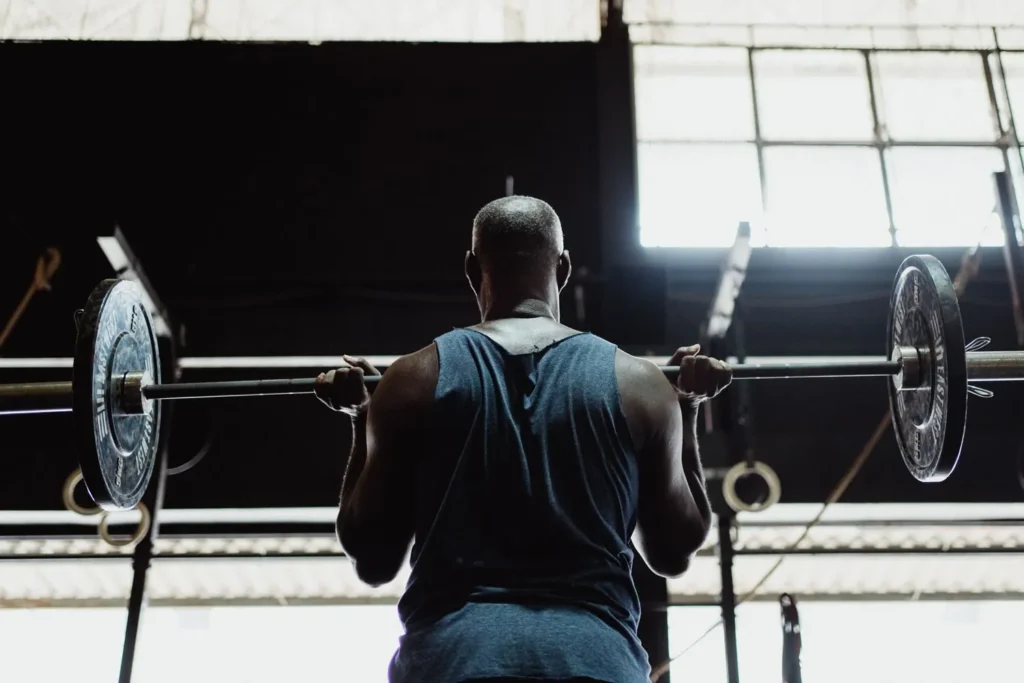
A full body workout routine for men trains legs, chest, back, shoulders, arms and core in every session, usually on three non-consecutive days a week. You do fewer exercises per muscle than a body-part split, but you hit each muscle more often, which suits a man with a job, a commute and about an hour per session. This guide gives you a complete three-session plan with sets, reps, rest and form cues, a simple progression rule, and a home swap chart.
What is a full body workout routine for men?
A full body workout routine for men is a training plan where every session covers the main movement patterns: squat, hinge, push, pull and core. Most men run it three days a week with a rest day between sessions, using five or six compound-led exercises each time and adding weight or reps gradually.
It differs from a bro split, where chest gets Monday and legs get Thursday and each muscle is trained once a week. Here each muscle is trained two or three times a week, so a missed session costs you little. If you want the general concept first, our full body workout guide covers it, and the full body workout for men in gym page goes deeper on machine and barbell choices.
How many days a week should you train?
Most men do best on three full body sessions a week, for example Monday, Wednesday and Friday, with at least 48 hours between sessions. Two days works for beginners or a very busy week, and four days suits experienced lifters who sleep well and trim the sets per session. Training the whole body every single day is not needed.
| Days per week | Sample days | Sessions | Best for | Rule of thumb |
|---|---|---|---|---|
| 2 | Mon, Thu | A, B | First 2 to 4 weeks, or a travel week | Keep 2 to 3 sets per exercise |
| 3 | Mon, Wed, Fri | A, B, C | Most men, most of the year | Follow the full plan below |
| 4 | Mon, Tue, Thu, Sat | A, B, C, A | Experienced lifters with good sleep | Cut one set per exercise |
For other weekly layouts, see our workout routine and best workout routine pages, or the workout schedule for men at home.
The 3-day plan: Workouts A, B and C with sets, reps and rest
Rotate A, B and C in order, so if you train Monday, Wednesday and Friday this week, next week starts on whichever workout comes next. Expect 50 to 60 minutes per session including the warm-up. Choose weights that leave you about one or two reps short of failure on every set, and always do the biggest lift of the day first while you are fresh.
| Workout | Exercise | Sets x reps | Rest | Form cue |
|---|---|---|---|---|
| A | Back squat or goblet squat | 3 x 6-8 | 2 min | Ribs down, knees track over toes, go only as deep as you can control |
| Flat bench press (barbell or dumbbell) | 3 x 6-8 | 2 min | Shoulder blades pinned back, forearms vertical, touch mid-chest | |
| Bent-over row | 3 x 8-10 | 90 sec | Flat back, pull elbows towards hips, no jerking | |
| Dumbbell lateral raise | 2 x 12-15 | 60 sec | Lift to shoulder height, soft elbows, no swinging | |
| Plank | 3 x 30-45 sec | 45 sec | Straight line from head to heels, squeeze glutes | |
| B | Romanian deadlift | 3 x 8-10 | 2 min | Soft knees, hips back, bar slides down the thighs, stop at a hamstring stretch |
| Standing overhead press | 3 x 6-8 | 2 min | Glutes tight, press in a straight line, head moves through at the top | |
| Lat pulldown or assisted pull-up | 3 x 8-10 | 90 sec | Chest up, drive elbows down to your ribs | |
| Walking lunge | 2 x 10 per leg | 60-90 sec | Long step, torso tall, back knee just above the floor | |
| Hanging knee raise | 3 x 8-12 | 45 sec | Curl the pelvis up, control the swing | |
| C | Leg press or Bulgarian split squat | 3 x 10-12 | 90 sec | Feet mid-platform, do not slam the knees straight at the top |
| Incline dumbbell press | 3 x 8-10 | 90 sec | Bench at a low incline, press up and slightly in | |
| Seated cable row | 3 x 10-12 | 75 sec | Sit tall, pause for a second as the handle touches your stomach | |
| Dumbbell curl plus triceps pushdown | 2 x 10-12 each | 60 sec | Elbows pinned to your sides, lower slowly | |
| Cable crunch or dead bug | 3 x 12-15 | 45 sec | Round the spine, do not just pull with the arms |
Workout A leads with a squat, B with a hinge, and C with single-leg and incline work, so every pattern gets a heavy slot and a lighter one each week. Rows and pull-ups balance all the pressing, so do not skip them.
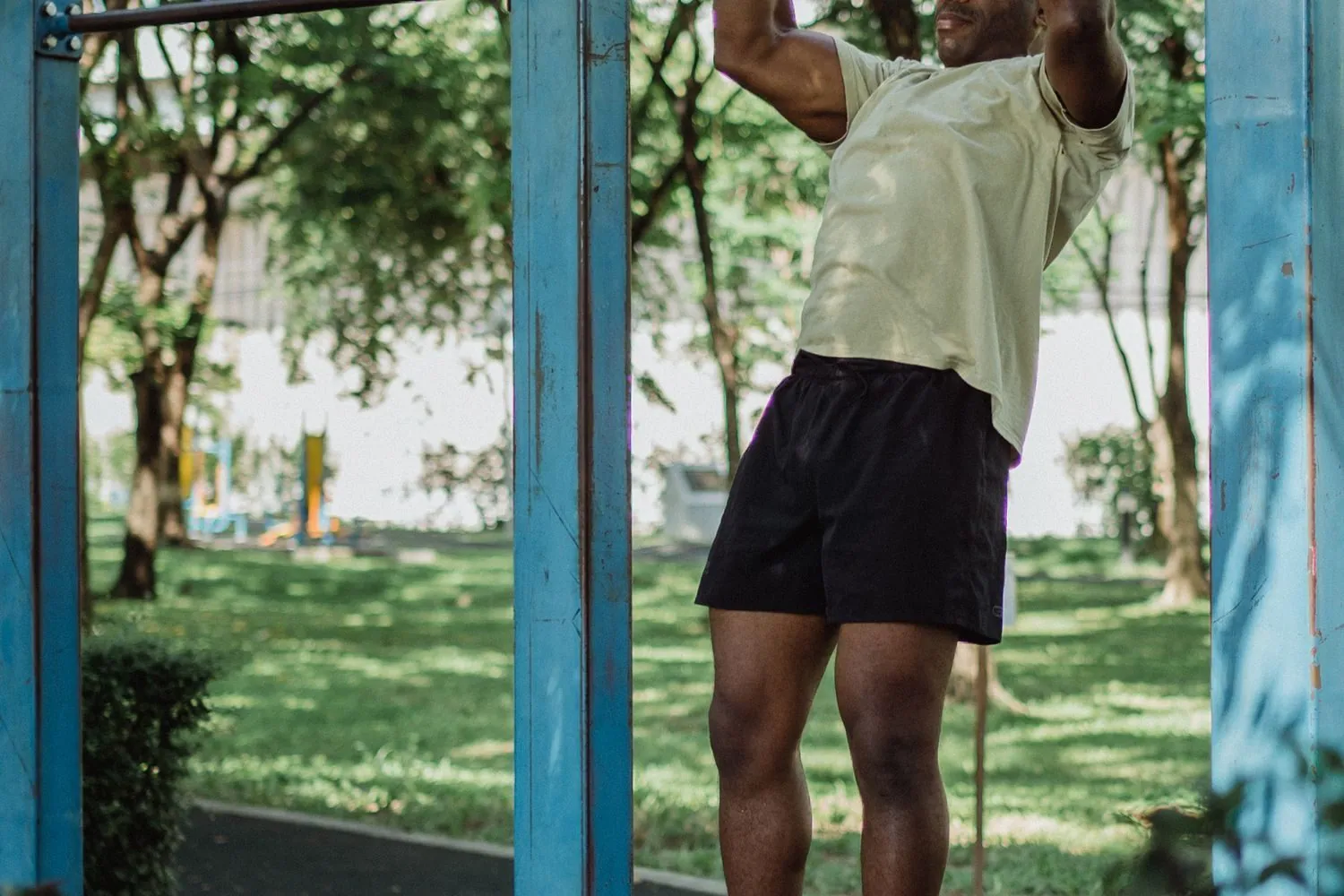
How to run each session, step by step
- Warm up for 8 to 10 minutes. Three to five minutes of brisk walking or cycling, then leg swings, hip circles and ten bodyweight squats.
- Ramp up on the first lift. Do two lighter sets first, such as half your working weight for five reps, then three-quarters for three.
- Work sets. Stop one or two reps before you would fail.
- Rest by the clock. About two minutes after heavy lifts, 60 to 90 seconds for mid-weight work, 45 seconds for arms and core.
- Finish and log. Walk for a few minutes and write down the weight and reps for every exercise.
How do you add weight without stalling?
Use double progression: keep the same weight until you hit the top of the rep range on every set, then add the smallest jump available, usually about 2.5 kg for upper-body lifts and 5 kg for squats and deadlifts. For example, a bench press of 3 x 6-8 at 40 kg becomes 42.5 kg once you complete 8, 8, 8.
A realistic run on the bench press looks like this:
- Session 1: 40 kg for 8, 7, 6 reps
- Session 6: 40 kg for 8, 8, 8 reps, so next time go up
- Session 7: 42.5 kg for 7, 6, 6 reps, and the cycle restarts
Every six to eight weeks, or whenever you feel flat, take a lighter week: keep the same weights but do about half the sets.
Myth check: you cannot build size training only three days a week
Muscle size depends on enough hard sets per muscle per week, taken close to failure, repeated for months with enough food and sleep. It does not depend on training every day. For most men, roughly 6 to 12 hard sets per muscle per week is a workable starting range, and this plan lands inside it for the big muscle groups.
Chest gets about six pressing sets a week, your back about nine, and your legs roughly nine to twelve. Arms get less direct work, so if bigger arms matter, add two sets of curls and two of pushdowns to Workouts A and B.
Troubleshooting: sessions drag, lifts stall or joints complain
- Sessions run past 75 minutes: you are resting too long. Use a phone timer, and drop the lateral raise or arm work before cutting a compound lift.
- A lift has stalled for three sessions: check sleep (7 to 9 hours is a sensible target) and whether you are eating enough protein. If both are fine, drop the weight by 5 to 10 percent and rebuild with clean reps.
- Still sore when the next session arrives: soreness is not a goal. Cut one set from each exercise for a week, or move to two days a week for a short spell.
- Elbows or shoulders ache when pressing: try dumbbells instead of a barbell, a slightly narrower grip, and a lower bench angle. If the pain is sharp or lasts more than a week, stop that lift and see a doctor or physiotherapist.
Can you follow this full body workout at home?
Yes. Replace barbell and machine lifts with dumbbells, a pull-up bar, resistance bands and your bodyweight, and keep the same squat, hinge, push, pull and core pattern. With one pair of adjustable dumbbells you can run all three sessions, and once the weights feel light you progress through slower lowering, pauses and extra reps.
| Gym lift | Home swap | How to make it harder |
|---|---|---|
| Back squat | Goblet squat with a dumbbell or a loaded backpack | 3-second lowering, 2-second pause at the bottom |
| Bench press | Floor dumbbell press or push-up | Feet on a chair, slow tempo, add a backpack |
| Bent-over row | Single-arm dumbbell row | Pause at the top, then add reps up to 15 |
| Overhead press | Seated or standing dumbbell press | Press one arm at a time, lower for 3 seconds |
| Romanian deadlift | Dumbbell Romanian deadlift | Move to a single-leg version |
| Leg press | Bulgarian split squat, rear foot on a sturdy chair | Hold dumbbells, slow the lowering |
For more at-home options, see our home workout and home workout routine pages. Home training is limited by load, so be strict about tempo.
Adjusting the plan for beginners, men over 40 and desk workers
Beginners: start with two sets per exercise, use machine or goblet versions of squats and presses, and train just two days a week for the first two to four weeks. Learning form beats chasing weight. Our beginner gym workout guide walks through the first month in detail.
Men over 40: spend ten to twelve minutes warming up, rest a little longer on heavy sets, and keep two or three reps in reserve on big lifts. Dumbbell presses and goblet squats are often friendlier on the shoulders and lower back than barbell versions. If you have been inactive for years, or you have a heart condition or high blood pressure, check with your doctor before you start.
Desk workers: add two sets of band pull-aparts to every warm-up, walk for a few minutes every hour, and stretch your hips after sessions.
What to eat and how much to sleep
A common target for men training with weights is roughly 1.6 to 2 g of protein per kg of body weight per day. For a 70 kg man that is about 110 to 140 g. Spread it over three or four meals using eggs (about 6 g each), paneer (about 18 g per 100 g), dal, curd, chicken or soya chunks. Aim for 7 to 9 hours of sleep, since this is when you recover from the sessions above.
If you want a personal eating plan, our online nutritionist consultation builds one around your food habits. If fat loss is your main goal, an online weight loss trainer can pair the lifting with a calorie target. No routine guarantees a particular result, and progress depends on how consistently you train, eat and sleep.
Get this routine built around your week
Tell a Fitstrot coach which days you can train, what equipment you have and any joints that complain, and get Workouts A, B and C adjusted to fit through 1-on-1 personal training.
Frequently asked questions
What is a good full body workout routine for men?
A good routine trains squat, hinge, push, pull and core patterns in every session, three days a week with a rest day between. Use five mostly compound exercises per session in the 6 to 12 rep range, and add weight or reps once every set hits the top of the range.
How long should a full body workout take?
Plan on 50 to 60 minutes including a warm-up of 8 to 10 minutes. If sessions run beyond 75 minutes, shorten rests or drop an accessory exercise rather than skipping the heavy compound lifts.
Can beginners start with a full body routine?
Yes, it is usually the best starting point. Begin with two sets per exercise, light weights and two sessions a week for the first few weeks, then move to three sessions.
Will a full body routine build muscle?
Yes, if you train close to failure, add weight or reps over time, eat enough protein and sleep well. Three sessions a week gives most large muscles roughly 6 to 12 hard sets weekly.
Can I do this full body workout at home with dumbbells?
Yes. Use the swap chart above: goblet squats, floor presses, single-arm rows, dumbbell Romanian deadlifts and split squats cover every pattern. With limited weights, progress through slower lowering, pauses and extra reps.


